

The study included 44 individuals with mild cognitive impairment. After six months, those who engaged in strength training demonstrated improvements in memory and brain structure, whereas the participants who did not show a decline in the assessed parameters.
Weight training offers numerous benefits, including increased strength and muscle mass, reduced body fat, and improved overall well-being and mental health. A recent study conducted at the State University of Campinas (UNICAMP) in São Paulo, Brazil, has highlighted another crucial advantage: it helps protect the brains of older adults against dementia. The findings were published in the journal GeroScience.
The study involved 44 participants with mild cognitive impairment, a condition that lies between normal aging and Alzheimer’s disease. In this stage, cognitive decline is more significant than expected for a person’s age, indicating a higher risk of developing dementia. The results revealed that strength training not only enhanced memory performance but also led to changes in brain structure.
Effects on Brain Health
After six months of twice-weekly weight training, the participants showed protection against atrophy in the hippocampus and precuneus – brain areas associated with Alzheimer’s disease – as well as improvements in parameters that reflect the health of neurons (white matter integrity).
“We already knew that there would be a physical improvement. Cognitive improvement was also imagined, but we wanted to see the effect of weight training on the brains of older people with mild cognitive impairment. The study showed that, fortunately, weight training is a strong ally against dementia, even for people who are already at high risk of developing it,” says Isadora Ribeiro, a FAPESP doctoral fellowship recipient at UNICAMP’s School of Medical Sciences (FCM) and first author of the article.
The work was carried out within the framework of the Brazilian Institute for Neuroscience and Neurotechnology (BRAINN) – a FAPESP Research, Innovation and Dissemination Center (RIDC) – and is the first to demonstrate what happens to the integrity of the white matter of individuals with mild cognitive impairment after weight training.
“As well as neuropsychological tests, we also performed MRI scans at the beginning and end of the study. These results are very important because they indicate the need to include more physical educators in the public health system at the primary health care level since increased muscle strength is associated with a reduced risk of dementia. It’s a less complex and cheaper treatment that can protect people from serious diseases,” comments Marcio Balthazar, BRAINN researcher and study supervisor.
“For example, the new anti-amyloid drugs approved in the United States indicated for the treatment of dementia and for people with mild cognitive impairment, cost around USD 30,000 a year. That’s a very high cost. These non-pharmacological measures, as we’ve shown is the case with weight training, are effective, not only in preventing dementia but also in improving mild cognitive impairment,” the researcher adds.
Study Protocol and Results
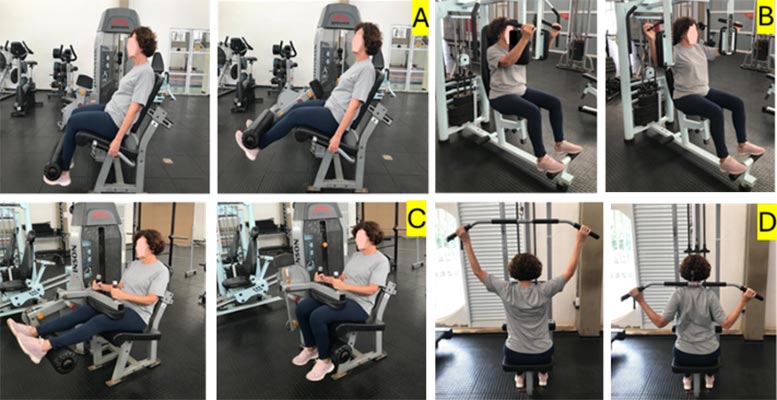
The research participants were divided into two groups: half underwent a resistance exercise program with weight training sessions twice a week, at moderate to high intensity and with progressive loads; the other half did not exercise during the study period and were part of the so-called control group.
In the analyses carried out at the end of the intervention, the volunteers who practiced weight training had better performance in verbal episodic memory, improved integrity of neurons, and areas related to Alzheimer’s disease protected from atrophy, while the control group showed a worsening of brain parameters.
“A characteristic of people with mild cognitive impairment is that they have volume loss in some brain regions associated with the development of Alzheimer’s. But in the group that did strength training, the right side of the hippocampus and precuneus were protected from atrophy. This result justifies the importance of regular weight training, especially for older people,” Ribeiro highlights.
The researcher believes that a longer period of training could lead to even more positive results than those reported in the study. “All the individuals in the bodybuilding group showed improvements in memory and brain anatomy. However, five of them reached the end of the study without a clinical diagnosis of mild cognitive impairment, such was their improvement. This leads us to imagine that longer training sessions, lasting three years, for example, could reverse this diagnosis or delay any kind of dementia progression. It’s certainly something to be hopeful about and something that needs to be studied in the future,” Ribeiro argues.
According to the researchers, weight training can protect the brain against dementia on two fronts: by stimulating the production of neural growth factor (an important protein for the growth, maintenance, and survival of neurons) and by promoting global disinflammation in the body.
“Any physical exercise, whether weight training or aerobic activity, is known to increase levels of a chemical involved in brain cell growth. It can also mobilize anti-inflammatory T-cells. This is key. After all, the more pro-inflammatory protein that is released in the body, the greater the chance of developing dementia, accelerating the neurodegenerative process and forming dysfunctional proteins that eventually kill neurons,” Balthazar explains.
To assess these issues, the volunteers’ levels of irisin and BDNF (brain-derived neurotrophic factor) – substances whose synthesis is stimulated by muscle contraction and which are associated with neural protection and synaptic plasticity – were measured. The results are currently being analyzed.
“It’s a continuation of this study in which we’ll try to better understand how these factors are related to changes in brain anatomy. We believe that it’s a set of anti-inflammatory and neuroprotective factors that lead to these changes,” Ribeiro predicts.
Reference: “Resistance training protects the hippocampus and precuneus against atrophy and benefits white matter integrity in older adults with mild cognitive impairment” by Isadora C. Ribeiro, Camila V. L. Teixeira, Thiago J. R. de Resende, Brunno M. de Campos, Gabriel B. Silva, Marco C. Uchida, Thamires N. C. Magalhães, Luciana R. Pimentel-Silva, Ítalo K. Aventurato, Brenda C. Gonçalves, Marjorie C. R. da Silva, Liara Rizzi, Gustavo B. P. Fernandes, Paula T. Fernandes, Fernando Cendes and Marcio L. F. Balthazar, 2 January 2025, GeroScience.
DOI: 10.1007/s11357-024-01483-8
The study was funded by the São Paulo Research Foundation.
Never miss a breakthrough: Join the SciTechDaily newsletter.
Follow us on Google and Google News.
1 Comment
“The researcher believes that a longer period of training COULD lead to even more positive results than those reported in the study.”
There’s the favorite word of most researchers — “could.” “Could” means only that there is no evidence to support the hypothesis improvement is impossible. Clearly the researcher is hopeful that longer periods of training will lead to even more positive results. However, is there any evidence to justify the optimism? It seems to me that the press release speculation has little in the way of actual evidence supporting their optimism and desire to extend the study. If there is actual evidence, such as an acceleration in the rate of improvement, then they should present it.