
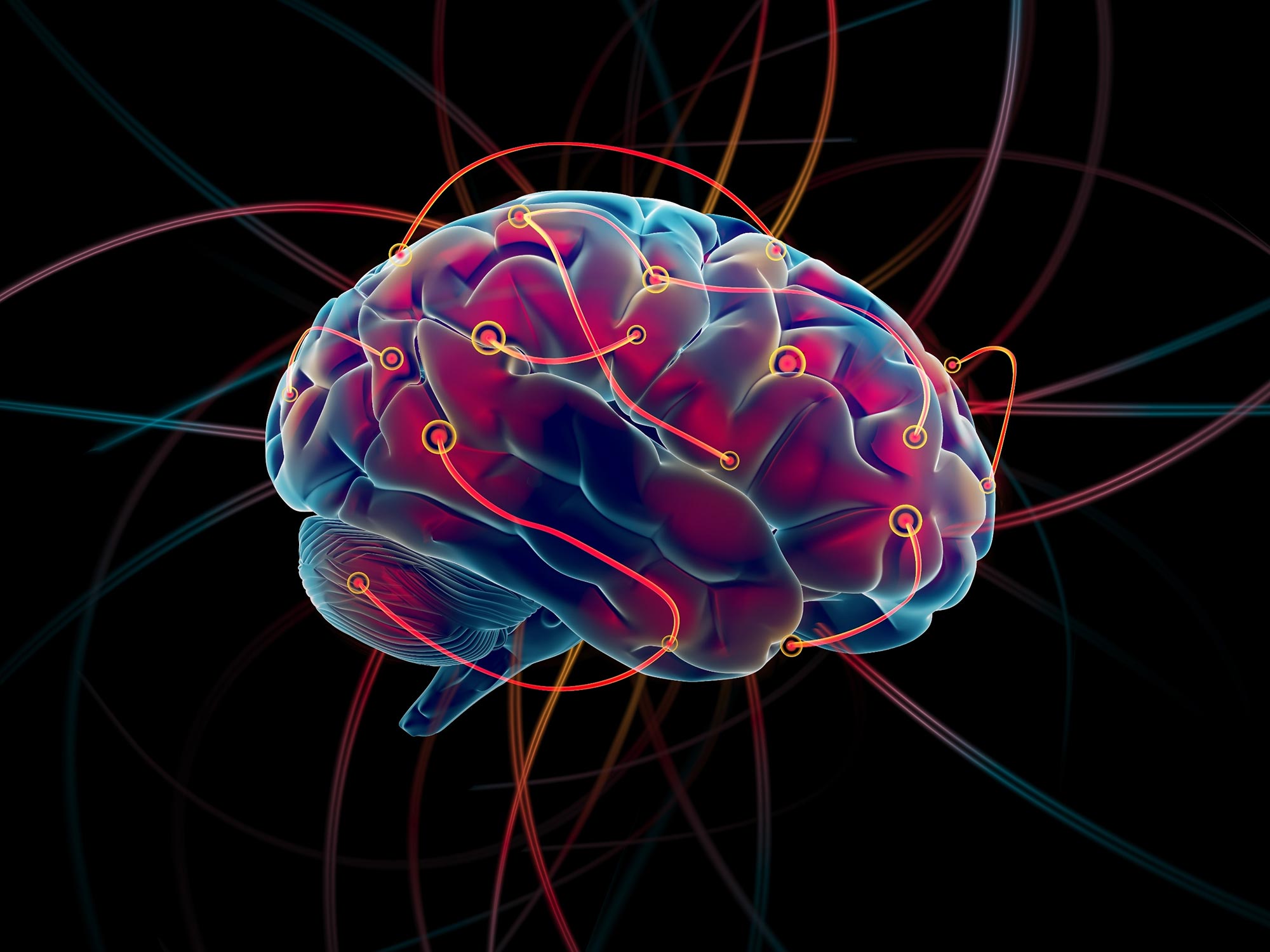
A study on Drosophila reveals that descending neurons (DNs) responsible for behaviors form complex, behavior-specific networks, challenging the notion that individual neurons drive actions independently. This discovery has implications for robotics and the study of motor disorders.
A fundamental question in neuroscience is how animals, including humans, convert brain signals into coordinated movements. Typically, the brain communicates movement commands to the body via “descending neurons” (DNs), which control both simple reflexes and complex behaviors.
But the sheer number of DNs, as well as their intricate connections, mean that studying them in larger animals can be challenging. For example, a mouse has about 70,000 DNs, while the human brain numbers over a million.
The fruit fly, Drosophila melanogaster, with its relatively simple nervous system, is a more manageable model. It has approximately 1,300 DNs, and yet can perform complex behaviors such as walking, flying, boxing, and courtship. This simplicity, combined with advanced genetic tools, makes Drosophila ideal for studying the neural basis of behavior.
Discoveries in Drosophila’s Neural Behavior
A team of scientists led by Pavan Ramdya at EPFL has now discovered how DNs in Drosophila orchestrate complex behaviors. Specifically, they focused on “command-like” DNs, the subset of descending neurons that previous studies have shown to be sufficient to drive complete behaviors – in the fruit fly, they drive forward walking, escape, egg-laying, and parts of the insect’s courtship “dance.”
A video summary of methods used for the research in fruit flies, showing neurons that transform brain signals into commands for movement. Credit: EPFL Neuroengineering Laboratory
The study shows that that command-like DNs, rather than acting alone, recruit additional networks of DNs, providing a new insight into how simple brain commands can produce coordinated actions. The research was led by Jonas Braun and Femke Hurtak in Ramdya’s group and is published in Nature.
The researchers used optogenetics, a technique that uses light to control neurons, to activate specific sets of command-like DNs in flies. They focused on three types of DNs that drive forward walking, antennal grooming, and backward walking respectively. By recording the activity of other DNs in the brain during these activations, they observed how these initial signals recruited additional neurons.
Neural Networks and Behavior Specificity
To further understand the connectivity between these neurons, the team analyzed the fruit fly’s brain connectome – a graph describing synaptic connections between neurons. Mapping out the connections, they identified how command-like DNs interact with other DNs.
This approach showed that command-like DNs don’t act in isolation, but instead form direct excitatory connections with other DNs, effectively creating networks that work together to produce complex behaviors. For example, the DN responsible for forward walking recruits a larger network of DNs than those controlling simpler behaviors like grooming. These networks are behavior-specific, with different clusters of neurons becoming activated for different actions.
The researchers also conducted experiments on headless flies to isolate the role of these networks. They found that certain behaviors, like backward walking, could still be performed even without networks in place whereas more complex behaviors, such as forward walking and grooming, required the full network of DNs in the brain.
This research builds a new framework for understanding how brain signals turn into actions: instead of single neurons acting as simple command centers, most behaviors may principally be orchestrated through the actions of larger networks. This model can help inspire the design of better robotic controllers, and even aid in our understanding of human motor disorders.
Reference: “Descending networks transform command signals into population motor control” by Jonas Braun, Femke Hurtak, Sibo Wang-Chen and Pavan Ramdya, 5 June 2024, Nature.
DOI: 10.1038/s41586-024-07523-9
The study was funded by the Boehringer Ingelheim Fonds and the Swiss National Science Foundation (SNSF).
Never miss a breakthrough: Join the SciTechDaily newsletter.
Follow us on Google and Google News.