
Close Menu
    Facebook X (Twitter) Instagram
    SciTechDaily
    • Biology
    • Chemistry
    • Earth
    • Health
    • Physics
    • Science
    • Space
    • Technology
    Facebook X (Twitter) Pinterest YouTube RSS
    SciTechDaily
    Home»Biology»Saying Goodbye to Traumatic Memories: How Astrocytes Decide What We Remember
    Biology

    Saying Goodbye to Traumatic Memories: How Astrocytes Decide What We Remember

    By Tohoku UniversityNovember 24, 20241 Comment4 Mins Read
    Facebook Twitter Pinterest Telegram LinkedIn WhatsApp Email Reddit
    Share
    Facebook Twitter LinkedIn Pinterest Telegram Email Reddit
    Brain Memory Dream Concept
    Manipulating astrocytes’ acidity in mice influences memory retention, with acidification impairing and alkalinization preserving long-term memories, offering insights into memory treatment approaches.

    Tohoku University’s study reveals that manipulating astrocytes in mice’s brains impacts memory retention. Acidifying astrocytes hinders long-term memories, whereas alkalinizing them preserves these memories, indicating a possible method for treating memory-related disorders.

    One of the brain’s most remarkable capabilities is its ability to store information as memories, enabling us to learn from past mistakes. While some memories remain clear and vivid, others fade away. Unlike computers, which save data uniformly, our brains selectively retain only those memories deemed significant.

    Researchers at Tohoku University have discovered that astrocytes, a special type of cell that surrounds neurons in the brain, play a crucial role in this memory selection process. Their experiments showed that artificially acidifying astrocytes does not affect short-term memory but does prevent the long-term retention of memories.

    The findings were detailed in the journal GLIA.
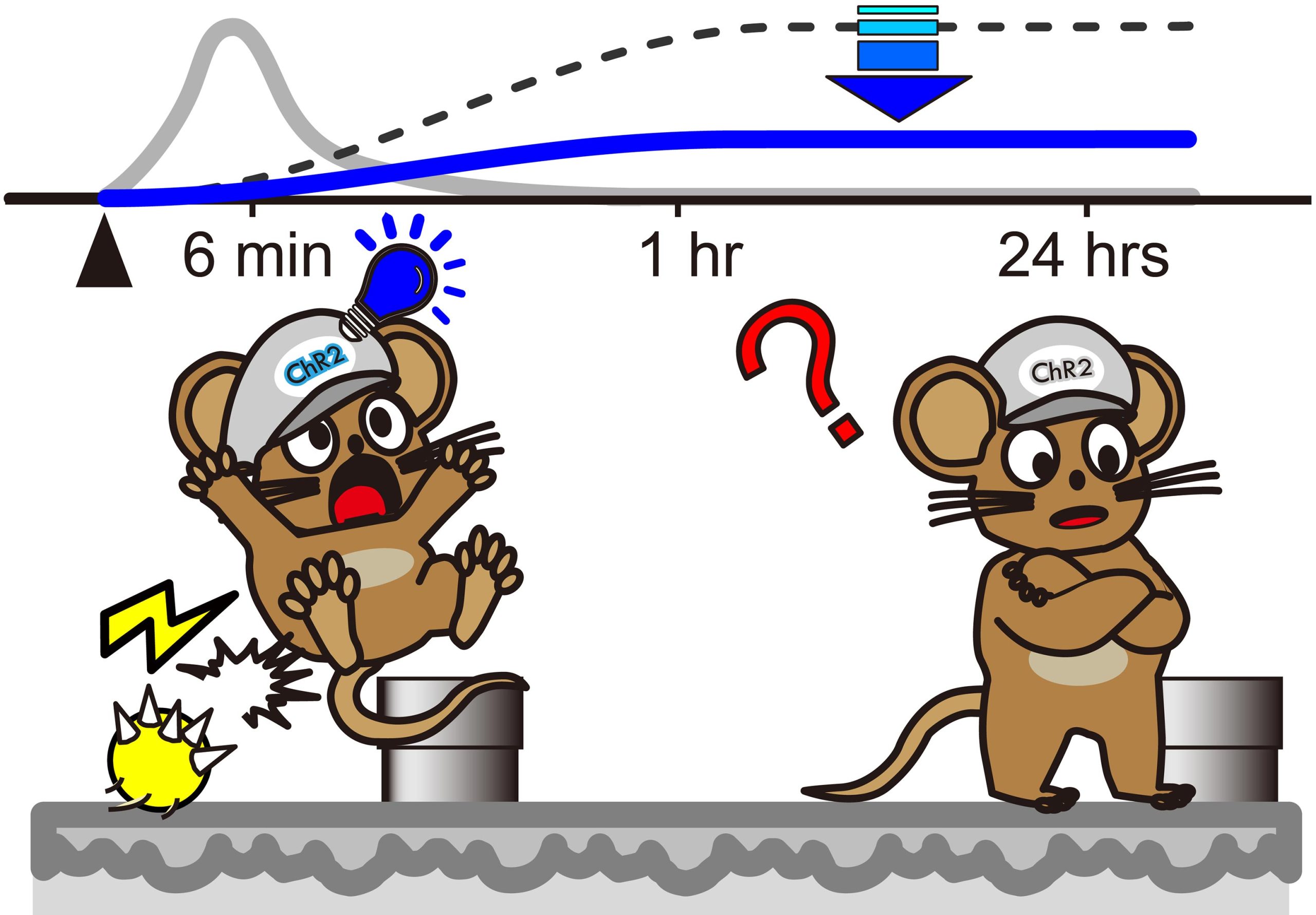
    Illustration of Astrocytic Manipulation in Mice
    Glial manipulation interferes with the long-term consolidation of fear memories. By artificially manipulating the state of astrocytes, it may become possible to prevent the long-term consolidation of unpleasant memories that could lead to trauma. Credit: ©Hiroki Yamao, Ko Matsui

    Optogenetics and Memory Experiments in Mice

    The researchers implemented a technique called “optogenetics” to manipulate the astrocytes by shining light onto them through optical fibers inserted in the mice’s brains. This enabled researchers to directly stimulate and either acidify or alkalinize the astrocytes in that area. They focused on the functions of astrocytes in the amygdala, a brain region known to be crucial for regulating emotion and fear.
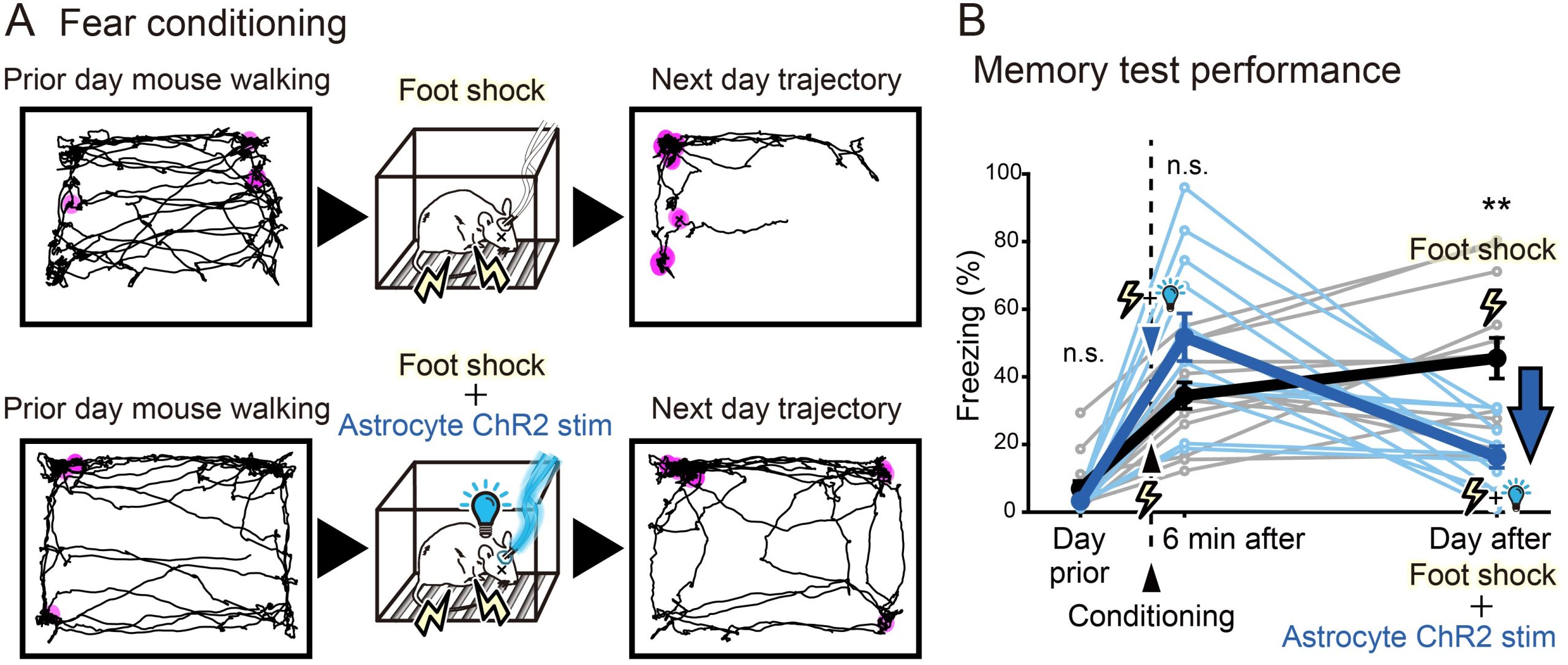
    Graphic of Long-Term Memory Suppression Through Astrocyte ChR2 Stim
    Selective suppression of long-term memory formation through ChR2 photoactivation of amygdala astrocytes. The experiments suggest the presence of parallel processes governing short-term and long-term memory formation, respectively. Credit: ©Hiroki Yamao, Ko Matsui

    A mild electrical shock was delivered to mice in an experiment chamber. When placed back in the same chamber, the mice remembered the shock and froze as a natural response. In comparison, the mice who had their astrocytes acidified immediately after the mild shock were able to hold onto the fear memory temporarily, but they forgot it by the next day. This shows that acidifying the astrocytes did not affect short-term memory but prevented the memories from being remembered long-term.
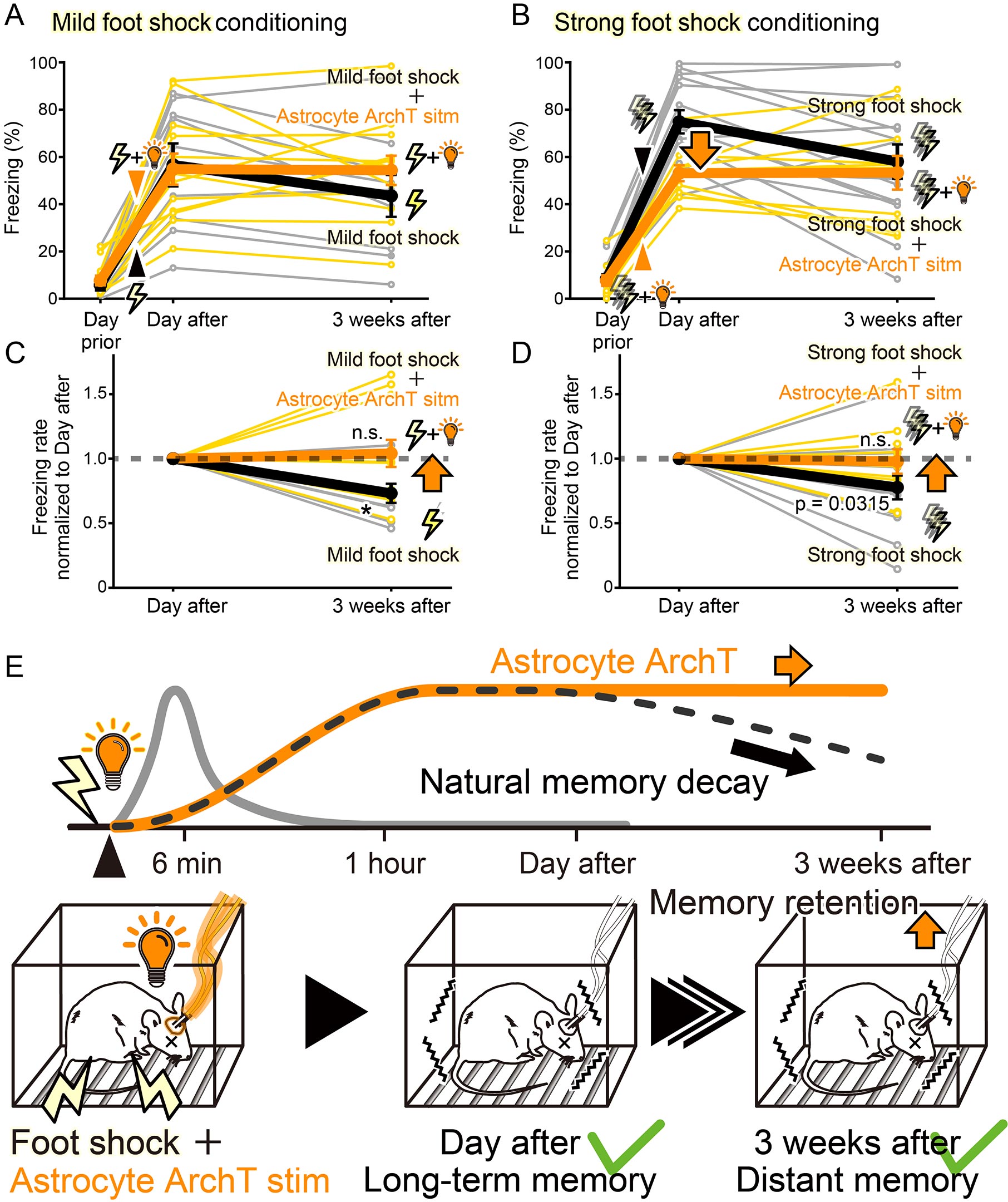
    Impact of ArchT Photoactivation on Memory Filtering and Retention in Mice
    Mice inherently possess a selective filtering mechanism that enhances the memory of intense experiences; however, this filtering function was inhibited by ArchT photoactivation of astrocytes in the amygdala. Additionally, the natural forgetting process over three weeks was suppressed by the light stimulation of ArchT-expressing astrocytes. Credit: ©Hiroki Yamao, Ko Matsui

    Implications for Memory Formation and PTSD Treatment

    A different effect was seen for mice who had their astrocytes alkalinized. When tested three weeks later, control mice typically showed signs of forgetting, demonstrated by a decrease in freezing responses. However, mice whose astrocytes were alkalinized immediately after a strong shock still displayed strong fear responses even after three weeks. This suggests that astrocytes play a key role in determining whether memories are erased or preserved for a long time, immediately after a traumatic event.

    While it is generally believed that memories are formed in a continuous process whereby short-term memories gradually solidify and become long-term memories, this research suggests they may actually develop in parallel. “We believe that this could change the way we understand memory formation,” says Professor Ko Matsui of the Super-network Brain Physiology lab at Tohoku University, who led the research. He added, “The effect of astrocytes on memory likely also depends on various contexts, including mental, social, or environmental factors.”
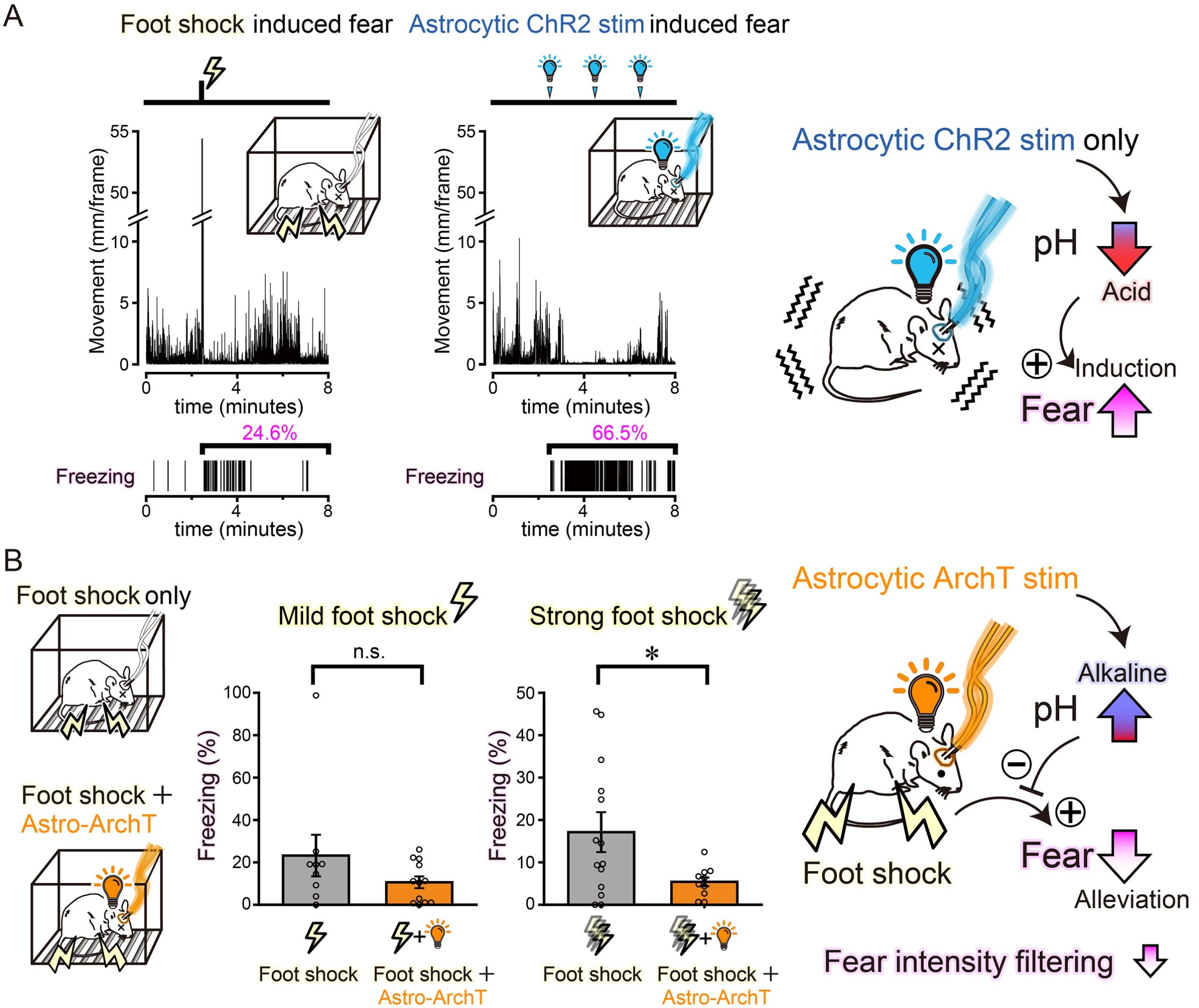
    Impact of Astrocyte ChR2 and ArchT Photoactivation on Freezing Responses
    Astrocytes are capable of triggering fear. Astrocyte ChR2 photoactivation alone induced freezing responses akin to those observed after receiving an electric foot shock. In contrast, astrocyte ArchT photoactivation suppressed the freezing responses following a footshock. Credit: ©Hiroki Yamao, Ko Matsui

    Lead investigator Hiroki Yamao believes astrocytes could hold the key to understanding emotional changes and memory formation. “This may be just a glimpse of how astrocytes affect emotional information processing,” Yamao explains. “Our next goal is to uncover the mechanisms by which astrocytes regulate emotional memory. Understanding these processes could pave the way for therapies that prevent traumatic memories from forming, offering a valuable approach to treating disorders like post-traumatic stress disorder (PTSD) by intervening in memory formation.”

    Reference: “Astrocytic determinant of the fate of long-term memory” by Hiroki Yamao and Ko Matsui, 04 November 2024, Glia.
    DOI: 10.1002/glia.24636

    Never miss a breakthrough: Join the SciTechDaily newsletter.
    Follow us on Google and Google News.

    Astrocytes Brain Fear Memory Neuroscience Optogenetics PTSD Tohoku University
    Share. Facebook Twitter Pinterest LinkedIn Email Reddit

    Related Articles

    Scientists Overturn Decades-Old Belief About the Brain’s So-Called Support Cells

    Neurobiologists Have Discovered How Stress Turns Into Fear – And a Method To Block It

    Paving the Way for New PTSD Treatments – Scientists Reveal How the Brain Stores Remote Fear Memories

    Glial Brain Cells Help Memory Along – Previously Unknown Mechanism for Spatial Learning Discovered

    Unlocking the Power of Our Emotional Memory To Cure Mental Health Disorders Like Depression and PTSD

    Scientists Find Protein That Indicates Whether Emotional Memories Can Be Changed or Forgotten

    Reactivation of the Hippocampus Causes Memory Recall

    Synchronized Brain Oscillations Crucial for Short-Term Memory

    Mother’s Nurturing Results in Larger Hippocampus in Children

    1 Comment

    1. Clyde Spencer on November 25, 2024 8:30 am

      ” Acidifying astrocytes hinders long-term memories, whereas alkalinizing them preserves these memories, indicating a possible method for treating memory-related disorders.”

      This is the binary, grammatical form of ‘acidification’ I learned and find it superior to what climatologists use where they spread a small pH change over the entire spectrum of the logarithmic change, leaving it unclear whether one is talking about a range where the H+/OH- ratio is >1, equal to 1, or <1.

      Reply
    Leave A Reply Cancel Reply

    • Facebook
    • Twitter
    • Pinterest
    • YouTube

    Don't Miss a Discovery

    Subscribe for the Latest in Science & Tech!

    Trending News

    Your Blood Pressure Reading Could Be Wrong Because of One Simple Mistake

    Astronomers Stunned by Ancient Galaxy With No Spin

    Physicists May Be on the Verge of Discovering “New Physics” at CERN

    Scientists Solve 320-Million-Year Mystery of Reptile Skin Armor

    Scientists Say This Daily Walking Habit May Be the Secret to Keeping Weight Off After Dieting

    New Therapy Rewires the Brain To Restore Joy in Depression Patients

    Giant Squid Detected off Western Australia in Stunning Deep-Sea Discovery

    Popular Sugar-Free Sweetener Linked to Liver Disease, Study Warns

    Follow SciTechDaily
    • Facebook
    • Twitter
    • YouTube
    • Pinterest
    • Newsletter
    • RSS
    SciTech News
    • Biology News
    • Chemistry News
    • Earth News
    • Health News
    • Physics News
    • Science News
    • Space News
    • Technology News
    Recent Posts
    • Scientists Stunned As Volcano Removes Methane From the Air
    • Scientists Discover Signs Africa May Be Splitting Apart Beneath Zambia
    • New Stroke Study Challenges Decades-Old Medical Beliefs
    • These Simple Plant Foods Are Linked to Lower Blood Pressure
    • Common Blood Pressure Drug Supercharges Cancer Treatment in Surprising New Study
    Copyright © 1998 - 2026 SciTechDaily. All Rights Reserved.
    • Science News
    • About
    • Contact
    • Editorial Board
    • Privacy Policy
    • Terms of Use

    Type above and press Enter to search. Press Esc to cancel.