

Climate Change Associated With Emerging Disease Spread
Humans are creating or exacerbating the environmental conditions that could lead to further pandemics, new University of Sydney research finds.
Modeling from the Sydney School of Veterinary Science suggests pressure on ecosystems, climate change, and economic development are key factors associated with the diversification of pathogens (disease-causing agents, like viruses and bacteria). This has the potential to lead to disease outbreaks.
The research, by Dr. Balbir B Singh, Professor Michael Ward, and Associate Professor Navneet Dhand, is published in the international journal, Transboundary and Emerging Diseases.
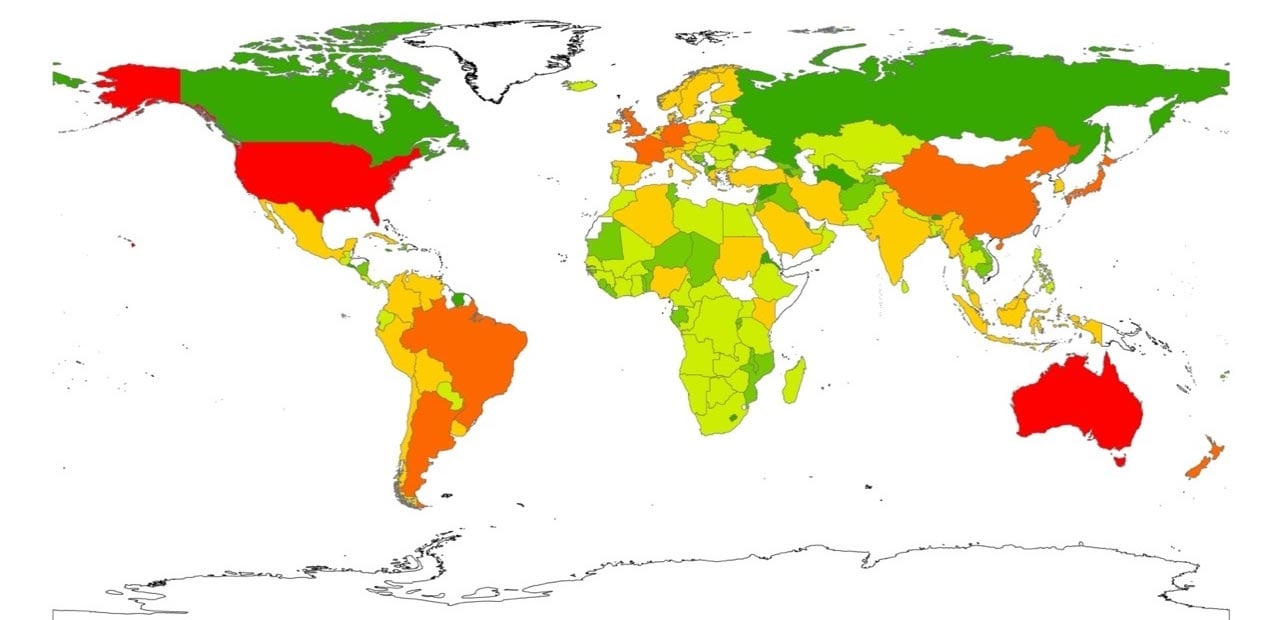
They found a greater diversity of zoonotic diseases (diseases transmitted between animals and humans) in higher-income countries with larger land areas, more dense human populations, and greater forest coverage.
“To date, such disease models have been limited, and we continue to be frustrated in understanding why diseases continue to emerge.”
Professor Michael Ward
The study also confirms increasing population growth and density are major drivers in the emergence of zoonotic diseases. The global human population has increased from about 1.6 billion in 1900 to about 7.8 billion today, putting pressure on ecosystems.
Associate Professor Dhand said: “As the human population increases, so does the demand for housing. To meet this demand, humans are encroaching on wild habitats. This increases interactions between wildlife, domestic animals, and human beings which increases the potential for bugs to jump from animals to humans.”
“To date, such disease models have been limited, and we continue to be frustrated in understanding why diseases continue to emerge,” said Professor Ward, an infectious diseases expert.
“This information can help inform disease mitigation and may prevent the next COVID-19.”
Other zoonotic diseases that have recently devastated human populations include SARS, avian (H5N1) and swine (H1N1) flu, Ebola and Nipah — a bat-borne virus.
Factors Predicting Disease
The researchers discovered country-level factors predicting three categories of disease: zoonotic, emerging (newly discovered diseases, or those diseases that have increased in occurrence or occurred in new locations), and human.
- Zoonotic diseases: land area, human population density, and area of forest. Areas with high zoonotic disease diversity include Europe, North America, Latin America, Australia, and China.
- Emerging diseases: land area, human population density, and the human development index. Areas with high emerging disease diversity include Europe, North America, Latin America, and India.
- Human diseases: high per capita health expenditure, mean annual temperature, land area, human population density, human development index, and rainfall. Areas with high human disease diversity include North America, Latin America, China, and India.
“Countries within a longitude of -50 to -100 like Brazil, developed countries like the United States and dense countries such as India were predicted to have a greater diversity of emerging diseases,” Professor Ward said.
The researchers also noted weather variables, such as temperature and rainfall, could influence the diversity of human diseases. At warmer temperatures, there tend to be more emerging pathogens.
The analyses demonstrate that weather variables (temperature and rainfall) have the potential to influence pathogen diversity These factors combined confirm human development — including human-influenced climate change — not only damages our environment but is responsible for the emergence of infectious diseases, such as COVID-19.
Using Data To Help Prevent Outbreaks
“Our analysis suggests sustainable development is not only critical to maintaining ecosystems and slowing climate change; it can inform disease control, mitigation, or prevention,” Professor Ward said.
“Due to our use of national-level data, all countries could use these models to inform their public health policies and planning for future potential pandemics.”
Reference: “Geodemography, environment and societal characteristics drive the global diversity of emerging, zoonotic and human pathogens” by Balbir B. Singh, Michael P. Ward and Navneet K. Dhand, 16 March 2021, Transboundary and Emerging Disease.
DOI: 10.1111/tbed.14072
Methodology: The authors used 13,892 unique pathogen-country combinations and 49 socioeconomic and environmental variables to develop this model. Information from 190 countries was analyzed using statistical models to identify drivers for emerging and zoonotic diseases.
Declaration: The authors would like to thank the Australian Government’s Department of Education and Training for awarding a 2018 Endeavour Research Fellowship to the primary author of this research.
The authors acknowledge the data relied for this research is incomplete. Reasons include underreporting of some previously known and undiscovered pathogens, particularly in less developed countries. For some of the predictor variables, the latest data available had missing values because recent data had not been updated.
Never miss a breakthrough: Join the SciTechDaily newsletter.
Follow us on Google and Google News.
2 Comments
One of the biggest risks for a pandemic is the ability for people to travel anywhere in the world in less time than it takes most diseases to incubate. See: https://en.wikipedia.org/wiki/12_Monkeys
Warmth is conducive to life of all types. David Attenborough claims that 50% of all species live in the 1% of the Earth’s surface that is tropical. Before Europeans discovered Eskimos, the Eskimos were relatively free of disease. Perhaps the solution to future pandemics is to pray for another glaciation, and ban airplanes.
LMAO, what a joke.
1-Sarscov-2 was engineered in a lab
2-The factors that predict disease look ok but that’s not what I see on the map. If you are excluding lab leaks then I don’t see why tropical regions in Africa with 100’s of millions of people with poor sanitary conditions are green and Oceania and US are red. You have India and northern Europe (Norway, Sweden and Finland…) on the same level of zoonotic pathogen diversity.
3-They admit the data is biased and incomplete (pathogens in underdeveloped countries are less studied while in developed ones it’s the contrary) but they still make conclusions as if it were reliable.
4-THIS ARTICLE IS LITERALLY DISINFORMATION, WHOEVER WROTE THIS AND WHOEVER REVIEWED IT NEEDS TO BE FIRED, FIRED!!.
This article says at the top “Climate change associated with emerging disease spread.”
LIARS
They only mention climate change ONCE, this is what they said.
“Overall, social and environmental factors and geography are significantly associated with global pathogen diversity. Finally, our analyses demonstrate that weather variables (temperature and rainfall) have the potential to influence pathogen diversity. Further research is required to assess the long-term impact of these variables.
Similarly, the impact of climate change on pathogen diversity is a topic that needs to be researched. We believe future models based on simultaneous testing of host, agent and environment characteristics for prediction will shed more light on disease emergence and zoonoses.”
>Similarly, the impact of climate change on pathogen diversity is a topic that needs to be researched.
>a topic that needs to be researched.
>a topic that needs to be researched.