

Forager ants do it, vampire bats do it, guppies do it, and mandrills do it. Long before humans learned about and started “social distancing due to COVID-19,” animals in nature intuitively practiced social distancing when one of their own became sick.
In a new review published in Science, Dana Hawley, a professor of biological sciences in the Virginia Tech College of Science and colleagues from the University of Texas at Austin, University of Bristol, University of Texas at San Antonio, and University of Connecticut have highlighted just a few of the many non-human species that practice social distancing, as well as lessons learned from their methods to stop the spread of bacterial, viral, and parasitic infections.
Sickness Behavior Across the Animal Kingdom
“Looking at non-human animals can tell us something about what we have to do as a society to make it such that individuals can behave in ways when they are sick that protect both themselves and society as a whole,” said Hawley, who is an affiliated faculty member of the Global Change Center and the Center for Emerging, Zoonotic, and Arthropod-Borne Pathogens, which are both housed within the Fralin Life Sciences Institute.
“Staying home and limiting interactions with others is an intuitive behavioral response when we feel sick — and one that we see across many types of animals in nature — but humans often suppress this instinct, at great potential cost to ourselves and our communities, because of pressures to continue working or attending classes even while sick,” added Hawley.
Passive Social Distancing: An Evolutionary Response
We all have had that experience of feeling sick. You may feel lethargic and just can’t seem to muster the energy to get out of bed or hang out with friends. Although you may not know it, you are practicing a form of social distancing. Since you are not actively trying to avoid people and just rolling with the punches of general malaise, Hawley and co-authors refer to this as “passive social distancing.” Of course, this has been observed in non-human species as well.
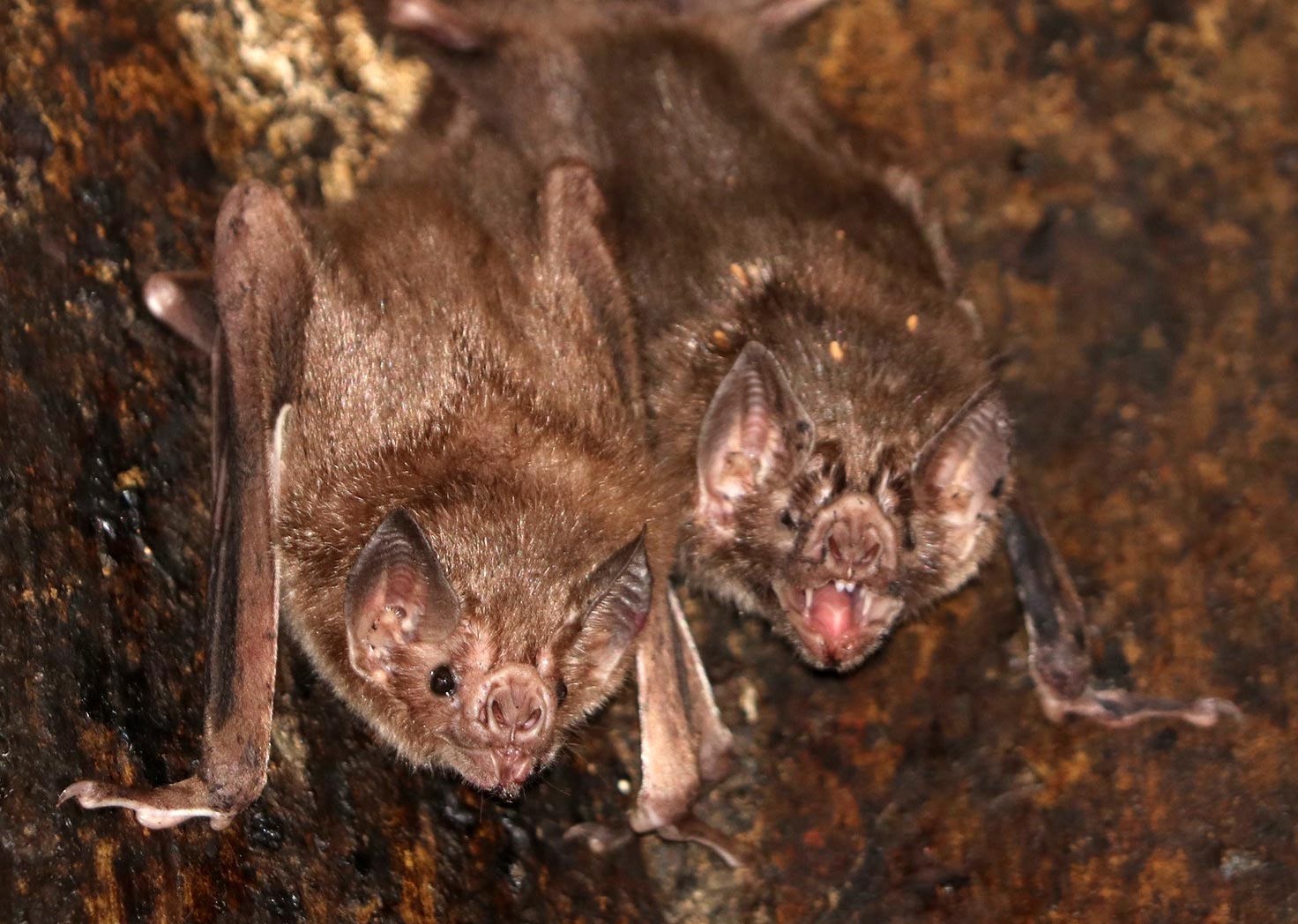
Vampire bats, who feed solely on the blood of other animals, have been well studied because they are highly social, compared to their fruit- and insect-eating bat relatives. Since blood is not nutritional and difficult to find most days, the bats form strong social bonds by sharing food and grooming — or licking and cleaning each other’s fur.
To learn more about their “sickness behavior,” or how their behavior changes in response to infection, researchers inject the bats with a small piece of cell membrane from a gram-negative bacteria known as lipopolysaccharide. The harmless substance triggers an immune response and their sickness behaviors, such as decreased activity and decreased grooming, without actually exposing them to a pathogen.
“Passive social distancing in vampire bats is a ‘byproduct’ of sickness behavior,” said Sebastian Stockmaier, who led the review while a Ph.D. student at the University of Texas at Austin, where he is still affiliated. “For instance, sick vampire bats might be more lethargic so that they can divert energy to a costly immune response. We have seen that this lethargy reduces contact with others and that sick vampire bats groom each other less.”
Mandrills also exhibit grooming behaviors in order to maintain their social bonds, as well as their hygiene. However, these highly social primates are strategic about their social distancing behaviors. Because their grooming behaviors are important to keep their standing in society, they avoid contagious group mates, while occasionally increasing their risk of infection by continuing to groom their infected close relatives.
On the other hand, many types of ants practice a form of active social distancing. Over the course of evolution, some ant species have adapted to abandon their tight-knit groups when they are feeling sick. In these cases, the infected individual’s self-sacrifice is seen as an act of public good to protect the rest of the colony and carry forth the genes that will keep the closely related colony thriving in the future.
But there are other cases where healthy animals go out of their way to exclude sick members from the group or avoid contact with them altogether.
Bees are another group of social insects whose main goal is to do everything for the greater good of the hive and their queen. So when infected bees are detected within the hive, healthy bees have no choice but to exclude the infected bees — by aggressively kicking them out of the hive.
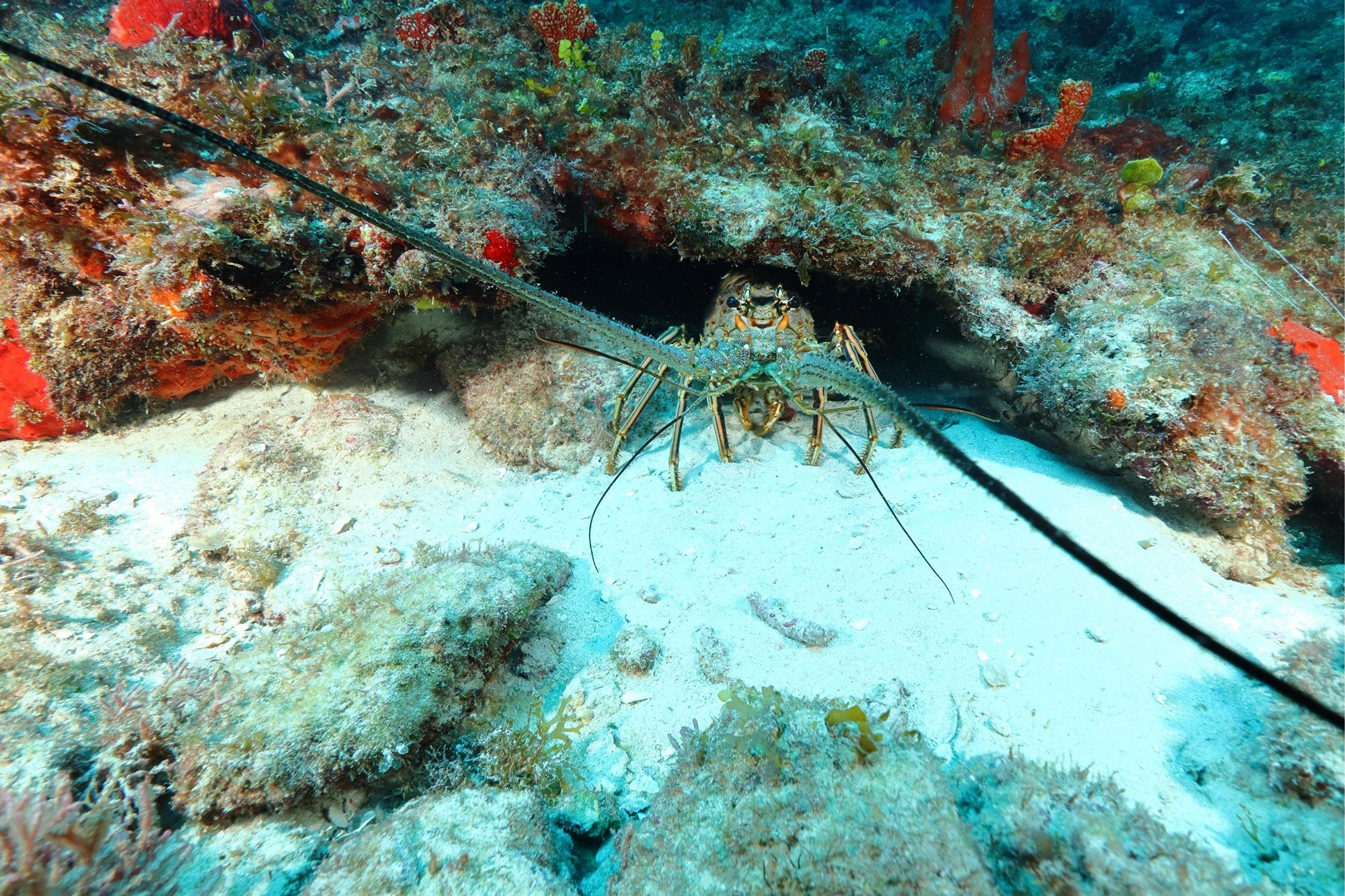
In other species, healthy individuals are the ones to leave the group to protect themselves from disease, but often at great cost. To reduce their risk of catching or transmitting a virus, healthy Caribbean spiny lobsters abandon their den when they detect an infected group member in it. Not only does this result in the loss of protection within the group and their den, but they are also exposing themselves to deadly predators in the open ocean. But for them, it is worth this risk to avoid a highly lethal virus.
The Universal Costs of Social Distancing
Although not all cases are this severe, reducing one’s own social interactions will always incur consequences of some kind, including loss of warmth or having more difficulty finding food.
Unfortunately, humans have gotten all too familiar with the costs and benefits of social distancing since the inception of the COVID-19 pandemic. But Hawley says that there are actually many ways in which we have altered our behavior in the midst of disease, without even realizing it.
Unconscious Behaviors That Minimize Disease Risk
“COVID-19 has really highlighted the many ways that we use behavior to deal with disease,” said Hawley. “I think that we have all unconsciously used these types of behaviors throughout our lives, and it is only just now coming into focus how important these behaviors are in protecting ourselves from getting sick.
“If you are sitting on an airplane and somebody next to you is coughing, you may be less likely to want to talk to them, or you may lean over to one side of your seat. There are so many ways that we are altering our behavior to minimize disease risk and we do it all the time without thinking because it is evolutionarily ingrained in us.”
As new mutants of the SARS-Cov-2 virus arise, humans will have to continue to wear masks to protect themselves and others and social distance. Unlike animals in nature, humans have developed technology like Zoom to create social connections and bridges while they are physically distancing themselves from others. Hawley also explored virtual technology as a means of compensating for the costs of social distancing in humans in a review published in The Royal Society Proceedings B.
Social Distancing: A Shared Survival Strategy
Whether you are a forager ant, a Caribbean spiny lobster, or a human, it is clear that social distancing is a behavior that both benefits us as individuals and the community that connects us with one another. Therefore, we must take care of ourselves and others by practicing a behavior that is more apparent, and more imperative, now than ever before: active social distancing.
Reference: “Infectious diseases and social distancing in nature” by Sebastian Stockmaier, Nathalie Stroeymeyt, Eric C. Shattuck, Dana M. Hawley, Lauren Ancel Meyers and Daniel I. Bolnick, 5 March 2021, Science.
DOI: 10.1126/science.abc8881
Never miss a breakthrough: Join the SciTechDaily newsletter.
Follow us on Google and Google News.