
Close Menu
    Facebook X (Twitter) Instagram
    SciTechDaily
    • Biology
    • Chemistry
    • Earth
    • Health
    • Physics
    • Science
    • Space
    • Technology
    Facebook X (Twitter) Pinterest YouTube RSS
    SciTechDaily
    Home»Technology»New Hydrogel Can Cool Down Electronic Devices and Convert Waste Heat Into Electricity
    Technology

    New Hydrogel Can Cool Down Electronic Devices and Convert Waste Heat Into Electricity

    By American Chemical SocietyApril 22, 2020No Comments2 Mins Read
    Facebook Twitter Pinterest Telegram LinkedIn WhatsApp Email Reddit
    Share
    Facebook Twitter LinkedIn Pinterest Telegram Email Reddit
    Hydrogel Cool Down Electronic Devices
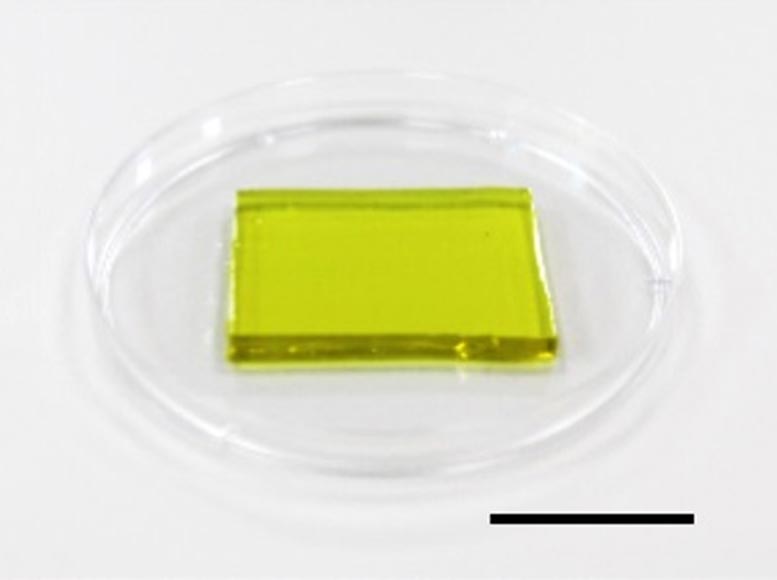
    A hydrogel can cool off electronics and generate electricity from their waste heat. Scale bar, 2 cm. Credit: Adapted from Nano Letters 2020, DOI: 10.1021/acs.nanolett.0c00800

    Using electronic devices for too long can cause them to overheat, which might slow them down, damage their components or even make them explode or catch fire. Now, researchers reporting in ACS’ Nano Letters have developed a hydrogel that can both cool down electronics, such as cell phone batteries, and convert their waste heat into electricity.

    Some components of electronic devices, including batteries, light-emitting diodes (known as LEDs), and computer microprocessors, generate heat during operation. Overheating can reduce the efficiency, reliability, and lifespan of devices, in addition to wasting energy. Xuejiao Hu, Kang Liu, Jun Chen, and colleagues wanted to design a smart thermogalvanic hydrogel that could convert waste heat into electricity, while also lowering the temperature of the device. So far, scientists have developed devices that can do one or the other, but not both simultaneously.

    The team made a hydrogel consisting of a polyacrylamide framework infused with water and specific ions. When they heated the hydrogel, two of the ions (ferricyanide and ferrocyanide) transferred electrons between electrodes, generating electricity. Meanwhile, water inside the hydrogel evaporated, cooling it. After use, the hydrogel regenerated itself by absorbing water from the surrounding air. To demonstrate the new material, the researchers attached it to a cell phone battery during fast discharging. Some of the waste heat was converted into 5 μW of electricity, and the temperature of the battery decreased by 68 F. The reduced working temperature ensures safe operation of the battery, and the electricity harvested is sufficient for monitoring the battery or controlling the cooling system.

    Reference: “Thermogalvanic Hydrogel for Synchronous Evaporative Cooling and Low-Grade Heat Energy Harvesting” by Shirui Pu, Yutian Liao, Kyle Chen, Jia Fu, Songlin Zhang, Lurong Ge, Giorgio Conta, Sofia Bouzarif, Ting Cheng, Xuejiao Hu, Kang Liu and Jun Chen, 22 April 2020, Nano Letters.
    DOI: 10.1021/acs.nanolett.0c00800

    The authors acknowledge funding from the National Natural Science Foundation of China, the Henry Samueli School of Engineering and Applied Science at the University of California, Los Angeles (UCLA) and the Department of Bioengineering at UCLA.

    Never miss a breakthrough: Join the SciTechDaily newsletter.
    Follow us on Google and Google News.

    American Chemical Society Electrical Engineering Materials Science Nanotechnology
    Share. Facebook Twitter Pinterest LinkedIn Email Reddit

    Related Articles

    Researchers Develop a Flexible Color-Changing Film Inspired by Chameleon Skin

    Plant-Based Nanowire Spray Could Be Used to Improve N95 Mask Filters, Energy Harvesters

    Photorealistic Painting With Light: Nanopillars Precisely Control the Color and Intensity of Transmitted Light

    New Electronic Skin Can React to Pain Like Human Skin – For Better Prosthetics and Smarter Robots

    Remarkable New Fabric Efficiently Transfers Heat – Could Help Keep You Cool Even Without A/C

    Scientists Strengthen Spin-Orbit Qubits in Milestone Critical for Scale-Up of Quantum Computers

    Nano-Thin Flexible Touchscreens Could Be Printed at Home – 100x Thinner Than Current Technology

    New Laser-Induced Graphene Technique Opens Door for Edible Electronics

    Scientists Develop a New Nanobiocomposite Material

    Leave A Reply Cancel Reply

    • Facebook
    • Twitter
    • Pinterest
    • YouTube

    Don't Miss a Discovery

    Subscribe for the Latest in Science & Tech!

    Trending News

    Early Warning Signals of Esophageal Cancer May Be Hiding in Plain Sight

    Common Blood Pressure Drug Shows Surprising Power Against Deadly Antibiotic-Resistant Superbug

    Scientists Uncover Dangerous Connection Between Serotonin and Heart Valve Disease

    Scientists Discover a “Protector” Protein That Could Help Reverse Hair Loss

    Bone-Strengthening Discovery Could Reverse Osteoporosis

    Scientists Uncover Hidden Trigger Behind Stem Cell Aging

    Scientists Find Way to Reverse Fatty Liver Disease Without Changing Diet

    Could Humans Regrow Limbs? New Study Reveals Promising Genetic Pathway

    Follow SciTechDaily
    • Facebook
    • Twitter
    • YouTube
    • Pinterest
    • Newsletter
    • RSS
    SciTech News
    • Biology News
    • Chemistry News
    • Earth News
    • Health News
    • Physics News
    • Science News
    • Space News
    • Technology News
    Recent Posts
    • 5 Common Myths About Learning a New Language, Debunked
    • The Neanderthal “Love Story” Isn’t What It Seems
    • Scientists Unlock Hidden Secrets of 2,300-Year-Old Mummies Using Cutting-Edge CT Scanner
    • Men vs. Women: Scientists Uncover Dramatic Differences in How the Immune System Ages
    • Eating Chili Peppers Linked to Longer Life
    Copyright © 1998 - 2026 SciTechDaily. All Rights Reserved.
    • Science News
    • About
    • Contact
    • Editorial Board
    • Privacy Policy
    • Terms of Use

    Type above and press Enter to search. Press Esc to cancel.