
Close Menu
    Facebook X (Twitter) Instagram
    SciTechDaily
    • Biology
    • Chemistry
    • Earth
    • Health
    • Physics
    • Science
    • Space
    • Technology
    Facebook X (Twitter) Pinterest YouTube RSS
    SciTechDaily
    Home»Science»Infernos of Intrigue: War’s Fiery Legacy Along the Silk Road
    Science

    Infernos of Intrigue: War’s Fiery Legacy Along the Silk Road

    By PNAS NexusDecember 27, 2023No Comments2 Mins Read
    Facebook Twitter Pinterest Telegram LinkedIn WhatsApp Email Reddit
    Share
    Facebook Twitter LinkedIn Pinterest Telegram Email Reddit
    Silk Road War Fires
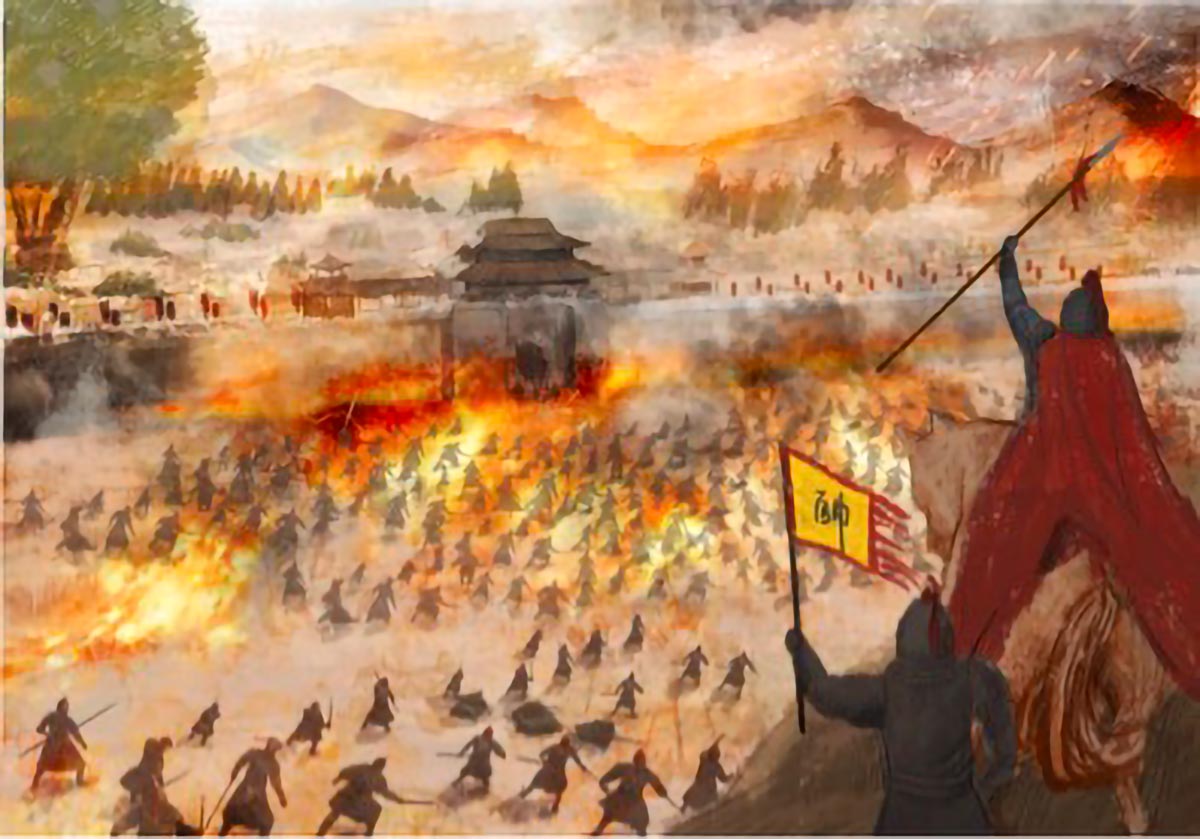
    Typical scenes of fires triggered by warfare activity in ancient China. (Provided by authors.) Credit: Zhang et al.

    A study of Tianchi Lake sediments shows that warfare, rather than natural factors, became the primary driver of increased fire occurrences along the Silk Road over the past 2,000 years.

    Impact of War on Fire Frequency Along the Silk Road

    Human activities such as intentional burning, agriculture, pastoralism, and metallurgy can affect the frequency of fire in an ecosystem. Guanghui Dong, Aifeng Zhou, and colleagues investigated whether another typical human activity has influenced fire history in the areas along the Silk Road: war.

    Ancient Warfare and Fire Use

    Fire was a notable weapon in ancient Chinese warfare. Sun Tzu, the famed 5th-century BCE military strategist and author of “The Art of War,” recommended using fire against enemies. This historical context provides a backdrop for the study’s findings.
    Silk Road War Activities
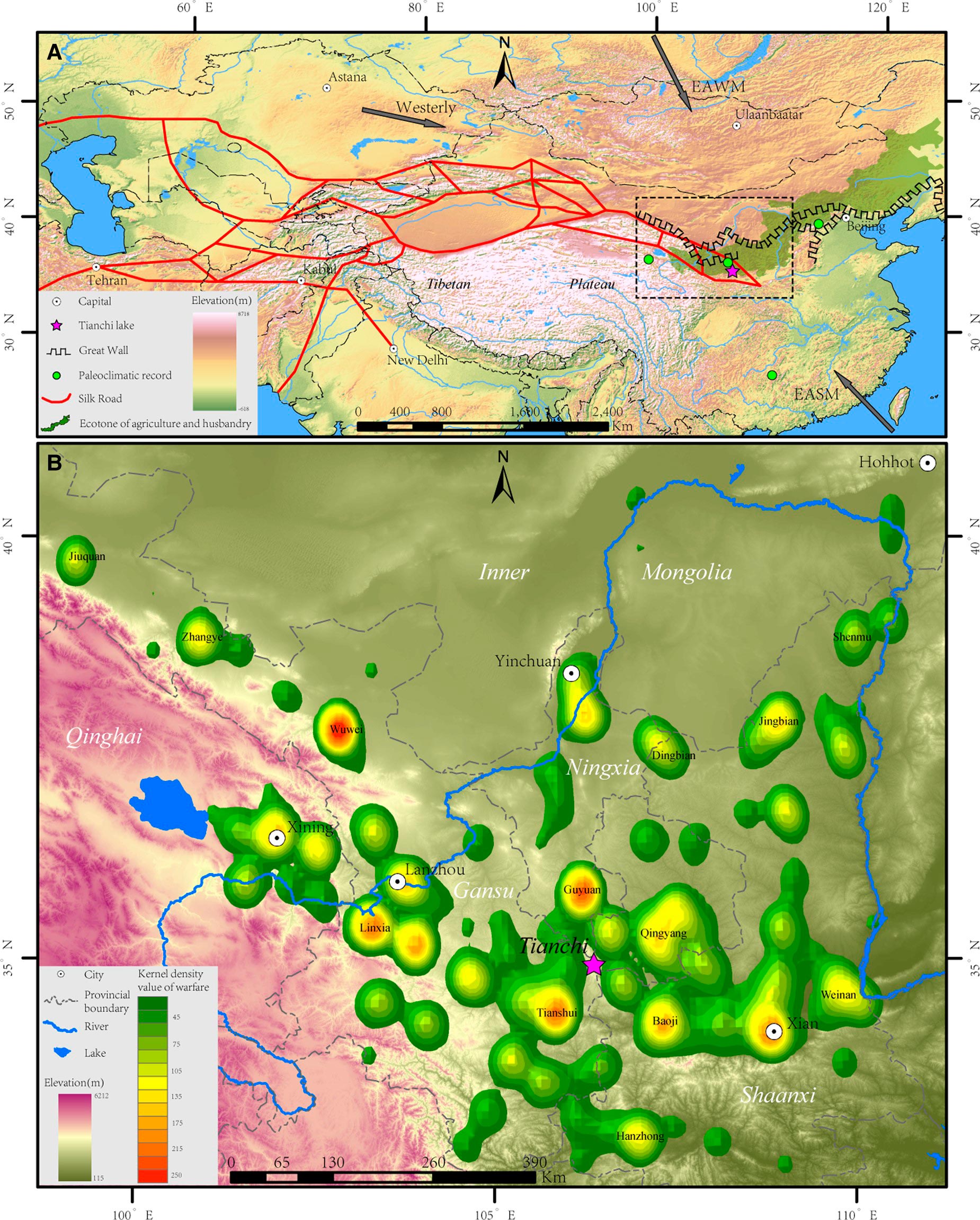
    (A) Overview of the Silk Road area. (B) spatial distribution of war activities over the past 2000 years. Credit: Zhang et al.

    Scientific Investigation of Fire History

    The research team measured black carbon, soot, and char in sediments from a core of Tianchi Lake, which represent 6,000 years of sediment deposition. The authors calculated the spatial range of land that would have contributed fire-related particulate to the sediment using the potential source contribution function analysis, a method typically used to determine the source areas for contemporary pollution.

    Findings on Fire Frequency and Cause

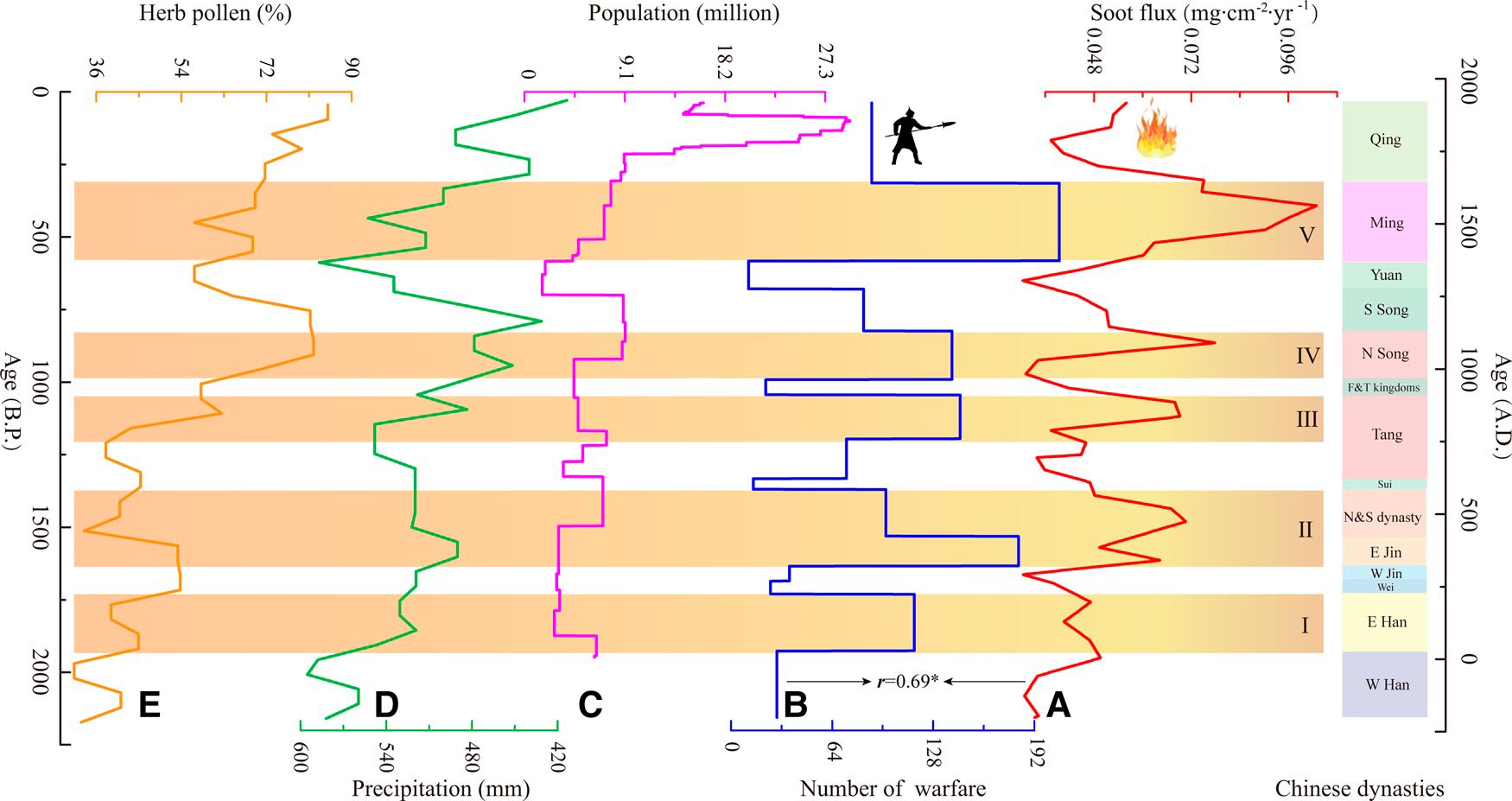
    Fire was infrequent in the middle Holocene, but became more frequent in the late Holocene, as the climate became drier and flammable herbaceous vegetation spread. Then, 2,000 years ago, the fire frequency became decoupled from climate or vegetation.
    Human Activities Versus Climate Vegetation Changes
    Human activities versus changes in climate and vegetation. Credit: Zhang et al.

    On centennial timescales, fires during this period are synchronous with warfare, as recorded in the List of Wars in Historical China. From 2,000–400 years ago, warfare between different political powers may have been the dominant contributor to high-intensity fires in the area, according to the authors.

    Reference: “Warfare impact overtakes climate-controlled fires in the eastern Silk Roads since 2000 B.P.” by Shanjia Zhang, Hao Liu, Gang Li, Zhiping Zhang, Xintong Chen, Zhilin Shi, Aifeng Zhou and Guanghui Dong, 19 December 2023, PNAS Nexus.
    DOI: 10.1093/pnasnexus/pgad408

    Never miss a breakthrough: Join the SciTechDaily newsletter.
    Follow us on Google and Google News.

    History
    Share. Facebook Twitter Pinterest LinkedIn Email Reddit

    Related Articles

    How Ancient Poop Debunked Myth of Native American Lost Civilization

    Mystifying Puzzle of Early Neolithic House Orientations Finally Solved

    Previously Dismissed As Myths, New Study Boosts Credibility of Columbus’ Cannibal Claims

    Famous Battle of Britain ‘What If’ Scenarios Put to the Test by Mathematicians

    What Really Caused Neanderthals to Go Extinct? New Study Has Shocking Answer

    Ancient Assyrian Astronomers Documented Solar Storms on Clay Tablets 2,700 Years Ago – Now Matched With Radioisotope Data

    New Interactive Map Shows Devastating Impact of WWII Luftwaffe Air Strikes on Britain

    Cave Site Reveals 78,000-Year-Old Record of Stone Age Innovation

    Skull From China May Be The Oldest Evidence Of Human Violence

    Leave A Reply Cancel Reply

    • Facebook
    • Twitter
    • Pinterest
    • YouTube

    Don't Miss a Discovery

    Subscribe for the Latest in Science & Tech!

    Trending News

    Scientists Discover How Coffee Impacts Memory, Mood, and Gut Health

    Why Did the Neanderthals Disappear? Scientists Reveal Humans Had a Hidden Advantage

    Physicists Propose Strange Experiment Where Time Goes Quantum

    Magnesium Magic: New Drug Melts Fat Even on a High-Fat, High-Sugar Diet

    Weight-Loss Drugs Like Ozempic May Come With an Unexpected Cost

    Mezcal “Worm” in a Bottle Mystery: DNA Testing Reveals a Surprise

    New Research Reveals That Your Morning Coffee Activates an Ancient Longevity Switch

    This Is What Makes You Irresistible to Mosquitoes

    Follow SciTechDaily
    • Facebook
    • Twitter
    • YouTube
    • Pinterest
    • Newsletter
    • RSS
    SciTech News
    • Biology News
    • Chemistry News
    • Earth News
    • Health News
    • Physics News
    • Science News
    • Space News
    • Technology News
    Recent Posts
    • This Popular Supplement May Boost Your Brain, Not Just Your Muscles
    • What Happened in Childhood Could Be Causing Your Gut Issues Today
    • Scientists Say This Simple Supplement May Actually Reverse Heart Disease
    • Scientists Just Captured Killer T Cells in Action Inside Tumors
    • Alaska’s Sky Explodes With Swirling Clouds and a Hidden Polar Storm
    Copyright © 1998 - 2026 SciTechDaily. All Rights Reserved.
    • Science News
    • About
    • Contact
    • Editorial Board
    • Privacy Policy
    • Terms of Use

    Type above and press Enter to search. Press Esc to cancel.