
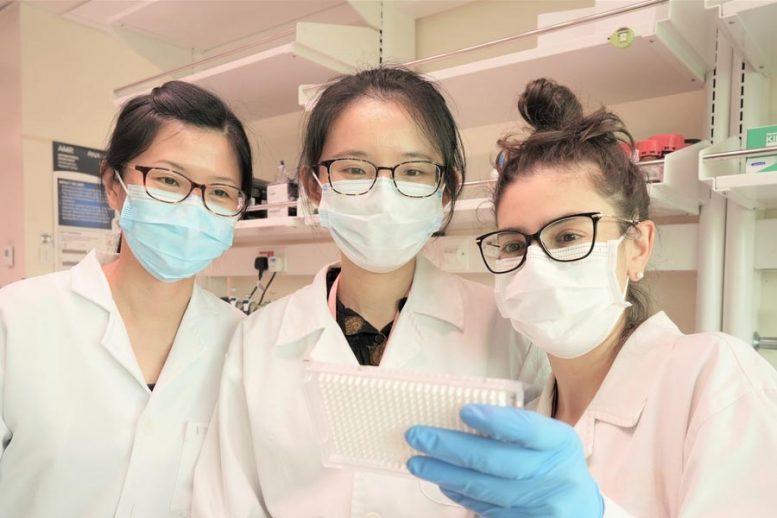
SMART researchers have developed an innovative method to detect and quantify the B.1.1.7 (Alpha) variant of concern via wastewater epidemiology.
Researchers from the Antimicrobial Resistance (AMR) interdisciplinary research group at the Singapore-MIT Alliance for Research and Technology (SMART), MIT’s research enterprise in Singapore, alongside collaborators from Biobot Analytics, Nanyang Technological University (NTU), and MIT, have successfully developed an innovative, open-source molecular detection method that is able to detect and quantify the B.1.1.7 (Alpha) variant of SARS-CoV-2. The breakthrough paves the way for rapid, inexpensive surveillance of other SARS-CoV-2 variants in wastewater.
Wastewater Surveillance: An Essential Tool for Variant Tracking
As the world continues to battle and contain COVID-19, the recent identification of SARS-CoV-2 variants with higher transmissibility and increased severity has made developing convenient variant tracking methods essential. Currently, identified variants include the B.1.17 (Alpha) variant first identified in the United Kingdom and the B.1.617.2 (Delta) variant first detected in India.
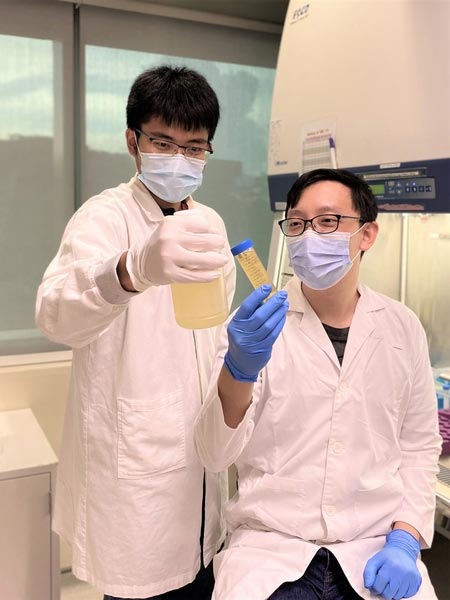
Wastewater surveillance has emerged as a critical public health tool to safely and efficiently track the SARS-CoV-2 pandemic in a non-intrusive manner, providing complementary information that enables health authorities to acquire actionable community-level information. Most recently, viral fragments of SARS-CoV-2 were detected in housing estates in Singapore through a proactive wastewater surveillance program. This information, alongside surveillance testing, allowed Singapore’s Ministry of Health to swiftly respond, isolate, and conduct swab tests as part of precautionary measures.
However, detecting variants through wastewater surveillance is less commonplace due to challenges in existing technology. Next-generation sequencing for wastewater surveillance is time-consuming and expensive. Tests also lack the sensitivity required to detect low variant abundances in dilute and mixed wastewater samples due to inconsistent and/or low sequencing coverage.
The method developed by the researchers is uniquely tailored to address these challenges and expands the utility of wastewater surveillance beyond testing for SARS-CoV-2, toward tracking the spread of SARS-CoV-2 variants of concern.
A Sensitive and Reliable Solution for Variant Surveillance
Wei Lin Lee, research scientist at SMART AMR and first author on the paper adds, “This is especially important in countries battling SARS-CoV-2 variants. Wastewater surveillance will help find out the true proportion and spread of the variants in the local communities. Our method is sensitive enough to detect variants in highly diluted SARS-CoV-2 concentrations typically seen in wastewater samples, and produces reliable results even for samples which contain multiple SARS-CoV-2 lineages.”
Led by Janelle Thompson, NTU associate professor, and Eric Alm, MIT professor and SMART AMR principal investigator, the team’s study, “Quantitative SARS-CoV-2 Alpha variant B.1.1.7 Tracking in Wastewater by Allele-Specific RT-qPCR” has been published in Environmental Science & Technology Letters. The research explains the innovative, open-source molecular detection method based on allele-specific RT-qPCR that detects and quantifies the B.1.1.7 (Alpha) variant. The developed assay, tested and validated in wastewater samples across 19 communities in the United States, is able to reliably detect and quantify low levels of the B.1.1.7 (Alpha) variant with low cross-reactivity, and at variant proportions down to 1 percent in a background of mixed SARS-CoV-2 viruses.
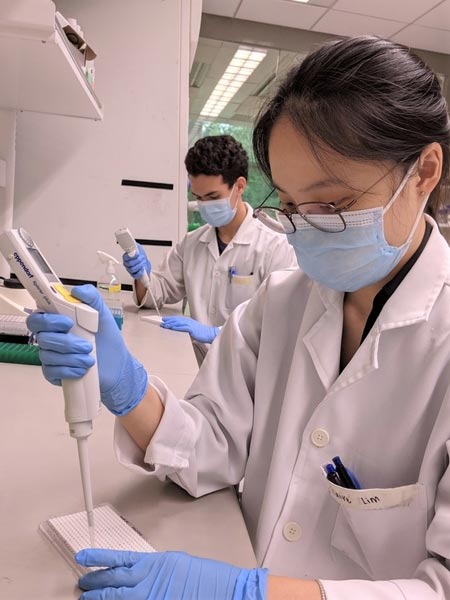
Targeting spike protein mutations that are highly predictive of the B.1.1.7 (Alpha) variant, the method can be implemented using commercially available RT-qPCR protocols. Unlike commercially available products that use proprietary primers and probes for wastewater surveillance, the paper details the open-source method and its development that can be freely used by other organizations and research institutes for their work on wastewater surveillance of SARS-CoV-2 and its variants.
Real-World Impact and Future Applications
The breakthrough by the research team in Singapore is currently used by Biobot Analytics, an MIT startup and global leader in wastewater epidemiology headquartered in Cambridge, Massachusetts, serving states and localities throughout the United States. Using the method, Biobot Analytics is able to accept and analyze wastewater samples for the B.1.1.7 (Alpha) variant and plans to add additional variants to its analysis as methods are developed. For example, the SMART AMR team is currently developing specific assays that will be able to detect and quantify the B.1.617.2 (Delta) variant, which has recently been identified as a variant of concern by the World Health Organization.
“Using the team’s innovative method, we have been able to monitor the B.1.1.7 (Alpha) variant in local populations in the U.S. — empowering leaders with information about COVID-19 trends in their communities and allowing them to make considered recommendations and changes to control measures,” says Mariana Matus PhD ’18, Biobot Analytics CEO and co-founder.
“This method can be rapidly adapted to detect new variants of concern beyond B.1.1.7,” adds MIT’s Alm. “Our partnership with Biobot Analytics has translated our research into real-world impact beyond the shores of Singapore and aid in the detection of COVID-19 and its variants, serving as an early warning system and guidance for policymakers as they trace infection clusters and consider suitable public health measures.”
Reference: “Quantitative SARS-CoV-2 Alpha Variant B.1.1.7 Tracking in Wastewater by Allele-Specific RT-qPCR” by Wei Lin Lee, Maxim Imakaev, Federica Armas, Kyle A. McElroy, Xiaoqiong Gu, Claire Duvallet, Franciscus Chandra, Hongjie Chen, Mats Leifels, Samuel Mendola, Róisín Floyd-O’Sullivan, Morgan M. Powell, Shane T. Wilson, Karl L. J. Berge, Claire Y. J. Lim, Fuqing Wu, Amy Xiao, Katya Moniz, Newsha Ghaeli, Mariana Matus, Janelle Thompson and Eric J. Alm, 18 July 2021, Environmental Science & Technology Letters.
DOI: 10.1021/acs.estlett.1c00375
The research is carried out by SMART and supported by the National Research Foundation (NRF) Singapore under its Campus for Research Excellence And Technological Enterprise (CREATE) program.
SMART was established by MIT in partnership with the National Research Foundation of Singapore (NRF) in 2007. SMART is the first entity in CREATE developed by NRF. SMART serves as an intellectual and innovation hub for research interactions between MIT and Singapore, undertaking cutting-edge research projects in areas of interest to both Singapore and MIT. SMART currently comprises an Innovation Center and five IRGs: AMR, Critical Analytics for Manufacturing Personalized-Medicine, Disruptive and Sustainable Technologies for Agricultural Precision, Future Urban Mobility, and Low Energy Electronic Systems.
The AMR interdisciplinary research group is a translational research and entrepreneurship program that tackles the growing threat of antimicrobial resistance. By leveraging talent and convergent technologies across Singapore and MIT, AMR aims to develop multiple innovative and disruptive approaches to identify, respond to, and treat drug-resistant microbial infections. Through strong scientific and clinical collaborations, its goal is to provide transformative, holistic solutions for Singapore and the world.
Never miss a breakthrough: Join the SciTechDaily newsletter.
Follow us on Google and Google News.