
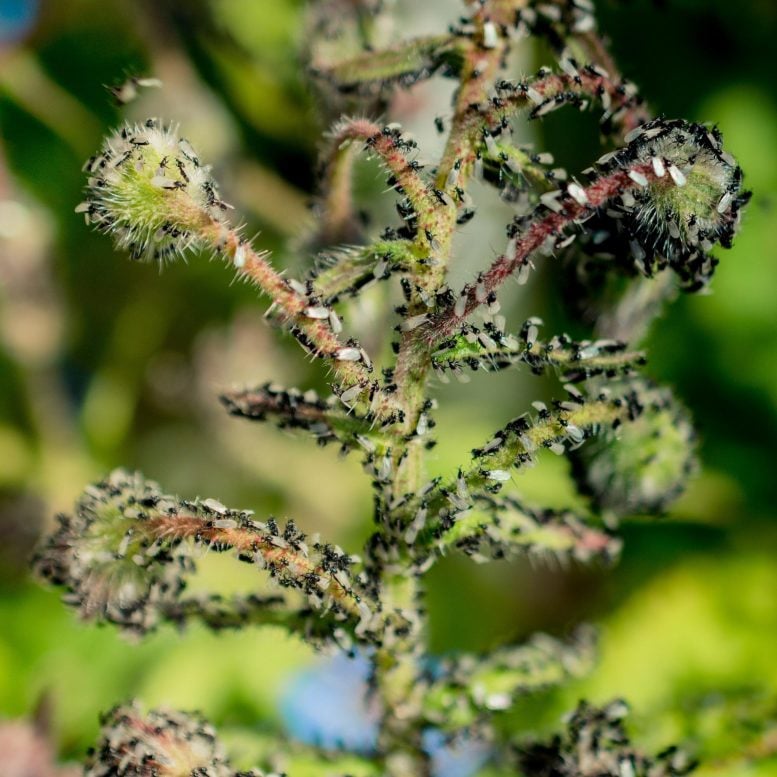
Studying invasive species alongside pandemics could unlock better global defenses against both.
Invasions by alien insect and animal species have much in common with outbreaks of infectious diseases and could tell us a great deal about how pandemics spread, according to a research paper published today.
Biological invasions, where animals, insects, plants, and microorganisms are transported around the globe by humans, are becoming more common and have a global annual cost of at least £ 118 billion.
Cross-Sector Collaboration is Key
An investigation by an international team of scientists, including the University of Leeds’ School of Biology, says the emergence of human diseases shares many of the same challenges as species invasions and that studying them together could provide solutions.
Co-author of the report, Dr. Alison M. Dunn, a Professor of Ecology in the School of Biology, said: “Integrated approaches that take into account the health of humans and that of animals, plants, and the environment are urgently needed to prevent future pandemics and the spread of invasive species across the globe.
“Cross-fertilization between the two disciplines could improve prediction, prevention, treatment, and mitigation of invasive species and infectious disease outbreaks, including pandemics, such as COVID-19.”
The paper, which is published today in the journal, BioScience, says the prevention of species invasion requires analysis of how it will arrive into a new region (primary spread) and how it spreads to the surrounding region (secondary spread).
But this dual pathway classification has seldom been used to look at emerging infectious organisms in humans — even though it is well known that factors such as behavior, income, tourism, and trade can influence transmission.
Invasive insects are the most frequent transmitters of organisms causing human diseases. The tiger mosquito has spread to all inhabited continents through trade and has been responsible for the spread of dengue fever, yellow fever, West Nile virus, and chikungunya.
Common Spread Mechanisms
Pathogens that cause these diseases go through the same stages as invasive species but can spread much more quickly, leading to pandemics, say the researchers.
Even the patterns of spread of re-emerging “native” diseases, such as Ebola in West Africa, share similarities to those of invasive species.
The paper concludes that biosecurity is key to preventing the spread of invasive species and of infectious diseases in humans and calls for medical scientists and ecologists to work together to learn more about both.
Professor Montserrat Vilà, researcher at the Estación Biológica de Doñana and lead author of the study, said: “Pandemics such as COVID-19 and biological invasions have much in common. They are often linked by the same global change drivers, and they are showing similar features. This paper gives a detailed review of the parallels between scientific approaches to invasions and human epidemics.
“Given increasing rates of emerging infectious pathogens and biological invasions worldwide and the ongoing global health crisis caused by coronavirus, the need for integrative and interdisciplinary approaches to biosecurity has never been greater.”
Reference: “Viewing Emerging Human Infectious Epidemics through the Lens of Invasion Biology” by Montserrat VilÀ, Alison M Dunn, Franz Essl, Elena GÓmez-DÍaz, Philip E Hulme, Jonathan M Jeschke, MartÍn A NÚÑez, Richard S Ostfeld, AnÍbal Pauchard, Anthony Ricciardi and Belinda Gallardo, 19 May 2021, BioScience.
DOI: 10.1093/biosci/biab047
Never miss a breakthrough: Join the SciTechDaily newsletter.
Follow us on Google and Google News.