
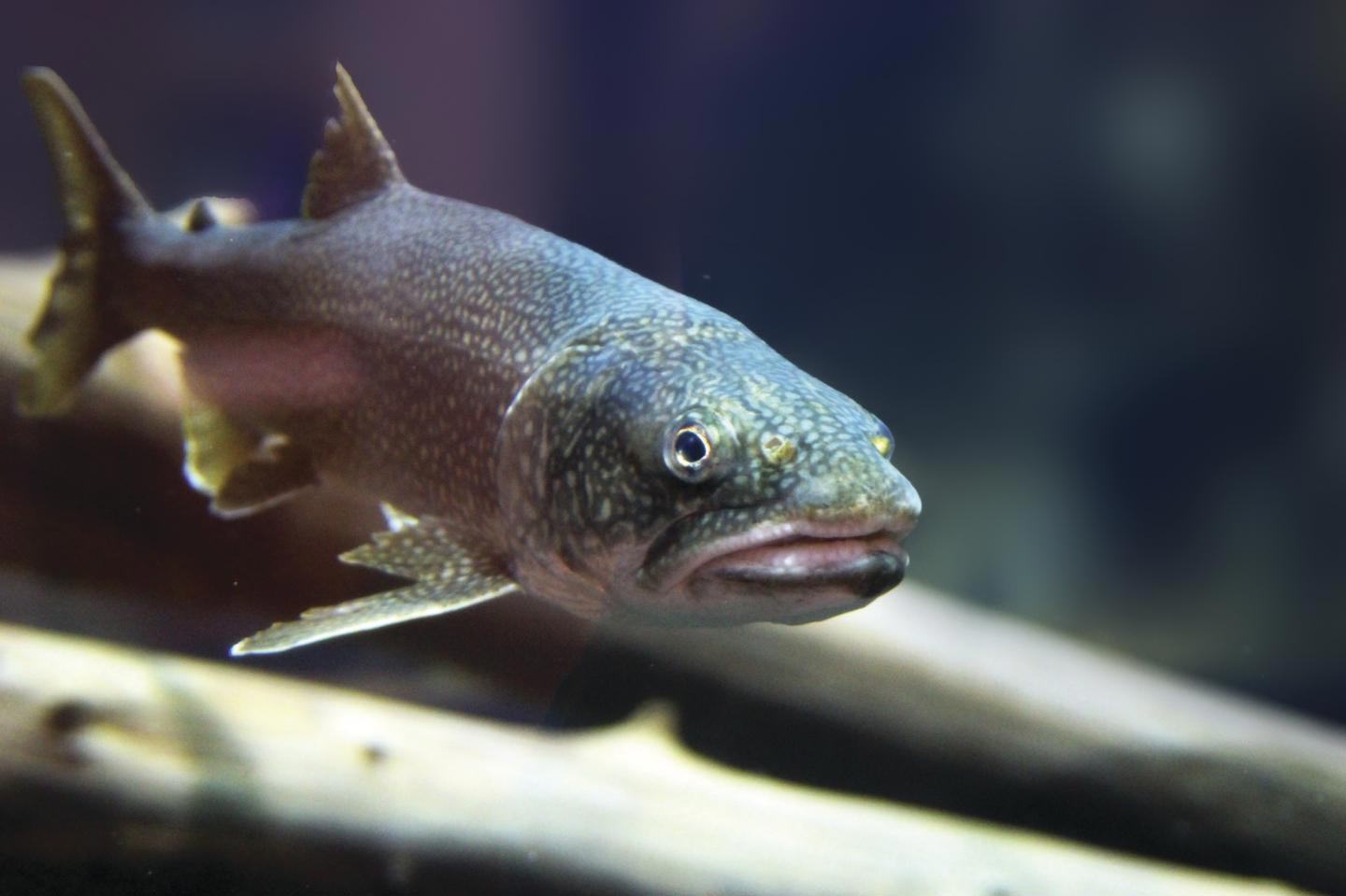
According to a new study published yesterday (November 4, 2019) in the Proceedings of the National Academy of Sciences, 40 years of reduced mercury use, emissions, and loading in the Great Lakes region have largely not produced equivalent declines in the amount of mercury accumulating in large game fish.
Researchers, including those from the University of Wisconsin–Madison, say it’s largely due to aquatic invasive species in Lake Michigan — primarily quagga and zebra mussels — that have upended the food web and forced fish to seek atypical food sources enriched in mercury.
Mercury, or methylmercury as it exists in fish, is a neurotoxin that can cause damage to the nervous system if consumed by people or animals. The study has consequences for health officials and natural resource managers who need the best science possible to inform their decisions, says lead author Ryan Lepak, a postdoctoral researcher at the UW–Madison Aquatic Sciences Center (ASC).
“Our work highlights that mercury concentrations in fish cannot be predicted by emission inventories alone, and other factors such as food web alterations are needed to get the full picture,” says Lepak, who is stationed at the U.S. Environmental Protection Agency Great Lakes Toxicology and Ecology Division in Duluth, Minnesota. “All five of the Great Lakes have fish consumption advisories in effect because mercury poses a disproportionate risk to the health of children and pregnant women.”
Lepak and coauthor James Hurley, ASC director, were interested in what has driven elevated rates of mercury concentrations in bigger fish, such as lake trout, despite policies that have largely reduced mercury emissions into Great Lakes waterways.
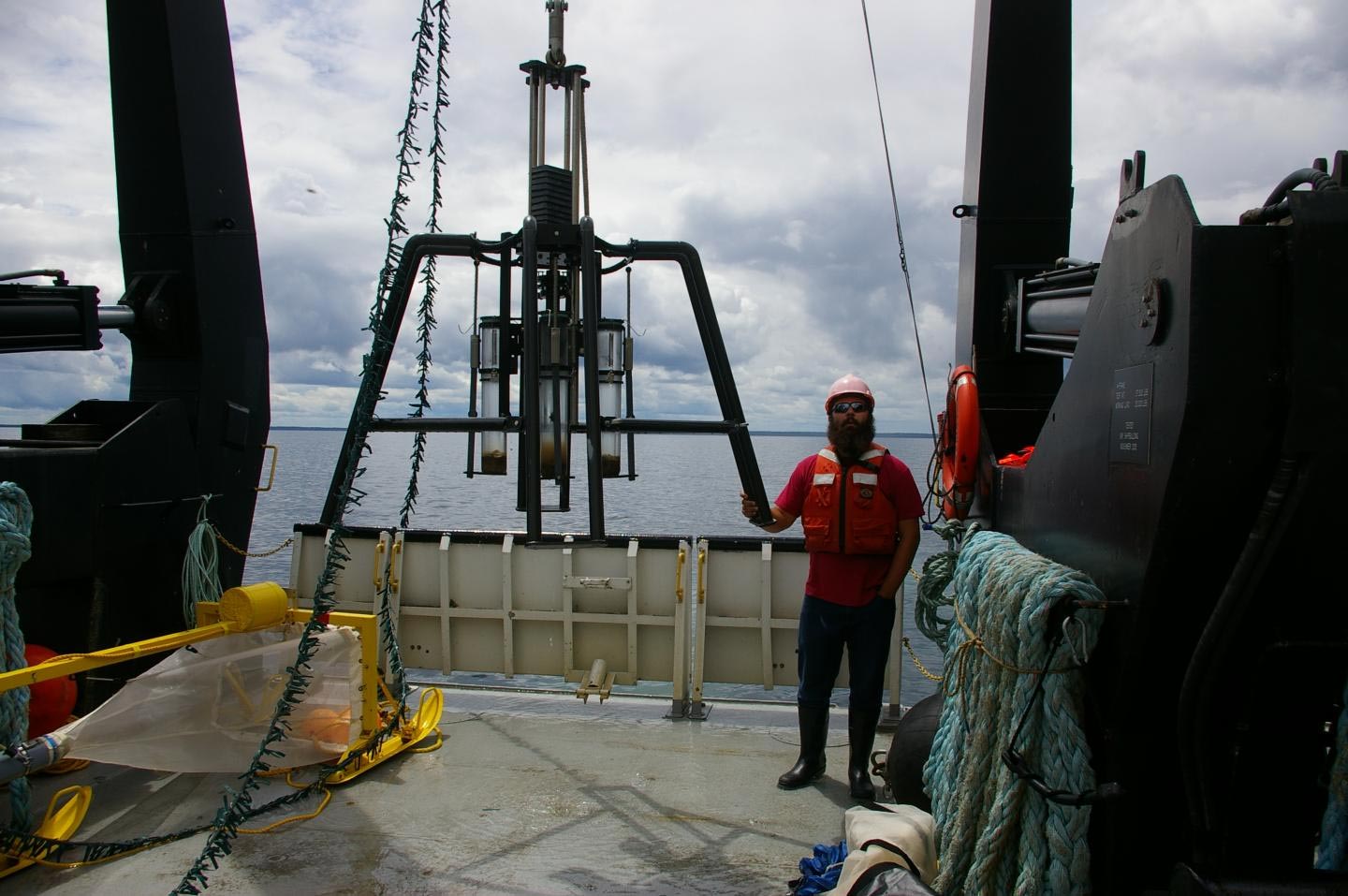
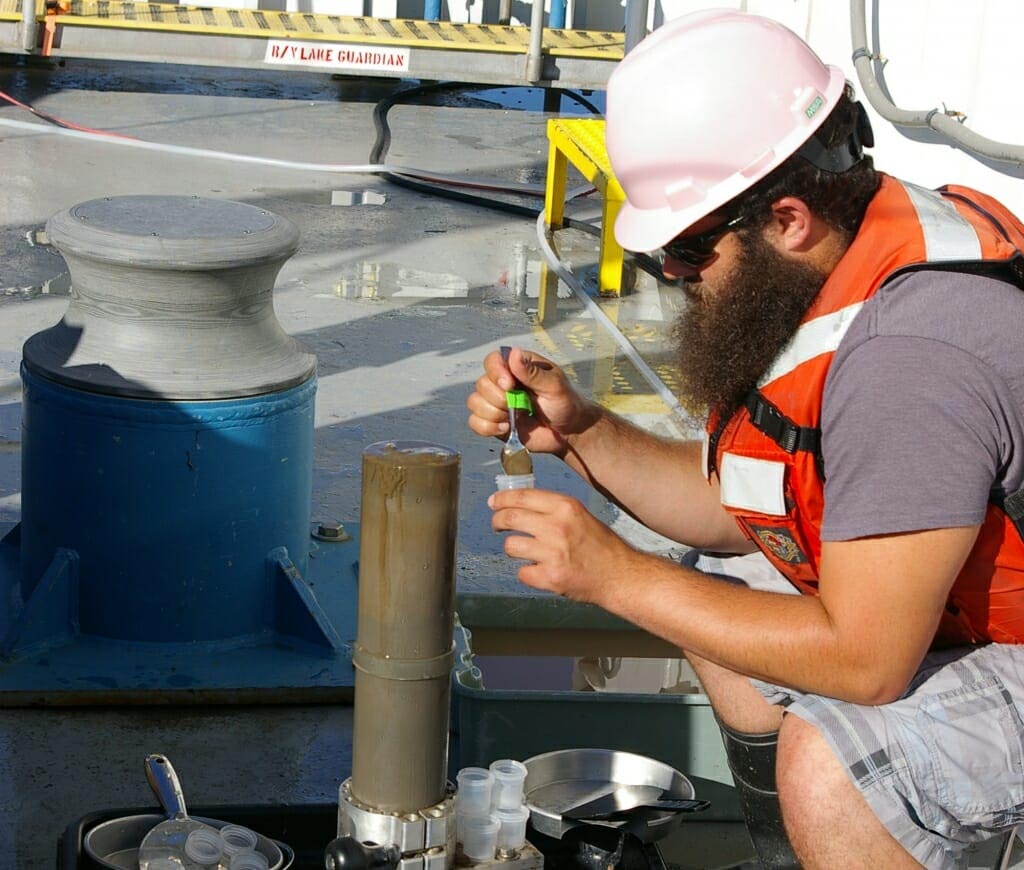
To understand the history of mercury in Great Lakes fish and determine sources of the contaminant, the research team performed a combination of mercury, nitrogen, and carbon isotope analysis — which Lepak terms “fingerprinting” — on samples of lake trout archived from 1978 to 2012.
From the same period, Lepak also examined archived samples of sediment taken from the lakebed to compare trends of mercury sources to sediments and fish.
The study years encompassed the period after which hospitals and municipalities stopped burning waste, which spared the Great Lakes from additional mercury contamination. Researchers expected the decline to reduce methylmercury accumulation in fish.
However, Hurley says that though the unique fingerprinting technique showed measurable changes to mercury concentrations in the archival fish and from lake sediment samples beginning in the 1980s, “there wasn’t an obvious decrease in concentrations of mercury in these fish thereafter, even though the sediment record revealed reduced mercury loading.”
Hurley notes that this is despite the fact that, after about 1990, mercury emissions and uses were substantially reduced and resulted in reduced mercury loading in the Great Lakes.
The culprits behind this, the analysis shows, are invasive dreissenid mussels, zebra and quagga, which exploded in number in Lake Michigan in the 1990s. Estimates indicate there are now trillions of mussels, which have led to significant shifts in lake trout feeding habits.
As dreissenids have filtered and consumed free-floating phytoplankton and cleared Lake Michigan waters, fish have been forced to search for food in deeper waters in the lake’s offshore zone and at the bottom of the lake in nearshore waters. The food the fish find here provides them less energy but is enriched in mercury.
“People enjoy sport fishing for lake trout but the larger the fish, the more mercury that has accumulated in fillets of the species,” Lepak explains. “Unfortunately, people have to consider contaminant levels when making a choice to serve fish for dinner.”
###
Reference: “Mercury source changes and food web shifts alter contamination signatures of predatory fish from Lake Michigan” by Ryan F. Lepak, Joel C. Hoffman, Sarah E. Janssen, David P. Krabbenhoft, Jacob M. Ogorek, John F. DeWild, Michael T. Tate, Christopher L. Babiarz, Runsheng Yin, Elizabeth W. Murphy, Daniel R. Engstrom and James P. Hurley, 4 November 2019, Proceedings of the National Academy of Sciences.
DOI: 10.1073/pnas.1907484116
Study collaborators include the U.S. EPA Great Lakes National Program Office and the Office of Research and Development; U.S. Geological Survey Mercury Research Laboratory, the Minnesota Science Museum; St. Croix Watershed Research Station; and the Chinese Academy of Sciences, Institute of Geochemistry. It was funded by the Great Lakes Restoration Initiative; U.S. Geological Survey, National Institutes for Water Resources and the Toxics Substances Hydrology Programs; Aquatic Sciences Center, University of Wisconsin Water Resources Institute; and the Wisconsin Alumni Research Foundation through the University of Wisconsin Office of the Vice Chancellor for Research and Graduate Education.
Never miss a breakthrough: Join the SciTechDaily newsletter.
Follow us on Google and Google News.
1 Comment
Methyl-mercury (MM) is very volatile and has a boiling point the same as water. Cooking drives off MM. Yet, the EPA determines MM in raw fish, not cooked fish. There have been no well-documented cases of MM poisoning in the US since it became a matter of concern in the 1970s. The infamous mercury poisoning event in the 1950s, in Minamata Bay (Japan), was probably due to very high levels of mercury (from mercury losses at a nearby PVC factory) and the Japanese taste for sashimi (raw fish). Mercury lost from hydraulic gold mining in the Mother Lode of California has left the streams and reservoirs with high levels of metallic mercury in the sediments. Yet, there are no documented problems with wildlife or people consuming wildlife from the area. It is an unwarranted abundance of caution, because MM MIGHT create problems, that there is so much concern about pregnant women and children.