
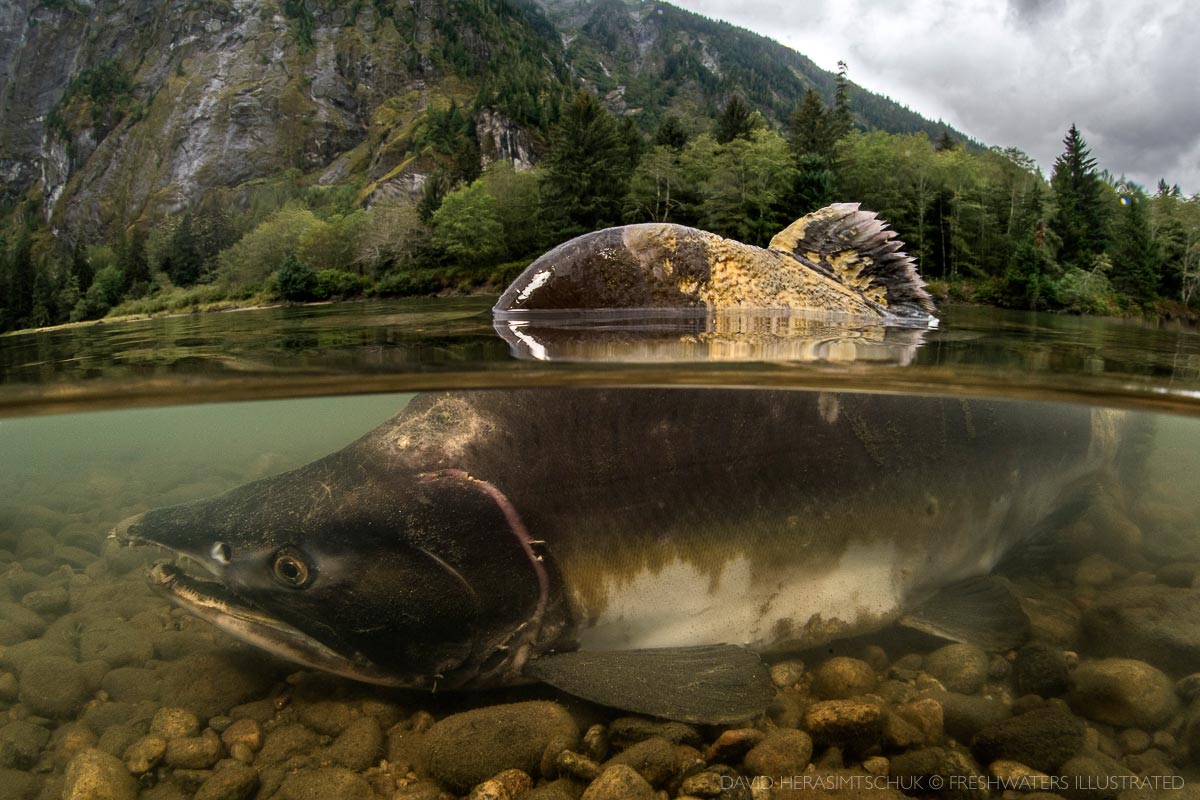
Glacial retreat could add 6,150 km of salmon habitat by 2100, but warming waters and climate pressures remain critical challenges.
Retreating glaciers in the Pacific mountains of western North America could produce around 6,150 kilometers (3,820 miles) of new Pacific salmon habitat by the year 2100, according to a new study.
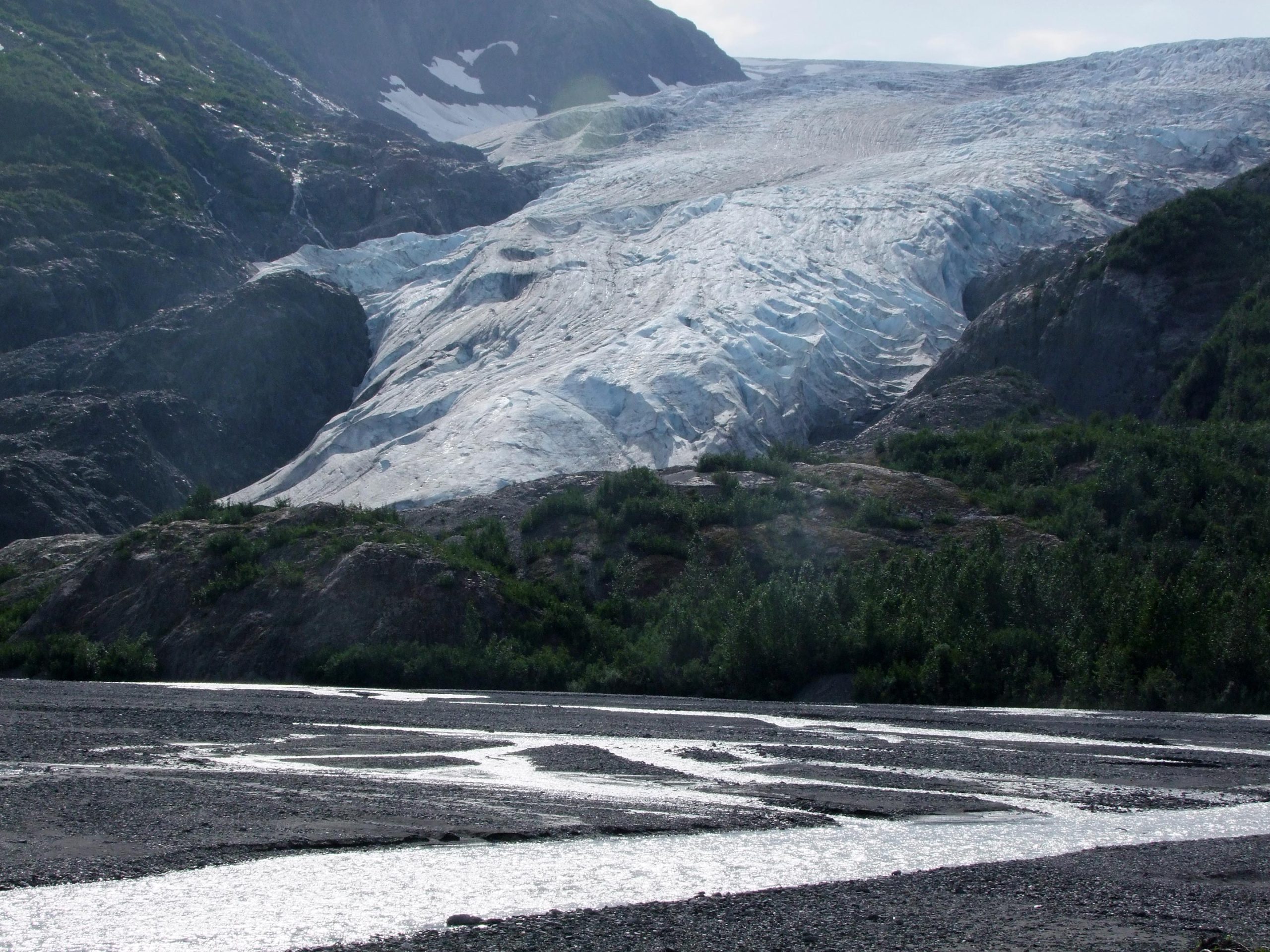
Scientists have ‘peeled back the ice’ from 46,000 glaciers between southern British Columbia and south-central Alaska to look at how much potential salmon habitat would be created when underlying bedrock is exposed and new streams flow over the landscape.
Modeling glacier retreat under different climate change scenarios, researchers discovered that, under a moderate temperature increase, the glaciers could reveal potential new Pacific salmon habitat nearly equal to the length of the Mississippi River (6,275 km or 3,899 mi).
Desirable for salmon, in this case, means low-gradient streams (less than 10% incline) connected to the ocean with retreating glaciers at their headwaters. The team discovered that 315 of the glaciers examined met these criteria.
The international team, led by researchers at Simon Fraser University (Canada) with University of Birmingham (UK), and other organizations, published their findings today (December 7, 2021) in Nature Communications.
Where the Gains Will Be Greatest
Lead author, Simon Fraser University spatial analyst Dr. Kara Pitman comments: “We predict that most of the emerging salmon habitat will occur in Alaska and the transboundary region, at the British Columbia-Alaska border, where large coastal glaciers still exist. The Gulf of Alaska sub-region is predicted to see the most gains—a 27% increase in salmon-accessible habitat by 2100.
“Once conditions stabilize in the newly-formed streams, salmon can colonize these areas quite quickly. It’s a common misconception that all salmon return home to the streams they were born in. Most do, but some individuals will stray—migrating into new streams to spawn and, if conditions are favorable, the population can increase rapidly.”
Co-author Professor Alexander Milner from the University of Birmingham has researched glacial retreat and salmon populations in southeast Alaska for over three decades. His team has worked on Stonefly Creek in Glacier Bay where glacier retreat revealed a new stream in the late 1970s and he comments:
“Colonization by salmon can occur relatively quickly after glacial retreat creates favorable spawning habitat in the new stream. For example, Stonefly Creek was colonized within 10 years by pink salmon that grew rapidly to more than 5,000 spawners. Other species also colonized including Coho and Sockeye salmon, especially where a lake is associated with the stream.”
A Double-Edged Sword for Salmon Survival
The researchers caution that while the newly created habitat is a positive for salmon in some locations; overall, climate change still poses grave challenges for some salmon populations.
“On one hand, this amount of new salmon habitat will provide local opportunities for some salmon populations,” says Dr. Pitman. “On the other hand, climate change and other human impacts continue to threaten salmon survival—via warming rivers, changes in stream flows, and poor ocean conditions.
“Climate change means we increasingly need to look to the future. We can’t just protect current-day habitat for species but need to consider what habitats they might rely on in the future.”
Reference: “Glacier retreat creating new Pacific salmon habitat in western North America” by Kara J. Pitman, Jonathan W. Moore, Matthias Huss, Matthew R. Sloat, Diane C. Whited, Tim J. Beechie, Rich Brenner, Eran W. Hood, Alexander M. Milner, George R. Pess, Gordan H. Reeves and Daniel E. Schindler, 7 December 2021, Nature Communications.
DOI: 10.1038/s41467-021-26897-2
Never miss a breakthrough: Join the SciTechDaily newsletter.
Follow us on Google and Google News.
2 Comments
Good
Warming is better than cooling. Unless you are a prosperous ‘climate change advovcate’. Then your beachfront property you bought by pushing climate change will be under water. Looking at you Obama and Gore!