
Close Menu
    Facebook X (Twitter) Instagram
    SciTechDaily
    • Biology
    • Chemistry
    • Earth
    • Health
    • Physics
    • Science
    • Space
    • Technology
    Facebook X (Twitter) Pinterest YouTube RSS
    SciTechDaily
    Home»Technology»Ion Conducting Polymer Crucial to Improving Neuromorphic Devices
    Technology

    Ion Conducting Polymer Crucial to Improving Neuromorphic Devices

    By Tohoku UniversityJuly 19, 2020No Comments2 Mins Read
    Facebook Twitter Pinterest Telegram LinkedIn WhatsApp Email Reddit
    Share
    Facebook Twitter LinkedIn Pinterest Telegram Email Reddit
    Ion Conducting Polymer
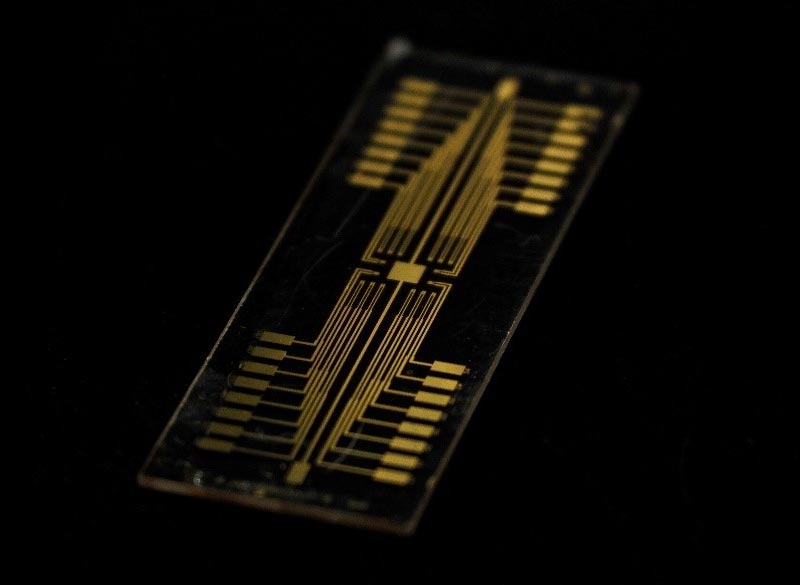
    Photograph of a neuromorphic device used in this study. Credit: Shunsuke Yamamoto

    “Neuromorphic” refers to mimicking the behavior of brain neural cells. When one speaks of neuromorphic computers, they are talking about making computers think and process more like human brains operating at high speed with low energy consumption.

    Despite a growing interest in polymer-based neuromorphic devices, researchers have yet to establish an effective method for controlling the response speed of devices. Researchers from Tohoku University and the University of Cambridge, however, have overcome this obstacle through mixing the polymers PSS-Na and PEDOT:PSS, discovering that adding an ion-conducting polymer enhances neuromorphic device response time.

    Polymers are materials composed of long molecular chains and play a fundamental aspect in modern life from the rubber in tires, to water bottles, to polystyrene. Mixing polymers together results in the creation of new materials with their own distinct physical properties.

    Most studies on neuromorphic devices based on polymer focus exclusively on the application of PEDOT: PSS, a mixed conductor that transports both electrons and ions. PSS-Na, on the other hand, transports ions only. By blending these two polymers, the researchers could enhance the ion diffusivity in the active layer of the device. Their measurements confirmed an increase in device response time, achieving a 5-time shorting at maximum. The results also proved how closely related response time is to the diffusivity of ions in the active layer.

    “Our study paves the way for a deeper understanding behind the science of conducting polymers.” explains co-author Shunsuke Yamamoto from the Department of Biomolecular Engineering at Tohoku University’s Graduate School of Engineering. “Moving forward, it may be possible to create artificial neural networks composed of multiple neuromorphic devices,” he adds.

    Reference: “Controlling the Neuromorphic Behavior of Organic Electrochemical Transistors by Blending Mixed and Ion Conductors” by Shunsuke Yamamoto and George G. Malliaras, 15 June 2020, ACS Applied Materials & Interfaces.
    DOI: 10.1021/acsaelm.0c00203

    Never miss a breakthrough: Join the SciTechDaily newsletter.
    Follow us on Google and Google News.

    Electrical Engineering Nanotechnology Tohoku University
    Share. Facebook Twitter Pinterest LinkedIn Email Reddit

    Related Articles

    U.S. Navy Researchers Create Electronic Diodes Beyond 5G Performance

    New Hydrogel Can Cool Down Electronic Devices and Convert Waste Heat Into Electricity

    Breaking the Size and Speed Limit of Modulators for Next Generation Internet and Communication Networks

    Revolutionary Light-Emitting Silicon – “Holy Grail” Breakthrough After 50 Years of Work

    Nanoscale Device Generates High-Power THz Waves That Can See Through Walls

    Biologically Inspired Ultrathin Arrayed Camera Captures Super-Resolution Images

    Better Lithium-Ion Batteries Possible With Nanoscale Molecular View of Self-Assembling Structure

    Nano-Thin Flexible Touchscreens Could Be Printed at Home – 100x Thinner Than Current Technology

    A New Self-Assembly Method for Fabricating Graphene Nanoribbons

    Leave A Reply Cancel Reply

    • Facebook
    • Twitter
    • Pinterest
    • YouTube

    Don't Miss a Discovery

    Subscribe for the Latest in Science & Tech!

    Trending News

    Scientists Uncover Potential Brain Risks of Popular Fish Oil Supplements

    Scientists Discover a Surprising Way To Make Bread Healthier and More Nutritious

    After 60 Years, Scientists Uncover Unexpected Brain Effects of Popular Diabetes Drug Metformin

    New Research Uncovers Hidden Side Effects of Popular Weight-Loss Drugs

    Scientists Rethink Extreme Warming After Surprising Ocean Discovery

    Landmark Study Links Never Marrying to Significantly Higher Cancer Risk

    Researchers Discover Unknown Beetle Species Just Steps From Their Lab

    Largest-Ever Study Finds Medicinal Cannabis Ineffective for Anxiety, Depression, PTSD

    Follow SciTechDaily
    • Facebook
    • Twitter
    • YouTube
    • Pinterest
    • Newsletter
    • RSS
    SciTech News
    • Biology News
    • Chemistry News
    • Earth News
    • Health News
    • Physics News
    • Science News
    • Space News
    • Technology News
    Recent Posts
    • Early Warning Signals of Esophageal Cancer May Be Hiding in Plain Sight
    • Researchers Have Discovered a THC-Free Cannabis Compound That May Replace Opioids
    • Common Blood Pressure Drug Shows Surprising Power Against Deadly Antibiotic-Resistant Superbug
    • Students Build Dark Matter Detector and Set New Experimental Limits
    • Scientists Discover Caffeine Can Repair Key Memory Circuits After Sleep Loss
    Copyright © 1998 - 2026 SciTechDaily. All Rights Reserved.
    • Science News
    • About
    • Contact
    • Editorial Board
    • Privacy Policy
    • Terms of Use

    Type above and press Enter to search. Press Esc to cancel.