
Close Menu
    Facebook X (Twitter) Instagram
    SciTechDaily
    • Biology
    • Chemistry
    • Earth
    • Health
    • Physics
    • Science
    • Space
    • Technology
    Facebook X (Twitter) Pinterest YouTube RSS
    SciTechDaily
    Home»Space»It Rains on the Sun, and Scientists Finally Know Why
    Space

    It Rains on the Sun, and Scientists Finally Know Why

    By University of Hawaii at ManoaOctober 7, 20251 Comment3 Mins Read
    Facebook Twitter Pinterest Telegram LinkedIn WhatsApp Email Reddit
    Share
    Facebook Twitter LinkedIn Pinterest Telegram Email Reddit
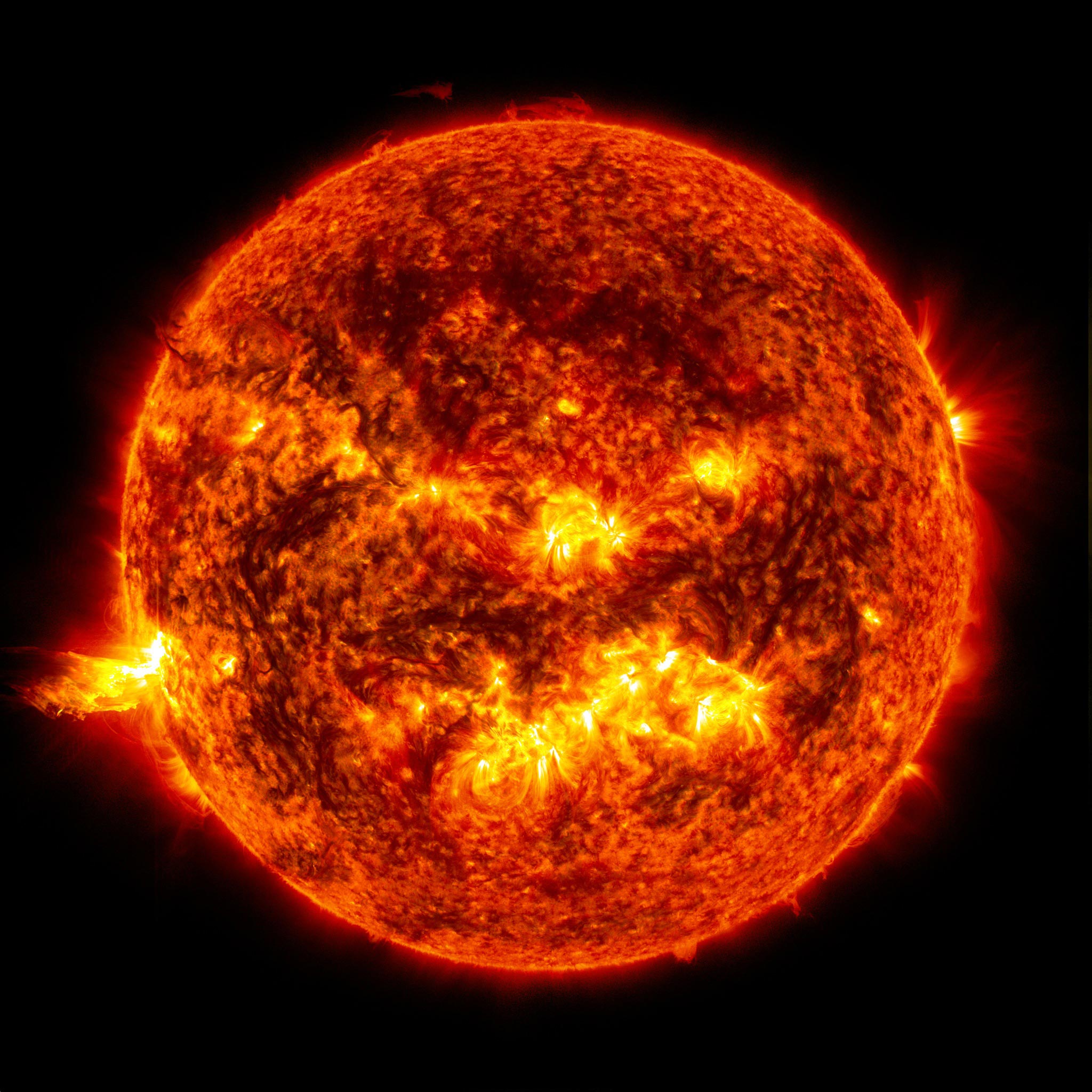
    Sun SDO Solar Flare 2013
    Researchers worked for years to unlock the mystery of solar rain in solar flares. Credit: NASA/Goddard/SDO

    Scientists at the University of Hawai‘i have discovered why it “rains” on the Sun, revealing that changing elemental makeup drives the mysterious downpours of plasma.

    It rains on the Sun, and scientists at the University of Hawaiʻi Institute for Astronomy (IfA) have finally uncovered the reason why.

    Unlike the water droplets that fall on Earth, solar rain occurs within the Sun’s corona, a region of extremely hot plasma that extends above its surface. This phenomenon involves cooler, denser clumps of plasma that condense high in the corona and then descend back toward the Sun. For years, researchers struggled to understand how this process could happen so rapidly during solar flares.

    New explanation

    Now, that long-standing mystery has been solved by Luke Benavitz, a first-year graduate student at IfA, and astronomer Jeffrey Reep. Their findings, published in the Astrophysical Journal, provide an essential update to solar models that have puzzled scientists for decades.
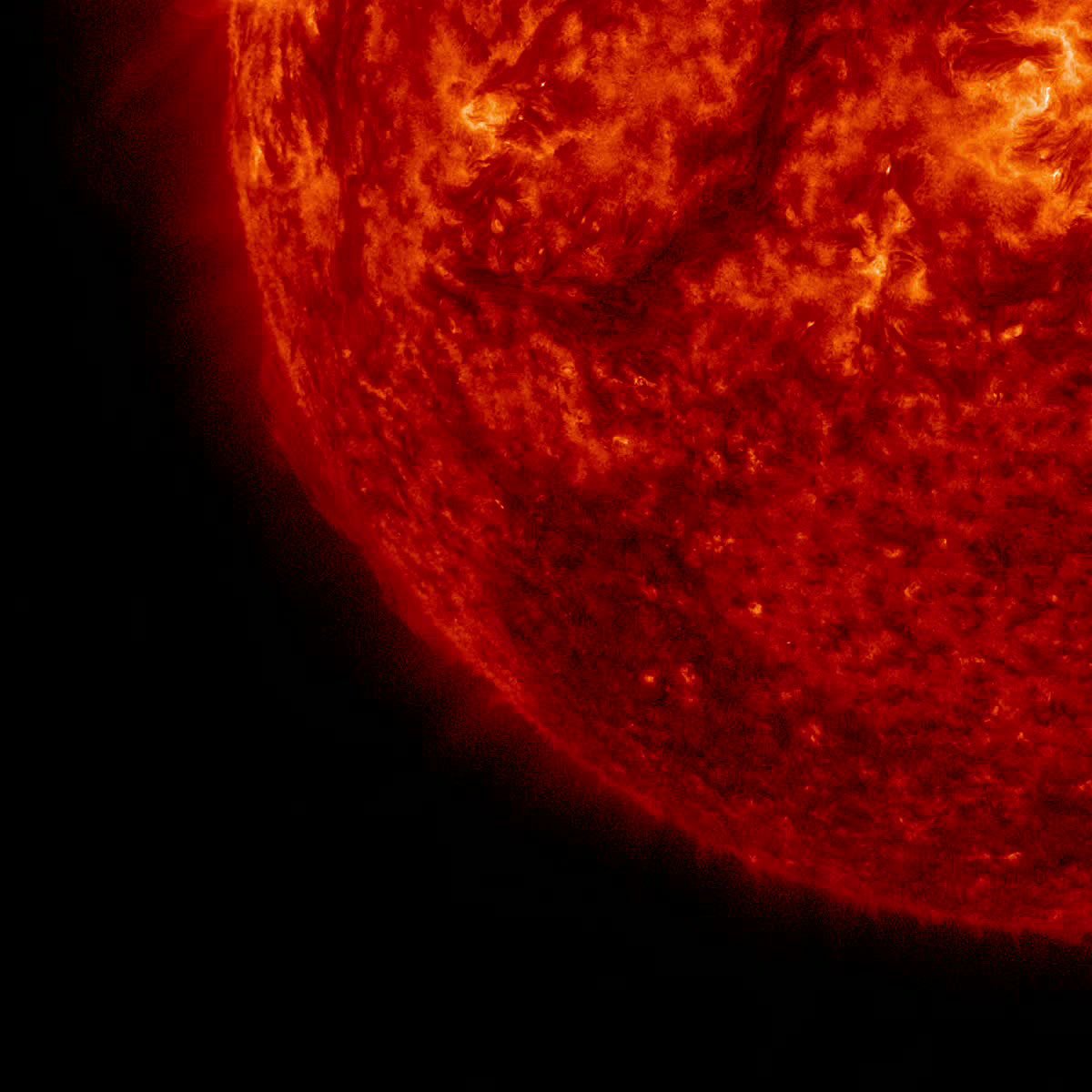
    Bright Solar Eruption
    Bright solar eruption captured in space. Credit: NASA/Solar Dynamics Observatory

    “At present, models assume that the distribution of various elements in the corona is constant throughout space and time, which clearly isn’t the case,” said Benavitz. “It’s exciting to see that when we allow elements like iron to change with time, the models finally match what we actually observe on the Sun. It makes the physics come alive in a way that feels real.”

    Why it matters

    The new finding means solar scientists can better model how the Sun behaves during flares, insights that could one day help predict space weather that affects our daily lives.

    Earlier models required heating over hours or days to explain coronal rain; however, solar flares can happen in just minutes. The IfA team’s work shows that shifting elemental abundances can explain how rain can quickly form.

    “This discovery matters because it helps us understand how the Sun really works,” said Reep. “We can’t directly see the heating process, so we use cooling as a proxy. But if our models haven’t treated abundances properly, the cooling time has likely been overestimated. We might need to go back to the drawing board on coronal heating, so there’s a lot of new and exciting work to be done.”

    Fresh insights

    This research opens the door to a much wider range of questions. Scientists now know that elemental abundances in the Sun’s atmosphere should change over time, which challenges long-standing models that assumed they were fixed. This means the discovery reaches far beyond coronal rain, pushing researchers to rethink how the Sun’s outer layers behave and how energy moves through its atmosphere.

    Reference: “Spatiotemporal Low First Ionization Potential Abundance: A Catalyst for Coronal Condensation” by Luke Fushimi Benavitz, Jeffrey W. Reep, Lucas A. Tarr and Andy S.H. To, 1 October 2025, The Astrophysical Journal.
    DOI: 10.3847/1538-4357/ae019d

    Never miss a breakthrough: Join the SciTechDaily newsletter.
    Follow us on Google and Google News.

    Astrophysics Solar Flares Space Weather Sun University of Hawaii at Manoa
    Share. Facebook Twitter Pinterest LinkedIn Email Reddit

    Related Articles

    Rethinking Sunspots: Solar Physicists Uncover Surprising Shallow New Origins

    NASA Supercomputer Solves 400-Year-Old Solar Magnetic Puzzle

    Controversial Findings: Astrophysicists Rethink Solar Magnetic Fields

    Brighter Than a Thousand Suns: Scientists Unravel Physics Behind Unusual Behavior of Stars’ Super Flares

    NASA’s SDO Reveals Images of X4.9-Class Solar Flare

    NASA Spacecraft Observe Magnetic Reconnection in Action

    New Model Advances the Understanding of How Solar Wind Works

    New Light Shed on the Origins of Extreme Space Storms

    NASA Continues to Monitor Solar Flares

    1 Comment

    1. David Jones on October 20, 2025 12:03 am

      Thank you

      Reply
    Leave A Reply Cancel Reply

    • Facebook
    • Twitter
    • Pinterest
    • YouTube

    Don't Miss a Discovery

    Subscribe for the Latest in Science & Tech!

    Trending News

    Largest-Ever Study Finds Medicinal Cannabis Ineffective for Anxiety, Depression, PTSD

    250-Million-Year-Old Egg Solves One of Evolution’s Biggest Mysteries

    Living With Roommates Might Be Changing Your Gut Microbiome Without You Knowing

    Century-Old Cleaning Chemical Linked to 500% Increased Risk of Parkinson’s Disease

    What if Your Memories Never Happened? Physicists Take a New Look at the Boltzmann Brain Paradox

    One of the Universe’s Largest Stars May Be Getting Ready To Explode

    Scientists Discover Enzyme That Could Supercharge Ozempic-Like Weight Loss Drugs

    Popular Sweetener Linked to DNA Damage – “It’s Something You Should Not Be Eating”

    Follow SciTechDaily
    • Facebook
    • Twitter
    • YouTube
    • Pinterest
    • Newsletter
    • RSS
    SciTech News
    • Biology News
    • Chemistry News
    • Earth News
    • Health News
    • Physics News
    • Science News
    • Space News
    • Technology News
    Recent Posts
    • Scientists Say This Overlooked Organ Could Hold the Key to Longer Life
    • Want Less Stress? Landmark Study Points to a Simple Habit
    • Scientists Reveal Eating Fruits and Vegetables May Increase Your Risk of Lung Cancer
    • AI Reveals Explosive Growth of Floating Algae Across the World’s Oceans
    • 5.5 Million Bees Discovered Living Beneath a New York Cemetery
    Copyright © 1998 - 2026 SciTechDaily. All Rights Reserved.
    • Science News
    • About
    • Contact
    • Editorial Board
    • Privacy Policy
    • Terms of Use

    Type above and press Enter to search. Press Esc to cancel.