
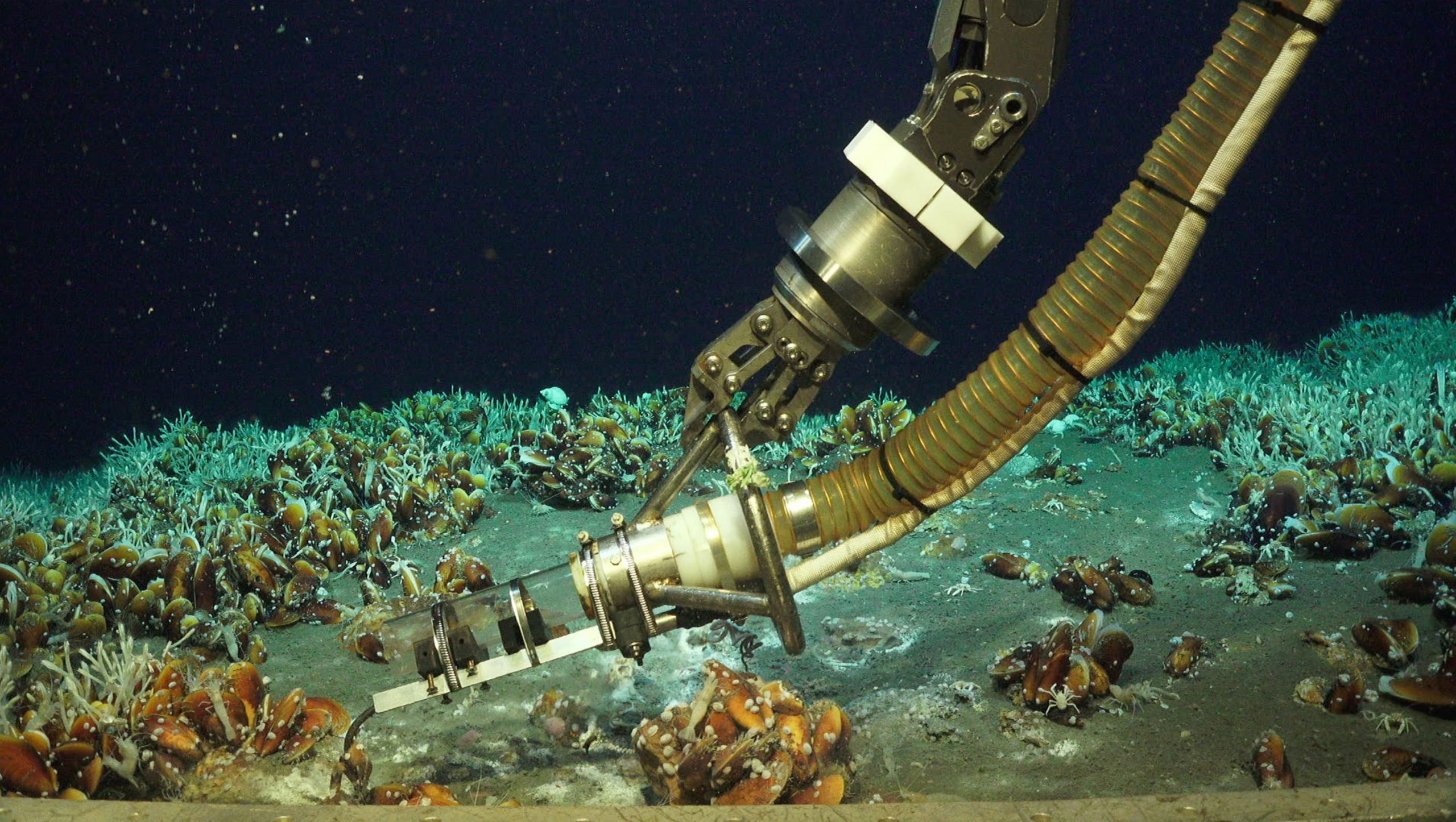
Scientists have found a unique deep-sea vent field off Papua New Guinea where hot hydrothermal fluids and methane-rich gases emerge in tandem, creating an unexpected mix of chemistry and life.
Off the coast of Papua New Guinea, scientists have identified an unusual kind of hydrothermal field where two very different processes happen at the same time: hot, mineral-rich fluids rise from the seafloor while large volumes of methane and other hydrocarbons escape nearby. This pairing has not been documented anywhere else on Earth.
The site is located about 1,300 meters (~4250 feet) below the surface along the side of Conical Seamount in the western Pacific near the island of Lihir in Papua New Guinea. The findings were recently published in the journal Scientific Reports.
ROV delivers the surprise
“We essentially have a hot vent bubbling right next to a cool gas seep – a combination that has never been described before,” says Dr. Philipp Brandl, marine geologist at the GEOMAR Helmholtz Centre for Ocean Research Kiel. He served as chief scientist on the SONNE expedition SO299 DYNAMET, which explored the Tabar–Lihir–Tanga–Feni island chain in 2023 to study the region’s underwater volcanoes (seamounts).
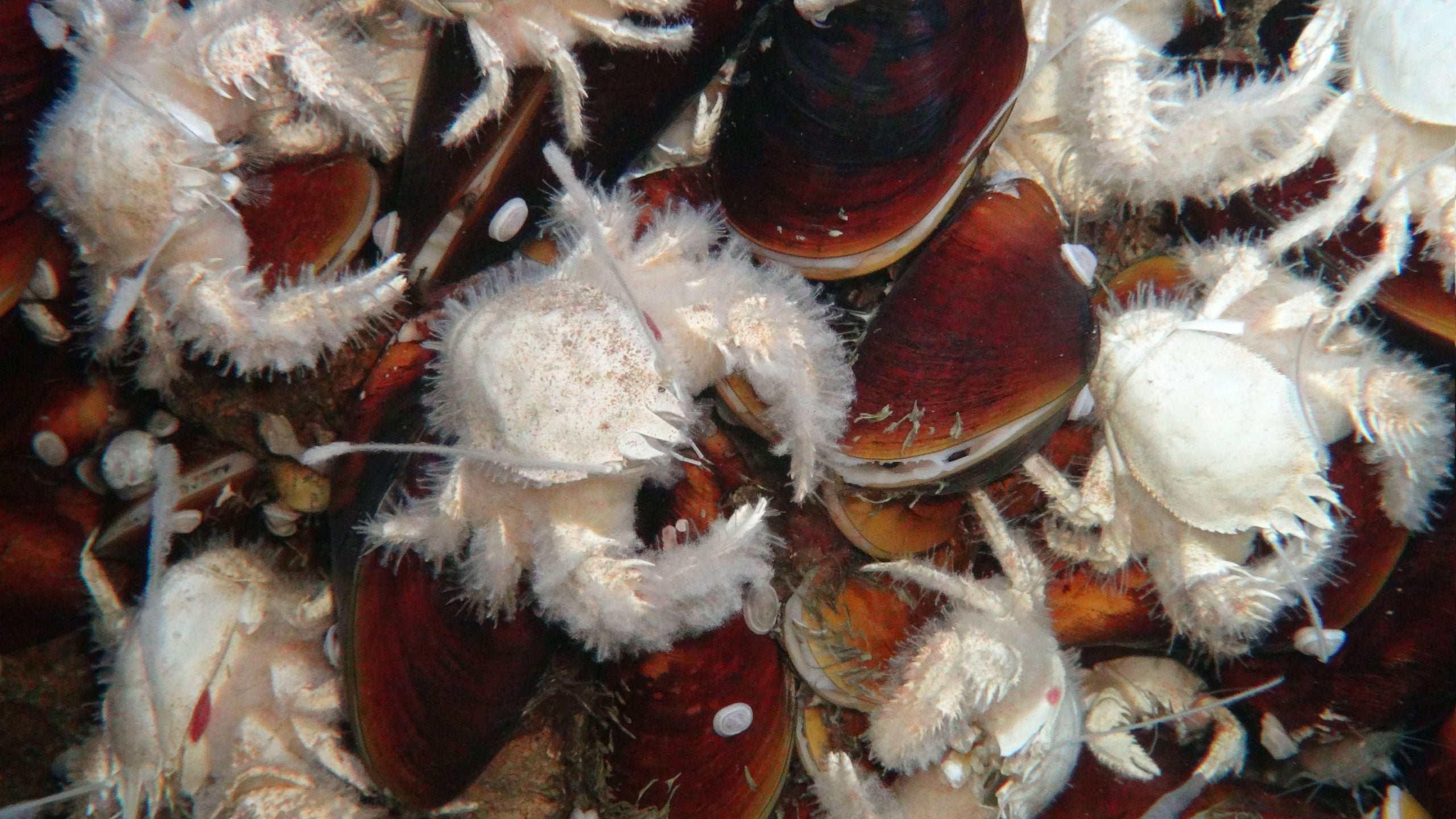
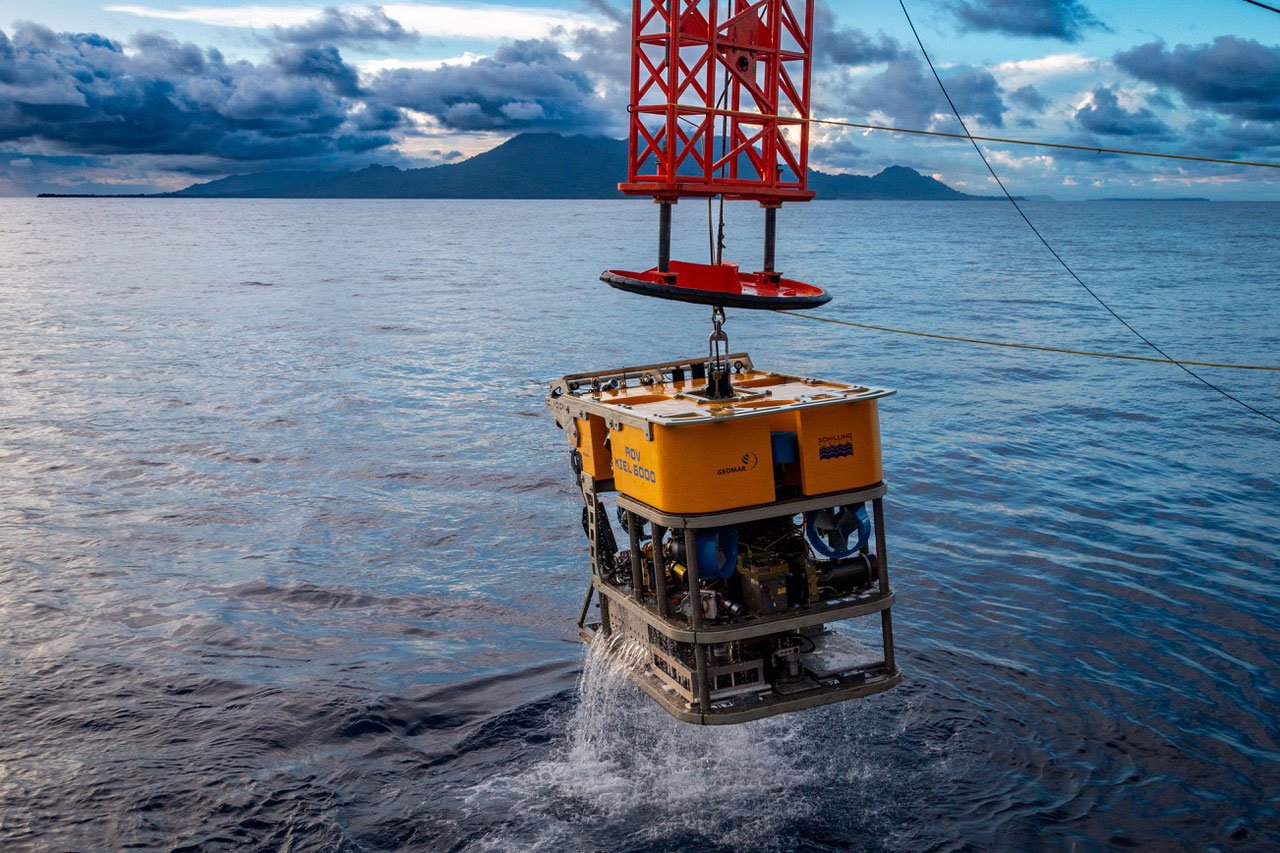
Brandl continues: “No one really expected to find a hydrothermal field here, let alone one that is so exceptional.” Although previous expeditions had indicated minor hydrothermal activity, the field remained undetected during several research cruises. It was only through the use of the ROV Kiel 6000 that the peculiarities of this underwater landscape were revealed. “It was a real surprise,” says Brandl, “especially for those of us who had worked in this area multiple times.”
A hybrid system of hot and cool vents
Hydrothermal vents and methane seeps are typically found in separate areas of the seafloor. In this location, their unusual closeness is explained by the geology of Conical Seamount, where thick sediment layers rich in organic material sit beneath the volcanic edifice. Rising magma warms these sediments, creating methane and other hydrocarbons, while the same heat source pushes mineral laden fluids upward until they reach the seafloor as hot vents.
Both types of fluids – the heated water from deeper layers and the cooler, methane heavy gases from the sediments – move through the same channels toward the seabed. As a result, warm fluids and cold gas emerge only a few centimeters from each other.
A habitat unlike any other
This direct neighborhood creates an entirely new hybrid environment, providing a habitat for an extremely diverse range of animals. Dense fields of the mussel Bathymodiolus, tube worms, shrimp, amphipods, and striking purple sea cucumbers cover the rocks. “In places, you couldn’t see a single patch of rock because everything is so densely populated,” says Brandl. “We are confident that some of the species there have not yet been described. However, a dedicated expedition would be needed to fully study this unique habitat.”
Due to the abundance of mussels, the scientists, along with local observer Stanis Konabe from the University of Papua New Guinea, named the field ‘Karambusel’. In the local Tok Pisin language, this means ‘mussel’.
Traces of precious metals in the rock
The unusual gas composition at the Karambusel field influences both the communities of life and the geological features. The methane emitted is highly concentrated, exceeding 80 per cent, while hot fluids rise from the magma simultaneously, creating unique chemical conditions in the subsurface.
Metals such as gold and silver, together with elements such as arsenic, antimony, and mercury, are deposited in the rock. Thus, the area bears the marks of an earlier, high-temperature phase involving precious metals, alongside present-day, cooler activity.
Threats from human activity
Despite its unique geology and biology, this site is under threat. Mining is already taking place in the region, for example, at the Ladolam gold mine on Lihir, where waste and residues are discharged into the sea. Exploration licenses for minerals and hydrocarbons on the seabed also exist. This endangers the fragile habitat and its highly specialized fauna.
The researchers are therefore calling for urgent further study, targeted marine spatial planning, and effective protection measures to preserve this extraordinary ecosystem. Philipp Brandl: “We have discovered an unexpected treasure trove of biodiversity in the Karambusel field that needs to be protected before economic interests destroy it.”
Reference: “Coupled hydrothermal venting and hydrocarbon seepage discovered at Conical Seamount, Papua New Guinea” by Philipp A. Brandl, Sylvia G. Sander, Christoph Beier, Mark Schmidt, Jan J. Falkenberg, Terue Kihara, Klaas Meyn, Felix Genske, Rebecca Zitoun, Brent I. A. McInnes, Mark D. Hannington, Sven Petersen, Eemu J. Ranta, Fred Jourdan, Louis-Maxime Gautreau, Thor H. Hansteen, Ingo Heyde, Stanis Konabe, Joseph O. Espi and The SO299 Shipboard Scientific Party, 19 September 2025, Scientific Reports.
DOI: 10.1038/s41598-025-17192-x
Never miss a breakthrough: Join the SciTechDaily newsletter.
Follow us on Google and Google News.
1 Comment
So, studying “biodiversity” trumps the needs of the nation? The “benefits” accrued from preventing the exploitation of this rich resource are some academics’ funding, and some scientific papers published in mostly obscure scientific journals and as no further benefits ensue, their number will gradually taper off as funding disappears. If something remarkable is discovered, then that obviously warrants reappraisal. So, the answer is to do the research now, and mark off an area as an international heritage site for future studies, or perhaps stake a claim for your university?