
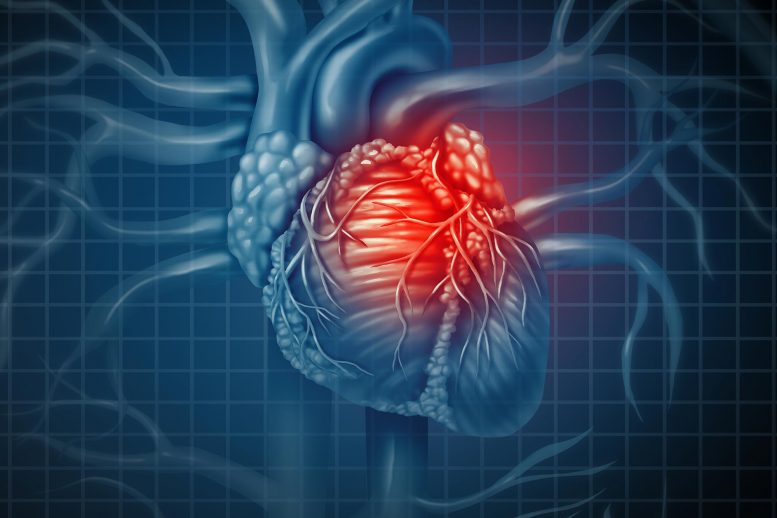
Unusual Heart Metabolism Could Be a Predictor of Potential Sudden Cardiac Death
According to a small but thorough study led by Johns Hopkins Medicine researchers, adults with abnormal heart metabolism are up to three times more likely to experience life-threatening arrhythmias (an irregular heart rhythm), and MRI techniques could be used to detect the condition and predict future sudden cardiac death (SCD).
The findings were recently published in the journal JCI Insight.
“We believe this is the first time that impaired cardiac metabolism in people has been linked to an increased risk of life-threatening arrhythmias or sudden cardiac death,” says study senior author Robert Weiss, M.D., professor of medicine at the Johns Hopkins University School of Medicine. “This could open a window for a whole new approach, a metabolic approach for treating or preventing severe arrhythmias, which is something that is not currently available in cardiology.”
According to the American Heart Association, sudden cardiac death accounts for 50% of all cardiovascular fatalities in the United States, taking more than 300,000 lives each year. Currently, the main method of avoiding SCD in high-risk individuals is an implanted cardioverter-defibrillator (ICD), a tiny, battery-powered device put in the chest to detect and stop abnormal heart rhythms. The gadget continually checks the heart rhythm and, if necessary, administers electric shocks to return the heartbeat to normal. An ICD’s battery life normally lasts five to seven years.
“Over seven years, 60%–70% of these devices never discharge to save a life,” says T. Jake Samuel, Ph.D., first author of the study and fellow in cardiology at Johns Hopkins Medicine. “We’re spending billions of dollars a year on ICDs that are implanted and have procedural and postprocedural risks. There is a need for noninvasive approaches to better assess risk for who needs or doesn’t need an ICD to prevent sudden cardiac death in people.”
Adenosine triphosphate (ATP), the main chemical source of cellular energy, was monitored in the hearts of 46 participants for the research by Samuel and colleagues before they received an ICD for primary prevention. Paul Bottomley, Ph.D., a co-author of the research, developed the magnetic resonance spectroscopy (MRS) method at Johns Hopkins Medicine to monitor cardiac ATP levels on clinical MRI scanners in order to identify whether individuals had abnormal ATP metabolism. To identify which patients had the proper ICD firings for life-threatening arrhythmias, all patients were assessed every three to six months for an average of ten years.
Metabolism and Risk of Arrhythmia
Results showed that people with low cardiac ATP levels (impaired metabolism) had a three-fold higher risk of sudden cardiac death (if not saved by ICD intervention) compared to those with normal ATP metabolism. This was still the case when adjusted for low left ventricular ejection fraction, the metric currently used to determine the need for a primary prevention ICD.
“The ICD was never needed in roughly 80% of those with normal cardiac ATP levels in the 10 years during the study period,” Samuel and colleagues report. They say the study findings could complement current approaches and lead to better predictions for who’s most likely to need, or not need an ICD. However, they stress, that more studies are needed to assess different and larger populations.
“But we’re excited about these truly new findings, arguably the first in people, and believe they can be transformative on how doctors assess sudden cardiac death risk,” Weiss says. “Once we have confirmed that metabolism and SCD are linked, we hope to study which drugs preserve and improve ATP metabolism and whether they can be used to reduce SCD risk.”
Reference: “Myocardial ATP depletion detected noninvasively predicts sudden cardiac death risk in patients with heart failure” by T. Jake Samuel, Shenghan Lai, Michael Schär, Katherine C. Wu, Angela M. Steinberg, An-Chi Wei, Mark E. Anderson, Gordon F. Tomaselli, Gary Gerstenblith, Paul A. Bottomley and Robert G. Weiss, 17 May 2022, JCI Insight.
DOI: 10.1172/jci.insight.157557
The authors report no conflict of interests.
This study was funded by the DW Reynolds Foundation, the National Institutes of Health, and the Russell H. Morgan and Clarence Doodeman endowments at Johns Hopkins.
Never miss a breakthrough: Join the SciTechDaily newsletter.
Follow us on Google and Google News.