
Close Menu
    Facebook X (Twitter) Instagram
    SciTechDaily
    • Biology
    • Chemistry
    • Earth
    • Health
    • Physics
    • Science
    • Space
    • Technology
    Facebook X (Twitter) Pinterest YouTube RSS
    SciTechDaily
    Home»Health»“Junk DNA” Provides Surprising New Treatments for Hard-To-Treat Blood Cancers
    Health

    “Junk DNA” Provides Surprising New Treatments for Hard-To-Treat Blood Cancers

    By King's College LondonSeptember 25, 2025No Comments3 Mins Read
    Facebook Twitter Pinterest Telegram LinkedIn WhatsApp Email Reddit
    Share
    Facebook Twitter LinkedIn Pinterest Telegram Email Reddit
    Blood Cancer Illustration
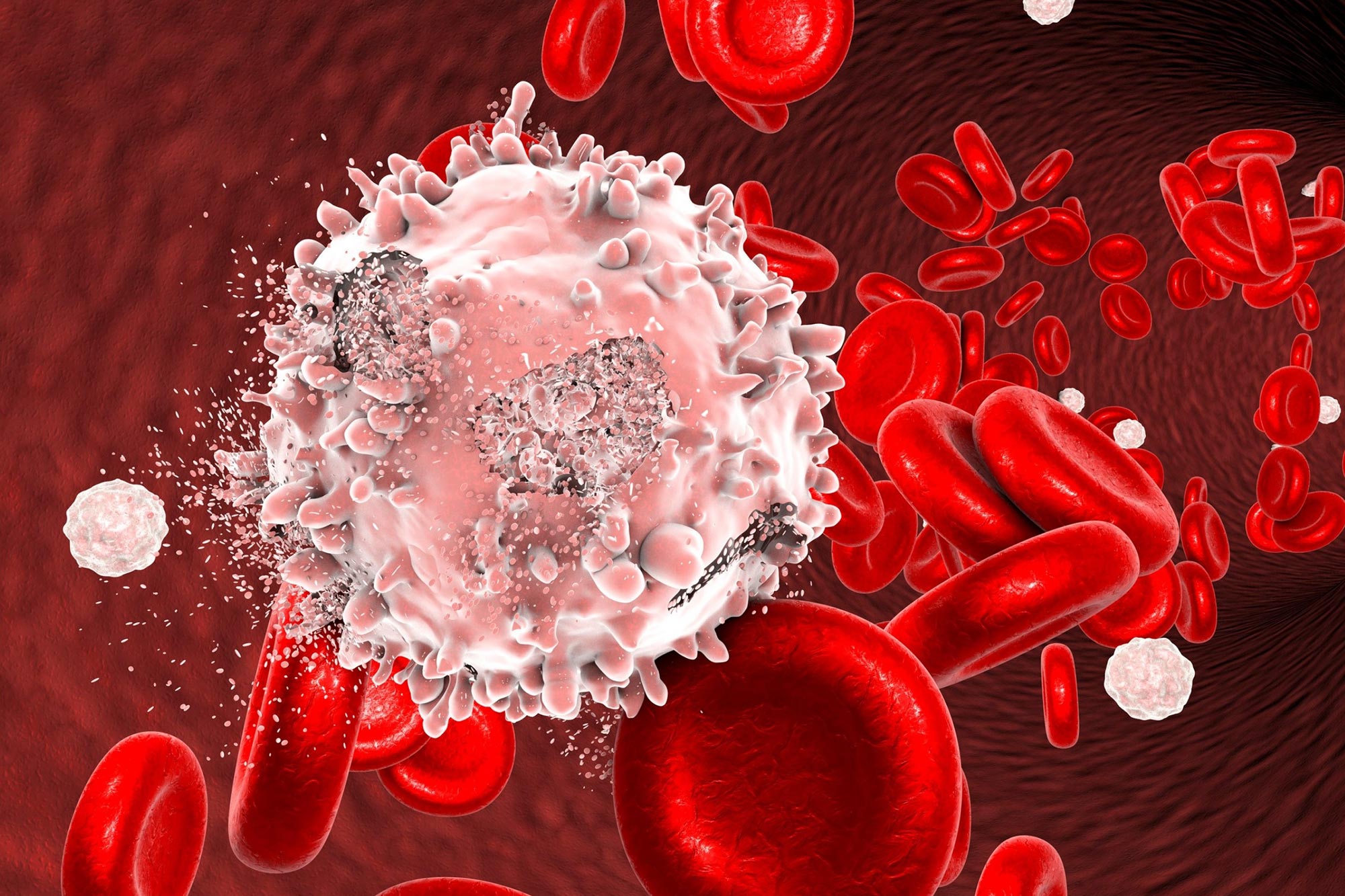
    Researchers at King’s College London have uncovered a surprising vulnerability in certain blood cancers by targeting a part of our DNA once dismissed as “junk.” Credit: Stock

    “Junk DNA” may hold the key to treating tough cancers. Existing drugs exploit weaknesses in cells with gene mutations.

    Researchers at King’s College London have identified a promising strategy for treating certain blood cancers by repurposing existing drugs. Their approach involves targeting a part of human DNA once dismissed as irrelevant, revealing it to be a valuable therapeutic opportunity.

    The findings, reported in Blood, examined myelodysplastic syndrome (MDS) and chronic lymphocytic leukemia (CLL). Both cancers frequently carry mutations in the ASXL1 and EZH2 genes, which normally regulate whether other genes are turned on or off. When these regulatory genes are altered, cells lose control over normal growth and division, leading to uncontrolled expansion of abnormal cells.

    Limits of current treatments

    Conventional cancer therapies often work by blocking harmful proteins produced by defective genes. In cases where the protein is absent altogether, as with these mutations, there is nothing for drugs to inhibit. This leaves patients with few effective treatment options and generally poorer outcomes.

    Close to half of human DNA consists of repetitive sequences known as transposable elements (TEs), once thought to be nonfunctional “junk DNA.” The researchers discovered that in cancers carrying ASXL1 and EZH2 mutations, these TEs become abnormally active. Their heightened activity strains cancer cells and damages their DNA, exposing a vulnerability that could be exploited as a new form of therapy.

    Repurposing PARP inhibitors

    PARP inhibitors are drugs already used to treat some other cancers. They usually work by preventing cancer cells from repairing damaged DNA. In this study, they acted differently. When TEs move around in the genome, they cause breaks in the DNA that are however protected by PARP proteins for repair. Blocking PARP prevents this repair, causing damage to build up until the cancer cells die.

    To confirm this new mechanism, the researchers used reverse transcriptase inhibitors, which stop TEs from copying themselves. This removed the effect of PARP inhibitors, showing that the drugs were working through a unique TE-related pathway rather than their usual role in BRCA-related cancers.

    Wider impact for cancer therapy

    “This discovery offers new hope for patients with hard-to-treat cancers, by using existing drugs in a completely new way, turning what was once thought to be useless DNA into a powerful target for treatment,” explains Professor Chi Wai Eric So, King’s College London.

    While this research focused on the blood cancers MDS and CLL, the findings suggest that other cancers with similar gene mutations might also be vulnerable to this approach, potentially widening the use of PARP inhibitors in cancer treatment.

    Reference: “Transposable elements as novel therapeutic targets for PARPi-induced synthetic lethality in PcG-mutated blood cancer” by Bernd B. Zeisig, Chiou-Tsun Tsai, Clemence Virely, Tsz Kan Fung, Ali Tuğrul Akin, Estelle Troadec, Bo Jiao, I. Richard Thompson, Priscilla Nga Ieng Lau, Nanjun Li, Andriani Charalambous, Larissa Bomfim, Jennifer Lynch, Athina Georgiou, Robbert Hoogeboom, Claire Lynn, Si-Yi Zhang, Piers E. M. Patten, Cynthia L. Fisher, Anna Schuh, Seishi Ogawa, Ghulam Mufti, Mohammad M. Karimi and Chi Wai Eric So, 11 September 2025, Blood.
    DOI: 10.1182/blood.2025028560

    Never miss a breakthrough: Join the SciTechDaily newsletter.
    Follow us on Google and Google News.

    Blood Cells Genetics King’s College London Mutation Oncology
    Share. Facebook Twitter Pinterest LinkedIn Email Reddit

    Related Articles

    The Science Behind Inflammation’s Hidden Role in Depression

    Study: Remnants of Ancient Viruses in Human DNA Related to Schizophrenia and Depression

    Startling Discovery: Cancer Can Arise Without Genetic Mutations

    Revolutionizing Oncology: T Cells As Predictive Powerhouses in Skin Cancer

    New Study: Immune Activation in Depression More Common Than Previously Thought

    Genetic Screening Shows a Causal Link Between Blood Group and Severe COVID-19

    New Genetic Discovery Could Help Scientists Understand Obesity – And Deliver Personalized Weight Loss Treatments

    Hearing Loss Treatment Hope After New Genes Identified

    Human Body Weight Influenced by Microbes in the Gut

    Leave A Reply Cancel Reply

    • Facebook
    • Twitter
    • Pinterest
    • YouTube

    Don't Miss a Discovery

    Subscribe for the Latest in Science & Tech!

    Trending News

    Breakthrough Bowel Cancer Trial Leaves Patients Cancer-Free for Nearly 3 Years

    Natural Compound Shows Powerful Potential Against Rheumatoid Arthritis

    100,000-Year-Old Neanderthal Fossils in Poland Reveal Unexpected Genetic Connections

    Simple “Gut Reset” May Prevent Weight Gain After Ozempic or Wegovy

    2.8 Days to Disaster: Scientists Warn Low Earth Orbit Could Suddenly Collapse

    Common Food Compound Shows Surprising Power Against Superbugs

    5 Simple Ways To Remember More and Forget Less

    The Atomic Gap That Could Cost the Semiconductor Industry Billions

    Follow SciTechDaily
    • Facebook
    • Twitter
    • YouTube
    • Pinterest
    • Newsletter
    • RSS
    SciTech News
    • Biology News
    • Chemistry News
    • Earth News
    • Health News
    • Physics News
    • Science News
    • Space News
    • Technology News
    Recent Posts
    • After 37 Years, the World’s Longest-Running Soil Warming Experiment Uncovers a Startling Climate Secret
    • NASA Satellite Captures First-Ever High-Res View of Massive Pacific Tsunami
    • ADHD Isn’t Just a Deficit: Study Reveals Powerful Hidden Strengths
    • Scientists Uncover “Astonishing” Hidden Property of Light
    • Scientists Discover Stem Cells That Could Regrow Teeth and Bone
    Copyright © 1998 - 2026 SciTechDaily. All Rights Reserved.
    • Science News
    • About
    • Contact
    • Editorial Board
    • Privacy Policy
    • Terms of Use

    Type above and press Enter to search. Press Esc to cancel.