
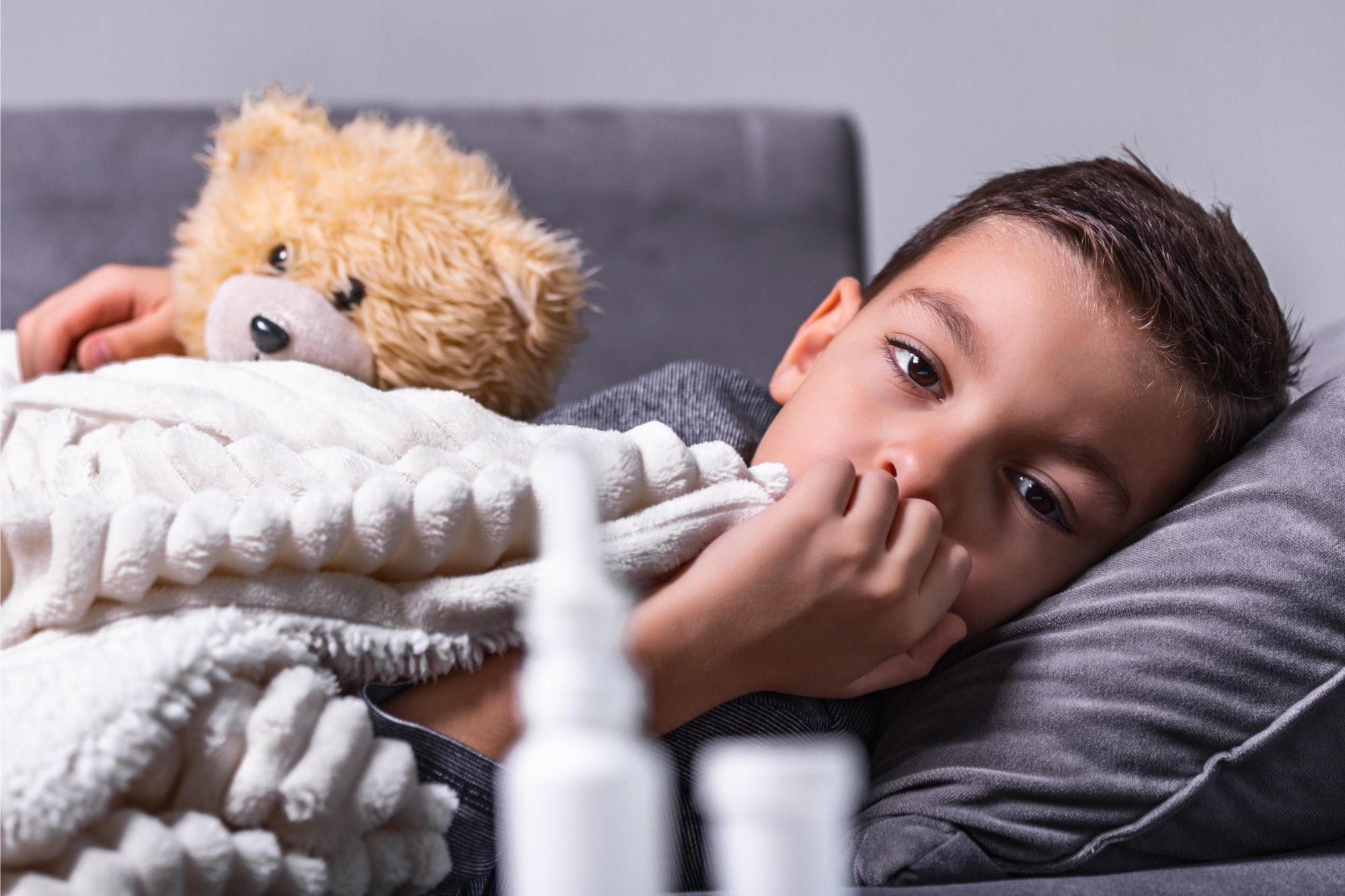
New research shows that hypertonic saline nasal drops can shorten children’s colds by two days and reduce transmission among family members, offering a simple, effective treatment option.
According to research recently presented at the European Respiratory Society (ERS) Congress in Vienna, Austria, administering hypertonic saline nasal drops to children can shorten the duration of the common cold by two days and also decrease the spread of colds to family members.
The results of the ELVIS-Kids randomized controlled trial were presented by Professor Steve Cunningham from Child Life and Health, University of Edinburgh, UK.
He said: “Children have up to 10 to 12 upper respiratory tract infections, what we refer to as colds, per year, which have a big impact on them and their families. There are medicines to improve symptoms, such as paracetamol and ibuprofen, but no treatments that can make a cold get better quicker.”
Study Methodology and Participant Details
ELVIS-Kids Chief Investigator Dr Sandeep Ramalingam, consultant virologist, NHS Lothian, Edinburgh, UK, had noted that salt-water solutions are often used by people in South Asia, as nasal irrigation and gargling, to treat a cold and wanted to explore if this clinical benefit could be replicated in a large study.
The research team recruited 407 children aged up to six years to a study where they were given either hypertonic saline ~2.6% (salt-water) nasal drops or usual care when they developed a cold. Overall, 301 children developed a cold; for 150 of these, their parents were given sea salt and taught to make and apply salt-water nose drops to the children’s noses (three drops per nostril, a minimum of four times per day, until well) and 151 children had usual cold care.
Professor Cunningham explains: “We found that children using salt-water nose drops had cold symptoms for an average of six days whereas those with usual care had symptoms for eight days. The children receiving salt water nose drops also needed fewer medicines during their illness.
“Salt is made up of sodium and chloride. Chloride is used by the cells lining the nose and windpipes to produce hypochlorous acid within cells, which they use to defend against virus infection. By giving extra chloride to the lining cells this helps the cells produce more hypochlorous acid, which helps suppress viral replication, reducing the length of the virus infection, and therefore the duration of symptoms.”
Reduction in Household Transmission and Future Directions
When children got salt-water nose drops, fewer households reported family members catching a cold (46% vs 61% for usual care). Eighty-two percent of parents said the nose drops helped the child get better quickly and 81% said they would use nose drops in the future.
Professor Cunningham added: “Reducing the duration of colds in children means that fewer people in their house also get a cold, with clear implications for how quickly a household feels better and can return to their usual activities like school and work, etc.
“Our study also showed that parents can safely make and administer nose drops to their children and therefore have some control over the common cold affecting their children.”
Professor Alexander Möeller is Head of the ERS Paediatric Assembly and Head of the Department for Respiratory Medicine at the University Children’s Hospital Zurich, Switzerland, and was not involved in the research. He said: “This is an important study that is the first of its kind to investigate the impact of salty nose drops in children with colds. Although most colds usually don’t turn into anything serious, we all know how miserable they can be, especially for young children and their families.
“This extremely cheap and simple intervention has the potential to be applied globally; providing parents with a safe and effective way to limit the impact of colds on their children and family would represent a significant reduction in health and economic burden of this most common condition.”
The team hopes to further investigate the effect of saltwater nose drops on wheezing during colds, after initial results from this study showed that children who received the drops had significantly fewer episodes of wheezing (5% vs 19%).
Meeting: European Respiratory Society Congress 2024
Never miss a breakthrough: Join the SciTechDaily newsletter.
Follow us on Google and Google News.
9 Comments
All is good and helpful however, we were told that if saline is more concentrated than normal it could cause dry mucosa and potentially cause secondary infection. I would have been more interested in seeing a 3ed group administering normal saline. Also, the study doesn’t say how to prepare the concentrated saline.
this is invented in India hundreds of years before and now scientists took the credit to explain the same thing
Use distilled water when making the saltwater
This study is plagiarism. These scientists should be sued for taking credit for something that has been used and proven to work for thousands of years. Oh, wait! Modern science is nothing more than claiming credit for something that has already been around for thousands of years. Or, you know, the new saying that was coined by Dr. Fauci “Follow the Science” which is the phrase that duped billions into being willfully poisoned. Not to mention the millions that it has already killed. What can one expect when Fauci rubs shoulders with the son (Bill Gates) of the father of eugenics. What sad place this world has become…
Well, I don’t think that systematic research on something my grandma used for years may be called “plagiarism”. Or maybe yours knew about the role of hypochlorous acids.
Haaaaaaa! Scientist have not “discovered” anything. We’ve been doing that. LMAO. You people are ridiculously useless.
Nothing new under the sun
It’s clear these scientists aren’t parents or else they’d know the hell they’d have to go through to get their toddler to put in 3 drops in each nostril 4-5 times a day. Family wil go thru less pain just letting the sickness run Its course lol
I’m sixty-eight years old. My children are in their thirties and forties . I have always used saline drops on my children and myself. This IA something that has been passed down generation to generation. I’m sure, many can attest that it is safe and effective and cheap. My daughter had a sinus infection and saline rinsing cleared it up . We also use it to help clean the sinus at allergy time.
All of that “research” is a waste of time and money.