

A study found that unsweetened sparkling water lowers oral pH less than soda sweetened with sugar.
A sip of sparkling water briefly makes the mouth more acidic, but not nearly as much as sugar-sweetened soda, according to a comparison of several common beverages. The findings suggest that choosing an unsweetened carbonated drink instead of soda may pose less risk to tooth enamel.
Acids can begin dissolving enamel when the mouth’s pH falls below roughly 5.5. Rather than measuring only the acidity of each beverage, researchers tracked how drinking them changed salivary pH inside the mouth.
“Many people are switching from soda to sparkling water, and our findings suggest that unsweetened sparkling water may be a lower-risk alternative to soda, when consumed in moderation and alongside good oral hygiene practices,” said Wajiha Zulfiqar, a graduate student in Nutrition Science at Purdue University.
Zulfiqar presented the results at NUTRITION 2026, the American Society for Nutrition’s flagship annual meeting, held July 25–28 in National Harbor, Maryland, near Washington, D.C.
A direct test compares four drinks
Sugar-sweetened soda is known to contribute to dental erosion by pushing oral pH below 5.5. The effect of unsweetened sparkling water on acidity inside the mouth, however, has received less attention.
Researchers compared sugar-sweetened soda, regular sparkling water, calcium-fortified sparkling water and plain water in 20 adults. Each participant consumed all four beverages, helping the researchers reduce the influence of individual differences on the results.
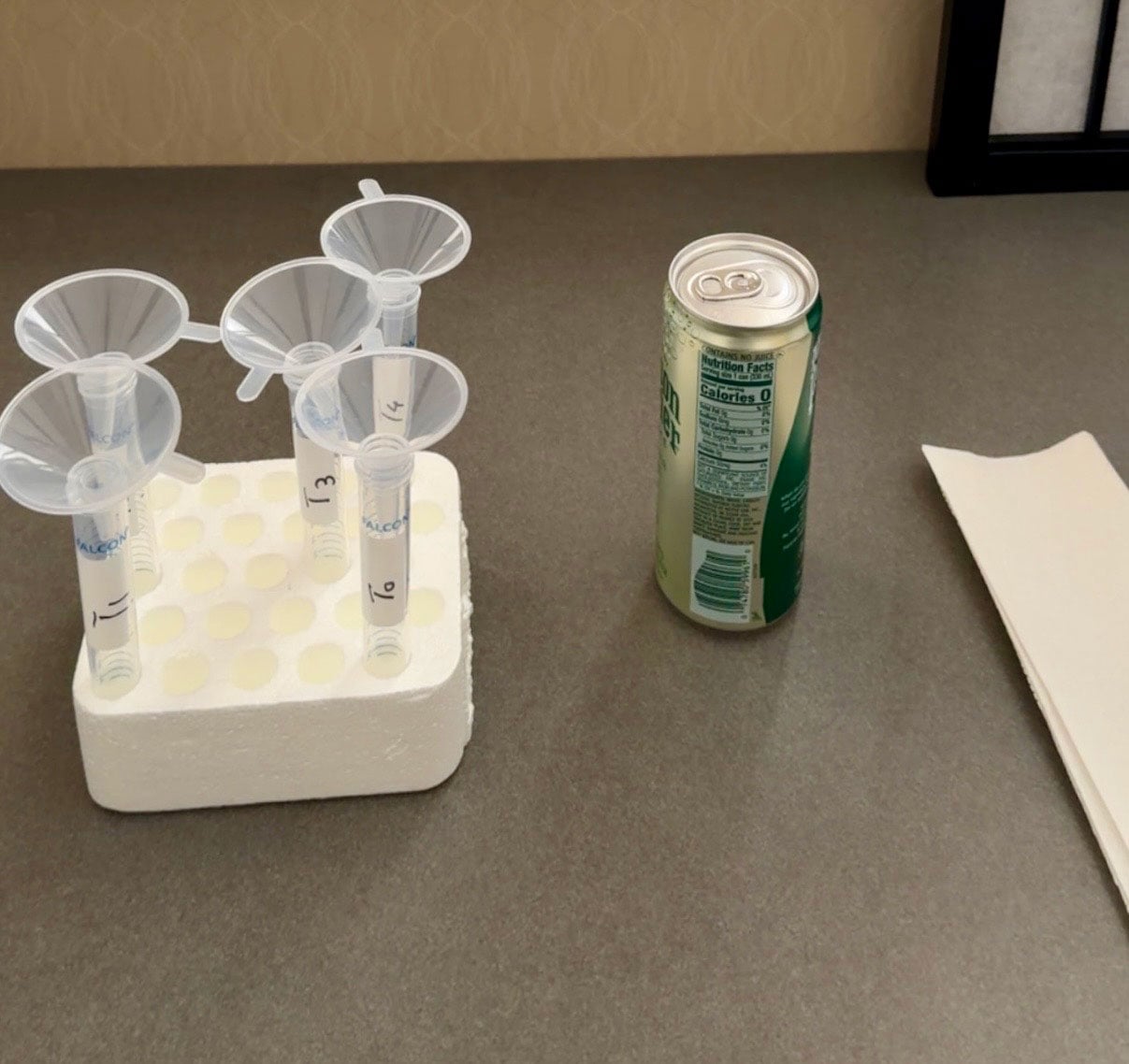
“Directly comparing different beverages using the same experimental framework allowed us to evaluate the effects of sparkling water relative to both soda — a higher-risk beverage — and plain water as a neutral reference,” said Zulfiqar. “Additionally, by measuring how the mouth responded in real time, rather than only testing beverage acidity alone as other studies have done, our study provides a more realistic understanding of how these drinks may impact oral health.”
Soda produces the deepest pH drop
Soda caused the strongest rise in oral acidity. Salivary pH remained significantly lower than after drinking plain water at both two minutes and 20 minutes following consumption.
Regular unsweetened sparkling water produced a temporary decline in salivary pH after two minutes, while the calcium-fortified version caused a decrease after five minutes. In both cases, pH had returned close to its starting level within 20 minutes.
Saliva restores acidity within minutes
After participants drank soda or sparkling water, saliva rapidly moved oral acidity back toward normal and kept pH above the threshold associated with enamel damage. The researchers cautioned that the experiment captured only short-term changes. Actual erosion risk also depends on how frequently a beverage is consumed, how long teeth are exposed, and whether the drink contains sugar.
“Our results suggest that replacing sugar-sweetened sodas with unsweetened sparkling water may help lower the risk of enamel erosion,” said Zulfiqar. “The results also highlight an opportunity for the beverage industry to explore reformulation strategies that could potentially reduce the erosive potential of acidic beverages.”
The researchers next plan to investigate the long-term effects of sparkling water and determine whether it changes other features of the oral environment that support dental health.
Meeting: NUTRITION 2026
Never miss a breakthrough: Join the SciTechDaily newsletter.
Follow us on Google and Google News.
1 Comment
What is “plain water?” Municipal water for household use varies considerably in ‘hardness’ and probably pH. Many people use water ‘softeners’ that exchange sodium or potassium ions for calcium and magnesium ions. “Sparkling water” typically only contains carbonic acid (perhaps along with some sodium bicarbonate) while many sodas also contain citric and phosphoric acids. What were the active agents in changing and and stabilizing the pH of the “sparkling water” and unspecified sodas?