
Close Menu
    Facebook X (Twitter) Instagram
    SciTechDaily
    • Biology
    • Chemistry
    • Earth
    • Health
    • Physics
    • Science
    • Space
    • Technology
    Facebook X (Twitter) Pinterest YouTube RSS
    SciTechDaily
    Home»Space»Kepler Space Telescope Captures One of the Fastest FELTs to Date
    Space

    Kepler Space Telescope Captures One of the Fastest FELTs to Date

    By Jessica Sieff, Notre DameMarch 29, 2018No Comments4 Mins Read
    Facebook Twitter Pinterest Telegram LinkedIn WhatsApp Email Reddit
    Share
    Facebook Twitter LinkedIn Pinterest Telegram Email Reddit
    Kepler Discovers a Fast-Evolving Luminous Transient
    The Fast-Evolving Luminous Transient, captured by Kepler Space Telescope in 2015, rose in brightness over just 2.2 days and faded completely within 10 days. Credit: NASA/JPL-Caltech

    The slow fade of radioactive elements following a supernova allows astrophysicists to study them at length. But the universe is packed full of flash-in-the-pan transient events lasting only a brief time, so quick and hard to study they remain a mystery.

    Only by increasing the rate at which telescopes monitor the sky has it been possible to catch more Fast-Evolving Luminous Transients (FELTs) and begin to understand them.

    According to a new study in Nature Astronomy, researchers say NASA’s Kepler Space Telescope captured one of the fastest FELTs to date. Peter Garnavich, professor and department chair of astrophysics and cosmology physics at the University of Notre Dame and co-author of the study, described the event as “the most beautiful light curve we will ever get for a fast transient.”

    “We think these might actually be very common, these flashes, and we have just been missing them in the past because they are so fast,” Garnavich said. “The fact that one occurred in the small area of the sky being monitored by Kepler means they are probably fairly common.”
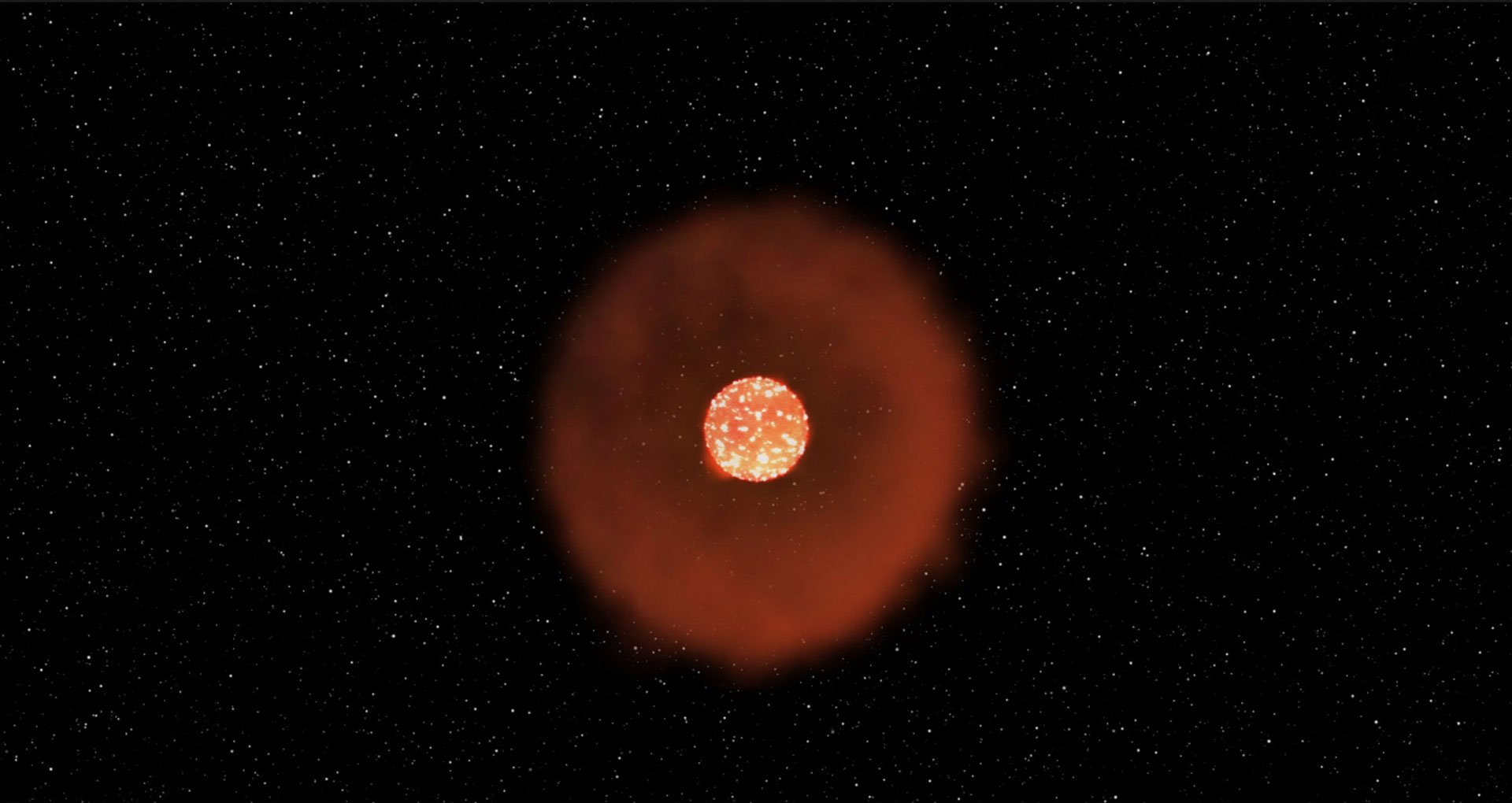
    Fast-Evolving Luminous Transient
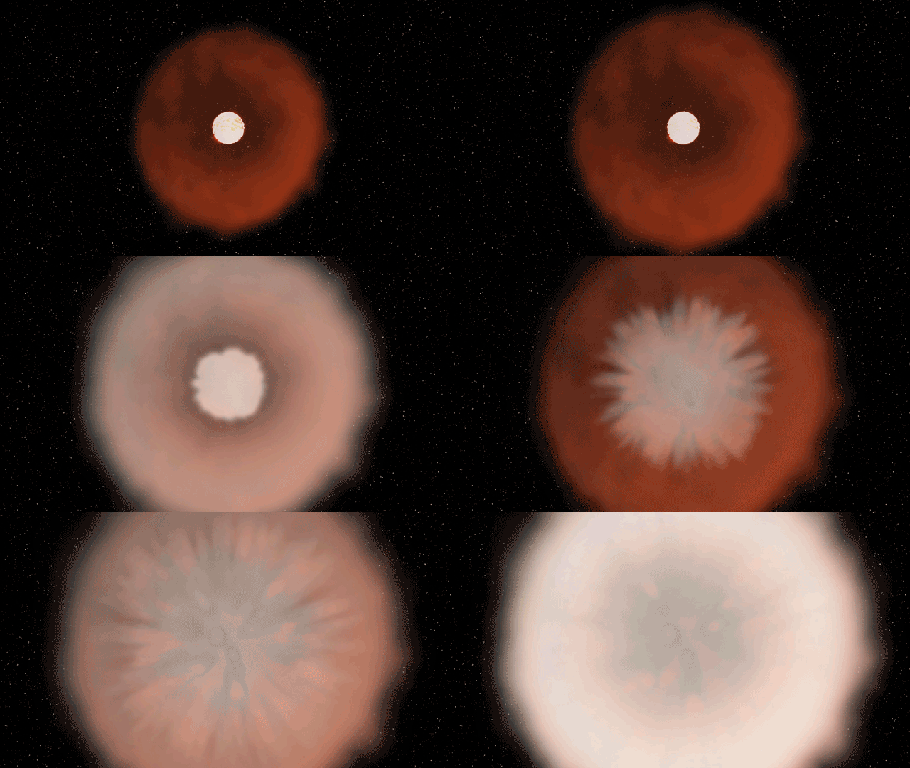
    This animation shows a kind of stellar explosion called a Fast-Evolving Luminous Transient. In this case, a giant star “burps” out a shell of gas and dust about a year before exploding. Most of the energy from the supernova turns into light when it hits this previously ejected material, resulting in a short, but brilliant burst of radiation. Credit: NASA/JPL-Caltech

    The FELT, captured in 2015, rose in brightness over just 2.2 days and faded completely within 10 days. Most supernovae can take 20 days to reach peak brightness and weeks to become undetectable.

    Researchers debated what could be causing these particularly fast events but ultimately settled on a simple explanation: The stars “burp” before exploding and don’t generate enough radioactive energy to be seen later. As the supernova runs into the gas expelled in the burp, astrophysicists observe a flash. The supernova then fades beyond its ability to detect it.

    “Our conclusion was that this was a massive star that exploded, but it had a mass loss — a wind — that started a couple of years before it exploded,” Garnavich described. “A shock ran into that wind after the explosion, and that’s what caused this big flash. But it turns out to be a rather weak supernova, so within a couple of weeks we don’t see the rest of the light.”

    The only visible activity is from the quick collision of the gas and the exploding star, where some of the kinetic energy is converted to light. One mystery that remains is why the “burp” would happen such a short time before the supernova explosion. Astrophysicists want to know how the outside of the star reacts to what’s happening deep in the core, Garnavich said.

    While the Kepler telescope and its K2 mission is expected to run out of fuel and end in the coming months, NASA’s Transiting Exoplanet Survey Satellite (TESS) is planned for launch following the K2 mission. Garnavich said data retrieved during the TESS mission could also be used to study FELTs.

    Reference: “A fast-evolving luminous transient discovered by K2/Kepler” by A. Rest, P. M. Garnavich, D. Khatami, D. Kasen, B. E. Tucker, E. J. Shaya, R. P. Olling, R. Mushotzky, A. Zenteno, S. Margheim, G. Strampelli, D. James, R. C. Smith, F. Förster and V. A. Villar, 26 March 2018, Nature Astronomy.
    DOI: 10.1038/s41550-018-0423-2

    The study was funded by NASA.

    Never miss a breakthrough: Join the SciTechDaily newsletter.
    Follow us on Google and Google News.

    Astronomy Astrophysics Cosmology Kepler Space Telescope University of Notre Dame
    Share. Facebook Twitter Pinterest LinkedIn Email Reddit

    Related Articles

    Kepler Provides a New Technique for Supernova-Hunting

    Kepler Continues to Surprise, Detects Transiting Exocomets

    New Research Reveals Dimming of Tabby’s Star May Be Caused by Dust

    How Does Binary Star System AR Scorpii Emit Energy

    Astronomers Demonstrate a Powerful New Technique for Observing Stars

    Kepler Reveals Solar-Like Oscillations in Other Stars

    Astronomers Measure Kepler 11145123 with Unprecedented Precision

    Study Reveals Strange Star KIC 8462852 is Likely Swarmed by Comets

    Kepler Discovers a Planetary Object Being Vaporized by a White Dwarf

    Leave A Reply Cancel Reply

    • Facebook
    • Twitter
    • Pinterest
    • YouTube

    Don't Miss a Discovery

    Subscribe for the Latest in Science & Tech!

    Trending News

    New Pill Lowers Stubborn Blood Pressure and Protects the Kidneys

    Humans May Have Hidden Regenerative Powers, New Study Suggests

    Scientists Just Solved the Mystery of Why Crabs Walk Sideways

    Doctors Are Surprised by What This Vaccine Is Doing to the Heart

    This Popular Supplement May Boost Your Brain, Not Just Your Muscles

    Scientists Say This Simple Supplement May Actually Reverse Heart Disease

    Warming Oceans Could Trigger a Dangerous Methane Surge

    This Simple Movement Could Be Secretly Cleaning Your Brain

    Follow SciTechDaily
    • Facebook
    • Twitter
    • YouTube
    • Pinterest
    • Newsletter
    • RSS
    SciTech News
    • Biology News
    • Chemistry News
    • Earth News
    • Health News
    • Physics News
    • Science News
    • Space News
    • Technology News
    Recent Posts
    • Researchers Discover Efficient New Way To Split Hydrogen From Water for Energy
    • This Korean Skincare Ingredient Could Help Fight Deadly Superbugs
    • Giant Squid Detected off Western Australia in Stunning Deep-Sea Discovery
    • Popular Sugar-Free Sweetener Linked to Liver Disease, Study Warns
    • Why Weight Loss Isn’t Enough for Everyone at Risk of Diabetes
    Copyright © 1998 - 2026 SciTechDaily. All Rights Reserved.
    • Science News
    • About
    • Contact
    • Editorial Board
    • Privacy Policy
    • Terms of Use

    Type above and press Enter to search. Press Esc to cancel.