
Close Menu
    Facebook X (Twitter) Instagram
    SciTechDaily
    • Biology
    • Chemistry
    • Earth
    • Health
    • Physics
    • Science
    • Space
    • Technology
    Facebook X (Twitter) Pinterest YouTube RSS
    SciTechDaily
    Home»Space»Kepler’s Final Image Reveals A Galaxy Full Of Possibilities
    Space

    Kepler’s Final Image Reveals A Galaxy Full Of Possibilities

    By Alison Hawkes, Ames Research CenterFebruary 7, 20191 Comment4 Mins Read
    Facebook Twitter Pinterest Telegram LinkedIn WhatsApp Email Reddit
    Share
    Facebook Twitter LinkedIn Pinterest Telegram Email Reddit

    Kepler’s Final Image

    NASA’s Kepler space telescope may be retired, but the discoveries continue to rack up for this historic planet-hunting mission. Kepler rang in the new year with several new planet discoveries, including a previously overlooked planet of unusual size, as well as a super Earth and a Saturn-sized world orbiting a Sun-like star.

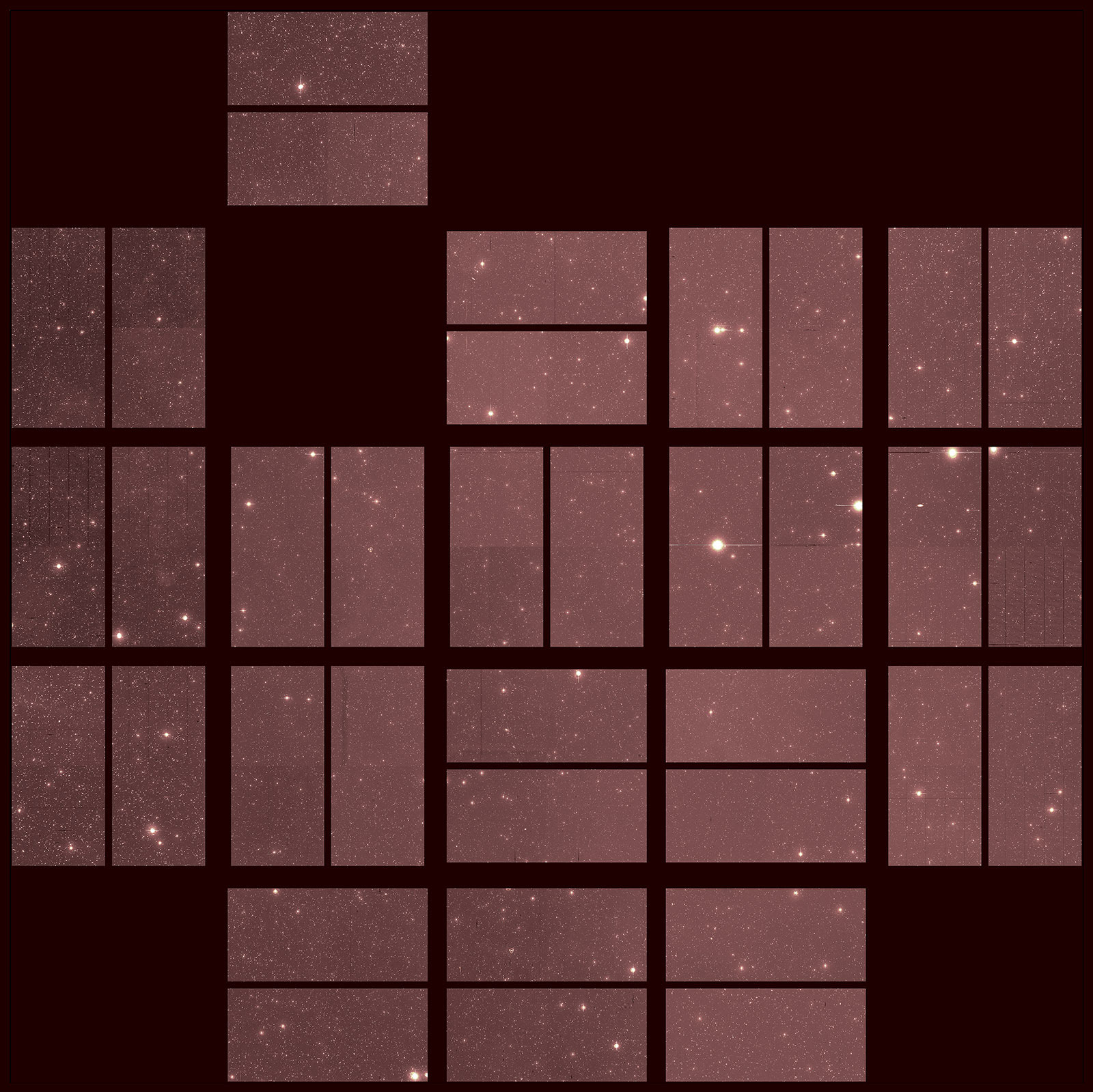
    In the meantime, the Kepler mission has released its final record of the spacecraft’s full field of view before the depletion of fuel permanently ended its work. NASA retired the spacecraft on October 30, 2018, to a safe orbit.
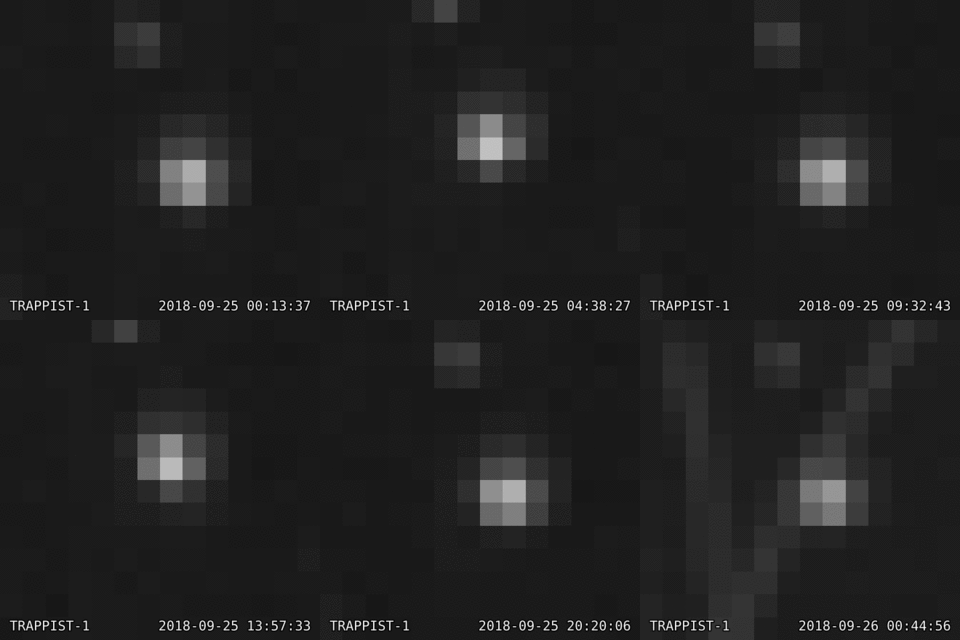
    TRAPPIST 1 System Final Kepler Image
    This is Kepler’s view of the TRAPPIST-1 system, an ultra-cool red dwarf star with seven rocky planets, at least three of them believed to be temperate worlds. Credit: NASA/Ames Research Center

    The “last light” image taken on September 25 represents the final page of the final chapter of Kepler’s remarkable journey of data collection. It bookends the moment of intense excitement nine and a half years earlier when the spacecraft first opened its eye to the skies and captured its “first light” image. Kepler went on to discover more than 2,600 worlds beyond our solar system and statistically proved that our galaxy has even more planets than stars.

    The blackened gaps in the center and along the top of the image are the result of earlier random part failures in the camera. Due to the modular design, the losses did not impact the rest of the instrument.

    For this final field of view, Kepler’s last observation campaign in its extended mission, the telescope was pointed in the direction of the constellation Aquarius. It caught a glimpse of the renowned TRAPPIST-1 system with its seven rocky planets, at least three of them believed to be temperate worlds. Another target was the GJ 9827 system, a nearby bright star that hosts a planet that is considered an excellent opportunity for follow-up observations with other telescopes to study an atmosphere of a faraway world.

    Kepler’s View of GJ 9827
    This Kepler’s view of GJ 9827, a star around which Kepler previously detected three orbiting planets. Because the system is relatively close at 97 light-years away, it is considered an excellent target for studying exoplanet atmospheres. Credit: NASA/Ames Research Center

    Fortuitously, Kepler’s field of view also slightly overlapped with NASA’s new planet-hunter, the Transiting Exoplanet Survey Satellite, or TESS, affording astronomers the chance to compare and improve their understanding of the data received from the two spacecraft. Although Kepler’s transmitters have been turned off and it is no longer collecting science, its data will be mined for many years to come.

    Here are videos of some of Kepler’s last targets as these stars brighten and dim. In addition to the static snapshots, Kepler routinely took of its full field of view, the telescope’s camera also recorded selected targets at 30-minute increments. These continued for another several hours after the “last light” image before data collection ceased. The target data is obtained to measure the change in brightness of the stars, essential for discovering planets as they transit the faces of their stars and for understanding other aspects of stellar behavior. The motion of the stars in the videos is due to decreasing thruster performance caused by near-fuel exhaustion.

    Kepler’s View of K2 138
    This is Kepler’s view of K2-138 with its six planets sized between Earth and Neptune. It was the first multi-planet system entirely discovered by citizen scientists. Credit: NASA/Ames Research Center

    NASA’s Ames Research Center in California’s Silicon Valley manages the Kepler and K2 missions for NASA’s Science Mission Directorate. NASA’s Jet Propulsion Laboratory in Pasadena, California, managed Kepler mission development. Ball Aerospace & Technologies Corporation operated the flight system with support from the Laboratory for Atmospheric and Space Physics at the University of Colorado in Boulder.

    Never miss a breakthrough: Join the SciTechDaily newsletter.
    Follow us on Google and Google News.

    Astronomy Kepler Space Telescope
    Share. Facebook Twitter Pinterest LinkedIn Email Reddit

    Related Articles

    Exoplanet Excitement: Kepler Reveals a Sizzling System With Seven Super-Earths

    Astronomers Discover the Last Three Planets NASA’s Kepler Space Telescope Observed Before Going Dark

    Final Act for NASA’s Kepler Planet Hunter: Unearthing a Triad of Alien Worlds

    An Intragalactic Treasure Hunt: Red Giant Stars’ Mass “Stolen” by Stellar Neighbors

    Jupiter’s Twin: NASA’s Kepler Space Telescope Delivers New Planetary Discovery From the Grave

    A Mars-Sized Planet Discovered Orbiting Extremely Close to Host Star – Its Year Is Less Than 10 Hours

    New Method To Detect Tatooine-Like Planets Proves Successful

    Mysterious Population of Rogue Planets Spotted Near the Center of Our Galaxy

    Breakthrough: Shrinking Planets Could Explain Mystery of Universe’s Missing Worlds

    1 Comment

    1. prof dr mehmet emin özel on February 8, 2019 1:21 pm

      Thank you Kepler, opening new vistas in astronomy!

      Reply
    Leave A Reply Cancel Reply

    • Facebook
    • Twitter
    • Pinterest
    • YouTube

    Don't Miss a Discovery

    Subscribe for the Latest in Science & Tech!

    Trending News

    Scientists Warn That This Common Pet Fish Can Wreck Entire Ecosystems

    Scientists Make Breakthrough in Turning Plastic Trash Into Clean Fuel Using Sunlight

    This Popular Supplement May Interfere With Cancer Treatment, Scientists Warn

    Scientists Finally Solved One of Water’s Biggest Mysteries

    Could This New Weight-Loss Pill Disrupt the Entire Market? Here’s What You Should Know About Orforglipron

    Earth’s Crust Is Tearing Open in Africa, and It Could Form a New Ocean

    Breakthrough Bowel Cancer Trial Leaves Patients Cancer-Free for Nearly 3 Years

    Natural Compound Shows Powerful Potential Against Rheumatoid Arthritis

    Follow SciTechDaily
    • Facebook
    • Twitter
    • YouTube
    • Pinterest
    • Newsletter
    • RSS
    SciTech News
    • Biology News
    • Chemistry News
    • Earth News
    • Health News
    • Physics News
    • Science News
    • Space News
    • Technology News
    Recent Posts
    • Kratom Use Explodes in the US, With Life-Changing Consequences
    • Scientists Uncover Fatal Weakness in “Zombie Cells” Linked to Cancer
    • World-First Study Reveals Human Hearts Can Regenerate After a Heart Attack
    • Why Your Dreams Feel So Real Sometimes and So Strange Other Times
    • Scientists Debunk 100-Year-Old Belief About Brain Cells, Rewriting Textbooks
    Copyright © 1998 - 2026 SciTechDaily. All Rights Reserved.
    • Science News
    • About
    • Contact
    • Editorial Board
    • Privacy Policy
    • Terms of Use

    Type above and press Enter to search. Press Esc to cancel.