
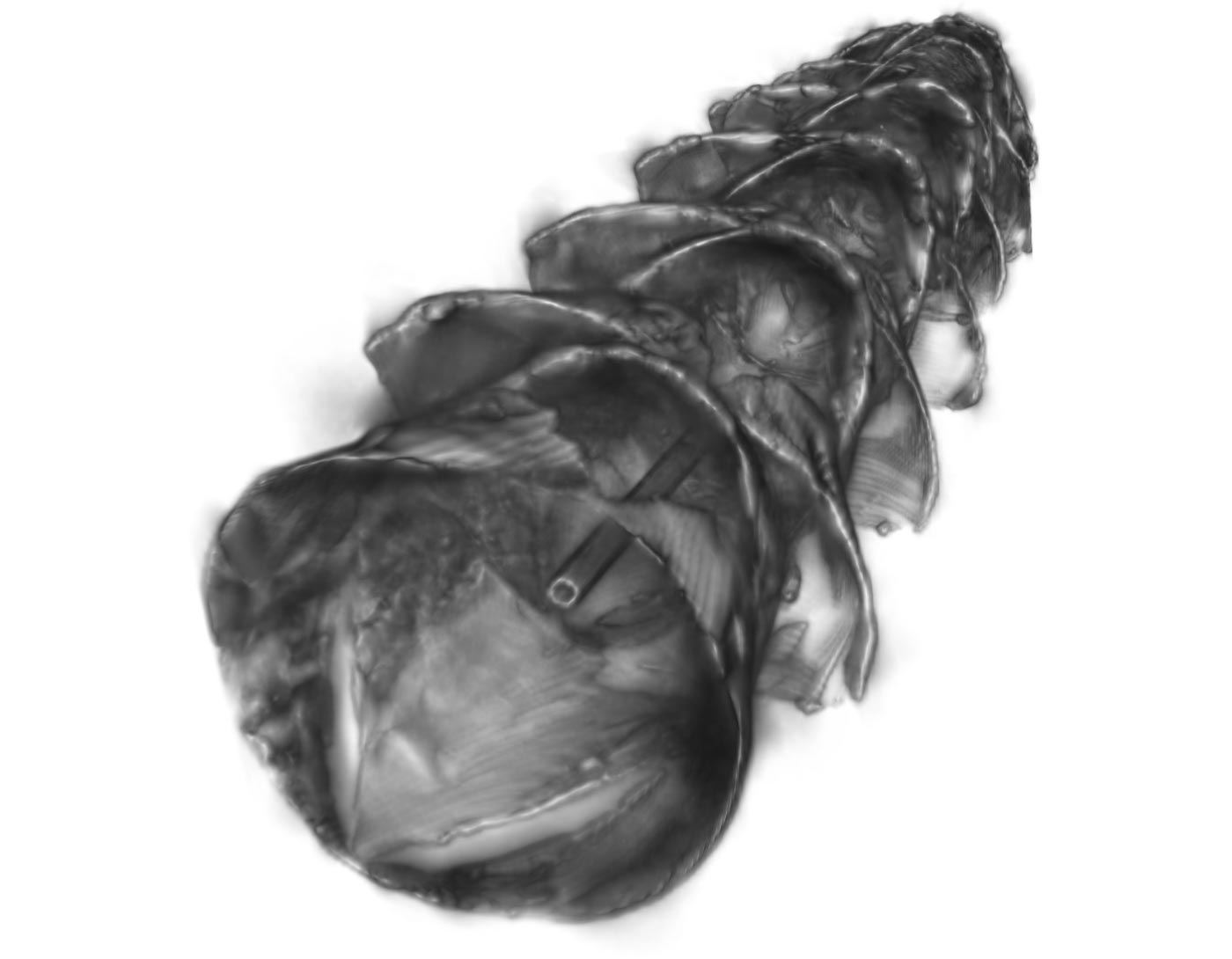
Stretchable, snakeskin-like design features pop-out needles to allow circumferential and longitudinal delivery of therapeutics in challenging situations.
Diseases that affect tubular structures in the body, such as the gastrointestinal (GI) system, vasculature and airway, present a unique challenge for delivering local treatments. Vertically oriented organs, such as the esophagus, and labyrinthine structures, such as the intestine, are difficult to coat with therapeutics, and in many cases, patients are instead prescribed systemic drugs that can have immunosuppressive effects.
To improve drug delivery for diseases that affect tubular organs, like eosinophilic esophagitis and inflammatory bowel disease, a multidisciplinary team from Brigham and Women’s Hospital, Massachusetts General Hospital and Massachusetts Institute of Technology (MIT) designed a stretchable stent based on the principles of kirigami that is capable of supporting rapid deposition of drug depots. The research is described in Nature Materials.
“We know that injected drugs like steroids can help relieve certain GI conditions, but the challenge is delivering them in a segment of a tubular organ multiple centimeters in length,” said corresponding author Giovanni Traverso, MB, BChir, PhD, a gastroenterologist and biomedical engineer in the Brigham’s Division of Gastroenterology and the Department of Mechanical Engineering at MIT. “One of the strategies we came up with was a dynamic stent, which can be stretched to change shape and deliver drugs circumferentially and longitudinally to cover the tube.”
Harnessing Kirigami Mechanics for Medical Use
To design the drug-depositing stent system, the team looked to the principles of kirigami, a Japanese form of paper art similar to origami that includes cutting paper. The researchers previously demonstrated that the buckling properties of kirigami-based designs can be used to engineer footwear outsoles that generate friction to prevent slips and falls.
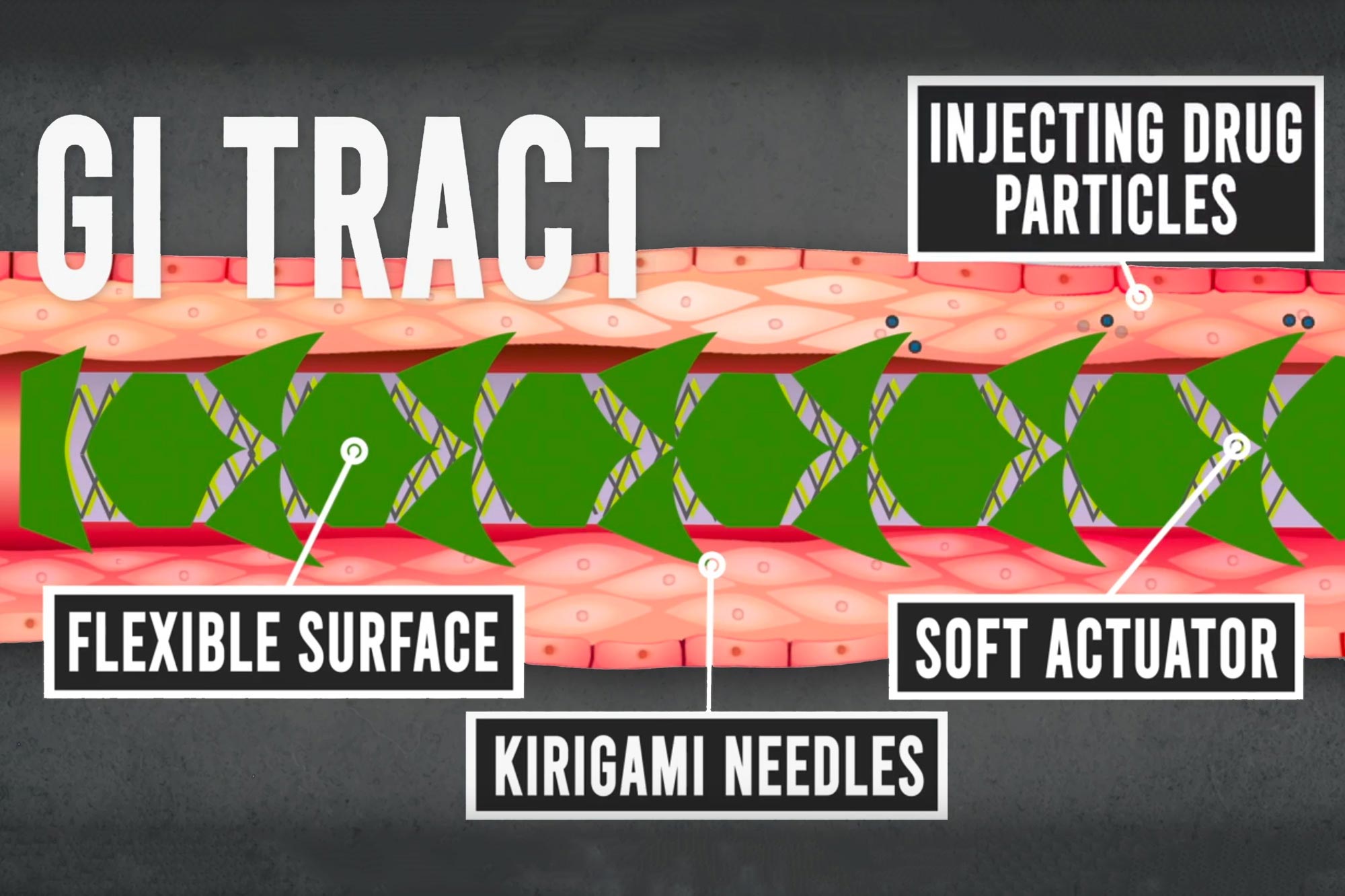
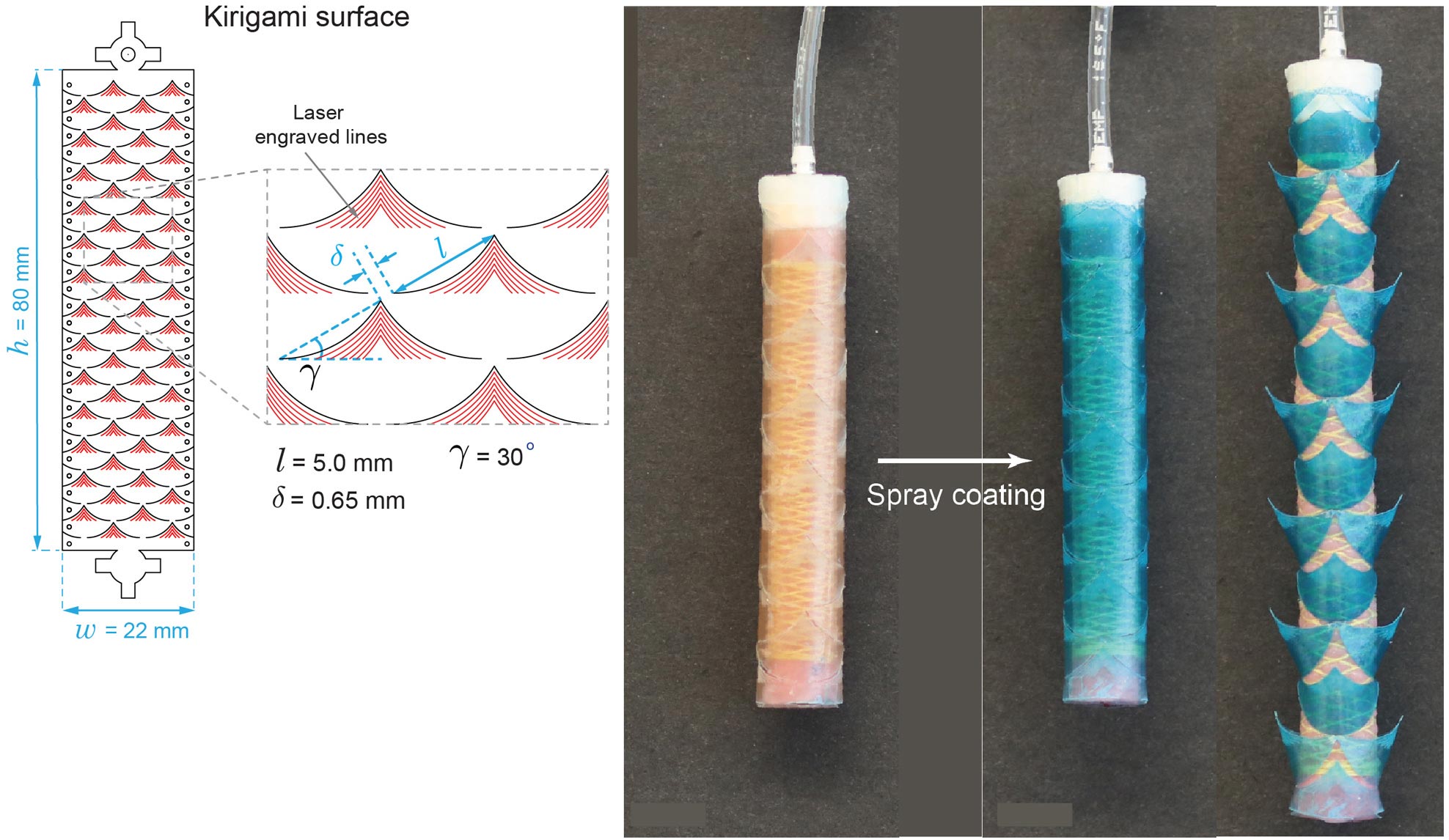
The kirigami stent has a snakeskin-like, cylindrical design that expands to engage pop-out needles, which are controlled by air pressure applied to a soft actuator. This allows for the circumferential delivery of therapeutics into the GI tract, as well as the vasculature and airways. The stent is removed shortly after the delivery of the therapeutic and is not implanted in the body. It can be manufactured in various sizes, and drug delivery can be controlled by varying the thickness of the kirigami shell, needle length, and applied pressure.
After refining the mechanics of the kirigami stent, the researchers coated the design with budesonide-loaded polymeric micro-particles to support extended drug delivery, which was then tested in the esophagi of pigs. Budesonide is a drug commonly used to treat a range of gastrointestinal diseases. The kirigami needles were left in their popped-out configuration for two minutes before the stent was removed. When the researchers examined the animals at different times (one, three, and seven days after the drug’s delivery), they found concentrations of the therapeutic in the animal tissue at all time points, indicating that the delivery system can promote the sustained administration of therapeutics.
Versatility Across Organ Systems and Scales
“Our simple approach allows us to develop a drug-releasing system that can be applied to various length-scales and be matched with the size of any target tubular organ,” said first author Sahab Babaee, PhD, a research affiliate in the Division of Gastroenterology at the Brigham and an MIT research scientist.
The researchers will continue to refine the drug delivery system in animal models and work toward developing it for use in humans. They hope that the system can also be deployed in structures like the trachea and iliac artery, thereby improving the targeted, sustained delivery of therapeutics for a range of diseases.
“The vision here is to think about the long-term release of the drug, so that one day a patient could receive local delivery of a treatment and have therapy for weeks, if not months or even years,” Traverso said. “Removing the need to routinely take a prescribed medication, like a steroid or other drug, can really transform the patient experience.”
For more on this research, see Stents Inspired by Japanese Paper Art Can Deliver Drugs Directly to the GI Tract.
Reference: “Kirigami-inspired stents for sustained local delivery of therapeutics” by Sahab Babaee, Yichao Shi, Saeed Abbasalizadeh, Siddartha Tamang, Kaitlyn Hess, Joy E. Collins, Keiko Ishida, Aaron Lopes, Michael Williams, Mazen Albaghdadi, Alison M. Hayward and Giovanni Traverso, 14 June 2021, Nature Materials.
DOI: 10.1038/s41563-021-01031-1
Other authors on the paper include Yichao Shi, Saeed Abbasalizadeh, Siddartha Tamang, Kaitlyn Hess, Joy E. Collins, Keiko Ishida, Aaron Lopes, Michael Williams, Mazen Albaghdadi, and Alison M. Hayward.
This work was funded in part by the Karl van Tassel (1925) Career Development Professorship and the Department of Mechanical Engineering at MIT. Traverso is a co-inventor on provisional patent applications for the technology described.
Never miss a breakthrough: Join the SciTechDaily newsletter.
Follow us on Google and Google News.
1 Comment
Extremely interesting.
Here is a thought.
Drug eluting stents for the Heart.
Why Heart you may ask?
Rethink the Heart as not a single Muscle pumping blood in the Circulatory system but a complex machine. Heart attacks are a leading cause of death globally.
There are Minute capillaries in arteries and veins in the hearts of all blood pumping creatures.
When such arteries and veins and capillaries get clogged we experience a heart attack.. ..
Inspired By COVID 19 and Nano Chemistry.
Views expressed are personal and not binding on anyone.