
Major worldwide citizen science initiative advances understanding of the human microbiome.
According to a recent study in Nature Biotechnology, leveraging gamers and video game technology can dramatically boost scientific research.
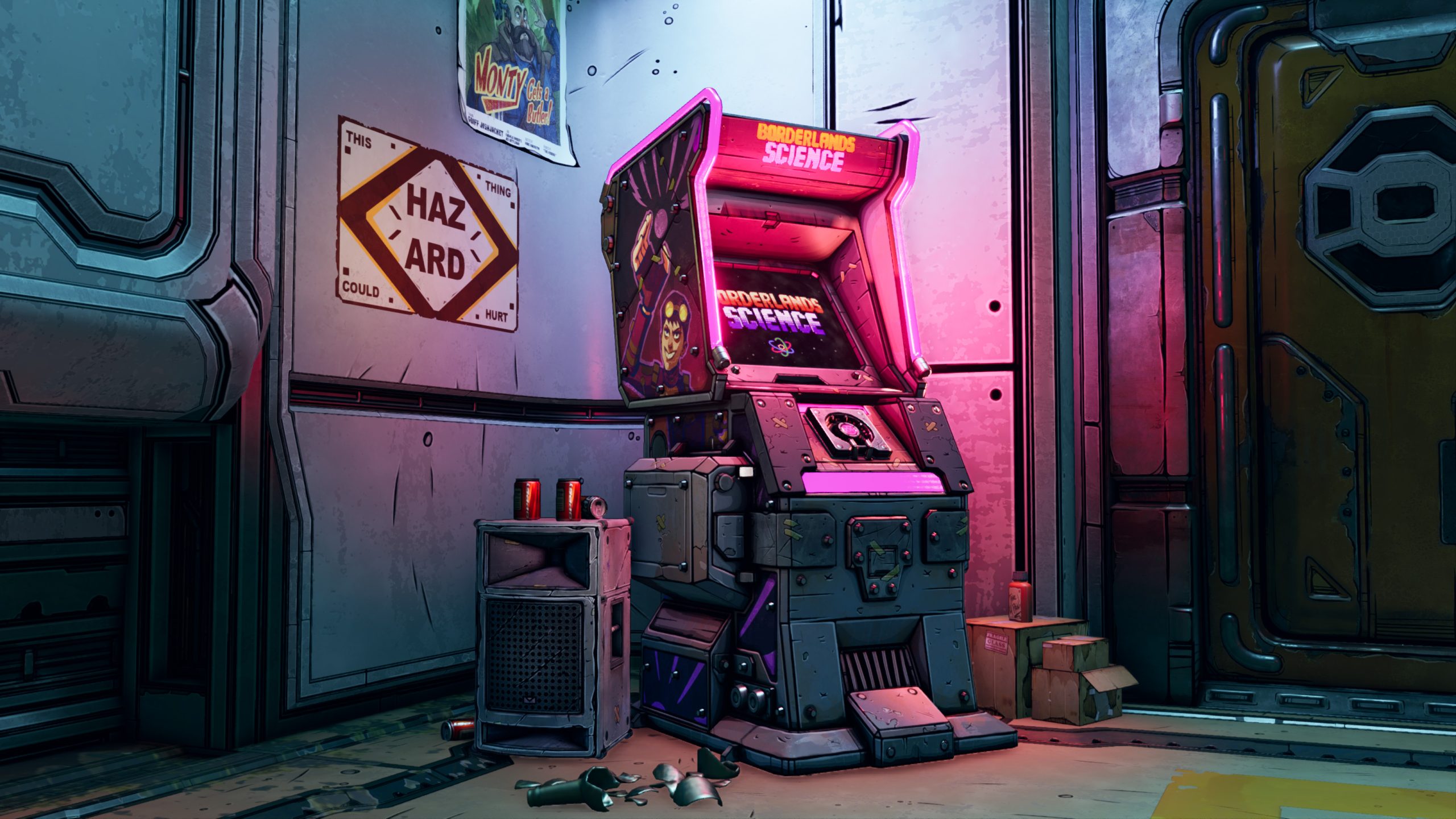
4.5 million gamers around the world have advanced medical science by helping to reconstruct microbial evolutionary histories using a minigame included inside the critically and commercially successful video game, Borderlands 3. Their playing has led to a significantly refined estimate of the relationships of microbes in the human gut. The results of this collaboration will both substantially advance our knowledge of the microbiome and improve on the AI programs that will be used to carry out this work in the future.
Tracing the evolutionary relationships of bacteria
By playing Borderlands Science, a mini-game within the looter-shooter video game Borderlands 3, these players have helped trace the evolutionary relationships of more than a million different kinds of bacteria that live in the human gut, some of which play a crucial role in our health. This information represents an exponential increase in what we have discovered about the microbiome up till now. By aligning rows of tiles which represent the genetic building blocks of different microbes, humans have been able to take on tasks that even the best existing computer algorithms have been unable to solve yet.
The project was led by McGill University researchers, developed in collaboration with Gearbox Entertainment Company, an award-winning interactive entertainment company, and Massively Multiplayer Online Science (MMOS), a Swiss IT company connecting scientists to video games), and supported by the expertise and genomic material from the Microsetta Initiative led by Rob Knight from the Departments of Pediatrics, Bioengineering, and Computer Science & Engineering at the University of California San Diego.
Humans improve on existing algorithms and lay the groundwork for the future
Not only have the gamers improved on the results produced by the existing programs used to analyze DNA sequences, but they are also helping lay the groundwork for improved AI programs that can be used in the future.
“We didn’t know whether the players of a popular game like Borderlands 3 would be interested or whether the results would be good enough to improve on what was already known about microbial evolution. But we’ve been amazed by the results,” says Jérôme Waldispühl, an associate professor in McGill’s School of Computer Science and senior author on the paper published today. “In half a day, the Borderlands Science players collected five times more data about microbial DNA sequences than our earlier game, Phylo, had collected over a 10-year period.”
The idea for integrating DNA analysis into a commercial video game with mass market appeal came from Attila Szantner, an adjunct professor in McGill’s School of Computer Science and CEO and co-founder of MMOS. “As almost half of the world population is playing with video games, it is of utmost importance that we find new creative ways to extract value from all this time and brainpower that we spend gaming,” says Szantner. “Borderlands Science shows how far we can get by teaming up with the game industry and its communities to tackle the big challenges of our times.”
“Gearbox’s developers were eager to engage millions of Borderlands players globally with our creation of an appealing in-game experience to demonstrate how clever minds playing Borderlands are capable of producing tangible, useful, and valuable scientific data at a level not approachable with non-interactive technology and mediums,” said Randy Pitchford, founder and CEO of Gearbox Entertainment Company. “I’m proud that Borderlands Science has become one of the largest and most accomplished citizen science projects of all time, forecasting the opportunity for similar projects in future video games and pushing the boundaries of the positive effect that video games can make on the world.”
Relating microbes to disease and lifestyle
The tens of trillions of microbes that colonize our bodies play a crucial role in maintaining human health. But microbial communities can change over time in response to factors such as diet, medications, and lifestyle habits.
Because of the sheer number of microbes involved, scientists are still only in the early days of being able to identify which microorganisms are affected by, or can affect, which conditions. Which is why the researchers’ project and the results from the gamers are so important.
“We expect to be able to use this information to relate specific kinds of microbes to what we eat, to how we age, and to the many diseases ranging from inflammatory bowel disease to Alzheimer’s that we now know microbes to be involved in,” adds Knight, who also directs the Center for Microbiome Innovation at the UC San Diego. “Because evolution is a great guide to function, having a better tree relating our microbes to one another gives us a more precise view of what they are doing within and around us.”
Building communities to advance knowledge
“Here we have 4.5 million people who contributed to science. In a sense, this result is theirs too and they should feel proud about it,” says Waldispühl. “It shows that we can fight the fear or misconceptions that members of the public may have about science and start building communities who work collectively to advance knowledge.”
“Borderlands Science created an incredible opportunity to engage with citizen scientists on a novel and important problem, using data generated by a separate massive citizen science project,” adds Daniel McDonald, the Scientific Director of the Microsetta Initiative. “These results demonstrate the remarkable value of open access data, and the scale of what is possible with inclusive practices in scientific endeavors.”
Reference: “Improving microbial phylogeny with citizen science within a mass-market video game” by Roman Sarrazin-Gendron, Parham Ghasemloo Gheidari, Alexander Butyaev, Timothy Keding, Eddie Cai, Jiayue Zheng, Renata Mutalova, Julien Mounthanyvong, Yuxue Zhu, Elena Nazarova, Chrisostomos Drogaris, Kornél Erhart, Borderlands Science Development Team, Borderlands Science players, Amélie Brouillette, Gabriel Richard, Randy Pitchford, Sébastien Caisse, Mathieu Blanchette, Daniel McDonald, Rob Knight, Attila Szantner and Jérôme Waldispühl, 15 April 2024, Nature Biotechnology.
DOI: 10.1038/s41587-024-02175-6
The research was funded in part by Genome Canada and Génome Québec.
Never miss a breakthrough: Join the SciTechDaily newsletter.
Follow us on Google and Google News.