
Close Menu
    Facebook X (Twitter) Instagram
    SciTechDaily
    • Biology
    • Chemistry
    • Earth
    • Health
    • Physics
    • Science
    • Space
    • Technology
    Facebook X (Twitter) Pinterest YouTube RSS
    SciTechDaily
    Home»Technology»Light Powers World’s Fastest-Spinning Object to 300 Billion Revolutions per Minute
    Technology

    Light Powers World’s Fastest-Spinning Object to 300 Billion Revolutions per Minute

    By Purdue UniversityJanuary 18, 2020No Comments3 Mins Read
    Facebook Twitter Pinterest Telegram LinkedIn WhatsApp Email Reddit
    Share
    Facebook Twitter LinkedIn Pinterest Telegram Email Reddit
    World’s Fastest-Spinning Human-Made Object
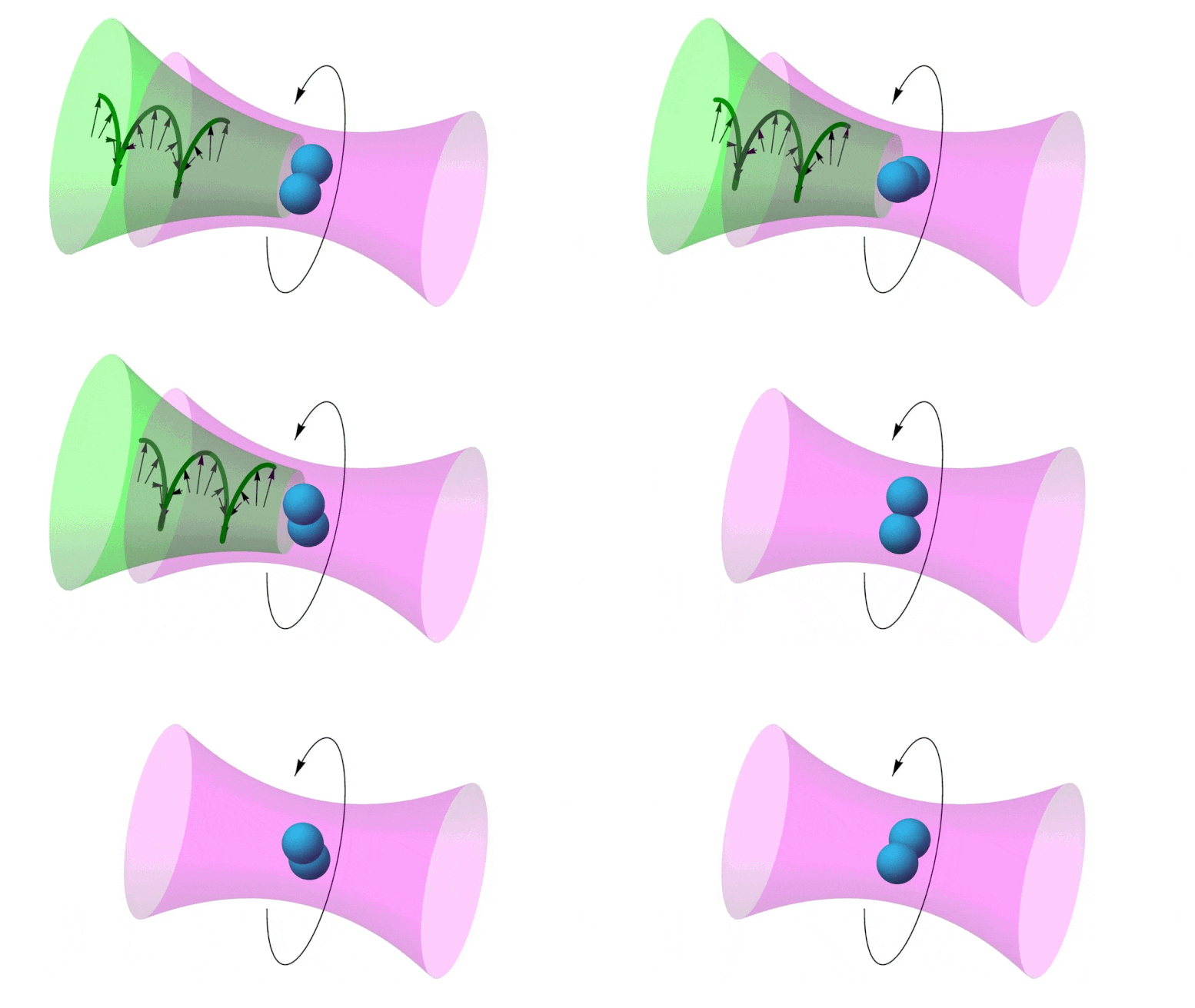
    Scientists at Purdue University have created the world’s fastest-spinning human-made object and the most sensitive torque detector by suspending a nanoparticle in a vacuum with a laser, and then using a second laser to test its torque sensitivity. Credit: Purdue University image/Jonghoon Ahn

    Nanoparticle levitated by light rotates at 300 billion rpm

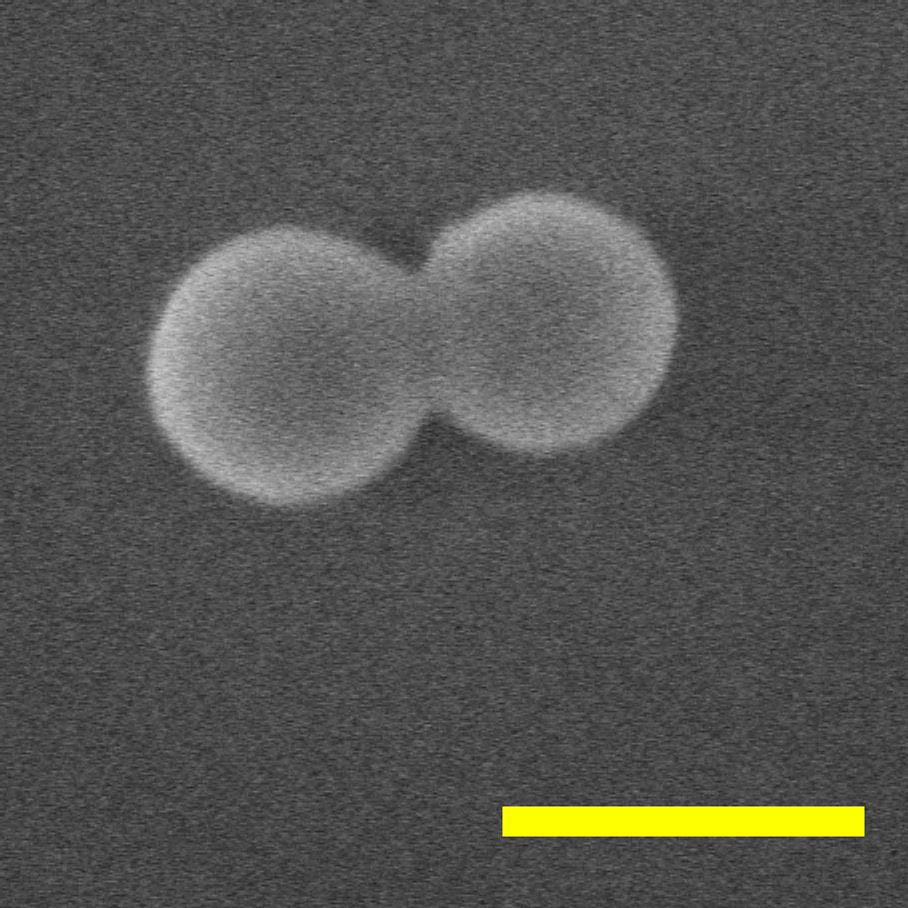
    A dumbbell-shaped nanoparticle powered just by the force and torque of light has become the world’s fastest-spinning object.

    Scientists at Purdue University created the object, which revolves at 300 billion revolutions per minute. Or, put another way, half a million times faster than a dentist’s drill.

    In addition, the silica nanoparticle can serve as the world’s most sensitive torque detector, which researchers hope will be used to measure the friction created by quantum effects.

    The research was published this week in Nature Nanotechnology.

    The researchers levitated the object in a vacuum using light in the form of a laser, and then used a second laser with a polarizing plate to alternate the optical torque on the object in order to test its torque detection sensitivity.

    “It’s always exciting to set a world record,” said Tongcang Li, assistant professor of physics and astronomy, and assistant professor of electrical and computer engineering.
    Nano-Scale Rotor Made From Silica
    The fastest-spinning object ever created is a nano-scale rotor made from silica at Purdue University. This image of the rotor at rest was created using a scanning electron microscope. For scale, the yellow bar in the image is 200 nanometers. Credit: Purdue University photo/Jaehoon Bang

    In 2018, Li and his colleagues had set the previous world record for the fastest-spinning object with a similar device that was one-fifth as fast.

    Hearing that the nanoparticle is powered by light could lead one to mistakenly think that the particle contains some sort of solar-powered capability. In fact, light itself exerts a minuscule, but measurable, amount of force on nearly any object.

    You may not be able to feel it physically (only emotionally perhaps), but the light from those fluorescent lights in your office is literally and constantly pressing down on you because of something known as light radiation pressure. It’s a force millions of times weaker than the gravity on you, but it is still there. In space, light can even propel satellites using light sails.

    “In the 1600s Johannes Kepler saw that the tails of comets always pointed away from the sun because of radiation pressure,” Li says. “We use the same thing, but with concentrated lasers, to levitate and rotate the nanoparticles.”

    In addition to the new track record in terms of rotation speed, the nanoparticles can measure torque at levels 600–700 times more sensitive than any device before.

    Li says this nano-torque detector will be used to measure and investigate quantum effects such as vacuum friction.

    It’s theorized that even objects in a vacuum levitated by light experience some very minuscule level of drag caused by virtual photons, a quantum fluctuation in a vacuum that is limited by the uncertainty principle. The nano-torque detector could also be used to measure related effects, including the Casimir effect and nanoscale magnetism, which could eventually allow engineers to develop and control nanoelectronic devices.

    Reference: “Ultrasensitive torque detection with an optically levitated nanorotor” by Jonghoon Ahn, Zhujing Xu, Jaehoon Bang, Peng Ju, Xingyu Gao and Tongcang Li, 13 January 2020, Nature Nanotechnology.
    DOI: 10.1038/s41565-019-0605-9

    The research was funded by the Office of Naval Research (grant number N00014-18-2371), the National Science Foundation (grant number PHY-1555035) and the Defense Advance Research Projects Agency (DARPA).

    Never miss a breakthrough: Join the SciTechDaily newsletter.
    Follow us on Google and Google News.

    Nanotechnology Purdue University
    Share. Facebook Twitter Pinterest LinkedIn Email Reddit

    Related Articles

    Ceramic Nanotubes Engineered As Thermal Antennas With Heat Radiation Control

    Microfluidic Device Can Isolate Target Cells Faster than Existing Devices

    Researchers Control Width and Composition of Nanowire Growth

    Quantum Computers to Arrive with Single-Atom-Sized Transistors

    Researchers Develop DNA Nanorobot to Seek Specific Cell Targets

    Researchers Study the Use of Photosystem-I as Photovoltaic Panels

    Researchers Find Maximum Nanotube Brightness is Proportional to Length

    Physicists Work on Nano Loudspeakers to Make Better MRIs, Quantum Computers

    Using Lasers to Cool Semiconductors

    Leave A Reply Cancel Reply

    • Facebook
    • Twitter
    • Pinterest
    • YouTube

    Don't Miss a Discovery

    Subscribe for the Latest in Science & Tech!

    Trending News

    Popular Sugar-Free Sweetener Linked to Liver Disease, Study Warns

    What Is Hantavirus? The Deadly Disease Raising Alarm Worldwide

    Scientists Just Discovered How the Universe Builds Monster Black Holes

    Scientists Unveil New Treatment Strategy That Could Outsmart Cancer

    A Simple Vitamin May Hold the Key to Treating Rare Genetic Diseases

    Scientists Think the Real Fountain of Youth May Be Hiding in Your Gut

    Ravens Don’t Follow Wolves, They Predict Them

    This Common Knee Surgery May Be Doing More Harm Than Good

    Follow SciTechDaily
    • Facebook
    • Twitter
    • YouTube
    • Pinterest
    • Newsletter
    • RSS
    SciTech News
    • Biology News
    • Chemistry News
    • Earth News
    • Health News
    • Physics News
    • Science News
    • Space News
    • Technology News
    Recent Posts
    • Why Are So Many New Fathers Dying? Scientists Say the U.S. Has a Dangerous Blind Spot
    • Scientists Identify Simple Supplement That Greatly Reduces Alzheimer’s Damage
    • You May Have a Dangerous Type of Cholesterol Even if Your Tests Look Normal
    • Study Reveals Dangerous Flaw in AI Symptom Checkers
    • New MRI Breakthrough Captures Stunningly Clear Images of the Eye and Brain
    Copyright © 1998 - 2026 SciTechDaily. All Rights Reserved.
    • Science News
    • About
    • Contact
    • Editorial Board
    • Privacy Policy
    • Terms of Use

    Type above and press Enter to search. Press Esc to cancel.