
Close Menu
    Facebook X (Twitter) Instagram
    SciTechDaily
    • Biology
    • Chemistry
    • Earth
    • Health
    • Physics
    • Science
    • Space
    • Technology
    Facebook X (Twitter) Pinterest YouTube RSS
    SciTechDaily
    Home»Earth»MarONet Buoy To Help NASA Illuminate Ocean’s Role in Climate Change
    Earth

    MarONet Buoy To Help NASA Illuminate Ocean’s Role in Climate Change

    By Lucien Wilkinson, Curtin UniversityNovember 8, 2024No Comments3 Mins Read
    Facebook Twitter Pinterest Telegram LinkedIn WhatsApp Email Reddit
    Share
    Facebook Twitter LinkedIn Pinterest Telegram Email Reddit
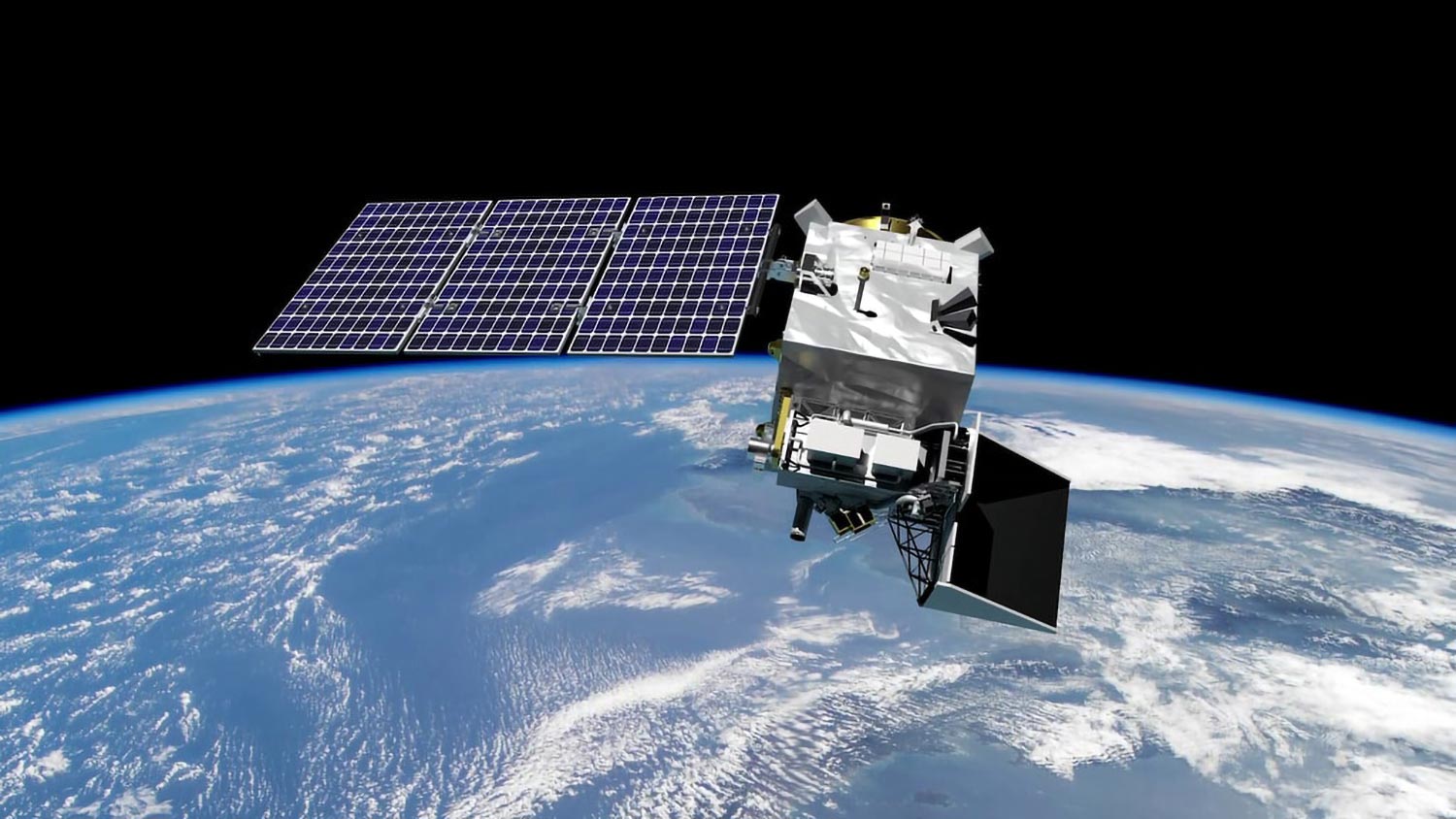
    PACE Spacecraft In Orbit Over Earth
    NASA’s PACE (Plankton, Aerosol, Cloud, ocean Ecosystem) spacecraft in orbit over Earth. Credit: NASA GSFC

    In partnership with NASA, Curtin University is enhancing ocean monitoring by deploying MarONet, a buoy off Perth’s coast, to improve satellite data accuracy. The project will help analyze ocean color and the impact of phytoplankton, key players in carbon capture and oxygen production.

    Curtin University has partnered with NASA, the University of Miami, San José State University, and the National Institute of Standards and Technology on an advanced satellite mission to monitor ocean color from space. This mission aims to provide crucial data on ocean health and its impact on climate regulation.

    As part of this initiative, researchers recently set up a 15-meter-tall buoy off the coast of Perth, Western Australia. This buoy supports NASA’s newly launched PACE (Plankton, Aerosol, Cloud, ocean Ecosystem) satellite mission by helping to maintain data quality.

    David Antoine With MarONet Buoy
    Professor David Antoine with the MarONet buoy. Picture: Curtin University

    MarONet’s Role in Ground-Truthing Satellite Data

    Professor David Antoine, head of Curtin’s Remote Sensing and Satellite Research Group (RSSRG) in the School of Earth and Planetary Sciences, explained that the new optical system, called MarONet (Marine Optical Network), located near Western Australia’s Rottnest Island, is essential for validating—or “ground-truthing”—the satellite observations from PACE.

    “We typically think of the ocean’s color as blue, but in many places, it looks blue-green because those areas are teeming with single-celled plants called phytoplankton, which contain chlorophyll and absorb the blue light,” Professor Antoine said.

    https://youtu.be/ndIZyLG9fYI

    Phytoplankton’s Role in Climate and Carbon Absorption

    “Phytoplankton are tiny plants that, in addition to being a vital food source for all marine life, collectively produce more than half of the world’s oxygen and absorb almost as much carbon dioxide as all the trees and land plants on Earth.

    “By measuring the color of the ocean with both satellites and sea-based sensors, we can study the enormous impact phytoplankton have on our climate and the potential of this tiny plant to help combat climate change.

    “Sensors on the buoy capture and analyze colors within sunlight reflected from the ocean to measure algae levels. This data is sent to shore via the mobile network, where it then helps fine-tune the satellite sensors for more accurate ocean monitoring.”

    Project lead engineer Andrew Gray, also from Curtin’s RSSRG, said the collaboration with NASA will help ensure the accuracy of data collected by its PACE satellite.

    “MarONet will improve the accuracy of remote sensing data collected by NASA by comparing it with physical measurements taken at ground level,” Mr. Gray said.

    MarONet’s Unique Calibration Environment

    “The unique oceanic conditions and clear atmosphere at the MarONet buoy site near Rottnest make it ideal for accurate calibration.

    “Curtin is proud to be a part of this important global initiative and looks forward to advancing our understanding of Earth’s oceans and climate.”

    University of Miami Principal Investigator Professor Art Gleason said the MarONet buoy deployed off Perth complements NASA’s existing sea-based (MOBY) systems.

    “There are sea-based sensors off Hawaii that have been operating for more than 20 years, allowing close coordination with the new buoy off Rottnest,” Professor Gleason said.

    Never miss a breakthrough: Join the SciTechDaily newsletter.
    Follow us on Google and Google News.

    Climate Change Curtin University NASA NASA PACE Oceanography Phytoplankton
    Share. Facebook Twitter Pinterest LinkedIn Email Reddit

    Related Articles

    NASA’s PACE Data Is Redefining Our View of Earth’s Climate and Oceans

    Earth’s Radiation Budget Is Out of Balance – Doubled During 14-Year Period

    Tracking Carbon From the Ocean Surface to the Dark “Twilight Zone”

    Shedding New Light on the Ocean’s Living Carbon Pump

    Can Seeding Earth’s Oceans With Iron on a Global Scale Solve Climate Change?

    NASA Finds Arctic Ice Melt Is Changing Ocean Currents

    Oceanographers Predict Phytoplankton Increase by 2100, Contrary to Common Belief in Environmental Science Community

    Sentinel-6/Jason-CS Earth Satellite Mission Will Track Rising Oceans Into 2030

    NASA Study Reveals Oceans Temporarily Hide Global Warming

    Leave A Reply Cancel Reply

    • Facebook
    • Twitter
    • Pinterest
    • YouTube

    Don't Miss a Discovery

    Subscribe for the Latest in Science & Tech!

    Trending News

    Could Low Vitamin D Be Making Your Pain Worse?

    Scientists Discover Once-Weekly Workout That Melts Belly Fat Surprisingly Effectively

    Scientists Just Tested a Thruster Powerful Enough for Human Missions to Mars

    Doctors Say Your Ice Pack Might Be Making Injuries Worse

    Scientists Discover 43-Foot Sea Reptile Twice the Size of a Great White Shark

    Bees and Birds Are Drinking Alcohol From Flowers

    Scientists Discover How Obesity May Trigger Alzheimer’s Disease

    Scientists Confirm Alcohol Causes Widespread Health Damage

    Follow SciTechDaily
    • Facebook
    • Twitter
    • YouTube
    • Pinterest
    • Newsletter
    • RSS
    SciTech News
    • Biology News
    • Chemistry News
    • Earth News
    • Health News
    • Physics News
    • Science News
    • Space News
    • Technology News
    Recent Posts
    • A Tiny Bright-Blue Octopus Found in the Galápagos Is Completely New to Science
    • Scientists Stop Pancreatic Cancer Before It Starts in Landmark Preclinical Study
    • Scientists Discover Surprising Anti-Aging Power Hidden in Aged Garlic
    • Just Minutes of Intense Exercise Could Slash Disease Risk by 50%
    • People Who Stop Ozempic Often Don’t Gain the Weight Back
    Copyright © 1998 - 2026 SciTechDaily. All Rights Reserved.
    • Science News
    • About
    • Contact
    • Editorial Board
    • Privacy Policy
    • Terms of Use

    Type above and press Enter to search. Press Esc to cancel.