

World’s Largest Iceberg Breaks Free in Antarctica
An enormous iceberg has calved from the western side of the Ronne Ice Shelf, lying in the Weddell Sea, in Antarctica. The iceberg, dubbed A-76, measures around 4,320 sq km (1,668 sq mi) in size – currently making it the largest berg in the world.
Spotted in recent images captured by the Copernicus Sentinel-1 mission, the iceberg is around 170 km (~105 miles) in length and 25 km wide (~15 miles), and is slightly larger than the Spanish island of Majorca.
The enormity of the berg makes it the largest in the world, snatching first place from the A-23A iceberg (approximately 3,880 sq km or 1,498 sq mi in size) which is also located in the Weddell Sea. In comparison, the A-74 iceberg that broke off the Brunt Ice Shelf in February earlier this year, was only 1,270 sq km (490 sq mi).
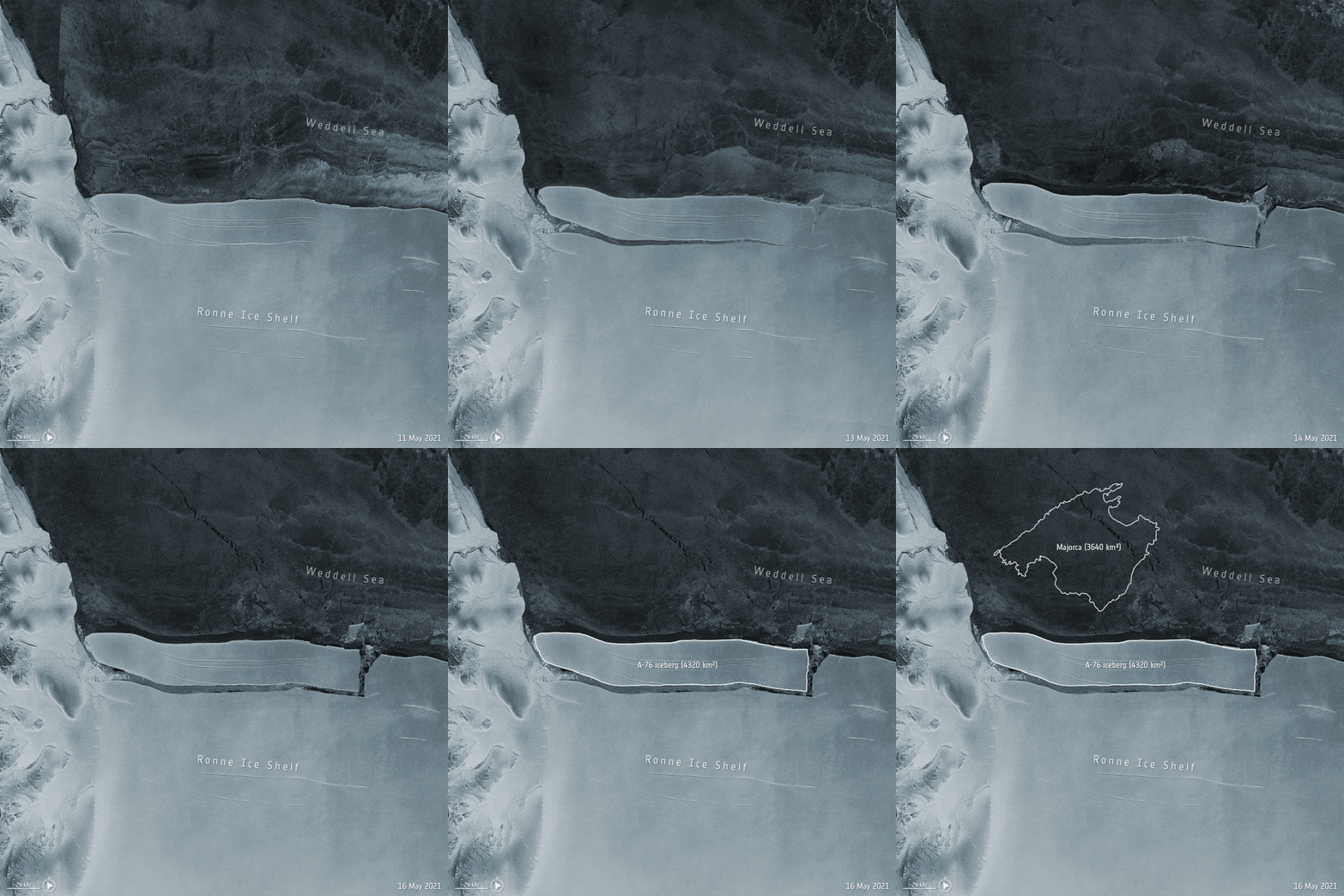
The iceberg was spotted by the British Antarctic Survey and confirmed from the US National Ice Center using Copernicus Sentinel-1 imagery. The Sentinel-1 mission consists of two polar-orbiting satellites that rely on C-band synthetic aperture radar imaging, returning data regardless of whether it is day or night, allowing us year-round viewing of remote regions like Antarctica.
Icebergs are traditionally named from the Antarctic quadrant in which they were originally sighted, then a sequential number, then, if the iceberg breaks, a sequential letter.
Never miss a breakthrough: Join the SciTechDaily newsletter.
Follow us on Google and Google News.