
A groundbreaking study reveals that the Transpolar Drift, a major Arctic current, is far more dynamic than once thought.
As sea ice melts and ocean patterns shift, pollutants from Siberian rivers are spreading farther and faster, posing rising threats to fragile polar ecosystems.
Pollutants on the Move as Climate Warms
A new study has revealed in unprecedented detail how substances from Siberian rivers, such as freshwater, sediments, and pollutants, travel across the Arctic Ocean. These pathways are highly variable and strongly influenced by climate conditions. The findings raise new concerns about the growing spread of pollution and its potential impact on vulnerable polar ecosystems as the climate continues to warm.
Published today (April 14) in Nature Communications and led by researchers at the University of Bristol, the international study offers the most detailed view yet of the Transpolar Drift, a major Arctic surface current that plays a key role in transporting river-sourced material. The research also identifies the main drivers of this current, including rising temperatures, which could accelerate the movement of human-made pollutants.
Siberian Rivers to Arctic Seas
The Transpolar Drift moves sea ice, freshwater, and suspended materials from the Siberian continental shelves across the central Arctic Ocean toward the Fram Strait, a gateway to the Nordic Seas.
This cross-Arctic flow influences the delivery of both natural substances, such as nutrients, gases, organic compounds, and human-made pollutants – including microplastics and heavy metals – from Siberian river systems into the central Arctic and the North Atlantic. This material affects Arctic biogeochemistry and ecosystems, while the fresh water itself alters ocean circulation.

Shifting Routes and Rising Risks
As the Arctic Ocean is a highly changeable environment, rather than following a steady course, river-sourced matter takes diverse, seasonally shifting routes shaped by changing shelf conditions and ocean currents, along with the formation, drift, and melting of sea ice. This results in rapid and widespread redistribution of both natural and pollutant matter.
Lead author Dr. Georgi Laukert, Marie Curie Postdoctoral Fellow in Chemical Oceanography at the University of Bristol, UK and Woods Hole Oceanographic Institution in Massachusetts, US, said: “We found pronounced changes in the composition of Siberian river water along the Transpolar Drift, demonstrating this highly dynamic interplay. Seasonal shifts in river discharge and dynamic circulation on the Siberian shelf drive ocean surface variability, while interactions between sea ice and the ocean further increase the redistribution of river-borne matter.
“Another key discovery is the increasingly central role of sea ice formed along the Transpolar Drift – not only as a passive transport medium, but as an active agent in shaping dispersal patterns. This sea ice captures material from multiple river sources during growth, unlike most coastal sea ice, creating complex mixtures that are transported across vast distances.”
Tracing Water with Isotope Science
To decode these complex pathways, the international research team analysed seawater, sea ice, and snow samples using oxygen and neodymium isotopes, along with measurements of rare earth elements to produce geochemical tracer data. This geochemical fingerprinting allowed the researchers to track the origins of river-sourced matter and follow how it evolved along its route through the central Arctic over a year-long period.
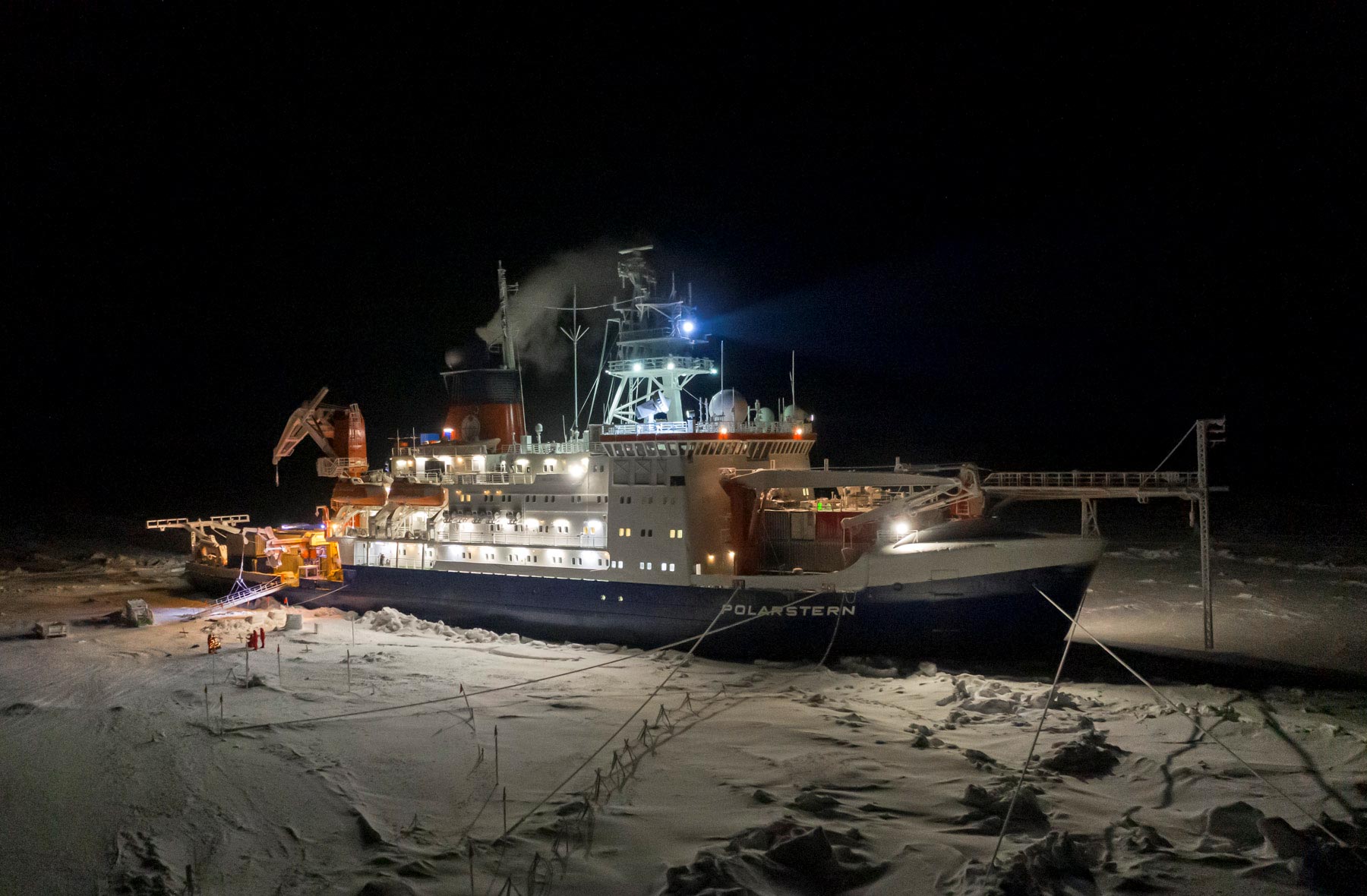
The study draws on samples from MOSAiC, the largest-ever Arctic expedition and among the most ambitious polar research efforts, involving seven ice breakers and more than 600 global scientists.
Co-author Dr. Dorothea Bauch, Researcher at Kiel University in Germany, said: “The findings represent unprecedented year-round observations. Previously, we only had summer data because it was too slow and hard to break through the ice in the winter. This sustained, interdisciplinary Arctic evidence offers important and comprehensive insights, which help us better understand highly complex ocean systems and the possible future implications.”
Disappearing Ice, Disrupted Currents
As summer sea ice continues to retreat due to warmer temperatures, circulation, and drift patterns are changing.
Co-author Professor Benjamin Rabe, Research Scientist from the Alfred Wegener Institute and Honorary Professor at the University of Applied Science, in Bremerhaven, Germany said: “These shifts could significantly alter how fresh water and river-derived matter spread through the Arctic, with far-reaching implications for ecosystems, biogeochemical cycles, and ocean dynamics.”
The research also challenges a long-standing perception of the Transpolar Drift as a stable conveyor of river water. First observed during Norwegian explorer Fridtjof Nansen’s historic Fram expedition in the 1890s, these latest findings discovered more than 130 years later indicate the Transpolar Drift is highly variable in both space and time.
A Fragile Future for Arctic Transport
Dr. Laukert added: “While the study does not focus on individual compounds, it illuminates the underlying transport mechanisms—a critical step for predicting how Arctic matter transport will evolve in a warming climate. If even this iconic current is so dynamic, then the entire Arctic Ocean may be more variable and vulnerable than we thought.”
Reference: “Dynamic ice–ocean pathways along the Transpolar Drift amplify the dispersal of Siberian matter” by Georgi Laukert, Dorothea Bauch, Benjamin Rabe, Thomas Krumpen, Ellen Damm, Markus Kienast, Ed Hathorne, Myriel Vredenborg, Sandra Tippenhauer, Nils Andersen, Hanno Meyer, Moein Mellat, Alessandra D’Angelo, Patric Simões Pereira, Daiki Nomura, Tristan J. Horner, Katharine Hendry and Stephanie S. Kienast, 14 April 2025, Nature Communications.
DOI: 10.1038/s41467-025-57881-9
Never miss a breakthrough: Join the SciTechDaily newsletter.
Follow us on Google and Google News.