
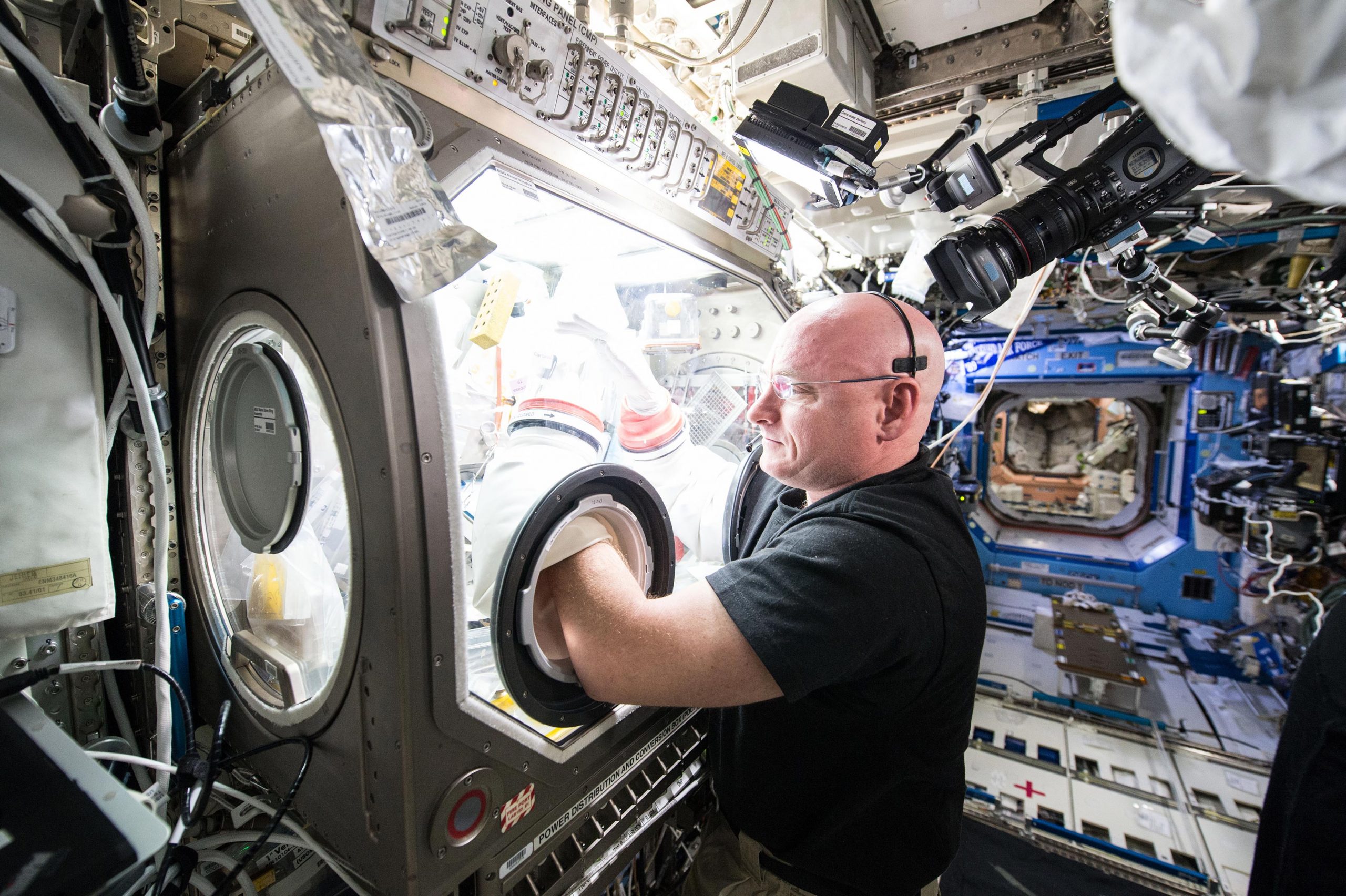
Living in space isn’t easy. There are notable impacts on the biology of living things in the harsh environment of space. A team of scientists has now identified a possible underlying driver of these impacts: the powerhouse of the cell, called mitochondria, experiences changes in activity during spaceflight.
Recently published in the journal Cell, these results used data collected over decades of experimental research on the International Space Station, including samples from 59 astronauts. Studies such as these are critical to understanding the effects of low gravity, radiation, confined spaces, and more as NASA sends astronauts deep into space for extended missions to the Moon, Mars, and beyond.
“We’ve found a universal mechanism that explains the kinds of changes we see to the body in space, and in a place we didn’t expect,” said Afshin Beheshti the lead author on the paper and a researcher with KBR, which provides contract support to NASA’s Ames Research Center in California’s Silicon Valley. “Everything gets thrown out of whack and it all starts with the mitochondria.”

The research also made use of a comprehensive database of animal studies collected on the GeneLab platform at Ames, as well as the NASA twin study comparing identical twins Mark and Scott Kelly over the course of a year. The GeneLab platform is the first of its kind to capture large amounts of space biology “omics” data that can be used to characterize and quantify biological molecules – such as DNA, RNA, and proteins – and their systematic effects on the structures and functions of organisms. GeneLab’s Analysis Working Group drew in scientists from all over the world to collaborate on the study and get the most out of the data housed on the open-source platform.
Mitochondria are tiny structures within cells that produce energy for the basic units of biology that make up our bodies. When that energy production breaks down, many of the body’s key organs and its immune system can be put in jeopardy. This new research indicates this breakdown in activity of mitochondria might contribute to health or performance challenges faced by humans in space.
The first clue about the connection between mitochondria and spaceflight came from research using rodents.
“When we started comparing the tissues from mice flown on separate space missions, we noticed that mitochondrial dysfunction kept popping up,” said Beheshti. “Whether we were looking at problems in the eyes or in the liver, the same pathways related to mitochondria were the source of the problem.”
NASA’s data on humans backed this hypothesis up. The changes identified in astronaut Scott Kelly’s immune system during his year in space starting in 2015 may be explained by the changes observed in the activity of his mitochondria as well. Blood and urine samples from dozens of other astronauts showed further evidence that, in various types of cells, being in space led to altered mitochondrial activity.
“This is a big step toward figuring out how our bodies can live healthily off-world,” said Beheshti. “And the good news is, this is a problem we can already start to tackle. We can look at countermeasures and drugs we already use to deal with mitochondrial disorders on Earth to see how they might work in space, to start.”
From issues as wide-ranging as disrupted circadian rhythms to cardiovascular alterations, scientists can now turn to this small but essential structure in cells as a place to continue research and look for solutions. Mitochondria are indeed the powerhouse of the cell, and may also power the future of space biology research – pointing the way toward discoveries that will help astronauts live safely in orbit and beyond.
Read New Insights on Health Effects of Long-Duration Space Flight for more on how space flight affects astronauts.
Reference: The biology of spaceflight, Cell.
Never miss a breakthrough: Join the SciTechDaily newsletter.
Follow us on Google and Google News.
1 Comment
Interesting .
Was wondering if such Mitochondrail Changes occuer only in a space filght Scenario or can also occur in Mammals and Humans on the planets surface , when looked at over a much longer time frame. I susoect these do occur in humans & Mammals and cause the increasing number of infectious diseases that are increasing in frquency due to weakened Immune Systems.