
A high-altitude survival gene may point to a new, naturally driven way to repair nerve damage.
A genetic adaptation that helps animals thrive in extreme mountain environments may also reveal a new way to repair the human nervous system. Researchers have identified a mutation linked to life at high altitudes that appears to protect and even rebuild damaged nerve tissue, raising new possibilities for treating conditions such as cerebral paralysis and multiple sclerosis (MS).
The study, published March 13 in Neuron, points to a built-in biological repair system that relies on compounds the body already produces. Instead of introducing foreign drugs, this approach could amplify natural processes that support nerve recovery.
“Evolution is a great gift from nature, providing a rich diversity of genes that help organisms adapt to different environments,” says corresponding author Liang Zhang of Songjiang Hospital Affiliated to Shanghai Jiao Tong University School of Medicine. “There is still so much to learn from naturally occurring genetic adaptations.”
The Role of Myelin in Brain Health
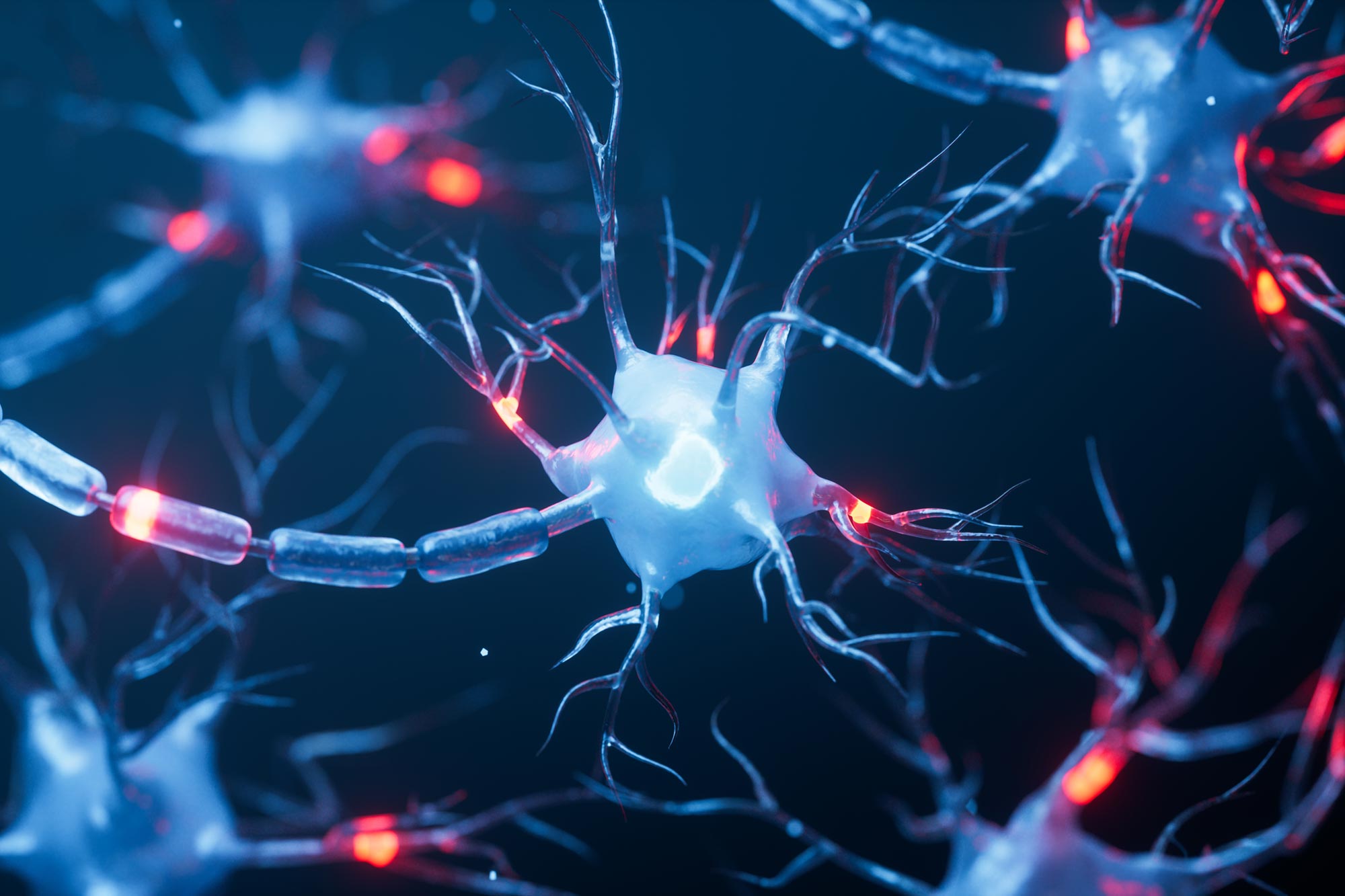
Myelin is a protective coating that surrounds nerve fibers in the brain and spinal cord, helping signals travel quickly and efficiently. When oxygen levels are too low during early brain development, this layer can be damaged, which may lead to cerebral paralysis in newborns.
In adults, damage to myelin is a hallmark of MS. In this condition, the immune system mistakenly attacks and destroys the protective layer. Reduced blood flow in the brain, which becomes more common with age, can also harm myelin and contribute to disorders such as cerebral small vessel disease and vascular dementia.
Earlier research found that animals living on the Tibetan Plateau, which sits at an average elevation of 14,700 feet (about 4,480 meters), carry a mutation in a gene known as Retsat. Scientists suspected this change helps species like yaks and Tibetan antelopes preserve normal brain function despite long-term exposure to low oxygen levels.
To explore this idea, Zhang and his team tested whether the mutation could protect myelin. They exposed newborn mice to low-oxygen conditions similar to elevations above 13,000 feet (about 3,960 meters) for roughly one week.
Mice with the Retsat mutation outperformed those without it in tests measuring learning, memory, and social behavior. Brain studies also showed that these mice had more myelin surrounding their nerve fibers.
A Potential Pathway for Regeneration
The team next examined whether the mutation could help repair myelin damage similar to that seen in MS. In mice carrying the mutation, myelin regenerated faster and more completely after injury. The damaged areas also contained more mature oligodendrocytes, the cells responsible for producing myelin.
Further analysis revealed that these mice had higher levels of ATDR, a compound derived from vitamin A, in their brains. The Retsat mutation appears to boost the activity of enzymes that convert vitamin A into its metabolites. These molecules then support the growth and maturation of myelin-producing cells.
When researchers treated mice with an MS-like condition using ATDR, the animals showed milder symptoms and improved movement.
Current MS therapies mainly aim to reduce immune system activity, Zhang explains. “ATDR is something everyone already has in their body. Our findings suggest that there may be an alternative approach that uses naturally occurring molecules to treat diseases related to myelin damage,” he says.
Reference: “A gain-of-function Retsat variant from high-altitude adaptation promotes myelination via a neuronal dihydroretinoic acid-RXR-γ pathway” by Daopeng Li, Wenxiu Dai, Li Li, Zhihao Zhou, Zhenghao Li, Chenzhao He, Xiangying Li, Xiaoyun Lu, Qiuying Huang, Yanqin Zhu, Debao Wu, Jiaquan Lu, Yiting Yuan, Yanghanchen Zhao, Wenbiao Zhang, Zhiping Zeng, Qiuying Huang, Xuemin Wang, Peng Shi and Liang Zhang, 13 March 2026, Neuron.
DOI: 10.1016/j.neuron.2026.01.013
This work was supported by the National Science and Technology Major Project, the National Natural Science Foundation of China, the China Postdoctoral Science Foundation, Shanghai Post-doctoral Excellence Program, the Natural Science Foundation of Shanghai, the 2024 Tibet Autonomous Region Science and Technology Plan Key R&D and Transformation Project, the Open Research Fund of Navy Medical University Basic Medical College, Yunnan Revitalization Talent Support Program Science & Technology Champion Project and the Yunnan Revitalization Talent Support Program.
Never miss a breakthrough: Join the SciTechDaily newsletter.
Follow us on Google and Google News.