
Close Menu
    Facebook X (Twitter) Instagram
    SciTechDaily
    • Biology
    • Chemistry
    • Earth
    • Health
    • Physics
    • Science
    • Space
    • Technology
    Facebook X (Twitter) Pinterest YouTube RSS
    SciTechDaily
    Home»Space»NASA Astronaut, Apollo Commander James McDivitt Dies at Age 93
    Space

    NASA Astronaut, Apollo Commander James McDivitt Dies at Age 93

    By NASAOctober 18, 20223 Comments7 Mins Read
    Facebook Twitter Pinterest Telegram LinkedIn WhatsApp Email Reddit
    Share
    Facebook Twitter LinkedIn Pinterest Telegram Email Reddit
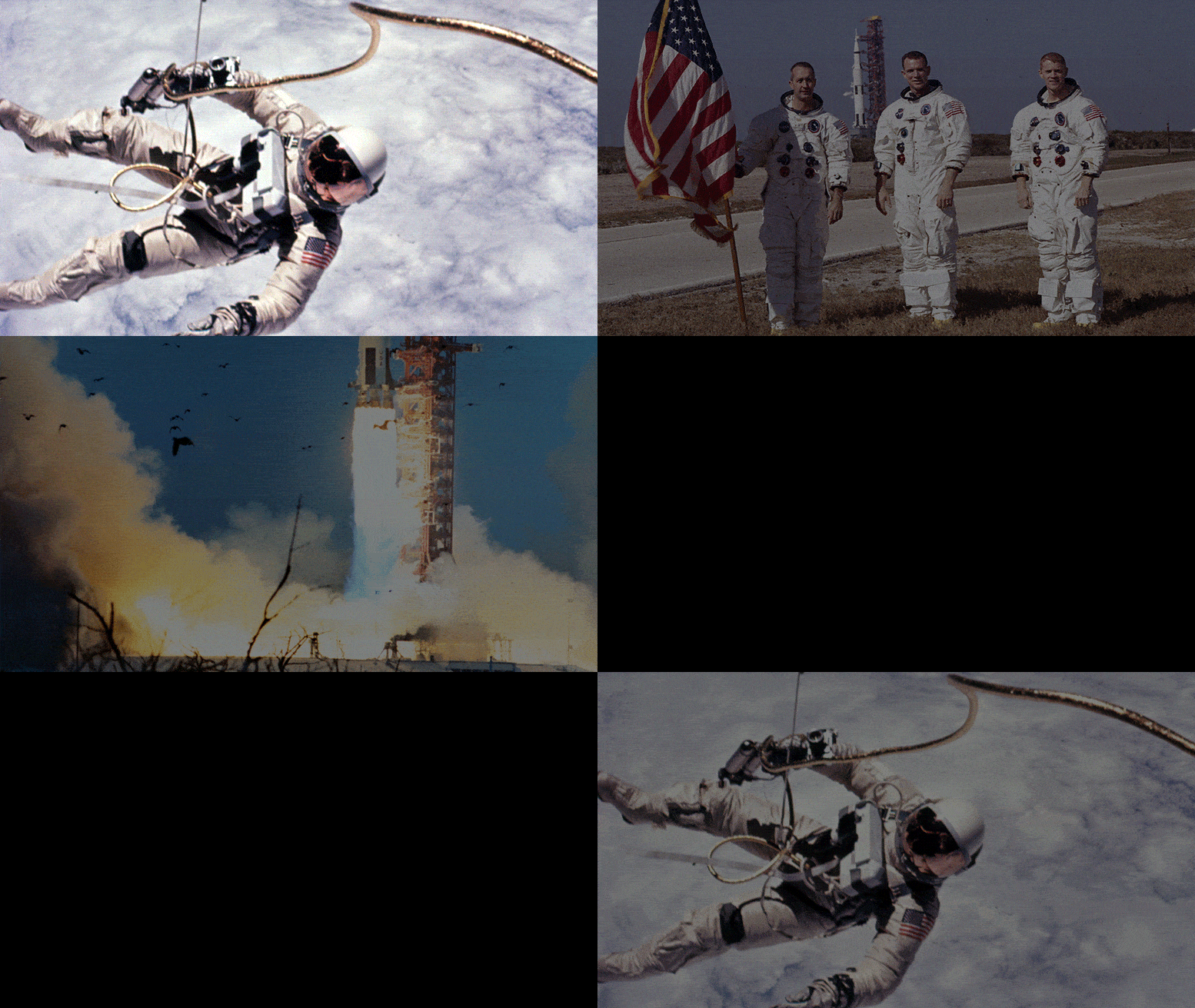
    NASA Astronaut James McDivitt Montage
    James A. McDivitt, a former NASA astronaut who commanded the pivotal Gemini IV and Apollo 9 missions, has died at 93. His significant contributions to space exploration include conducting the first American spacewalk and testing the Lunar Module for the first time. Post-NASA, he held high-ranking positions in the corporate sector. His exemplary service earned him multiple prestigious awards.

    Former NASA astronaut James A. McDivitt, who commanded the Gemini IV and Apollo 9 missions, died on October 13. McDivitt passed away peacefully in his sleep surrounded by his family and friends in Tucson, Arizona. He was 93 years old.

    McDivitt was born June 10, 1929, in Chicago. He graduated from Kalamazoo Central High School, in Kalamazoo, Michigan, before going on to receive a Bachelor of Science degree in Aeronautical Engineering from the University of Michigan, graduating first in his class in 1959.
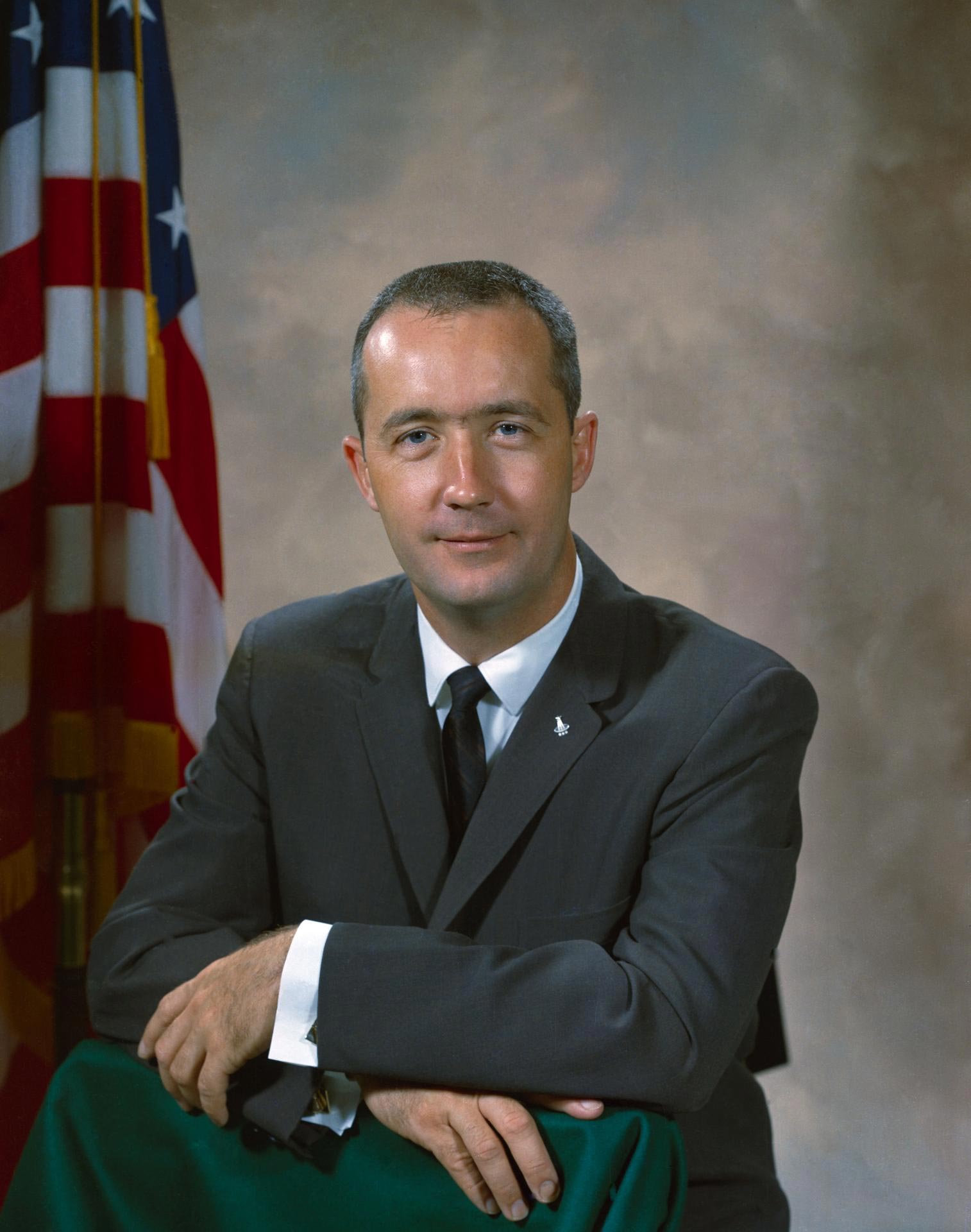
    NASA Astronaut James McDivitt Portrait
    Portrait of NASA astronaut James A. McDivitt. Credit: NASA

    He joined the Air Force in 1951 and retired with the rank of Brig. General. He flew 145 combat missions during the Korean War in F-80 and F-86 aircraft. He was a graduate of the U.S. Air Force Experimental Test Pilot School and the U.S. Air Force Aerospace Research Pilot course and served as an experimental test pilot at Edwards Air Force Base, California. He logged more than 5,000 flying hours during his piloting career.

    McDivitt was selected as an astronaut by NASA in September 1962 as part of NASA’s second astronaut class.
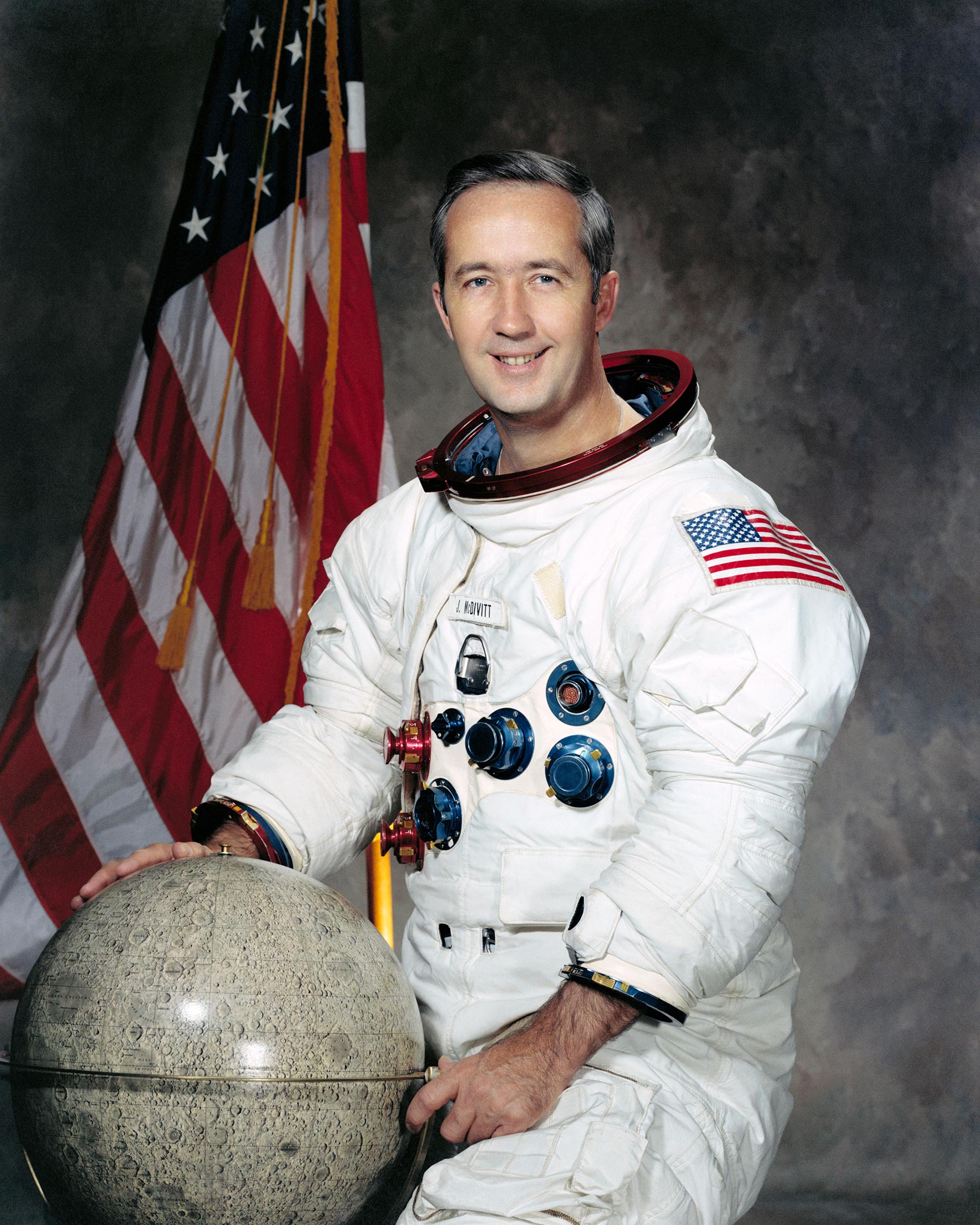
    NASA Astronaut Portrait James McDivitt
    Astronaut James A. McDivitt, shown here in his official 1971 portrait, died Oct. 13, 2022. McDivitt commanded Gemini IV, the second crewed Gemini flight, and Apollo 9, which tested the first lunar module in Earth orbit. Credit: NASA

    He first flew in space as commander of the Gemini IV mission in June 1965. McDivitt was joined by fellow Air Force pilot Ed White on the program’s most ambitious flight to date. During Gemini IV, White would become the first American to venture outside his spacecraft for what officially is known as an extravehicular activity (EVA) or as the world has come to know it, a spacewalk.
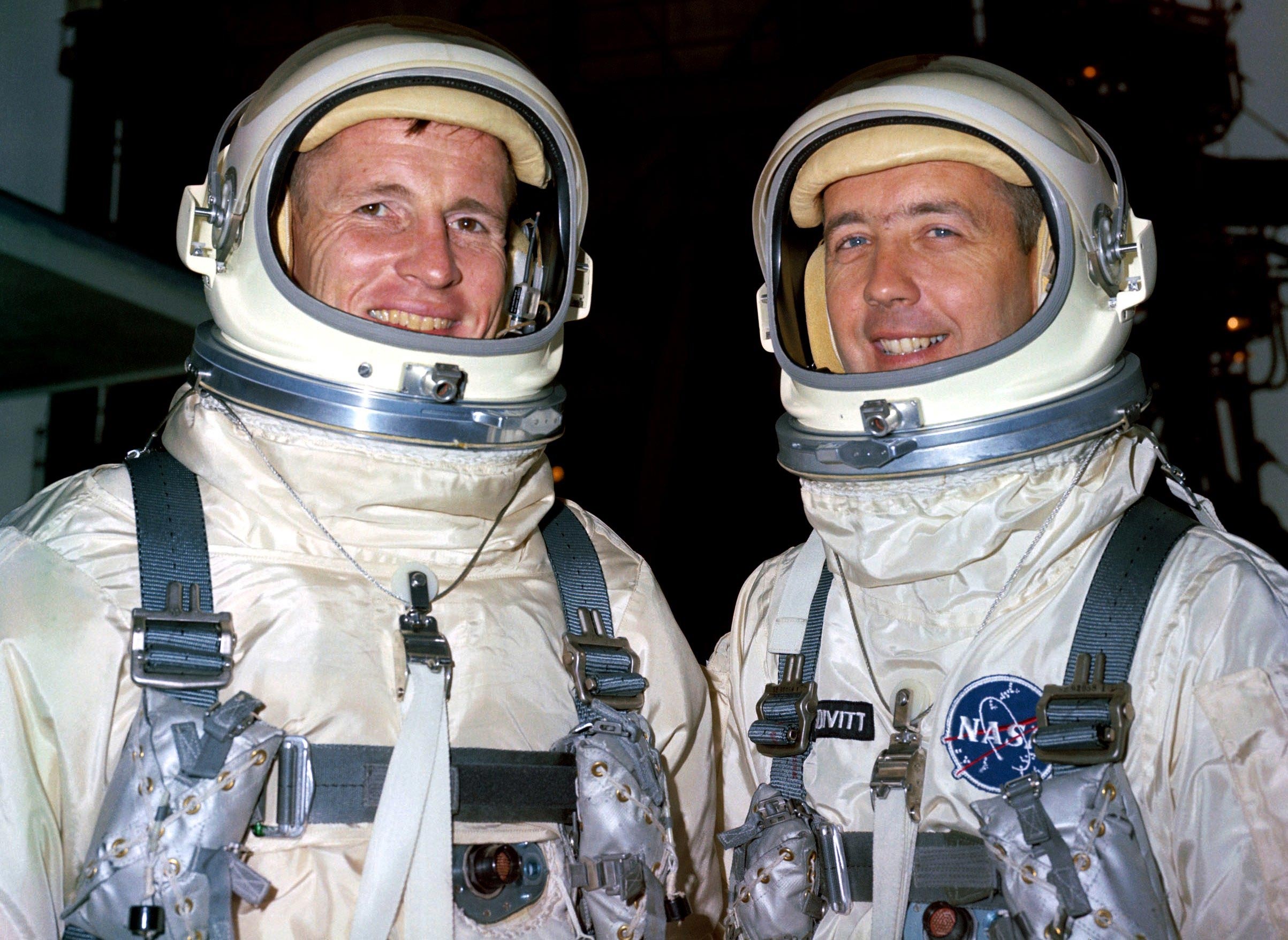
    Gemini IV Astronauts Ed White and Jim McDivitt
    Gemini IV astronauts Ed White, left, and Jim McDivitt, pose at Cape Kennedy’s Launch Pad 19 on June 1, 1965. Credit: NASA

    In the following years, it was a skill that allowed Apollo explorers to walk on the Moon and American astronauts and their partners from around the world to build the International Space Station. The mission’s four-day duration nearly doubled NASA astronauts’ previous time in space to that point, with the longest American spaceflight previously being Gordon Cooper’s 34-hour Mercury 9 mission.
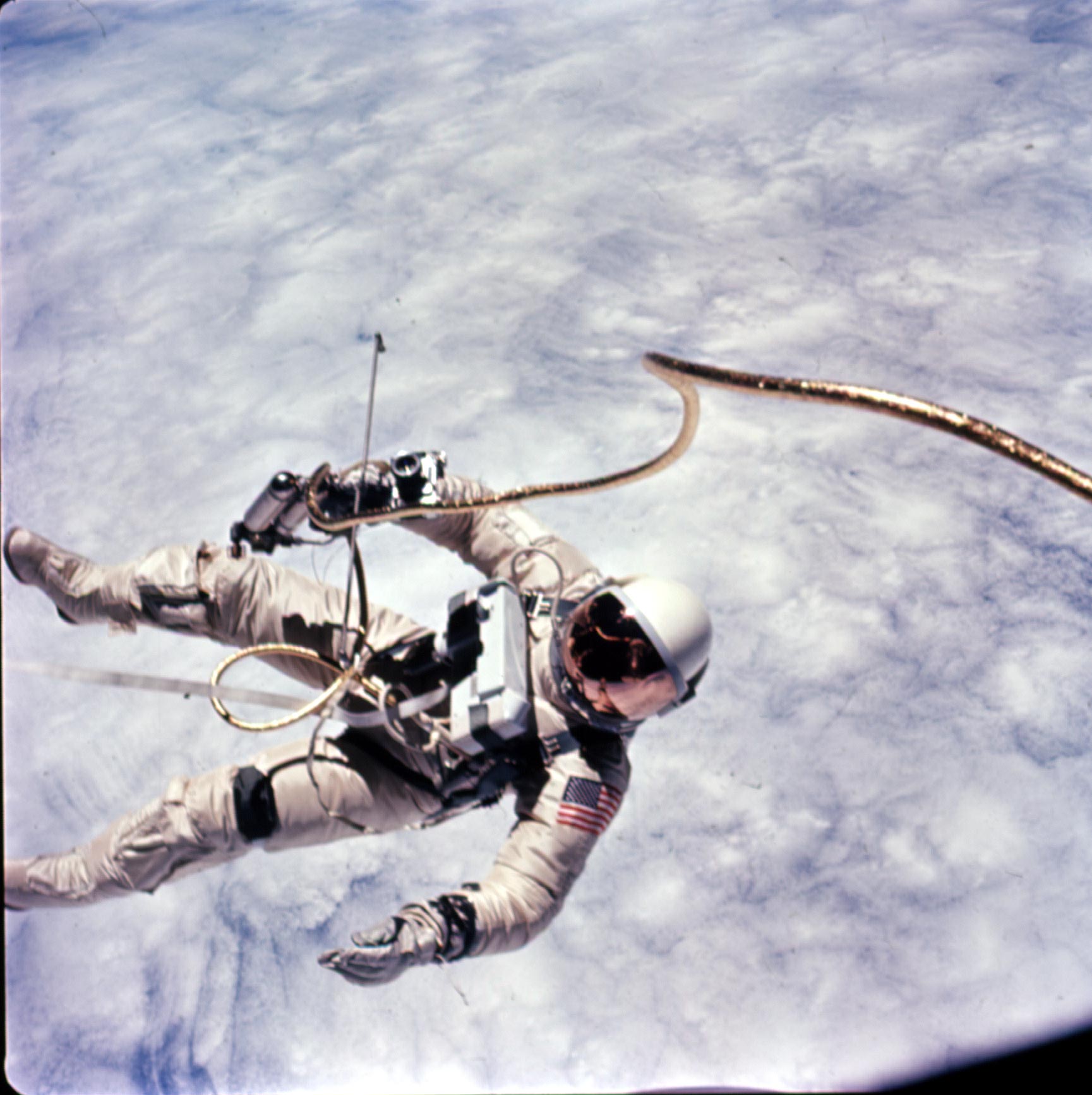
    Gemini 4 Astronaut Ed White Begins Spacewalk
    Gemini 4 astronaut Ed White begins his spacewalk extra-vehicular activity over the Pacific Ocean on the third orbit. This was the first spacewalk by a U.S. astronaut. It lasted 23 minutes. White initially used the gas-powered gun held in his hand. After the first three minutes, the fuel ran out and White maneuvered by twisting his body and pulling on the 8-meter-long umbilical cord. The photographs were taken by Commander James McDivitt. Credit: NASA

    McDivitt’s second spaceflight as the commander of Apollo 9 played a critical role in landing the first humans on the Moon. This was the first flight of the complete set of Apollo hardware and was the first flight of the Lunar Module. The mission launched from NASA’s Kennedy Space Center on March 3, 1969, with Commander James McDivitt, Command Module Pilot David Scott, and Lunar Module Pilot Russell Schweickart.
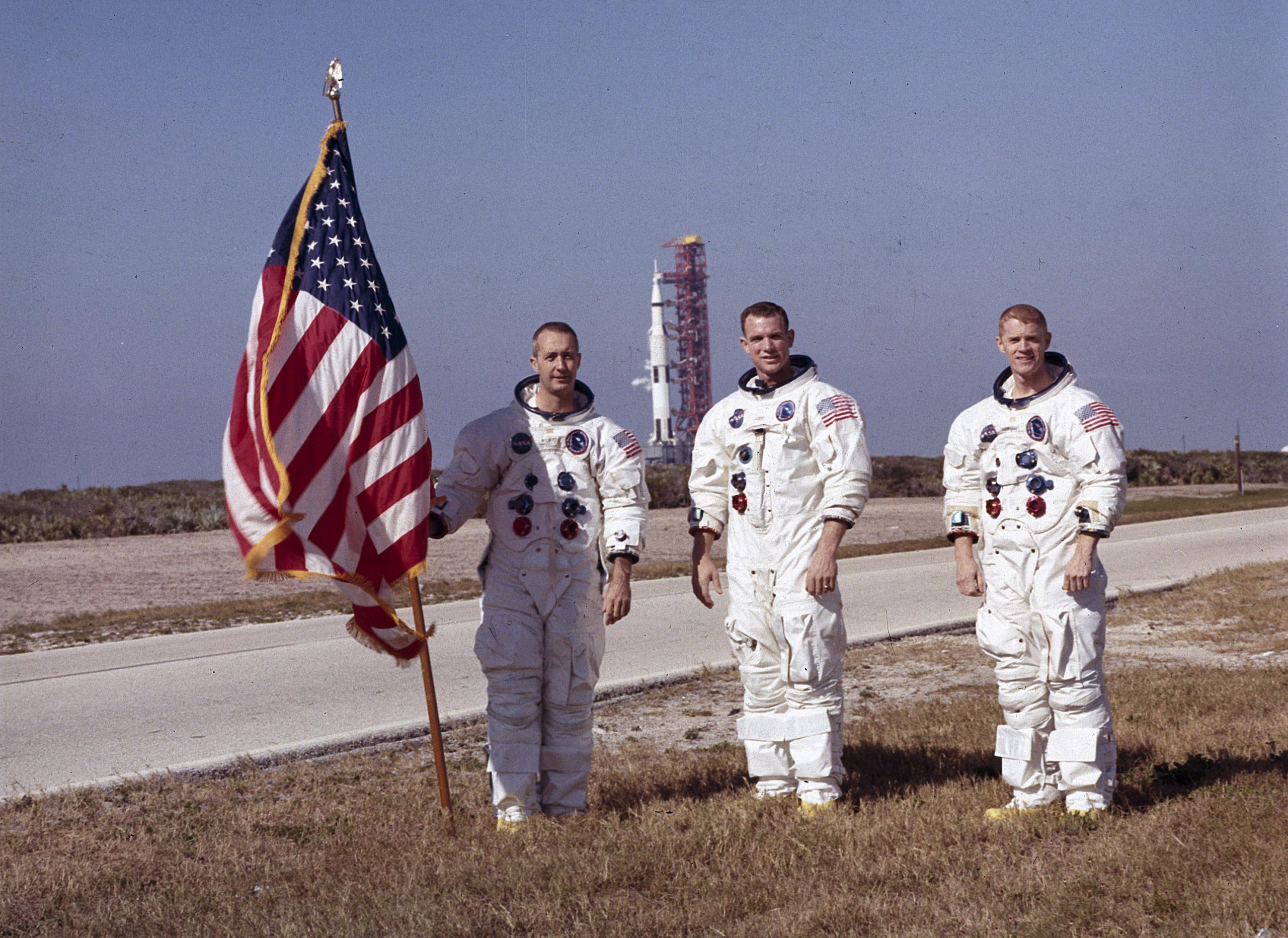
    Apollo 9 Astronauts
    The Apollo 9 astronauts, left to right, James A. McDivitt, David R. Scott, and Russell L. Schweickart, pause in front of the Apollo/Saturn V space vehicle that would launch the Apollo 8 crew. The launch of the Apollo 9 (Saturn V launch vehicle, SA-504) took place on March 3, 1969. The Apollo 9 spacecraft, in the lunar mission configuration, was tested in Earth orbit. The mission was designed to rehearse all the steps and reproduce all the events of the Apollo 11 mission with the exception of the lunar touchdown, stay, and liftoff. The command and service modules, and the lunar module were used in flight procedures identical to those that would later take similar vehicles to the Moon, and a landing. The Apollo 9 crew landed on March 13, 1969. Credit: NASA

    After launch, Apollo 9 entered Earth orbit and the crew performed an engineering test of the first crewed lunar module, nicknamed “Spider,” from beginning to end. They simulated the maneuvers that would be performed during actual lunar missions. During the mission, the astronauts performed a series of flight tasks with the command and service module and the lunar module. The top priority was rendezvous and docking of the lunar module with the command and service module. The crew also configured the lunar module to support a spacewalk by McDivitt and Schweickart. On Flight Day 10, March 13, 1969, the Apollo 9 capsule re-entered Earth’s atmosphere and splashed down in the Atlantic Ocean, within three miles and in full view of the recovery ship, the USS Guadalcanal, about 341 miles north of Puerto Rico.
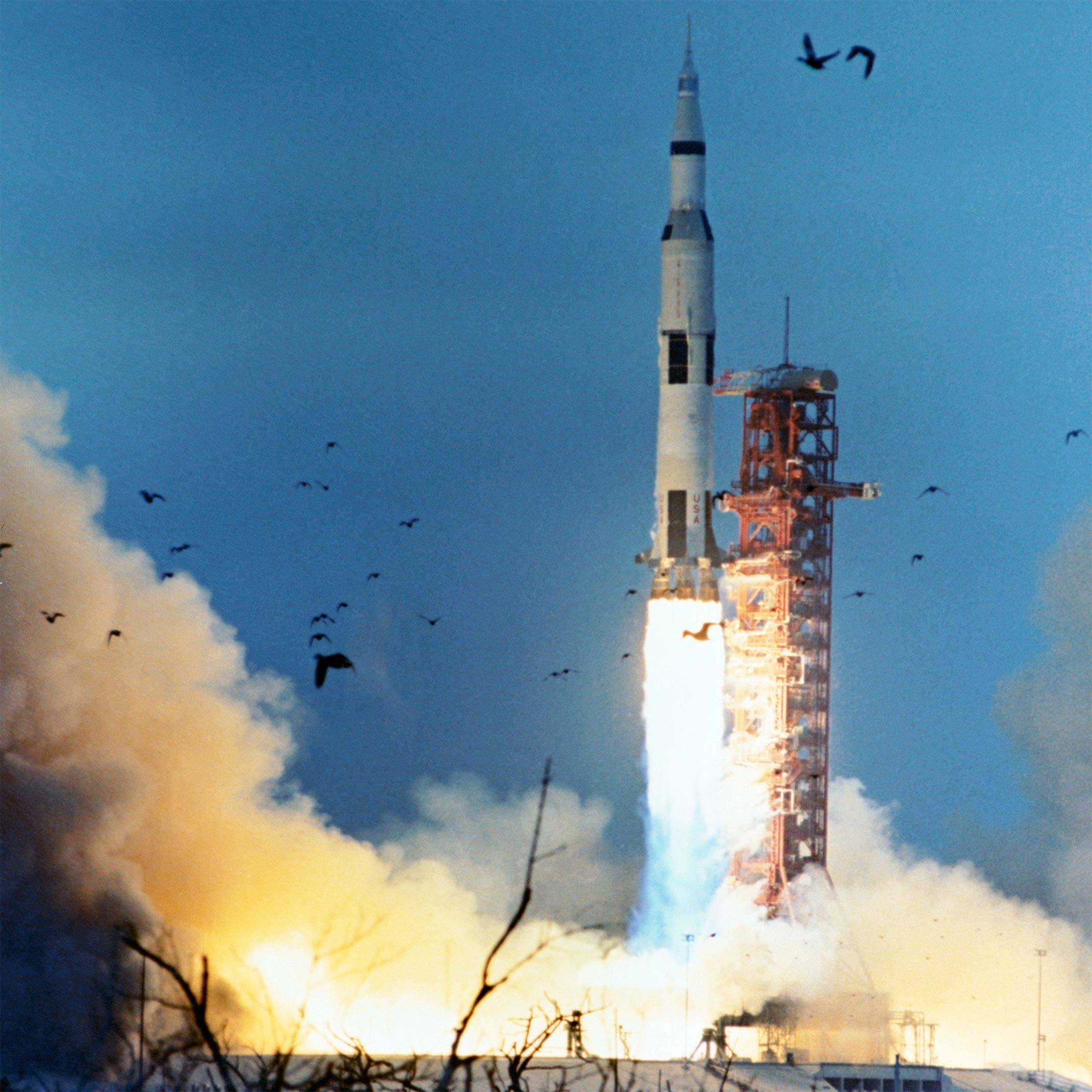
    Apollo 9 Liftoff
    The Apollo 9 (Spacecraft 104/Lunar Module 3/Saturn 504) space vehicle was launched from Pad A, Launch Complex 39, Kennedy Space Center (KSC) at 11 a.m. EST, March 3, 1969. Aboard the spacecraft are astronauts James A. McDivitt, commander; David R. Scott, command module pilot; and Russell L. Schweickart, lunar module pilot. Apollo 9 was the second crewed Saturn V mission. Credit: NASA

    McDivitt logged more than 14 days in space.

    After Apollo 9, he became manager of lunar landing operations, and led a team that planned the lunar exploration program and redesigned the spacecraft to accomplish this task. In August 1969, he became manager of the Apollo Spacecraft Program, guiding the program through Apollo 12, 13, 14, 15, and 16.

    Apollo 9 Lunar Module
    Excellent view of the Apollo 9 Lunar Module, “Spider,” in a lunar landing configuration, as photographed from the Command and Service Modules on the fifth day of the Apollo 9 Earth-orbital mission on March 7, 1969. The landing gear on the “Spider” has been deployed. Lunar surface probes (sensors) extend out from the landing gear foot pads. Inside the “Spider” were astronauts James A. McDivitt, Apollo 9 commander; and Russell L. Schweickart, lunar module pilot. Astronaut David R. Scott, command module pilot, remained at the controls in the Command Module, “Gumdrop,” while the other two astronauts checked out the Lunar Module. Credit: NASA

    McDivitt retired from the U.S. Air Force and left NASA in June 1972 to take the position of executive vice president of corporate affairs for Consumers Power Company. In March 1975, he joined Pullman, Inc. as executive vice president and a director. In October 1975 he became president of the Pullman Standard Division, The Railcar Division, and later had additional responsibility for the leasing and engineering and construction areas of the company. In January 1981 he joined Rockwell International as senior vice president, government operations, and Rockwell International Corporation, Washington, D.C.

    His numerous awards included two NASA Distinguished Service Medals and the NASA Exceptional Service Medal. For his service in the U.S. Air Force, he also was awarded two Air Force Distinguished Service Medals, four Distinguished Flying Crosses, five Air Medals, and U.S. Air Force Astronaut Wings. McDivitt also received the Chong Moo Medal from South Korea, the U.S. Air Force Systems Command Aerospace Primus Award, the Arnold Air Society JFK Trophy, the Sword of Loyola, and the Michigan Wolverine Frontiersman Award.

    Never miss a breakthrough: Join the SciTechDaily newsletter.
    Follow us on Google and Google News.

    Astronaut NASA Popular
    Share. Facebook Twitter Pinterest LinkedIn Email Reddit

    Related Articles

    To the Moon and Beyond: Meet the Trailblazing Astronauts of NASA’s Artemis II

    NASA Unveils Next-Gen Spacesuit for Artemis III Moon Surface Mission

    Safe on Earth! NASA’s SpaceX Crew-5 Splash Down Near Florida Coast

    Incredible Image of NASA Astronaut Nicole Mann Refracted Through a Sphere of Water Flying Weightlessly in Microgravity

    Russia Sending Spacecraft To Rescue Crew From ISS After Damaged Soyuz Ruled “Not Viable”

    Splashdown! NASA’s SpaceX Crew-4 Safely Returns to Earth

    NASA’s SpaceX Crew-5 Picture-Perfect Launch to International Space Station

    NASA Turns to Private Sector for New Spacesuits for Exploring the Surface of the Moon

    Splashdown! NASA SpaceX Crew-3 Astronauts Safely Return to Earth

    3 Comments

    1. JOHN MICHAEL FINLEY on October 18, 2022 10:53 am

      CERTAINLY AN INDIVIDUAL TO HONOR IN THE HIGHEST REGARD FOR HIS STRENGTH AND BRAVERY. HE WILL NOT BE FORGOTTEN.

      Reply
    2. Huge Fan on October 18, 2022 7:31 pm

      The Apollo program was simply the best on so many levels – just astonishing

      Reply
    3. Jim behan on October 21, 2022 8:09 am

      It is very strange to me that a base hasn’t been set up on the moon after all this time I think that you have the ability to do it but for some reason you won’t

      Reply
    Leave A Reply Cancel Reply

    • Facebook
    • Twitter
    • Pinterest
    • YouTube

    Don't Miss a Discovery

    Subscribe for the Latest in Science & Tech!

    Trending News

    First-of-Its-Kind Discovery: Homer’s Iliad Found Embedded in a 1,600-Year-Old Egyptian Mummy

    Beyond Inflammation: Scientists Uncover New Cause of Persistent Rheumatoid Arthritis

    A Simple Molecule Could Unlock Safer, Easier Weight Loss

    Scientists Just Built a Quantum Battery That Charges Almost Instantly

    Researchers Unveil Groundbreaking Sustainable Solution to Vitamin B12 Deficiency

    Millions of People Have Osteopenia Without Realizing It – Here’s What You Need To Know

    Researchers Discover Boosting a Single Protein Helps the Brain Fight Alzheimer’s

    World-First Study Reveals Human Hearts Can Regenerate After a Heart Attack

    Follow SciTechDaily
    • Facebook
    • Twitter
    • YouTube
    • Pinterest
    • Newsletter
    • RSS
    SciTech News
    • Biology News
    • Chemistry News
    • Earth News
    • Health News
    • Physics News
    • Science News
    • Space News
    • Technology News
    Recent Posts
    • After Decades, MIT Researchers Capture the First 3D Atomic View of a Mysterious Material
    • Your Favorite Fishing Spot Is Turning Brown – and the Fish Are Changing
    • 380-Million-Year-Old Fish Fossil Reveals Secrets of Life’s First Steps Onto Land
    • Mezcal “Worm” in a Bottle Mystery: DNA Testing Reveals a Surprise
    • Scientists Turn Red Lettuce Green, Unlocking Hidden Nutrients
    Copyright © 1998 - 2026 SciTechDaily. All Rights Reserved.
    • Science News
    • About
    • Contact
    • Editorial Board
    • Privacy Policy
    • Terms of Use

    Type above and press Enter to search. Press Esc to cancel.