
Close Menu
    Facebook X (Twitter) Instagram
    SciTechDaily
    • Biology
    • Chemistry
    • Earth
    • Health
    • Physics
    • Science
    • Space
    • Technology
    Facebook X (Twitter) Pinterest YouTube RSS
    SciTechDaily
    Home»Earth»NASA DSCOVR Satellite Image of Africa and Europe
    Earth

    NASA DSCOVR Satellite Image of Africa and Europe

    By SciTechDailyJuly 29, 2015No Comments2 Mins Read
    Facebook Twitter Pinterest Telegram LinkedIn WhatsApp Email Reddit
    Share
    Facebook Twitter LinkedIn Pinterest Telegram Email Reddit
    Africa and Europe from a Million Miles Away
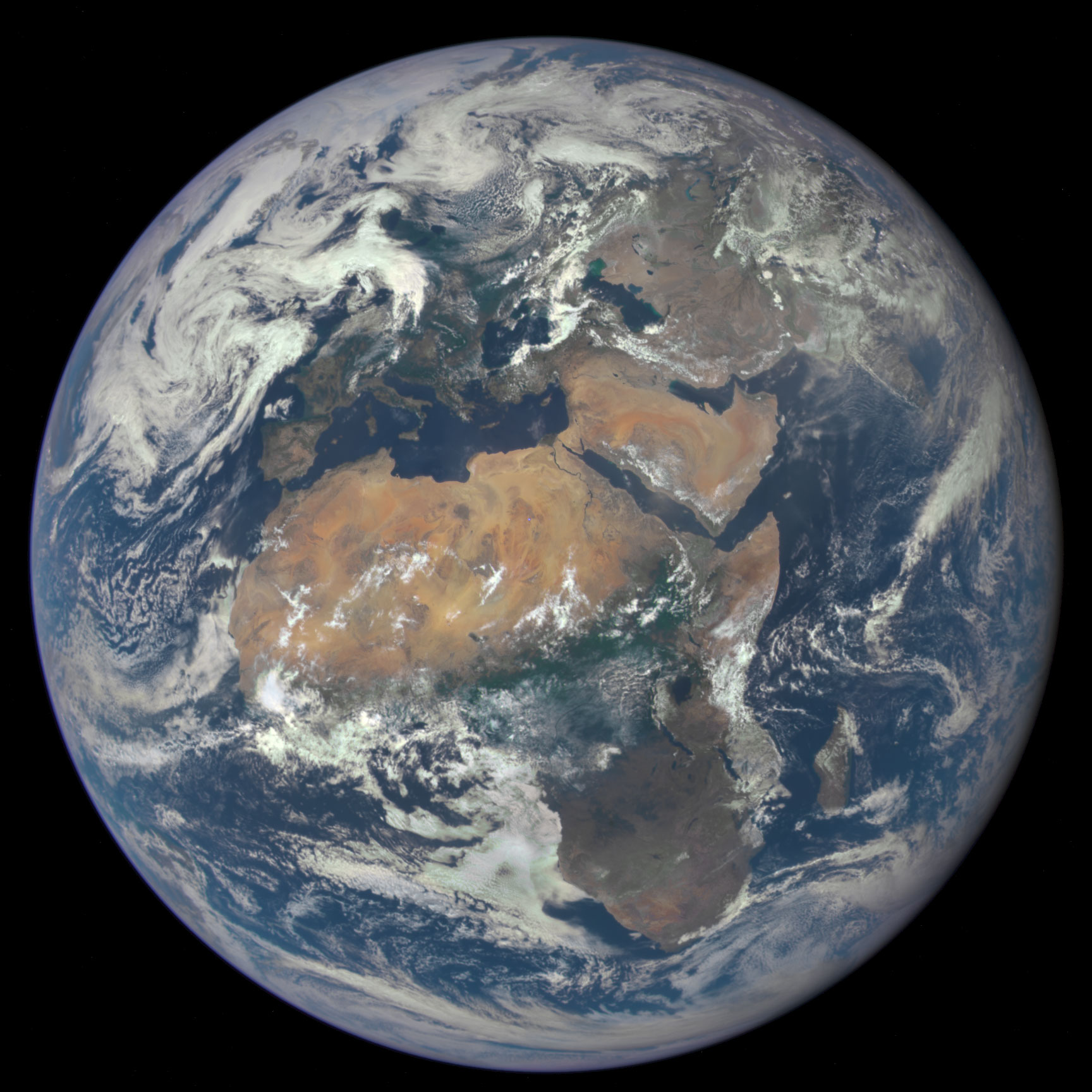
    Africa takes the spotlight in this image of Earth captured by a NASA camera aboard the Deep Space Climate Observatory (DSCOVR) satellite. Credit: NASA

    This newly released NASA image shows Africa and Europe from a million miles away.

    Africa is front and center in this image of Earth taken by a NASA camera on the Deep Space Climate Observatory (DSCOVR) satellite. The image, taken July 6 from a vantage point one million miles from Earth, was one of the first taken by NASA’s Earth Polychromatic Imaging Camera (EPIC).

    Central Europe is toward the top of the image with the Sahara Desert to the south, showing the Nile River flowing to the Mediterranean Sea through Egypt. The photographic-quality color image was generated by combining three separate images of the entire Earth taken a few minutes apart. The camera takes a series of 10 images using different narrowband filters — from ultraviolet to near infrared — to produce a variety of science products. The red, green and blue channel images are used in these Earth images.

    The DSCOVR mission is a partnership between NASA, the National Oceanic and Atmospheric Administration (NOAA), and the U.S. Air Force, with the primary objective to maintain the nation’s real-time solar wind monitoring capabilities, which are critical to the accuracy and lead time of space weather alerts and forecasts from NOAA.

    DSCOVR was launched in February to its planned orbit at the first Lagrange point or L1, about one million miles from Earth toward the sun. It’s from that unique vantage point that the EPIC instrument is acquiring images of the entire sunlit face of Earth. Data from EPIC will be used to measure ozone and aerosol levels in Earth’s atmosphere, cloud height, vegetation properties, and a variety of other features.

    Never miss a breakthrough: Join the SciTechDaily newsletter.
    Follow us on Google and Google News.

    Earth Science NASA NOAA
    Share. Facebook Twitter Pinterest LinkedIn Email Reddit

    Related Articles

    NASA and NOAA Show Long-Term Global Warming Trend Continues

    Independent Analyses Reveal 2015 Surface Temperatures Are the Warmest on Record

    Astronaut Scott Kelly Views the Nile at Night from the International Space Station

    NASA Continues to Research Greenland Ice Sheet Melt and Sea Level Rise

    NASA’s Oceans Melting Greenland Mission Maps Greenland’s Coastline

    NASA Study Provides New Estimates for the Global Water Cycle

    Global Temperature Analysis Finds 2014 as Warmest Year in Modern Record

    2014 Antarctic Ozone Hole Comparable to Previous Years

    New NASA/NOAA Animations Reveal Water Vapor Over Oceans

    Leave A Reply Cancel Reply

    • Facebook
    • Twitter
    • Pinterest
    • YouTube

    Don't Miss a Discovery

    Subscribe for the Latest in Science & Tech!

    Trending News

    Artificial Sweeteners May Harm Future Generations, Study Suggests

    Splashdown! NASA Artemis II Returns From Record-Breaking Moon Mission

    What If Consciousness Exists Beyond Your Brain

    Scientists Finally Crack the 100-Million-Year Evolutionary Mystery of Squid and Cuttlefish

    Beyond “Safe Levels”: Study Challenges What We Know About Pesticides and Cancer

    Researchers Have Found a Dietary Compound That Increases Longevity

    Scientists Baffled by Bizarre “Living Fossil” From 275 Million Years Ago

    Your IQ at 23 Could Predict Your Wealth at 27, Study Finds

    Follow SciTechDaily
    • Facebook
    • Twitter
    • YouTube
    • Pinterest
    • Newsletter
    • RSS
    SciTech News
    • Biology News
    • Chemistry News
    • Earth News
    • Health News
    • Physics News
    • Science News
    • Space News
    • Technology News
    Recent Posts
    • Why Losing Too Much Fat Can Be Just As Dangerous as Obesity
    • Beef vs. Chicken: Surprising Results From New Prediabetes Study
    • Alzheimer’s Breakthrough: Scientists Discover Key Protein May Prevent Toxic Protein Clumps in the Brain
    • Scientists Discover New Way To Make Protein Shakes Taste Better
    • Scientists Break Optical Limits With Quantum Dot-Powered Nanoscopy
    Copyright © 1998 - 2026 SciTechDaily. All Rights Reserved.
    • Science News
    • About
    • Contact
    • Editorial Board
    • Privacy Policy
    • Terms of Use

    Type above and press Enter to search. Press Esc to cancel.