
Close Menu
    Facebook X (Twitter) Instagram
    SciTechDaily
    • Biology
    • Chemistry
    • Earth
    • Health
    • Physics
    • Science
    • Space
    • Technology
    Facebook X (Twitter) Pinterest YouTube RSS
    SciTechDaily
    Home»Earth»NASA Satellite Observes Massive Power Outages in New Orleans
    Earth

    NASA Satellite Observes Massive Power Outages in New Orleans

    By Michael Carlowicz, NASA Earth ObservatorySeptember 2, 2021No Comments2 Mins Read
    Facebook Twitter Pinterest Telegram LinkedIn WhatsApp Email Reddit
    Share
    Facebook Twitter LinkedIn Pinterest Telegram Email Reddit
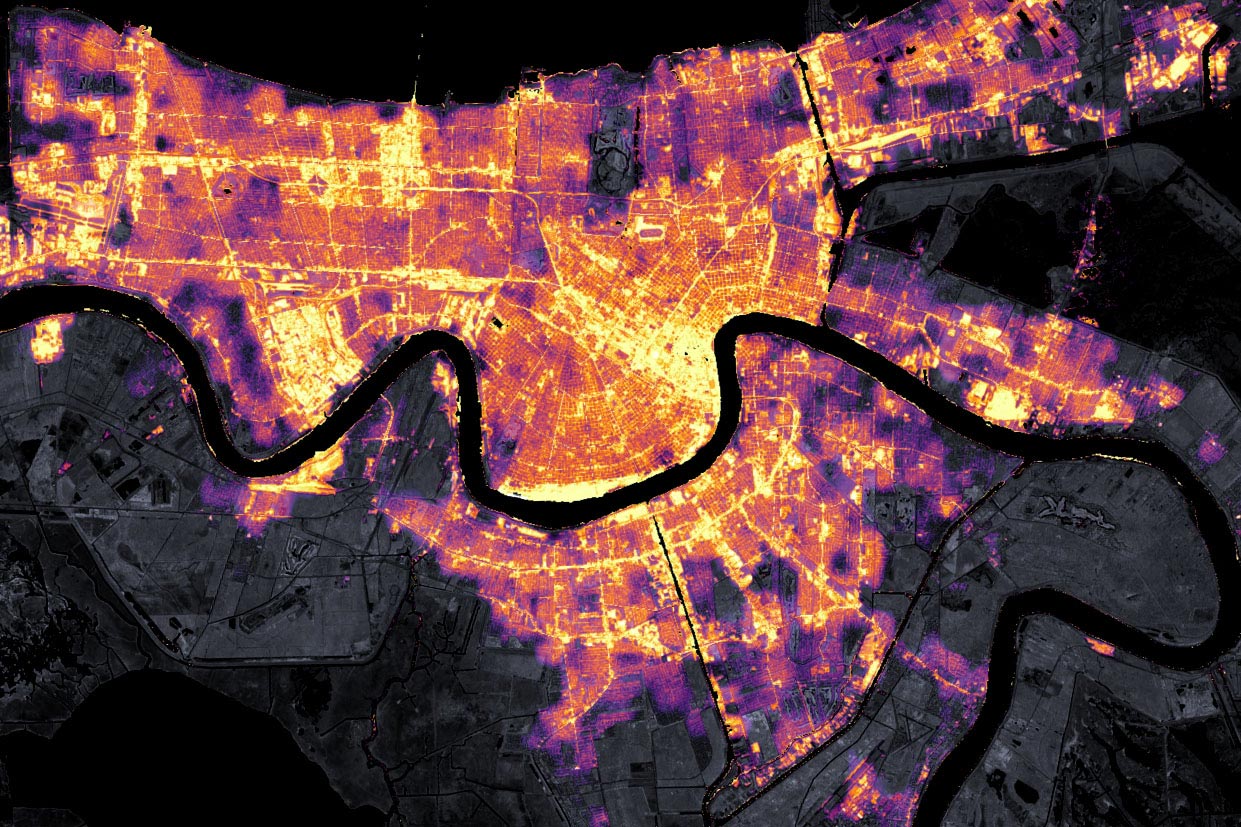
    New Orleans With Power 2021 Annotated
    August 9, 2021

    Three days after Hurricane Ida, many people in Louisiana are going without electric power due to downed power lines and damaged transmission towers.

    Three days after Hurricane Ida brought fierce wind, rain, and storm surges to Louisiana, large swaths of the state are enduring electric power blackouts due to downed lines and damaged transmission towers. According to news sources, many people are also going without access to running water and gasoline due to damaged infrastructure.

    A team of scientists from NASA’s Goddard Space Flight Center and the Universities Space Research Association (USRA) has mapped the outages using satellite data. The images above show nighttime lights data acquired on August 9 and 31 by the Suomi NPP satellite. The base maps make use of data collected by the Landsat 8 satellite.

    “The imagery is surprisingly cloud-free. It usually would take at least 48 hours for skies to clear up enough after an event like this,” added Miguel Román, a USRA scientist and leader of the Black Marble Project. “At this aftermath stage, Black Marble imagery is capturing a lot of diesel-power/backup generation, which utilities do not monitor.”
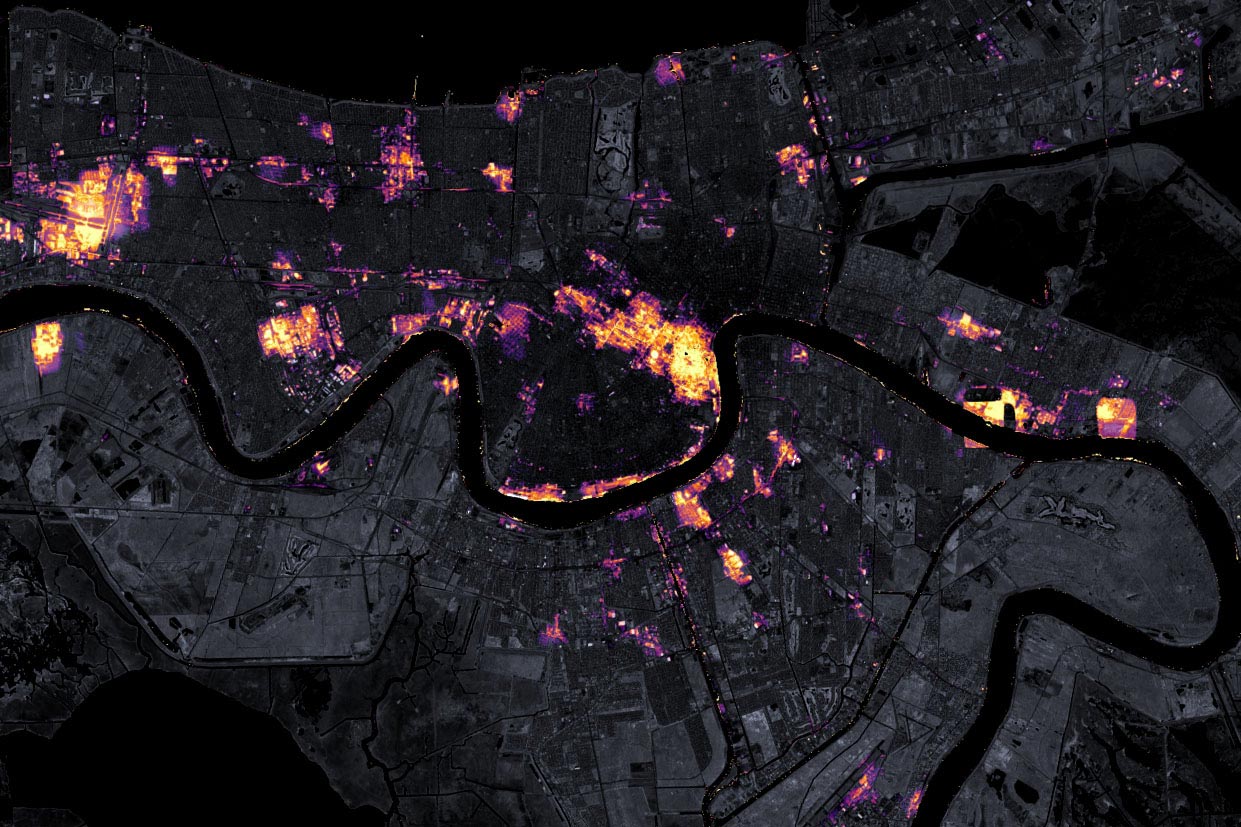
    New Orleans Without Power 2021 Annotated
    August 31, 2021

    By the morning of September 1, 2021, more than 985,000 customers were reported without power in Louisiana according to data compiled by PowerOutage.US from publicly accessible sources. (The total counts homes and businesses, not people.) Another 33,000 customers were without power in Mississippi.

    VIIRS has a low-light sensor—the day/night band—that measures light emissions and reflections. This capability has made it possible to distinguish the intensity, types, and sources of lights and to observe how they change. The data are then processed by the Black Marble team to account for changes in the landscape (such as flooding), the atmosphere, and the Moon phase, and to filter out stray light from sources that are not electric lights.

    Precision is critical for studies with night lights. Raw, unprocessed images can be misleading because moonlight, clouds, pollution, seasonal vegetation—even the position of the satellite—can change how light is reflected and can distort observations.

    NASA Earth Observatory images by Joshua Stevens, using Black Marble data courtesy of Ranjay Shrestha/NASA Goddard Space Flight Center and Landsat data from the U.S. Geological Survey.

    Never miss a breakthrough: Join the SciTechDaily newsletter.
    Follow us on Google and Google News.

    Hurricane NASA NASA Earth Observatory Storms Weather
    Share. Facebook Twitter Pinterest LinkedIn Email Reddit

    Related Articles

    Gorgeous Watercolor Seas in the Wake of Hurricane Ian

    Dramatic Satellite Images Show Power Outages After Hurricane Ian

    Fuel for Hurricane Ian: Fearsome Power Comes From the Ocean

    Hurricane Ian Enters the Gulf of Mexico – Headed Toward the West Coast of Florida

    Hurricane Fiona & Typhoon Nanmadol: Powerful Storms Hit Puerto Rico and Japan

    Hurricane Ida Leaves a Trail of Oil in the Gulf of Mexico

    A Changed Landscape in Southern Louisiana After Hurricane Ida: Large New Patches of Open Water

    Hurricane Ida Batters Louisiana: 5th-Strongest Storm Ever To Make Landfall in the Continental U.S.

    Incredible View of Tropical Storm Elsa Captured From Space

    Leave A Reply Cancel Reply

    • Facebook
    • Twitter
    • Pinterest
    • YouTube

    Don't Miss a Discovery

    Subscribe for the Latest in Science & Tech!

    Trending News

    Giant Crocodylians Ruled South America’s Ancient Food Chain

    Breakthrough in a Bizarre Galaxy Could Help Unlock the Mystery of Dark Matter

    Just 4 Minutes of Daily Strength Training Can Quadruple Fitness in Older Adults

    Almost All Plant-Based Meat Alternatives Contain Mycotoxins, Study Finds

    Astronomers Detect a Record-Breaking “Cosmic Laser” From 8 Billion Light-Years Away

    A 47-Year-Old Scientist Tracked Himself for Months – His Biological Age Fell to 32

    Construction Crew Uncovers Giant 20-Meter Dinosaur in Brazil

    30 Years of Hurricane Data Reveal 4 Warning Signs Before Storms Strengthen

    Follow SciTechDaily
    • Facebook
    • Twitter
    • YouTube
    • Pinterest
    • Newsletter
    • RSS
    SciTech News
    • Biology News
    • Chemistry News
    • Earth News
    • Health News
    • Physics News
    • Science News
    • Space News
    • Technology News
    Recent Posts
    • Hurricane Forecast Maps Are Getting Better – but One Big Problem Remains
    • Blackbirds Somehow Know When a Snake Is Too Dangerous To Attack
    • Scientists Find a Clue to Making Brain Stimulation More Reliable
    • A Hidden Gut Reaction May Explain Why Vegetables Are So Good for You
    • New “Invisible” Cell Therapy Could Provide Side-Effect-Free Diabetes Treatment
    Copyright © 1998 - 2026 SciTechDaily. All Rights Reserved.
    • Science News
    • About
    • Contact
    • Editorial Board
    • Privacy Policy
    • Terms of Use

    Type above and press Enter to search. Press Esc to cancel.