
Close Menu
    Facebook X (Twitter) Instagram
    SciTechDaily
    • Biology
    • Chemistry
    • Earth
    • Health
    • Physics
    • Science
    • Space
    • Technology
    Facebook X (Twitter) Pinterest YouTube RSS
    SciTechDaily
    Home»Science»NASA to Provide a Live Feed of Supermoon Eclipse
    Science

    NASA to Provide a Live Feed of Supermoon Eclipse

    By NASASeptember 23, 2015No Comments3 Mins Read
    Facebook Twitter Pinterest Telegram LinkedIn WhatsApp Email Reddit
    Share
    Facebook Twitter LinkedIn Pinterest Telegram Email Reddit
    NASA to Provide Live Feed of Sunday’s Supermoon Eclipse
    Late on September 27, 2015, in the U.S. and much of the world, a total lunar eclipse will mask the moon’s larger-than-life face.

    Remember to take a look at this weekend’s supermoon eclipse; if you don’t you will have to wait until 2033 for the next one. NASA will provide a live stream broadcast just in case the weather in your area isn’t cooperating.

    For the first time in more than 30 years, you can witness a supermoon in combination with a lunar eclipse. Late on September 27, 2015, in the U.S. and much of the world, a total lunar eclipse will mask the moon’s larger-than-life face.

    Watch NASA’s live stream from 8:00 p.m. until at least 11:30 p.m. EDT broadcast from Marshall Space Flight Center in Huntsville, Alabama, with a live feed from the Griffith Observatory, Los Angeles, California. Mitzi Adams, a NASA solar physicist at Marshall will discuss the eclipse and answer questions from Twitter. To ask a question, use #askNASA.

    Throughout human history, lunar eclipses have been viewed with awe and sometimes fear. Today, we know that a total lunar eclipse happens when the full moon passes through the darkest part of Earth’s shadow, the umbra.

    Sunday’s supermoon eclipse will last 1 hour and 11 minutes, and will be visible to North and South America, Europe, Africa, and parts of West Asia and the eastern Pacific. Weather permitting, you can see the supermoon after nightfall, and the eclipse will cast it into shadow beginning at 8:11 p.m. EDT. The total eclipse starts at 10:11 p.m. EDT, peaking at 10:47 p.m. EDT.


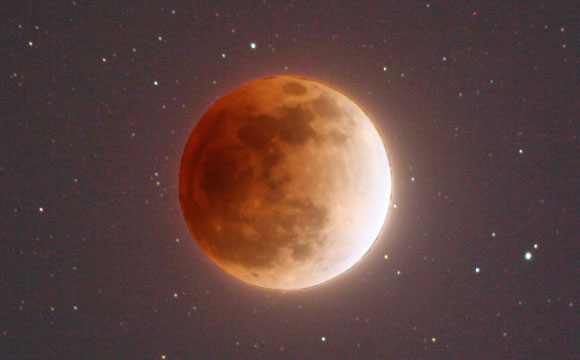
    On the night of September 27, 2015, a supermoon lunar ecllipse will be viewable in the night sky for those living in North and South America. Those living in Europe and Africa can view it in the early morning hours of September 28.

    The moon does not make its own light; it reflects light it receives from the sun. During a lunar eclipse, the moon appears less and less bright as sunlight is blocked by the Earth’s shadow. As totality approaches, sunlight reaches the moon indirectly and is refracted around the “edges” of Earth, through Earth’s atmosphere. Because of this, almost all colors except red are “filtered” out, and the eclipsed moon appears reddish or dark brown. This filtering is caused by particulates in our atmosphere; when there have been a lot of fires and/or volcanic eruptions, lunar eclipses will appear darker and redder. This eerie — but harmless — effect has earned the phenomenon the nickname “blood moon.”

    The live feed from NASA’s Marshall Space Flight Center will offer views of the eclipse from not only the Griffith Observatory, but the Adler Planetarium in Chicago, Fernbank Observatory in Atlanta and other locations across the United States. The live feed is an alternative for those experiencing less-than-optimal weather or light-polluted night skies.

    Learn more about eclipses and how NASA’s Lunar Reconnaissance Orbiter (LRO) will wait as Earth blots out the sun and the moon goes dark. LRO scientists embrace new possibilities, extending their scientific exploration to include eclipses and other events that can reveal more of the moon’s secrets.

    If you miss this event, you’ll have to wait a while — the next supermoon eclipse won’t occur until 2033.

    Never miss a breakthrough: Join the SciTechDaily newsletter.
    Follow us on Google and Google News.

    Astronomy Earth Science Eclipse Moon NASA Supermoon
    Share. Facebook Twitter Pinterest LinkedIn Email Reddit

    Related Articles

    Five NASA Tips for Photographing the “Ring of Fire” Solar Eclipse

    Lunar Reconnaissance Orbiter Reveals Apollo 16 Booster Rocket Impact Site

    LRO Radar Data Indicates That the Walls of Shackleton Crater on the Moon May Hold Ice

    Astronomers Discover a Fifth Moon Orbiting Pluto

    Phobos May Provide Evidence of Life on Mars

    Study Finds a Mixture of Both Deep and Shallow Heating on Io

    Hubble to Test Technique of Using the Moon as a Mirror

    A Closer Look at Titan’s Chemical Production

    NASA’s GRAIL Mission Returns Video From Far Side of the Moon

    Leave A Reply Cancel Reply

    • Facebook
    • Twitter
    • Pinterest
    • YouTube

    Don't Miss a Discovery

    Subscribe for the Latest in Science & Tech!

    Trending News

    AI Could Detect Early Signs of Alzheimer’s in Under a Minute – Far Before Traditional Tests

    What if Dark Matter Has Two Forms? Bold New Hypothesis Could Explain a Cosmic Mystery

    This Metal Melts in Your Hand – and Scientists Just Discovered Something Strange

    Beef vs. Chicken: Surprising Results From New Prediabetes Study

    Alzheimer’s Breakthrough: Scientists Discover Key Protein May Prevent Toxic Protein Clumps in the Brain

    Quantum Reality Gets Stranger: Physicists Put a Lump of Metal in Two Places at Once

    Scientists May Have Found the Key to Jupiter and Saturn’s Moon Mystery

    Scientists Uncover Brain Changes That Link Pain to Depression

    Follow SciTechDaily
    • Facebook
    • Twitter
    • YouTube
    • Pinterest
    • Newsletter
    • RSS
    SciTech News
    • Biology News
    • Chemistry News
    • Earth News
    • Health News
    • Physics News
    • Science News
    • Space News
    • Technology News
    Recent Posts
    • Living With Roommates Might Be Changing Your Gut Microbiome Without You Knowing
    • Simple and Cheap Blood Test Could Detect Cancer and Other Diseases Before Symptoms Appear
    • Century-Old Cleaning Chemical Linked to 500% Increased Risk of Parkinson’s Disease
    • What if Your Memories Never Happened? Physicists Take a New Look at the Boltzmann Brain Paradox
    • Students Found an Ancient Star That Shouldn’t Be in the Milky Way
    Copyright © 1998 - 2026 SciTechDaily. All Rights Reserved.
    • Science News
    • About
    • Contact
    • Editorial Board
    • Privacy Policy
    • Terms of Use

    Type above and press Enter to search. Press Esc to cancel.