
Close Menu
    Facebook X (Twitter) Instagram
    SciTechDaily
    • Biology
    • Chemistry
    • Earth
    • Health
    • Physics
    • Science
    • Space
    • Technology
    Facebook X (Twitter) Pinterest YouTube RSS
    SciTechDaily
    Home»Space»NASA Waves Off Upcoming Artemis I Moon Rocket Launch, Prepares for Rollback
    Space

    NASA Waves Off Upcoming Artemis I Moon Rocket Launch, Prepares for Rollback

    By NASASeptember 24, 20221 Comment2 Mins Read
    Facebook Twitter Pinterest Telegram LinkedIn WhatsApp Email Reddit
    Share
    Facebook Twitter LinkedIn Pinterest Telegram Email Reddit
    Artemis I SLS First Rollout
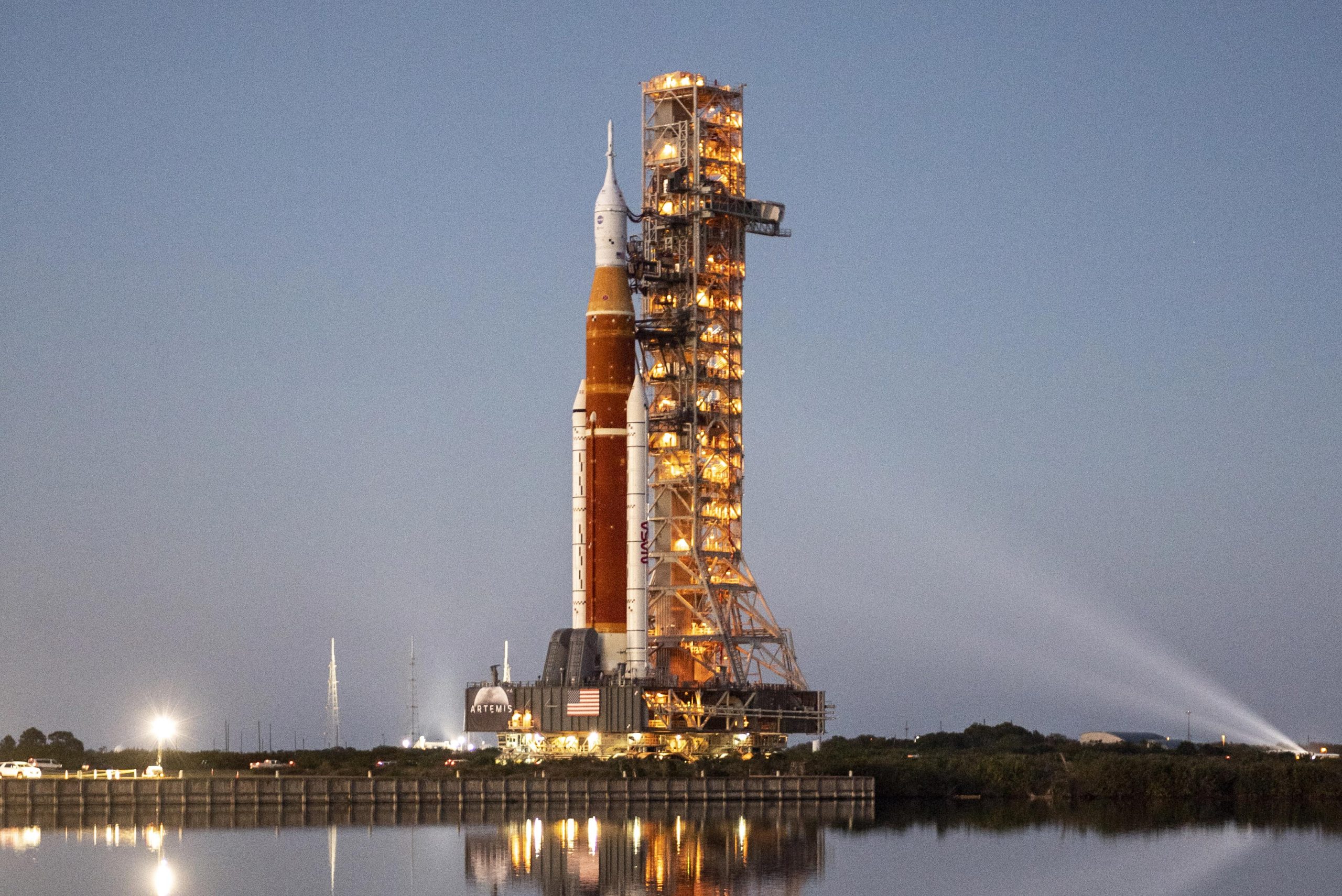
    NASA’s Space Launch System (SLS) rocket with the Orion spacecraft aboard is seen atop a mobile launcher as it rolls out to Launch Complex 39B for the first time on Thursday, March 17, 2022, at NASA’s Kennedy Space Center in Florida. Credit: NASA/Keegan Barber

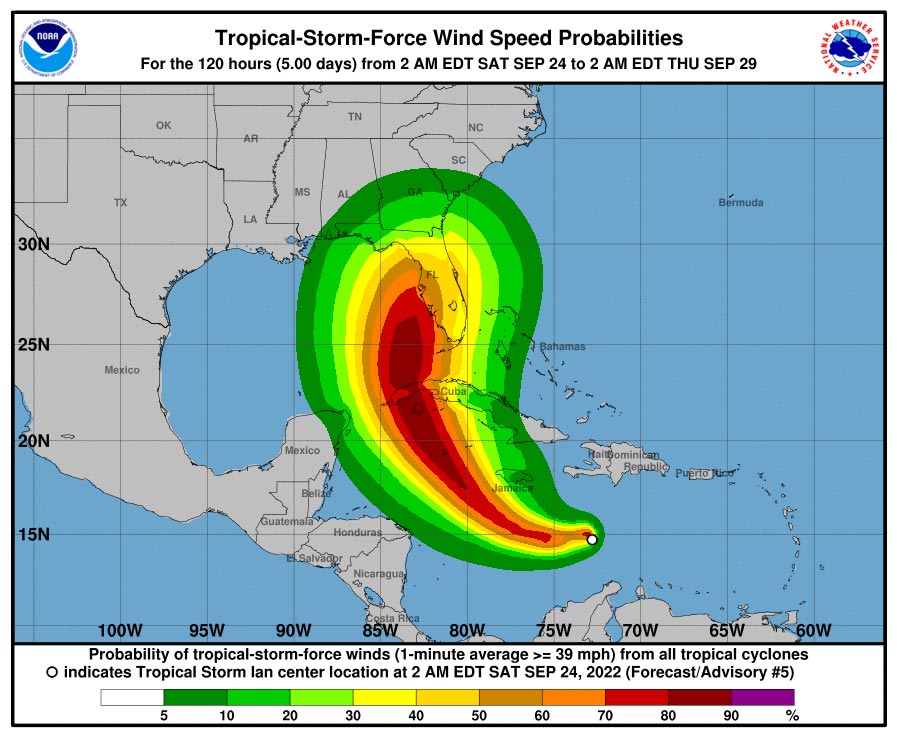
    NASA is forgoing an Artemis I launch opportunity on Tuesday, September 27, and preparing for rollback, while continuing to watch the weather forecast associated with Tropical Storm Ian.

    During a meeting this morning, September 24, teams decided to stand down on preparing for the Tuesday launch date to allow them to configure systems for rolling back the Space Launch System rocket and Orion spacecraft to the Vehicle Assembly Building (VAB). However, engineers deferred a final decision about the roll to Sunday, September 25, to allow for additional data gathering and analysis. If Artemis I managers elect to roll back the rocket to the VAB, it would begin late Sunday night or early Monday morning.
    Tropical Storm Ian NOAA
    Tropical Storm Ian. This graphic shows probabilities of sustained (1-minute average) surface wind speeds equal to or exceeding 34 kt (39 mph). This wind speed probability graphic is based on the official National Hurricane Center (NHC) track, intensity, and wind radii forecasts, and on NHC forecast error statistics for those forecast variables during recent years. It provides cumulative probabilities that wind speeds of at least 39 mph will occur during cumulative time periods at each specific point on the map. Credit: NOAA

    NASA is taking a step-wise approach to its decision-making process to allow the agency to protect its employees by completing a safe roll in time for them to address the needs of their families while also protecting for the option to press ahead with another launch opportunity in the current window if weather predictions improve.

    The agency is grateful to its partners at the National Oceanic and Atmospheric Administration (NOAA), United State Space Force, and the National Hurricane Center (NHC) for providing the highest quality products to protect our nation’s flight test that will pave the way to return humanity to the Moon. 

    Never miss a breakthrough: Join the SciTechDaily newsletter.
    Follow us on Google and Google News.

    NASA
    Share. Facebook Twitter Pinterest LinkedIn Email Reddit

    Related Articles

    NASA’s Psyche Spacecraft Is About To Fly Shockingly Close to Mars

    This Mars Rock Refused To Let Go of NASA’s Curiosity Rover

    Blue Origin’s New Moon Lander Passes a Crucial Test for NASA Missions

    NASA Fires Up Record-Breaking Plasma Thruster for Future Mars Missions

    Artemis II Just Proved NASA Is Closer Than Ever to Returning to the Moon

    NASA Powers Down Voyager 1 Instrument As It Fights To Survive Deep Space

    Scientists Stunned by New Organic Molecules Found on Mars

    Scientists Discover a New Meteor Shower From a Mysterious Crumbling Asteroid

    A Fiery Finale: How NASA’s Artemis II Moon Mission Returns to Earth

    1 Comment

    1. Jim on September 24, 2022 5:34 pm

      This project is cursed.

      Reply
    Leave A Reply Cancel Reply

    • Facebook
    • Twitter
    • Pinterest
    • YouTube

    Don't Miss a Discovery

    Subscribe for the Latest in Science & Tech!

    Trending News

    This Experimental Drug Repaired the Gut and Reversed Severe Fatty Liver Disease

    Physicists Just Turned a Black Hole Energy Theory Into Reality

    Stanford Scientists Solve a 252-Million-Year-Old Mass Extinction Mystery

    The Ancient Survival Mechanism Making Weight Loss So Difficult

    Just 3,000 Steps a Day May Help Protect the Brain From Alzheimer’s

    “Weird Clams” Reveal a New Invasion Along the U.S. Northeast Coast

    Archaeologists Decapitated Tutankhamun and Glued His Body Back Together

    New Black Hole Theory Solves a 50-Year-Old Problem

    Follow SciTechDaily
    • Facebook
    • Twitter
    • YouTube
    • Pinterest
    • Newsletter
    • RSS
    SciTech News
    • Biology News
    • Chemistry News
    • Earth News
    • Health News
    • Physics News
    • Science News
    • Space News
    • Technology News
    Recent Posts
    • Scientists Restore the Sense of Touch With Electrical Brain Stimulation
    • New Study Reveals Herpesvirus Infection May Accelerate Alzheimer’s Disease
    • Microplastics Found in 84% of Serious Heart Attack Patients
    • The Oldest Known Right-Handed Animal May Have Lived 550 Million Years Ago
    • MIT’s Tiny Flying Robot Just Learned To Move Like a Real Insect
    Copyright © 1998 - 2026 SciTechDaily. All Rights Reserved.
    • Science News
    • About
    • Contact
    • Editorial Board
    • Privacy Policy
    • Terms of Use

    Type above and press Enter to search. Press Esc to cancel.