
Close Menu
    Facebook X (Twitter) Instagram
    SciTechDaily
    • Biology
    • Chemistry
    • Earth
    • Health
    • Physics
    • Science
    • Space
    • Technology
    Facebook X (Twitter) Pinterest YouTube RSS
    SciTechDaily
    Home»Space»NASA’s Perseverance Rover Captures 200-Foot-Wide Dust Devil Tearing Across Mars
    Space

    NASA’s Perseverance Rover Captures 200-Foot-Wide Dust Devil Tearing Across Mars

    By Jet Propulsion LaboratoryOctober 2, 2023No Comments4 Mins Read
    Facebook Twitter Pinterest Telegram LinkedIn WhatsApp Email Reddit
    Share
    Facebook Twitter LinkedIn Pinterest Telegram Email Reddit
    Martian Dust Devil NASA Perseverance Mars Rover
    NASA’s Perseverance rover captured this Martian dust devil moving east to west at a clip of about 12 mph (19 kph) along a location called “Thorofare Ridge” in the Jezero Crater on August 30. Credit: NASA/JPL-Caltech

    The six-wheeled geologist spotted the twister as part of an atmospheric exploration of Jezero Crater.

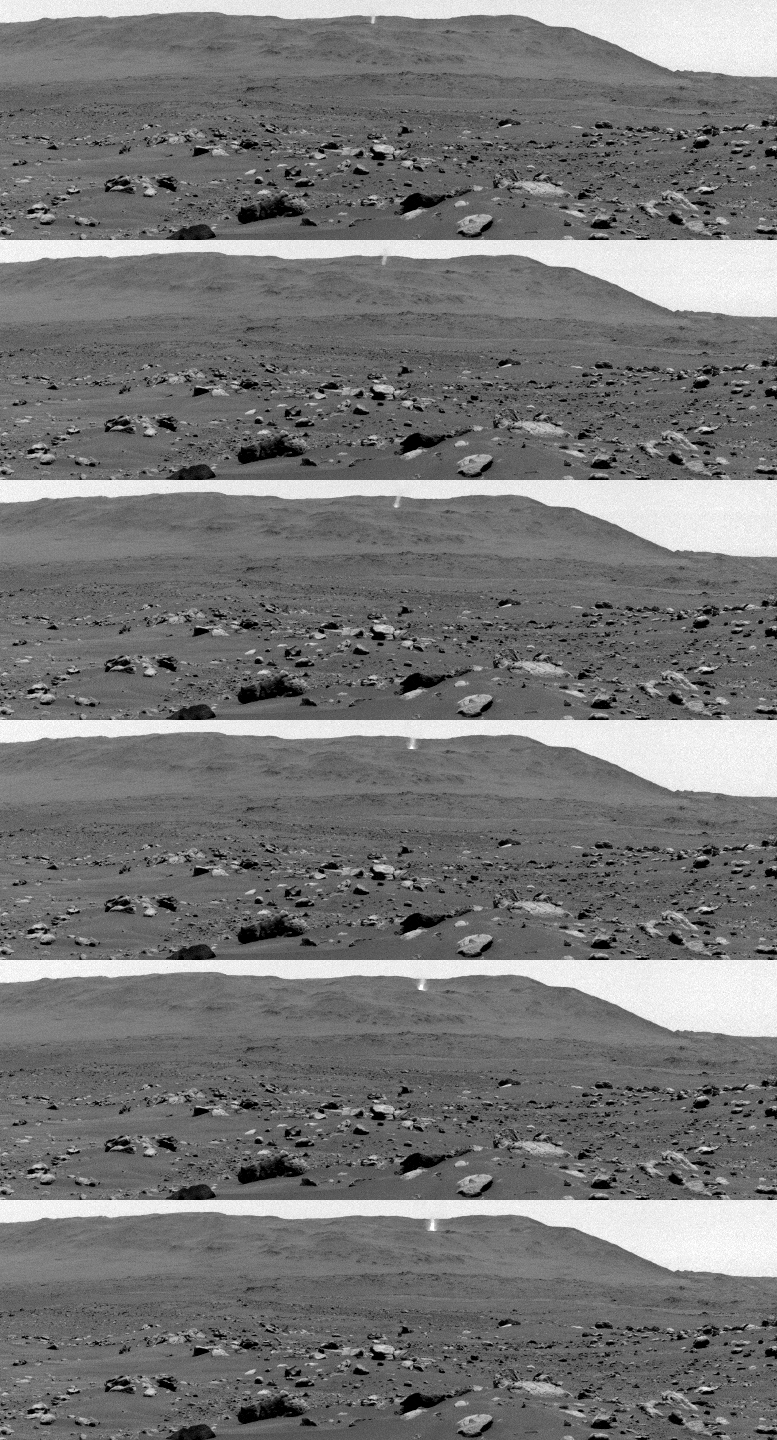
    The lower portion of a Martian dust devil was captured moving along the western rim of Mars’ Jezero Crater by NASA’s Perseverance rover on August 30, 2023, the 899th Martian day, or sol, of the mission. The video, which was sped up 20 times, is composed of 21 frames taken four seconds apart by one of the rover’s Navcams.

    Much weaker and generally smaller than Earth’s tornadoes, dust devils are one of the mechanisms that move and redistribute dust around Mars. Scientists study them to better understand the Martian atmosphere and improve their weather models.
    Martian Whirlwind Takes Thorofare
    NASA’s Perseverance rover captured this Martian dust devil moving east to west at a clip of about 12 mph (19 kph) along “Thorofare Ridge” on August 30. The video, which was sped up 20 times, is composed of 21 frames taken four seconds apart. It was enhanced in order to show maximal detail. Credit: NASA/JPL-Caltech

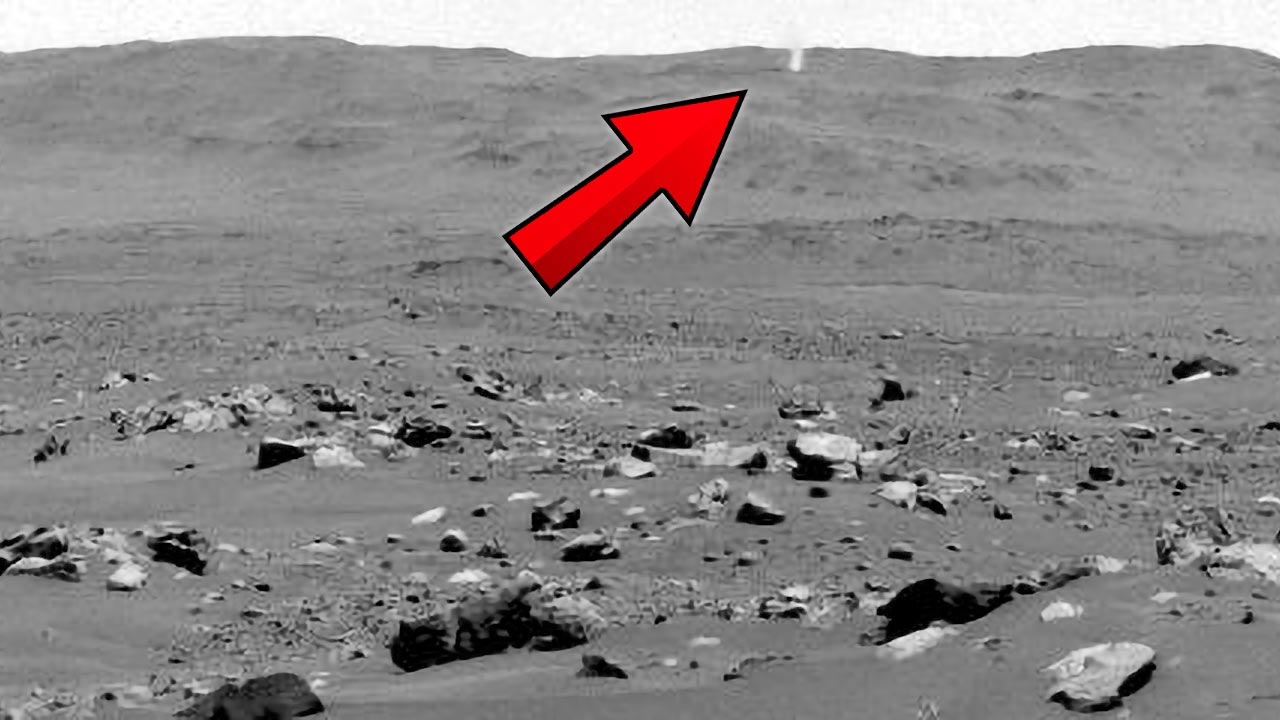
    Using data from the imagery, mission scientists determined that this particular dust devil was about 2.5 miles (4 kilometers) away, at a location nicknamed “Thorofare Ridge,” and moving east to west at about 12 mph (19 kph). They calculated its width to be about 200 feet (60 meters). And while only the bottom 387 feet (118 meters) of the swirling vortex are visible in the camera frame, the scientists could also estimate its full height.

    “We don’t see the top of the dust devil, but the shadow it throws gives us a good indication of its height,” said Mark Lemmon, a planetary scientist at the Space Science Institute in Boulder, Colorado, and a member of the Perseverance science team. “Most are vertical columns. If this dust devil were configured that way, its shadow would indicate it is about 1.2 miles (2 kilometers) in height.”

    Martian Whirlwind NASA Perseverance Rover
    NASA’s Perseverance rover captured this Martian dust devil moving east to west at a clip of about 12 mph (19 kph) along “Thorofare Ridge” on August 30. This is a wider view, still frame. Credit: NASA/JPL-Caltech

    Dust devils, which occur on Earth as well, form when rising cells of warm air mix with descending columns of cooler air. The Martian versions can grow to be much larger than those found on Earth. While they are most prominent during the spring and summer months (Mars’ northern hemisphere, where Perseverance is located, is currently in summer), scientists can’t predict when they’ll appear at a specific location. So Perseverance and its fellow NASA Mars rover Curiosity routinely monitor in all directions for them, taking images in black-and-white to reduce the amount of data sent to Earth.

    More About the Mission

    A central objective for Perseverance’s mission on Mars is astrobiology, including the search for signs of ancient microbial life. The rover will characterize the planet’s geology and past climate, pave the way for human exploration of the Red Planet, and be the first mission to collect and cache Martian rock and regolith (broken rock and dust).

    In subsequent NASA missions, working with the European Space Agency (ESA), spacecraft would be sent to the Red Planet to collect these sealed samples from the surface and return them to Earth for in-depth analysis.

    The Mars 2020 Perseverance mission is part of NASA’s Moon to Mars exploration approach, which includes Artemis missions to the Moon that will help prepare for human exploration of Mars.

    Management and operation of the Perseverance rover fall under JPL, which is supervised by the California Institute of Technology (Caltech) in Pasadena, California, on NASA’s behalf.

    Never miss a breakthrough: Join the SciTechDaily newsletter.
    Follow us on Google and Google News.

    Atmospheric Science JPL Mars Mars 2020 Perseverance Rover NASA Planets Popular
    Share. Facebook Twitter Pinterest LinkedIn Email Reddit

    Related Articles

    Shocking Spherules on Mars: NASA’s Perseverance Rover Finds a Rock That Defies Explanation

    NASA’s Perseverance Rover Captures Rare Martian Dust Devil Collision in Stunning Detail

    Mars’ Bizarre “Spiders” Now Crawling in a NASA Lab

    NASA’s Perseverance Mars Rover To Begin Epic Climb up Steep Martian Crater Rim

    In the Heart of Mars: NASA’s Perseverance Rover Unearths Ancient Rivers’ Secrets

    Search for Ancient Martian Life: NASA’s Perseverance Rover Sees Mars in a New Light

    Spectacular Mosaic of Mars’ Belva Crater Captured by NASA’s Perseverance Rover

    Martian Dust Devils: NASA’s Perseverance Studies the Wild Winds of Jezero Crater

    Variable Speed of Sound on Mars: What Sounds Captured by NASA’s Perseverance Rover Reveal About the Red Planet

    Leave A Reply Cancel Reply

    • Facebook
    • Twitter
    • Pinterest
    • YouTube

    Don't Miss a Discovery

    Subscribe for the Latest in Science & Tech!

    Trending News

    Millions Take This Joint Supplement but Scientists Found a Concerning Alzheimer’s Link

    Why Evolution Stalled for Millions of Years Before Suddenly Exploding

    New Feathered Dinosaur May Have Solved a 120-Million-Year-Old Fossil Mystery

    Ozempic and Similar Drugs Linked to Dramatic Drop in Addiction Rates

    Ancient Meteorite Reveals a Forgotten Planet That Existed 4.5 Billion Years Ago

    Scientists Reveal What Happened When 12 People Were Trapped Together in Antarctica for 10 Months

    The “Impossible” Earthquake Beneath Utah Was Real After All

    A Major Update Just Hit Cholesterol Guidelines – Here’s What Every Adult Needs To Know

    Follow SciTechDaily
    • Facebook
    • Twitter
    • YouTube
    • Pinterest
    • Newsletter
    • RSS
    SciTech News
    • Biology News
    • Chemistry News
    • Earth News
    • Health News
    • Physics News
    • Science News
    • Space News
    • Technology News
    Recent Posts
    • This AI Learned the Laws of Physics and Could Accelerate Quantum Computing Breakthroughs
    • How Flocking Birds “Defy” One of Physics’ Most Fundamental Laws
    • Your GPS Lies in Cities. Scientists Finally Fixed It
    • Physicists Create a New Kind of Schrödinger’s Cat State From Exotic Quantum Building Blocks
    • One Simple Food Swap Could Cut Carbon Emissions As Much as a Flight Across Europe
    Copyright © 1998 - 2026 SciTechDaily. All Rights Reserved.
    • Science News
    • About
    • Contact
    • Editorial Board
    • Privacy Policy
    • Terms of Use

    Type above and press Enter to search. Press Esc to cancel.