
Close Menu
    Facebook X (Twitter) Instagram
    SciTechDaily
    • Biology
    • Chemistry
    • Earth
    • Health
    • Physics
    • Science
    • Space
    • Technology
    Facebook X (Twitter) Pinterest YouTube RSS
    SciTechDaily
    Home»Space»NASA’s Solar Dynamics Observatory Spots a Lunar Transit
    Space

    NASA’s Solar Dynamics Observatory Spots a Lunar Transit

    By Lina Tran, NASA’s Goddard Space Flight CenterOctober 20, 2017No Comments2 Mins Read
    Facebook Twitter Pinterest Telegram LinkedIn WhatsApp Email Reddit
    Share
    Facebook Twitter LinkedIn Pinterest Telegram Email Reddit
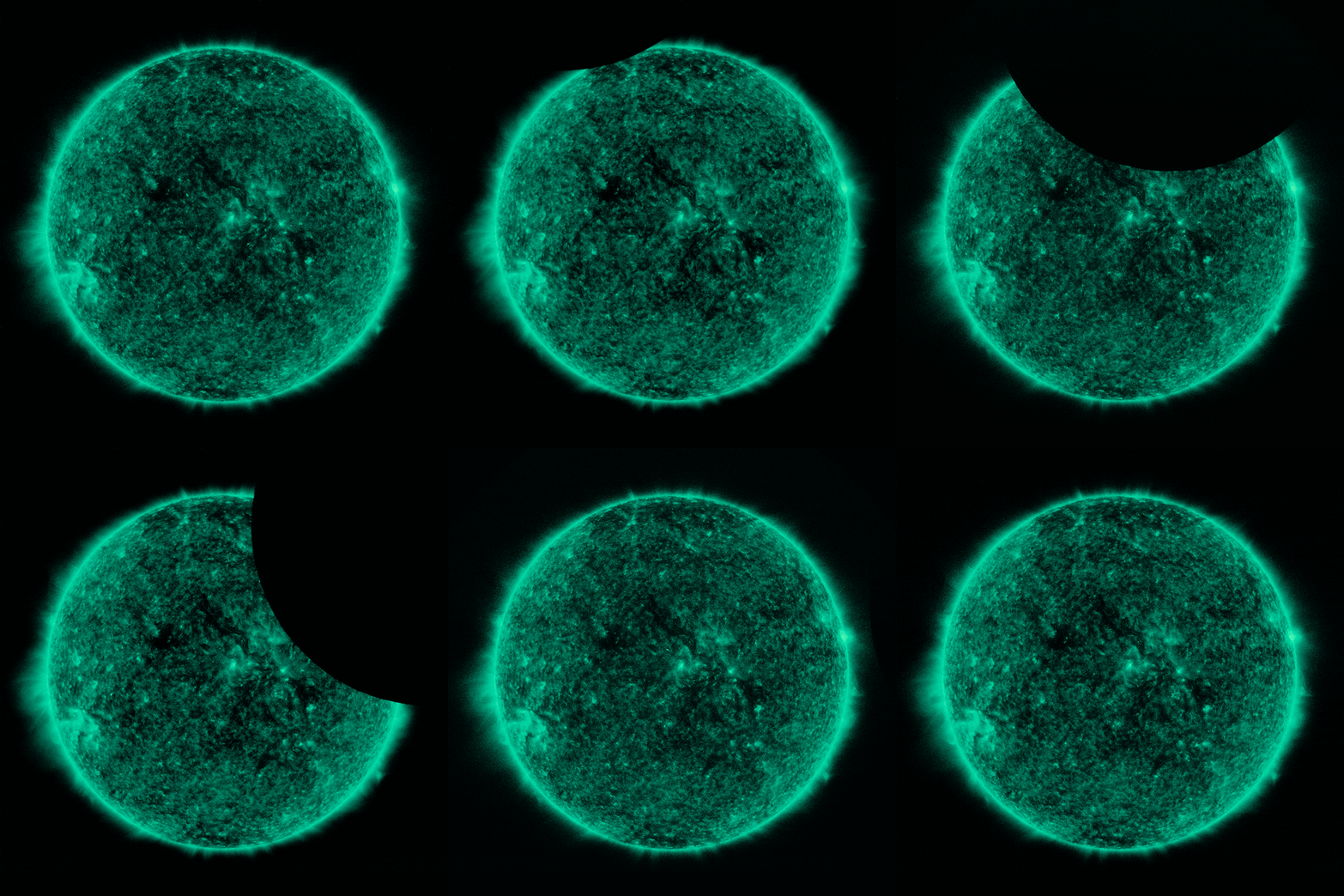
    NASA's SDO Views a Lunar Transit
    Credit: NASA’s Goddard Space Flight Center/SDO/Joy Ng

    NASA’s Solar Dynamics Observatory captured a new image of a lunar transit when the Moon crossed the spacecraft’s view of the Sun.

    On October 19, 2017, the Moon photobombed NASA’s Solar Dynamics Observatory, or SDO, when it crossed the spacecraft’s view of the Sun, treating us to these shadowy images. The lunar transit lasted about 45 minutes, between 3:41 and 4:25 p.m. EDT, with the Moon covering about 26 percent of the Sun at the peak of its journey. The Moon’s shadow obstructs SDO’s otherwise constant view of the Sun, and the shadow’s edge is sharp and distinct, since the Moon has no atmosphere which would distort sunlight.

    SDO captured these images in a wavelength of extreme ultraviolet light that shows solar material heated to more than 10 million degrees Fahrenheit. This kind of light is invisible to human eyes, but colorized here in green.

    SDO: The Solar Dynamics Observatory is the first mission to be launched for NASA’s Living With a Star (LWS) Program, a program designed to understand the causes of solar variability and its impacts on Earth. SDO is designed to help us understand the Sun’s influence on Earth and Near-Earth space by studying the solar atmosphere on small scales of space and time and in many wavelengths simultaneously.

    SDO’s goal is to understand, driving towards a predictive capability, the solar variations that influence life on Earth and humanity’s technological systems by determining

    • How the Sun’s magnetic field is generated and structured
    • How this stored magnetic energy is converted and released into the heliosphere and geospace in the form of solar wind, energetic particles, and variations in the solar irradiance.
    • SDO launched on February 11, 2010, 10:23 am EST on an Atlas V from SLC 41 from Cape Canaveral.

    Never miss a breakthrough: Join the SciTechDaily newsletter.
    Follow us on Google and Google News.

    Astronomy Solar Dynamics Observatory
    Share. Facebook Twitter Pinterest LinkedIn Email Reddit

    Related Articles

    Powerful X-Class Solar Flare Erupts From Sun – Captured by NASA’s Solar Dynamics Observatory

    Moderate Solar Flare Erupts From Sun – Captured by NASA’s Solar Dynamics Observatory

    In 1999 Mysterious Finger-Like Features Were Spotted on the Sun – Now Scientists Have an Explanation

    NASA’s Solar Dynamics Observatory Captures Mid-Level Flare Erupting From the Sun

    Resonant Modes: Long-Period Oscillations of the Sun Discovered

    Solar Dynamics Observatory: Artificial Intelligence Helps Improve NASA’s Eyes on the Sun

    U.S. Postal Service Issues Stunning New Sun Science Forever Stamps

    Gorgeous New Sun Science Stamps Highlight a Decade of Sun-Watching From Space

    Unusual “Rosetta Stone” Solar Eruption Could Help Explain Mysterious Powerful Explosions on the Sun

    Leave A Reply Cancel Reply

    • Facebook
    • Twitter
    • Pinterest
    • YouTube

    Don't Miss a Discovery

    Subscribe for the Latest in Science & Tech!

    Trending News

    Popular Childhood Drinks Linked to Higher Blood Pressure Later in Life

    Scientists Just Challenged a 70-Year-Old Myth About the Human Brain

    Intermittent Fasting Benefits May Last Long After the Diet Ends

    Scientists Develop a Food Ingredient That May Prevent Obesity

    NASA Satellites Spot a Powerful El Niño Building Beneath the Pacific

    Why Do Statins Hurt Muscles? Scientists May Finally Have an Answer

    Decades-Old Dark Matter Explanation Fails Its Most Direct Test Yet

    “One in a Million” Find: Soft Tissue Discovered in 450-Million-Year-Old Fossil

    Follow SciTechDaily
    • Facebook
    • Twitter
    • YouTube
    • Pinterest
    • Newsletter
    • RSS
    SciTech News
    • Biology News
    • Chemistry News
    • Earth News
    • Health News
    • Physics News
    • Science News
    • Space News
    • Technology News
    Recent Posts
    • Common Mouth Bacteria May Trigger Dangerous Calcium Buildup in the Heart
    • New CRISPR Tool Gives Scientists Control Over Cellular Protein Production
    • Natural Supplement May Boost Cancer-Fighting Immunity
    • Scientists Overcome a Major Electrical Bottleneck in Next-Generation Semiconductors
    • Mysterious Radio Beacon Near a Black Hole Defies Expectations
    Copyright © 1998 - 2026 SciTechDaily. All Rights Reserved.
    • Science News
    • About
    • Contact
    • Editorial Board
    • Privacy Policy
    • Terms of Use

    Type above and press Enter to search. Press Esc to cancel.