
Close Menu
    Facebook X (Twitter) Instagram
    SciTechDaily
    • Biology
    • Chemistry
    • Earth
    • Health
    • Physics
    • Science
    • Space
    • Technology
    Facebook X (Twitter) Pinterest YouTube RSS
    SciTechDaily
    Home»Space»NASA’s Solar Dynamics Observatory Spots Two Lunar Transits in Space
    Space

    NASA’s Solar Dynamics Observatory Spots Two Lunar Transits in Space

    By Susie Darling, NASA HeadquartersSeptember 11, 20186 Comments2 Mins Read
    Facebook Twitter Pinterest Telegram LinkedIn WhatsApp Email Reddit
    Share
    Facebook Twitter LinkedIn Pinterest Telegram Email Reddit
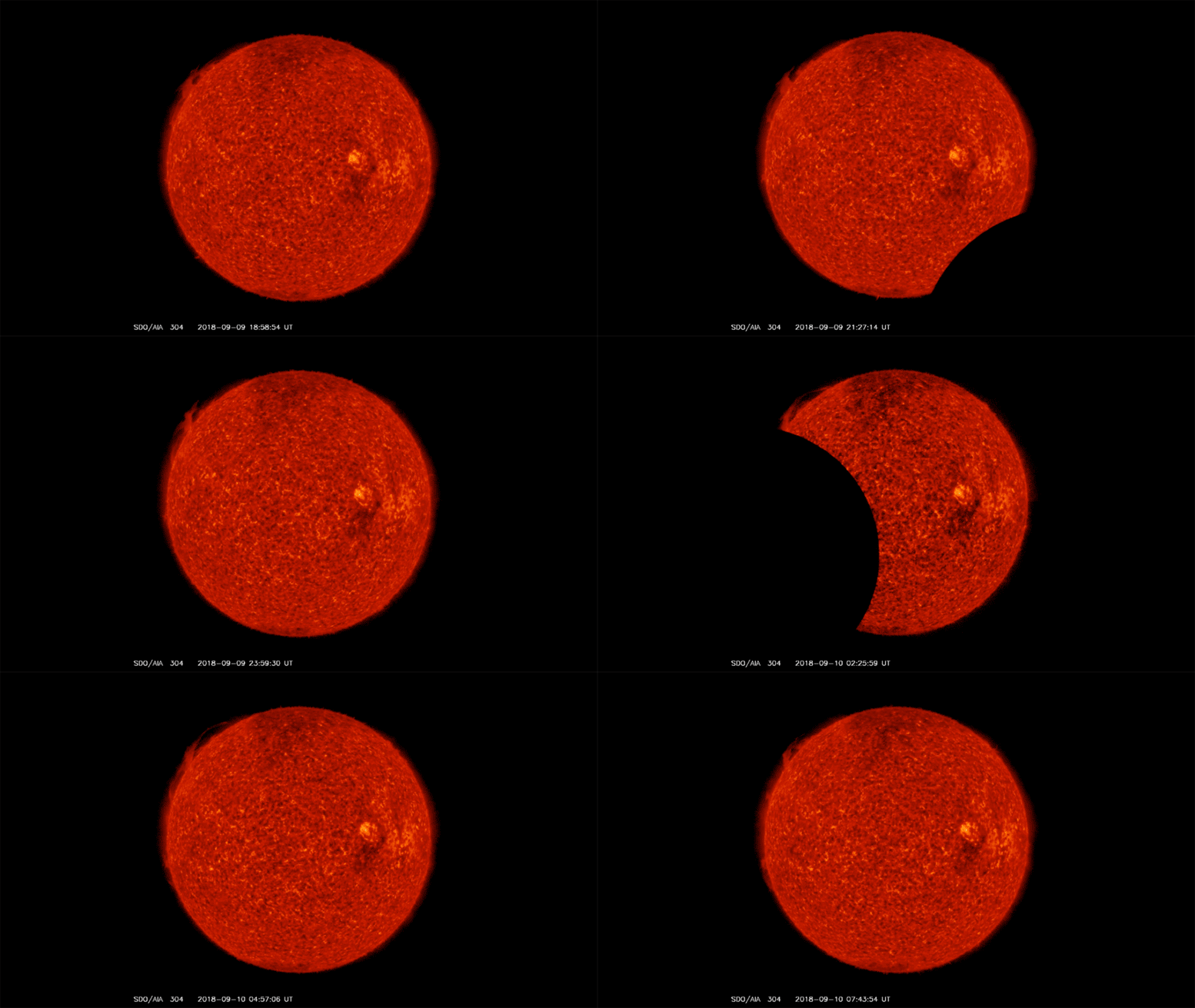
    NASA's SDO Spots Two Lunar Transits in Space
    On September 9, 2018, NASA’s Solar Dynamics Observatory, SDO, saw two lunar transits as the Moon passed in front of the Sun. Credit: NASA/Goddard/SDO

    On September 9, 2018, NASA’s Solar Dynamics Observatory, SDO, saw two lunar transits as the Moon passed in front of the Sun. A transit happens when a celestial body passes between a larger body and an observer. This first lunar transit lasted one hour, from 4:30 pm to 5:30 p.m. EDT and obscured 92 percent of the Sun at the peak of its journey. The second transit happened several hours later at 9:52 p.m. and lasted a total of 49 minutes, ending at 10:41 p.m. EDT. This transit only obscured 34 percent of the Sun at its peak.

    Watch the movie here to see how — from SDO’s perspective — the Moon appears to go in one direction and then switch direction to cross the Moon again. The Moon does not, of course, actually change direction, but it appears to do so from SDO’s perspective based on the fact that the spacecraft’s orbit essentially catches up and passes the Moon during the first transit.

    Because the Moon does not have an atmosphere, when a lunar transit occurs no light from the Sun gets distorted, allowing for a distinct view of the Moon’s surface. Although it looks smooth from far away, the surface of the Moon is rugged, sprinkled with craters, valleys, and mountains.

    SDO captured these images in a wavelength of extreme ultraviolet light that shows solar material heated to more than 10 million degrees Fahrenheit. Extreme ultraviolet light is typically invisible to the human eye, but satellites like SDO allow us to observe the swirling movement in the Sun’s atmosphere visible only in these wavelengths.

    Never miss a breakthrough: Join the SciTechDaily newsletter.
    Follow us on Google and Google News.

    Astronomy Cosmology Solar Dynamics Observatory
    Share. Facebook Twitter Pinterest LinkedIn Email Reddit

    Related Articles

    NASA’s Solar Dynamics Observatory Reveals Sun’s Magnetic Field

    NASA’s Solar Dynamics Observatory Detects Solar Flare Pulses at Sun and Earth

    Astronomers Detail the Nature of Solar Brightness Variations

    Scientists Watch the Sun Stop Its Own Solar Eruption

    NASA’s Solar Dynamics Observatory Witnesses a Double Eclipse

    SDO Views Coronal Hole in Our Sun

    Links Between Core Collapse Supernovae and Star Formation Established

    The Bolshoi Simulation: Boxing the Universe

    Baryon Oscillation Spectroscopic Survey Measures the Universe’s Expansion and Dark Energy

    6 Comments

    1. John on September 11, 2018 10:03 am

      Why are these lunar transits so important?

      Reply
    2. Fred on September 14, 2018 3:09 am

      Why are the eclipse disks different diameters?

      Reply
      • mik on September 17, 2018 10:49 am

        Because during the first transit SDO was much closer to the Moon.

        Reply
    3. FoxM on September 14, 2018 6:31 am

      Fred is right Sun keep the same size and moon not?

      Reply
    4. Hello on September 14, 2018 7:29 am

      I would like to see other video examples of Moon traveling in two different directions and for some reason not keeping the same size.

      Reply
    5. Steve on September 19, 2018 8:07 am

      Can someone please explain this better… how does the moon size change but not the sun.
      How does it change direction as well…

      Reply
    Leave A Reply Cancel Reply

    • Facebook
    • Twitter
    • Pinterest
    • YouTube

    Don't Miss a Discovery

    Subscribe for the Latest in Science & Tech!

    Trending News

    The Universe Is Expanding Too Fast and Scientists Can’t Explain Why

    “Like Liquid Metal”: Scientists Create Strange Shape-Shifting Material

    Early Warning Signals of Esophageal Cancer May Be Hiding in Plain Sight

    Common Blood Pressure Drug Shows Surprising Power Against Deadly Antibiotic-Resistant Superbug

    Scientists Uncover Dangerous Connection Between Serotonin and Heart Valve Disease

    Scientists Discover a “Protector” Protein That Could Help Reverse Hair Loss

    Bone-Strengthening Discovery Could Reverse Osteoporosis

    Scientists Uncover Hidden Trigger Behind Stem Cell Aging

    Follow SciTechDaily
    • Facebook
    • Twitter
    • YouTube
    • Pinterest
    • Newsletter
    • RSS
    SciTech News
    • Biology News
    • Chemistry News
    • Earth News
    • Health News
    • Physics News
    • Science News
    • Space News
    • Technology News
    Recent Posts
    • A Common Diabetes Drug May Hold the Key to Stopping HIV From Coming Back
    • Ancient “Syphilis-Like” Disease in Vietnam Challenges Key Scientific Assumptions
    • Drinking Alcohol To Cope in Your 20s Could Damage Your Brain for Life
    • Scientists Crack Alfalfa’s Chromosome Mystery After Decades of Debate
    • Ancient Ant-Plant Alliance Collapses As Predatory Wasps Move In
    Copyright © 1998 - 2026 SciTechDaily. All Rights Reserved.
    • Science News
    • About
    • Contact
    • Editorial Board
    • Privacy Policy
    • Terms of Use

    Type above and press Enter to search. Press Esc to cancel.