
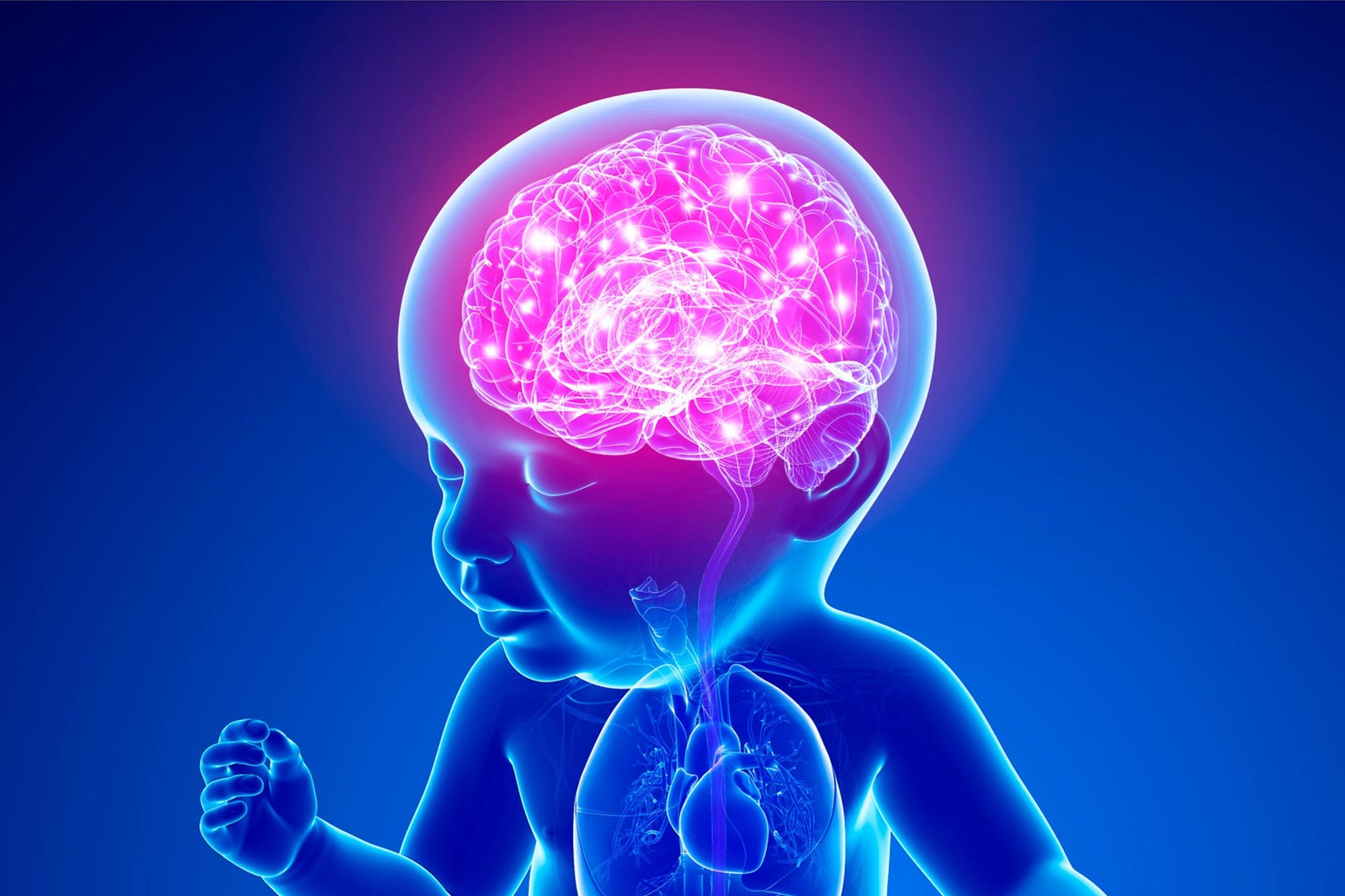
AI analysis of infant movements reveals critical insights into early developmental stages, emphasizing the importance of feet movements in learning.
Recent advances in computing and artificial intelligence, as well as new insights into infant learning, suggest that machine and deep learning techniques can be used to study how infants transition from random exploratory movements to purposeful actions. Thus far, most research has focused on babies’ spontaneous movements, distinguishing between fidgety and non-fidgety behaviors.
Although early infant movements may seem chaotic, they reveal meaningful patterns as infants interact with their environment. However, we still lack an understanding of how infants intentionally engage with their surroundings and the principles guiding their goal-directed actions.

Understanding Infant Interactions Through AI
To explore how infants begin to act purposefully, researchers at Florida Atlantic University and their collaborators conducted a baby-mobile experiment, a developmental research technique used since the late 1960s. In this experiment, a colorful mobile is gently tethered to an infant’s foot, which moves when the baby kicks, thereby linking their actions to what they see. This setup helps researchers understand how infants control their movements and discover their ability to influence their surroundings.
In the study, researchers tested whether AI tools could pick up on complex changes in patterns of infant movement. Infant movements, tracked using a Vicon 3D motion capture system, were classified into different types – from spontaneous actions to reactions when the mobile moves. By applying various AI techniques, researchers examined which methods best captured the nuances of infant behavior across different situations and how movements evolved over time.
Researchers explored how infants act purposefully by attaching a colorful mobile to their foot and tracking movements with a Vicon 3D motion capture system. Credit: Florida Atlantic University
Understanding Infant Interactions Through AI
Results of the study, published in Scientific Reports, underscore that AI is a valuable tool for understanding early infant development and interaction. Both machine and deep learning methods accurately classified five-second clips of 3D infant movements as belonging to different stages of the experiment. Among these methods, the deep learning model, 2D-CapsNet, performed the best. Importantly, for all the methods tested, the movements of the feet had the highest accuracy rates, which means that, compared to other parts of the body, the movement patterns of the feet changed most dramatically across the stages of the experiment.
“This finding is significant because the AI systems were not told anything about the experiment or which part of the infant’s body was connected to the mobile. What this shows is that the feet – as end effectors – are the most affected by the interaction with the mobile,” said Scott Kelso, Ph.D., co-author and Glenwood and Martha Creech Eminent Scholar in Science at the Center for Complex Systems and Brain Sciences within FAU’s Charles E. Schmidt College of Science. “In other words, the way infants connect with their environment has the biggest impact at the points of contact with the world. Here, this was ‘feet first.’”
Impact of Mobility on Infant Learning
The 2D-CapsNet model achieved an accuracy of 86% when analyzing foot movements and was able to capture detailed relationships between different body parts during movement. Across all methods tested, foot movements consistently showed the highest accuracy rates – about 20% higher than movements of the hands, knees, or the whole body.
“We found that infants explored more after being disconnected from the mobile than they did before they had the chance to control it. It seems that losing the ability to control the mobile made them more eager to interact with the world to find a means of reconnecting,” said Aliza Sloan, Ph.D., co-author and a postdoctoral research scientist in FAU’s Center for Complex Systems and Brain Sciences. “However, some infants showed movement patterns during this disconnected phase that contained hints of their earlier interactions with the mobile. This suggests that only certain infants understood their relationship with the mobile well enough to maintain those movement patterns, expecting that they would still produce a response from the mobile even after being disconnected.”
The researchers say that if the accuracy of infants’ movements remains high during the disconnection, it might indicate that the infants learned something during their earlier interactions. However, different types of movements might mean different things in terms of what the infants discovered.
“It’s important to note that studying infants is more challenging than studying adults because infants can’t communicate verbally,” said Nancy Aaron Jones, Ph.D., co-author, professor in FAU’s Department of Psychology, director of the FAU WAVES Lab, and a member of the Center for Complex Systems and Brain Sciences within the Charles E. Schmidt College of Science. “Adults can follow instructions and explain their actions, while infants cannot. That’s where AI can help. AI can help researchers analyze subtle changes in infant movements, and even their stillness, to give us insights into how they think and learn, even before they can speak. Their movements can also help us make sense of the vast degree of individual variation that occurs as infants develop.”
Looking at how AI classification accuracy changes for each infant gives researchers a new way to understand when and how they start to engage with the world.
“While past AI methods mainly focused on classifying spontaneous movements linked to clinical outcomes, combining theory-based experiments with AI will help us create better assessments of infant behavior that are relevant to their specific contexts,” said Kelso. “This can improve how we identify risks, diagnose and treat disorders.”
Reference: “Artificial intelligence detects awareness of functional relation with the environment in 3 month old babies” by Massoud Khodadadzadeh, Aliza T. Sloan, Nancy Aaron Jones, Damien Coyle and J. A. Scott Kelso, 6 July 2024, Scientific Reports.
DOI: 10.1038/s41598-024-66312-6
The research was supported by Tier 2 High Performance Computing resources provided by the Northern Ireland High-Performance Computing facility funded by the U.K. Engineering and Physical Sciences Research Council; the U.K. Research and Innovation Turing AI Fellowship (2021-2025) funded by the Engineering and Physical Research Council, Vice Chancellor’s Research Scholarship; the Institute for Research in Applicable Computing at the University of Bedfordshire; the FAU Foundation (Eminent Scholar in Science); and United States National Institutes of Health.
Never miss a breakthrough: Join the SciTechDaily newsletter.
Follow us on Google and Google News.