
Close Menu
    Facebook X (Twitter) Instagram
    SciTechDaily
    • Biology
    • Chemistry
    • Earth
    • Health
    • Physics
    • Science
    • Space
    • Technology
    Facebook X (Twitter) Pinterest YouTube RSS
    SciTechDaily
    Home»Health»New Biosensors Quickly Detect COVID-19 Coronavirus Proteins and Antibodies
    Health

    New Biosensors Quickly Detect COVID-19 Coronavirus Proteins and Antibodies

    By Ian Haydon, UW MedicineJanuary 31, 2021No Comments4 Mins Read
    Facebook Twitter Pinterest Telegram LinkedIn WhatsApp Email Reddit
    Share
    Facebook Twitter LinkedIn Pinterest Telegram Email Reddit
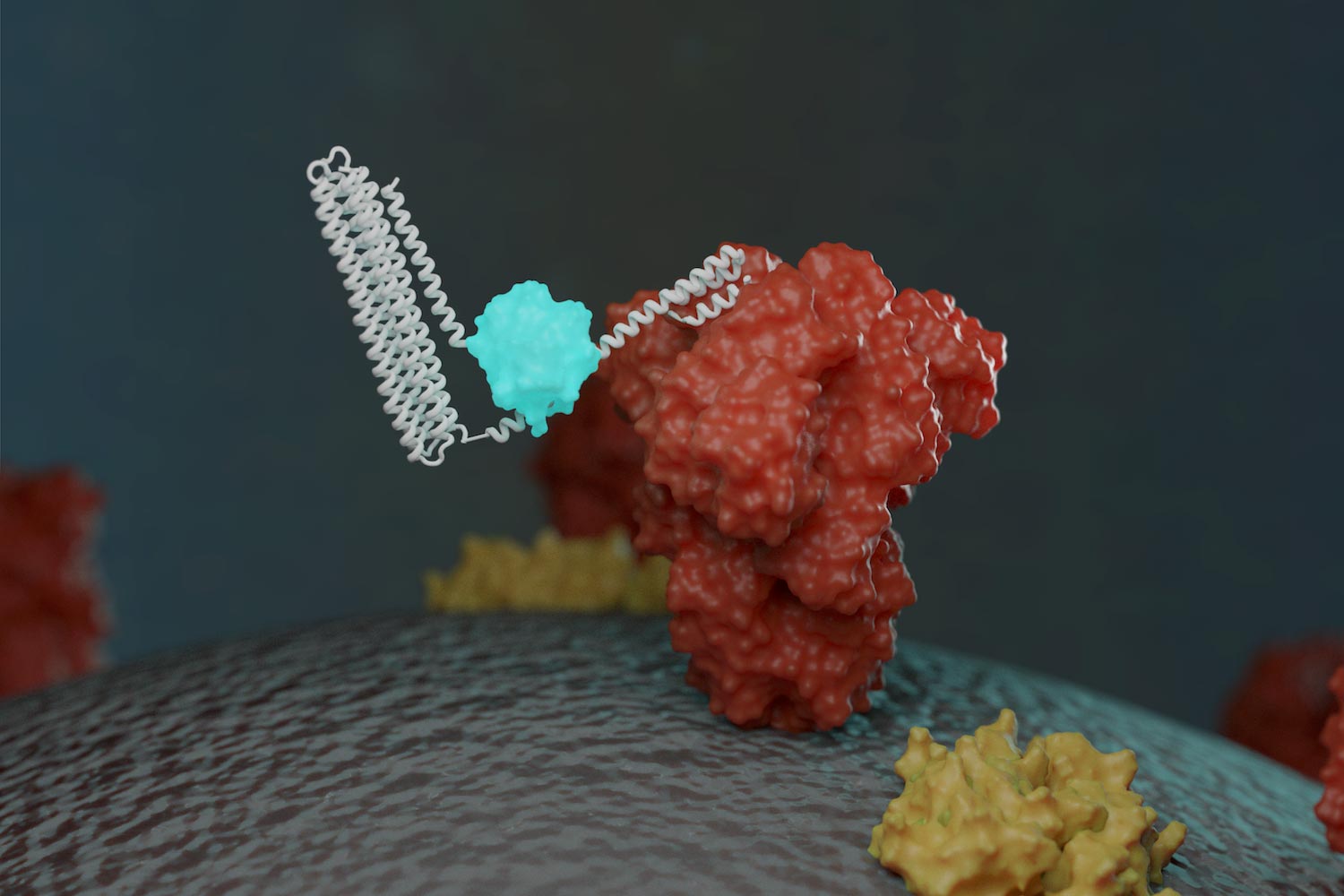
    Biosensor Binding to Molecule and Emitting Light
    An illustration of a new biosensor binding to a targeted molecule and emitting light. The creation of the biosensor was led by the UW Medicine Institute for Protein Design. Credit: Ian Haydon/UW Medicine Institute for Protein Design

    When mixed with fluid from a nasal swab or blood sample, these protein sensors emit light within minutes.

    Scientists have created a new way to detect the proteins that make up the pandemic coronavirus, as well as antibodies against it. They designed protein-based biosensors that glow when mixed with components of the virus or specific COVID-19 antibodies. This breakthrough could enable faster and more widespread testing in the near future. The research appears in Nature.

    To diagnose coronavirus infection today, most medical laboratories rely on a technique called RT-PCR, which amplifies genetic material from the virus so that it can be seen. This technique requires specialized staff and equipment. It also consumes lab supplies that are now in high demand all over the world. Supply-chain shortfalls have slowed COVID-19 test results in the United States and beyond.

    In an effort to directly detect coronavirus in patient samples without the need for genetic amplification, a team of researchers led by David Baker, professor of biochemistry and director of the Institute for Protein Design at UW Medicine, used computers to design new biosensors. These protein-based devices recognize specific molecules on the surface of the virus, bind to them, then emit light through a biochemical reaction.
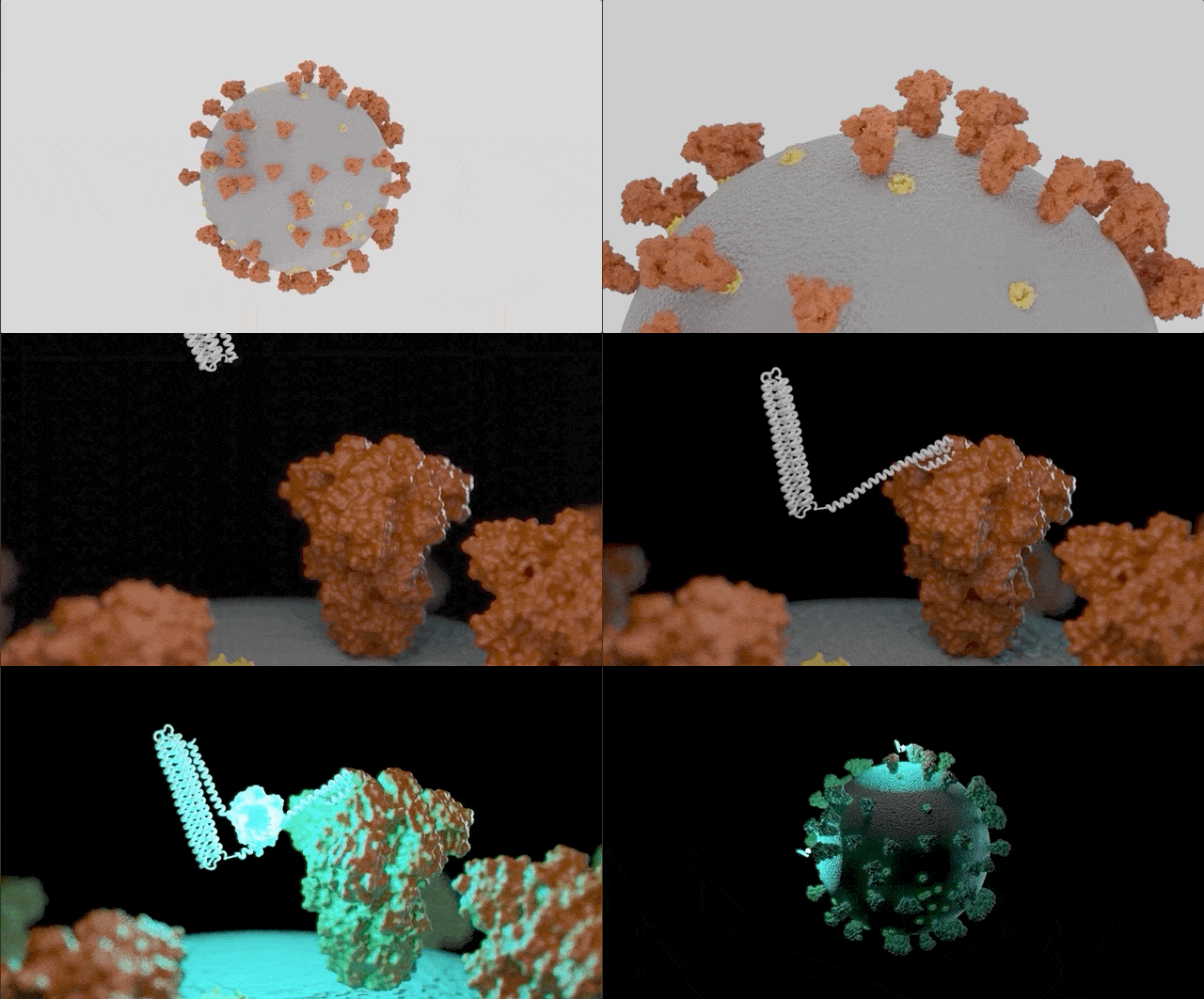
    LOCKR Based SARS CoV 2 Biosensor
    Artist’s depiction of a LOCKR-based SARS-CoV-2 biosensor. Credit: Ian Haydon/UW Medicine Institute for Protein Design

    Specific, Sensitive, and Versatile Detection Tools

    Antibody testing can reveal whether a person has had COVID-19 in the past. It is being used to track the spread of the pandemic, but it too requires complex laboratory supplies and equipment.

    The same team of UW researchers also created biosensors that glow when mixed with COVID-19 antibodies. They showed that these sensors do not react to other antibodies that might also be in the blood, including those that target other viruses. This sensitivity is important for avoiding false-positive test results.

    “We have shown in the lab that these new sensors can readily detect virus proteins or antibodies in simulated nasal fluid or donated serum, said Baker. “Our next goal is to ensure they can be used reliably in a diagnostic setting. This work illustrates the power of de novo protein design to create molecular devices from scratch with new and useful functions.”

    Alfredo Quijano Rubio
    Alfredo Quijano-Rubio conducting research at the UW Medicine Institute for Protein Design in Seattle. He led work on the design and testing of new light-emitting biosensors to detect coronavirus proteins and antibodies. Future modifications to this model biosensor might also be useful in detecting other clinically important molecules in cancer and infectious diseases. Credit: Ian Haydon/UW Institute for Protein Design

    Beyond COVID-19, the team also showed that similar biosensors could be designed to detect medically relevant human proteins such as Her2 (a biomarker and therapy target for some forms of breast cancer) and Bcl-2 (which has clinical significance in lymphoma and some other cancers), as well as a bacterial toxin and antibodies that target Hepatitis B virus.

    Reference: “De novo design of modular and tunable protein biosensors” by Alfredo Quijano-Rubio, Hsien-Wei Yeh, Jooyoung Park, Hansol Lee, Robert A. Langan, Scott E. Boyken, Marc J. Lajoie, Longxing Cao, Cameron M. Chow, Marcos C. Miranda, Jimin Wi, Hyo Jeong Hong, Lance Stewart, Byung-Ha Oh and David Baker, 27 January 2021, Nature.
    DOI: 10.1038/s41586-021-03258-z

    This research was supported by the National Institutes of Health, Howard Hughes Medical Institute, Air Force Office of Scientific Research, The Audacious Project, Eric and Wendy Schmidt by recommendation of the Schmidt Futures, Washington Research Foundation, Nordstrom Barrier Fund, The Open Philanthropy Project, LG Yonam Foundation, BK21 PLUS project of Korea, United World Antiviral Research Network (UWARN) which is one of the Centers Researching Emerging Infectious Diseases, Gree Real Estate, and “la Caixa” Foundation.

    Never miss a breakthrough: Join the SciTechDaily newsletter.
    Follow us on Google and Google News.

    Biochemistry Biomedical Engineering Biotechnology COVID-19 Molecular Biology Popular University of Washington Virology
    Share. Facebook Twitter Pinterest LinkedIn Email Reddit

    Related Articles

    Newly Discovered Virus-Cell Interaction May Explain COVID-19’s High Infection Rate

    Ultrapotent COVID-19 Vaccine Designed via Computer: Innovative Nanoparticle Vaccine Spurs Extremely High Levels of Protective Antibodies

    Ultrapotent Antibody Mix Blocks COVID-19 Virus From Entering Cells – Protects Against the Pandemic Coronavirus

    Computer Designed Synthetic Antiviral Proteins Inhibit SARS-CoV-2 / COVID-19 in Human Cells

    COVID-19 Vaccine Innovation Could Massively Speed Up Worldwide Production

    Open Source All-Atom Models of Full-Length COVID-19 ‘S’ Protein Produced by Scientists

    Infection Researchers Identify How Coronaviruses From Animals Need to Change to Spread to Humans

    Coronavirus Fight: Scientists Identify COVID-19 Drug That “Kills” the Virus Within 48 Hours

    Promising New COVID-19 Vaccine Candidate Developed

    Leave A Reply Cancel Reply

    • Facebook
    • Twitter
    • Pinterest
    • YouTube

    Don't Miss a Discovery

    Subscribe for the Latest in Science & Tech!

    Trending News

    Even Occasional Binge Drinking May Triple Liver Damage Risk

    Liftoff! NASA’s Artemis II Launch Sends Astronauts Around the Moon for First Time in 50 Years

    Scientists Discover New Way To Eliminate “Zombie Cells” Driving Aging

    This New Quantum Theory Could Change Everything We Know About the Big Bang

    This One Vitamin May Help Protect Your Brain From Dementia Years Later

    Stopping Weight-Loss Drugs Like Ozempic Can Quickly Erase Heart Benefits

    A 500-Million-Year-Old Surprise Is Forcing Scientists to Rethink Spider Evolution

    Coffee and Blood Pressure: What You Need To Know Before Your Next Cup

    Follow SciTechDaily
    • Facebook
    • Twitter
    • YouTube
    • Pinterest
    • Newsletter
    • RSS
    SciTech News
    • Biology News
    • Chemistry News
    • Earth News
    • Health News
    • Physics News
    • Science News
    • Space News
    • Technology News
    Recent Posts
    • This Breakthrough Solar Panel Generates Power From Both Sunlight and Raindrops
    • Greenland’s Ice Is Melting Faster Than Ever, and Scientists Are Alarmed
    • NASA Artemis II Nears Dramatic Moon Flyby With Record-Breaking Moment Ahead
    • Scientists Uncover New Metabolic Effects Beyond Weight Loss of Mounjaro
    • Scientists Create Healing Gel That Could Stop Chronic Wounds From Turning Deadly
    Copyright © 1998 - 2026 SciTechDaily. All Rights Reserved.
    • Science News
    • About
    • Contact
    • Editorial Board
    • Privacy Policy
    • Terms of Use

    Type above and press Enter to search. Press Esc to cancel.