
Close Menu
    Facebook X (Twitter) Instagram
    SciTechDaily
    • Biology
    • Chemistry
    • Earth
    • Health
    • Physics
    • Science
    • Space
    • Technology
    Facebook X (Twitter) Pinterest YouTube RSS
    SciTechDaily
    Home»Biology»New Critically Endangered Killifish Species Discovered in Kenya’s Ancient Forest
    Biology

    New Critically Endangered Killifish Species Discovered in Kenya’s Ancient Forest

    By Wiida Fourie-Basson, Stellenbosch UniversityApril 3, 2025No Comments3 Mins Read
    Facebook Twitter Pinterest Telegram LinkedIn WhatsApp Email Reddit
    Share
    Facebook Twitter LinkedIn Pinterest Telegram Email Reddit
    Nothobranchius Sylvaticus in a Tank
    A new species of killifish, Nothobranchius sylvaticus, from Kenya. Credit: Dirk Bellstedt

    Scientists discovered a new forest killifish in Kenya, revealing both evolutionary and tectonic history—but its habitat is highly endangered.

    A newly discovered species of killifish, Nothobranchius sylvaticus, has been formally described in the journal Zootaxa. Critically endangered, this fish was sampled during fieldwork in 2017 and 2018 from an ancient forest in southeastern Kenya.

    Nothobranchius sylvaticus, from the Latin meaning “pertaining to the forest,” is also the first known endemic killifish to persist in a forest.

    Sampling Expeditions and Research Origins

    Prof. Dirk Bellstedt, emeritus professor of biochemistry at Stellenbosch University, was part of the international research team that collected the fish from temporary swamps in the Gongoni Forest, a small and ancient forest along Kenya’s southeastern coast. The expeditions were conducted as part of the “Off the Beaten Track” project, funded by the Volkswagen Foundation in Germany.
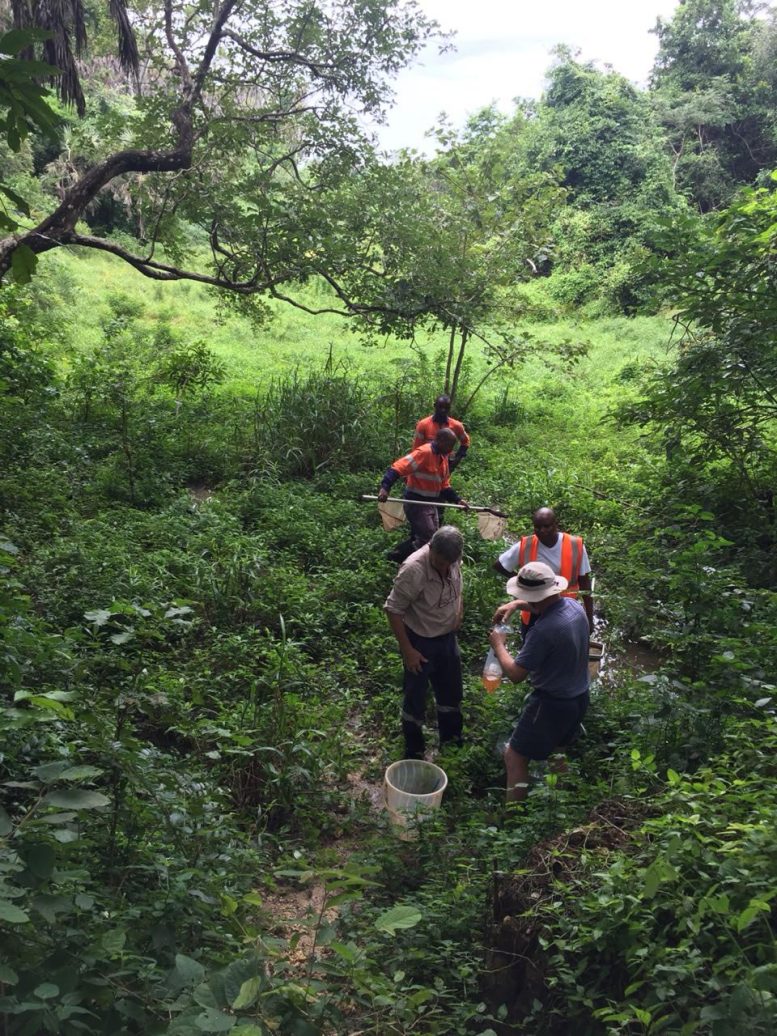
    Swamp in Gongoni Forest, Kenya
    The new species of killifish was sampled from an ephemeral swamp in the Gongoni Forest Reserve in Kenya. Pictured here are Prof. Dirk Bellstedt from Stellenbosch University with Quentin Luke from the East African Herbarium at the National Museums of Kenya, assisted by staff of the Base Titanium mine. Credit: Friederike Bellstedt

    The team performed both a principal component analysis, based on the physical traits of the fish, as well as DNA sequencing, to confirm that it is indeed a new species. A dated phylogenetic analysis, the most comprehensive for the genus, indicated that the N. sylvaticus lineage diverged from its sister species about 7.09 million years ago.

    An Ancient Forest with a Deep History

    According to Bellstedt, this finding indicates that the Gongoni Forest itself is more than 7.09 million years old. Comprising only about 8.2 square kilometers, this ancient forest is a typical example of the East African Mosaic – a combination of savannah interspersed with forest patches that stretches from as far south as Pondoland in South Africa to as far north as southern coastal Somalia.
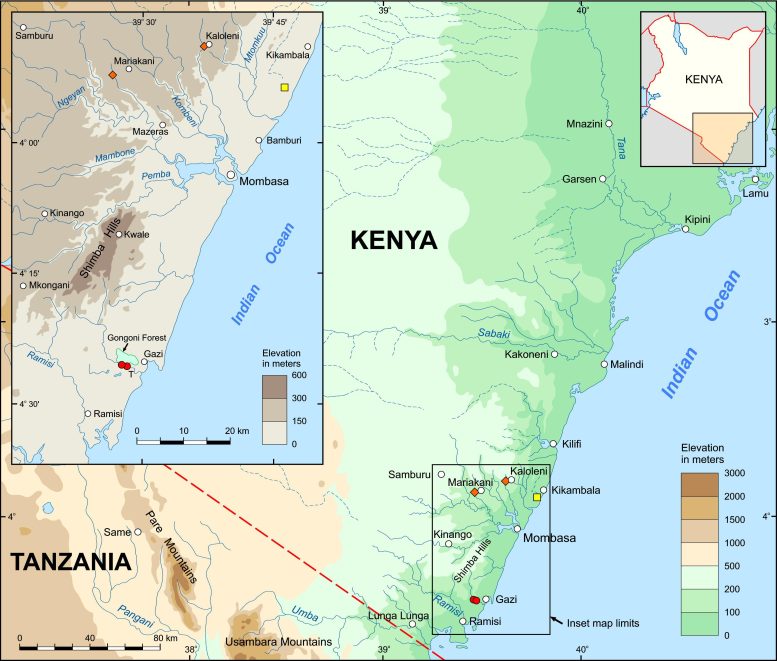
    Map Showing Known Distribution of N. sylvaticus
    Map of south-eastern Kenya, showing the known distribution of Nothobranchius sylvaticus (red-filled circles). Credit: Brian Watters

    Since 2015, the team has been combining next-generation DNA sequencing of fish groups, such as Africa’s famous cichlid fishes, with high precision rock dating of key landforms in eastern Africa. The aim is to reconstruct the tectonic development of central Africa over the past 20 million years. During the past five to 30 million years, this region has undergone major tectonic activities and break ups.

    For the scientists, the discovery of N. sylvaticus was one more example of the congruence between evolutionary events in the genus Nothobranchius with paleo-drainage dynamics, which were driven by the tectonic events that formed the East-African River Valley System.

    However, due to the new species’ severely restricted habitat in an ancient forest, it also faces a high conservation risk.

    The type specimen was deposited at the National Museums of Kenya in Nairobi, and the comparative specimens at the Royal Museum for Central Africa in Tervuren, Belgium.

    Reference: “The description of a critically endangered new species of seasonal killifish, Nothobranchius sylvaticus (Cyprinodontiformes: Nothobranchiidae), a relict species from an East African forest refugium in south-eastern Kenya” by Dirk U. Bellstedt, Béla Nagy, P. de Wet van der Merwe, Fenton P.D. Cotterill, Quentin Luke and Brian R. Watters, 6 March 2025, Zootaxa.
    DOI: 10.11646/zootaxa.5601.1.4

    Funding: Universiteit Stellenbosch, Volkswagen Foundation

    Never miss a breakthrough: Join the SciTechDaily newsletter.
    Follow us on Google and Google News.

    Biodiversity Endangered Evolutionary Biology New Species Stellenbosch University Zoology
    Share. Facebook Twitter Pinterest LinkedIn Email Reddit

    Related Articles

    Scientists Discover New Golden-Tongued Species of Lizard

    Discovery of a Lifetime: Student Discovers Ancient “Living Fossil” Underneath Rock

    “Totally Unexpected” – Scientists Discover Cryptic New Species of Crocodile

    Ghost Frog Found: Scientists Stumble Upon Species Missing Since 1902

    Scientists Discover New Species of “Rock-Climbing” Gecko in Madagascar

    Large New Amphibious Centipede Species Discovered in Okinawa and Taiwan

    New Centipede Discovered on Top of Food Chain in Hellish Ecosystem of a Sulfur-Soaked Romanian Cave

    New Species Found in the Hottest Place on Earth

    New Green Pit Viper From India Named After Salazar Slytherin From Harry Potter

    Leave A Reply Cancel Reply

    • Facebook
    • Twitter
    • Pinterest
    • YouTube

    Don't Miss a Discovery

    Subscribe for the Latest in Science & Tech!

    Trending News

    One of the Universe’s Largest Stars May Be Getting Ready To Explode

    Scientists Discover Enzyme That Could Supercharge Ozempic-Like Weight Loss Drugs

    Popular Sweetener Linked to DNA Damage – “It’s Something You Should Not Be Eating”

    Ancient “Rock” Microbes May Reveal How Complex Life Began

    Researchers Capture Quantum Interference in One of Nature’s Rarest Atoms

    “A Plague Is Upon Us”: The Mass Death That Changed an Ancient City Forever

    Scientists Discover Game-Changing New Way To Treat High Cholesterol

    This Small Change to Your Exercise Routine Could Be the Secret to Living Longer

    Follow SciTechDaily
    • Facebook
    • Twitter
    • YouTube
    • Pinterest
    • Newsletter
    • RSS
    SciTech News
    • Biology News
    • Chemistry News
    • Earth News
    • Health News
    • Physics News
    • Science News
    • Space News
    • Technology News
    Recent Posts
    • Scientists Prove There Are Just Six Degrees of Separation in a Social Network
    • Bee Bacteria Could Fix a Major Flaw in Plant-Based Milk
    • Scientists Discover a Surprising Way To Make Bread Healthier and More Nutritious
    • Natural Compounds Boost Bone Implant Success While Killing Bacteria and Cancer Cells
    • After 60 Years, Scientists Uncover Unexpected Brain Effects of Popular Diabetes Drug Metformin
    Copyright © 1998 - 2026 SciTechDaily. All Rights Reserved.
    • Science News
    • About
    • Contact
    • Editorial Board
    • Privacy Policy
    • Terms of Use

    Type above and press Enter to search. Press Esc to cancel.