
Close Menu
    Facebook X (Twitter) Instagram
    SciTechDaily
    • Biology
    • Chemistry
    • Earth
    • Health
    • Physics
    • Science
    • Space
    • Technology
    Facebook X (Twitter) Pinterest YouTube RSS
    SciTechDaily
    Home»Health»New Nasal Swab Test Reveals Can Accurately Identify Viral Infection
    Health

    New Nasal Swab Test Reveals Can Accurately Identify Viral Infection

    By Ziba Kashef, Yale UniversityDecember 21, 2017No Comments3 Mins Read
    Facebook Twitter Pinterest Telegram LinkedIn WhatsApp Email Reddit
    Share
    Facebook Twitter LinkedIn Pinterest Telegram Email Reddit
    A Test to Show When the Body is Fighting a Virus
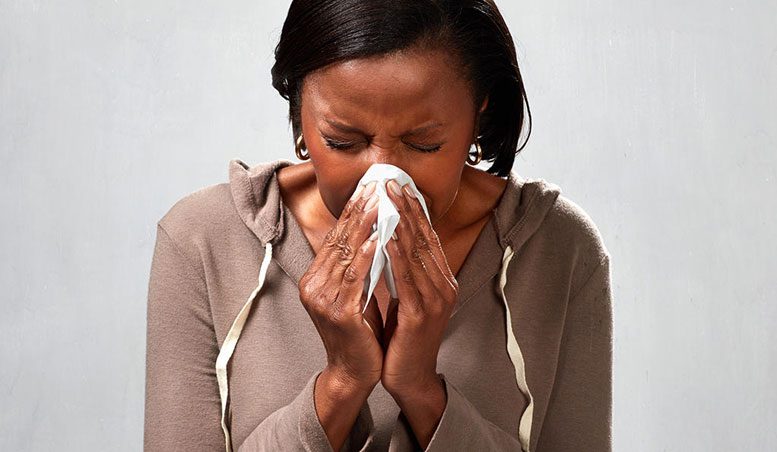
    A new nasal swab test accurately identifies viral infections that cause respiratory symptoms by measuring RNA or protein molecules in human cells. This could be a cheaper and faster alternative to current methods for diagnosing respiratory illnesses. (© stock.adobe.com)

    A new test that measures RNA or protein molecules in human cells can accurately identify viral infection as a cause of respiratory symptoms, according to a Yale study published December 21 in The Journal of Infectious Diseases. Performed with a simple nasal swab, the test could prove to be a quicker, cheaper way to diagnose respiratory viral illnesses than current methods, the researchers said.

    “It’s a simpler test and more cost-effective for looking at viral infection,” said author Ellen Foxman, M.D., assistant professor of laboratory medicine at Yale School of Medicine.

    Upper respiratory illnesses are common, yet there is no rapid diagnostic test to confirm more than a handful of common viruses as the cause. To identify biomarkers, or indicators, of viral infection applicable to many different respiratory viruses, Foxman and co-author Marie Landry, M.D., first tested human nasal cells in the laboratory. With genetic sequencing techniques, they screened the cells for RNAs and proteins that increase when a virus is present.

    Foxman and Landry identified three RNAs, and two proteins, that are “turned on” by a virus. They then investigated whether measuring the expression of the genes, or levels of the proteins, could predict the presence of a viral infection.

    The researchers found that the RNAs and proteins were both accurate predictors of respiratory viral infection, confirmed by subsequent testing for common viruses. The RNAs predicted viral infection with 97% accuracy. This method also picked up viruses that are not identified by many current lab tests, they said.

    “Instead of looking for individual viruses, our test asks the question: ‘Is the body fighting a virus?’” said Foxman. “We found we can answer that question very well.”

    The researchers hope to develop the method into a rapid gene or protein test that doctors could perform in their offices. Such a test could help providers diagnose a viral infection more quickly and accurately than with routine evaluation or more time-consuming and expensive tests, the researchers said.

    The test could be particularly useful for assessing very sick patients or young children, they added, and it could also help reduce the misuse of antibiotics to treat viral infections.

    “One reason to test is to know why the patient is sick,” said Foxman. “The other reason is to make a decision about whether people who are not that sick should get antibiotics.”

    The research team’s goal is to create a gene- or protein-based test available for general use within one to five years, Foxman said.

    This work was supported by the National Institutes of Health and Biomedical Advanced Research and Development Authority, and by the Yale Department of Laboratory Medicine. Foxman and Landry have a patent pending.

    Reference:  “Antiviral response in the nasopharynx identifies patients with respiratory virus infection” Marie L Landry and Ellen F Foxman, 21 December 2017, Journal of Infectious Diseases.
    DOI: 10.1093/infdis/jix648

    Never miss a breakthrough: Join the SciTechDaily newsletter.
    Follow us on Google and Google News.

    Disease Infection Medicine Virus Yale University
    Share. Facebook Twitter Pinterest LinkedIn Email Reddit

    Related Articles

    New Strategy to Better Protect Cancer Patients from the Flu

    Study Shows Diabetes Drug Significantly Reduces Risk of Heart Failure

    Yale Researchers Reveal How HIV Spreads in Real Time

    Yale Study Shows One in Four Hepatitis C Patients Denied Initial Drug Therapy

    Fewer Doses of Prophylaxis Provides Near-Optimal Protection Against RSV

    Researchers May Have Pinpointed a Strategy for Eliminating Latent HIV

    How the Immune System Combats Superinfection

    Tick-Borne Infection Borrelia Miyamotoi Discovered in the United States

    Intensive Glycemic Control Does Not Definitively Reduce the Risk of Impaired Kidney Function

    Leave A Reply Cancel Reply

    • Facebook
    • Twitter
    • Pinterest
    • YouTube

    Don't Miss a Discovery

    Subscribe for the Latest in Science & Tech!

    Trending News

    Doctors May Need To Rethink Calcium and Vitamin D Recommendations After Major Review

    Scientists Discover a Hidden Cause of Cellular Aging That Can Be Reversed

    Archaeologists Have Found Something Unexpected Inside a 1,600-Year-Old Egyptian Mummy

    Scientists May Have Found a Completely New Way To Treat Depression

    New 7-Dimensional Theory May Finally Solve the Black Hole Information Paradox

    Scientists Made Older Mice Biologically Younger Using Gut Microbes

    Scientists Finally Uncover Why Ozempic Stops Working for Some People

    Wasp Colonies Explode Into Violence After Losing Their Queen

    Follow SciTechDaily
    • Facebook
    • Twitter
    • YouTube
    • Pinterest
    • Newsletter
    • RSS
    SciTech News
    • Biology News
    • Chemistry News
    • Earth News
    • Health News
    • Physics News
    • Science News
    • Space News
    • Technology News
    Recent Posts
    • Researchers Solve the Mystery Behind a Billion-Dollar Dental Implant Disease
    • Scientists Finally Uncover How a “Forever Chemical” Causes Birth Defects
    • Scientists Uncover the Earliest Brain Changes That May Predict Alzheimer’s Decades Before Symptoms
    • Mystery Solved: The Decades-Old Secret Lurking Beneath North Carolina’s Blueberry Farms
    • Surprising New Study Challenges a Century-Old Theory of Habit Formation
    Copyright © 1998 - 2026 SciTechDaily. All Rights Reserved.
    • Science News
    • About
    • Contact
    • Editorial Board
    • Privacy Policy
    • Terms of Use

    Type above and press Enter to search. Press Esc to cancel.