
Close Menu
    Facebook X (Twitter) Instagram
    SciTechDaily
    • Biology
    • Chemistry
    • Earth
    • Health
    • Physics
    • Science
    • Space
    • Technology
    Facebook X (Twitter) Pinterest YouTube RSS
    SciTechDaily
    Home»Science»New Research Reveals Easter Island Had a Cooperative Community
    Science

    New Research Reveals Easter Island Had a Cooperative Community

    By Binghamton UniversityDecember 22, 2017No Comments3 Mins Read
    Facebook Twitter Pinterest Telegram LinkedIn WhatsApp Email Reddit
    Share
    Facebook Twitter LinkedIn Pinterest Telegram Email Reddit
    New Research Shows Easter Island Had a Cooperative Community
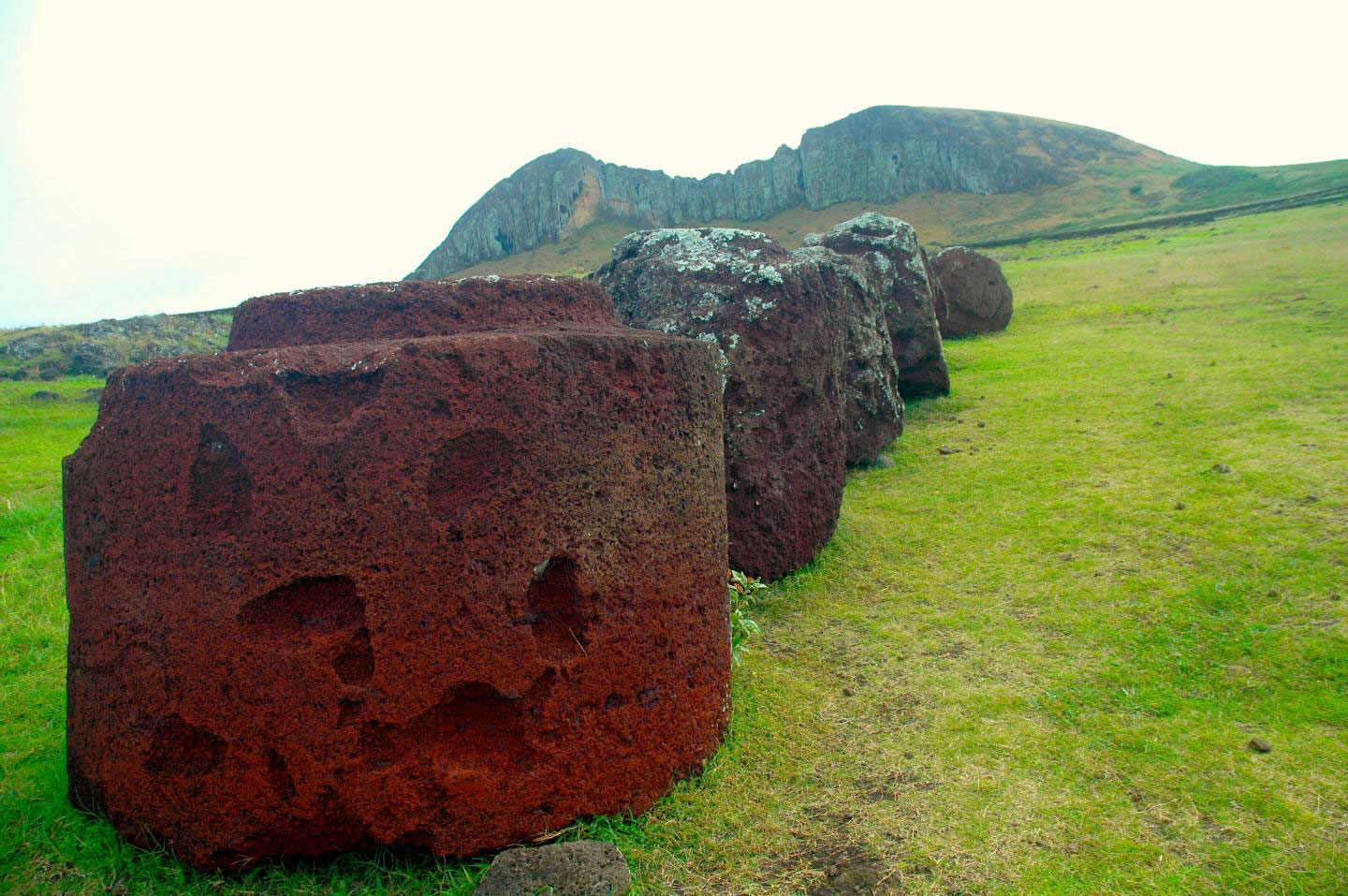
    Pukao are large, cylindrical stones made from a volcanic rock known as ‘red scoria.’ Weighing multiple tons, they were placed on the heads of the moai during prehistoric times, consistent with the Polynesian traditions of honoring their ancestors. Carl LIpo

    Analysis of giant stone hats found on Rapa Nui, Chile (Easter Island) provides evidence contrary to the widely held belief that the ancient civilization had a warrior culture. According to a new study conducted by a team of researchers, including a professor at Binghamton University, State University of New York, these stone hats suggest that the people of Rapa Nui were part of a supportive and inclusive community.

    Carl Lipo, anthropology professor and director of the Environmental Studies Program at Binghamton University, and a team of researchers studied the monumental statues (moai) on Rapa Nui, and the previously unacknowledged giant stone hats (pukao) that were placed atop them. Pukao are large, cylindrical stones made from a volcanic rock known as ‘red scoria.’ Weighing multiple tons, they were placed on the heads of the moai during prehistoric times, consistent with the Polynesian traditions of honoring their ancestors.

    The researchers produced the first study analyzing the pukao and their significance, examining the 70 multi-ton giant hats scattered around the island that have gradually eroded over time. Using photography to produce 3D computer models, the researchers were able to study the pukao in greater detail and discovered that there are far more drawings carved into the hats than was previously thought.

    “With the building mitigating any sense of conflict, the moai construction and pukao placement were key parts to the success of the island,” said Lipo. “In our analysis of the archaeological records, we see evidence that demonstrates the prehistoric communities repeatedly worked together to build monuments. The action of cooperation had a benefit to the community by enabling sharing of information and resources.”

    While Easter Island is famous, the archaeological record of the island is not well-documented, said Lipo. He believes that scientists can learn a great deal from the pukao by examining this new information.

    “Every time we look at the archaeological record of the island, we are surprised by what we find. There is much more to be learned from this remarkable place — important answers that shed light on the abilities of our ancestors, as well as potential ideas for contemporary society about what it takes to survive on a tiny and remote island,” said Lipo.

    Reference: “Using Structure from Motion Mapping to Record and Analyze Details of the Colossal Hats (Pukao) of Monumental Statues on Rapa Nui (Easter Island)” by Sean W. Hixon, Carl P. Lipo, Terry L. Hunt and Christopher Lee, 5 October 2017, Advances in Archaeological Progress.
    DOI: 10.1017/aap.2017.28

    Never miss a breakthrough: Join the SciTechDaily newsletter.
    Follow us on Google and Google News.

    Anthropology Archaeology Behavioral Science Binghamton University Easter Island Environmental Science
    Share. Facebook Twitter Pinterest LinkedIn Email Reddit

    Related Articles

    How Easter Island’s Massive Moai Statues Actually “Walked” Themselves

    Resilience, Not Collapse: What the Easter Island Myth Gets Totally Wrong

    “Problematic Stuff” – Tradition of Keeping Mementos in Memory of Loved Ones Goes Back at Least 2,000 Years

    New Fossil Discovery of a Distinct, Ancient Human Species Points to Complicated Evolutionary Process

    Archaeologists Uncover Evidence From Monumental Tombs of Domesticated Dogs in Ancient Arabian Peninsula

    When Good Governments Go Bad: History Shows That Societies Collapse When Leaders Undermine Social Contracts

    Easter Island’s Moai Provide Hints of a Complex Society

    Researchers Discover Oldest Images to Date of Dogs on Leashes

    Archaeologists Reveal Factors that Contributed to the Demise of Early Rapa Nui Society

    Leave A Reply Cancel Reply

    • Facebook
    • Twitter
    • Pinterest
    • YouTube

    Don't Miss a Discovery

    Subscribe for the Latest in Science & Tech!

    Trending News

    Millions Take These IBS Drugs, But a New Study Finds Serious Risks

    Scientists Unlock Hidden Secrets of 2,300-Year-Old Mummies Using Cutting-Edge CT Scanner

    Bread Might Be Making You Gain Weight Even Without Eating More Calories

    Scientists Discover Massive Magma Reservoir Beneath Tuscany

    Europe’s Most Active Volcano Just Got Stranger – Here’s Why Scientists Are Rethinking It

    Alzheimer’s Symptoms May Start Outside the Brain, Study Finds

    Millions Take This Popular Supplement – Scientists Discover a Concerning Link to Heart Failure

    The Universe Is Expanding Too Fast and Scientists Can’t Explain Why

    Follow SciTechDaily
    • Facebook
    • Twitter
    • YouTube
    • Pinterest
    • Newsletter
    • RSS
    SciTech News
    • Biology News
    • Chemistry News
    • Earth News
    • Health News
    • Physics News
    • Science News
    • Space News
    • Technology News
    Recent Posts
    • Doctors Surprised by the Power of a Simple Drug Against Colon Cancer
    • Why Popular Diabetes Drugs Like Ozempic Don’t Work for Everyone: The “Genetic Glitch”
    • Scientists Create Improved Insulin Cells That Reverse Diabetes in Mice
    • Scientists Stunned After Finding Plant Thought Extinct for 60 Years
    • A Common Diabetes Drug May Hold the Key to Stopping HIV From Coming Back
    Copyright © 1998 - 2026 SciTechDaily. All Rights Reserved.
    • Science News
    • About
    • Contact
    • Editorial Board
    • Privacy Policy
    • Terms of Use

    Type above and press Enter to search. Press Esc to cancel.