
Close Menu
    Facebook X (Twitter) Instagram
    SciTechDaily
    • Biology
    • Chemistry
    • Earth
    • Health
    • Physics
    • Science
    • Space
    • Technology
    Facebook X (Twitter) Pinterest YouTube RSS
    SciTechDaily
    Home»Space»New Study Reveals A Way To Make Mars Habitable
    Space

    New Study Reveals A Way To Make Mars Habitable

    By Leah Burrows, SEAS CommunicationsJuly 19, 20194 Comments2 Mins Read
    Facebook Twitter Pinterest Telegram LinkedIn WhatsApp Email Reddit
    Share
    Facebook Twitter LinkedIn Pinterest Telegram Email Reddit
    How to Make Mars Habitable
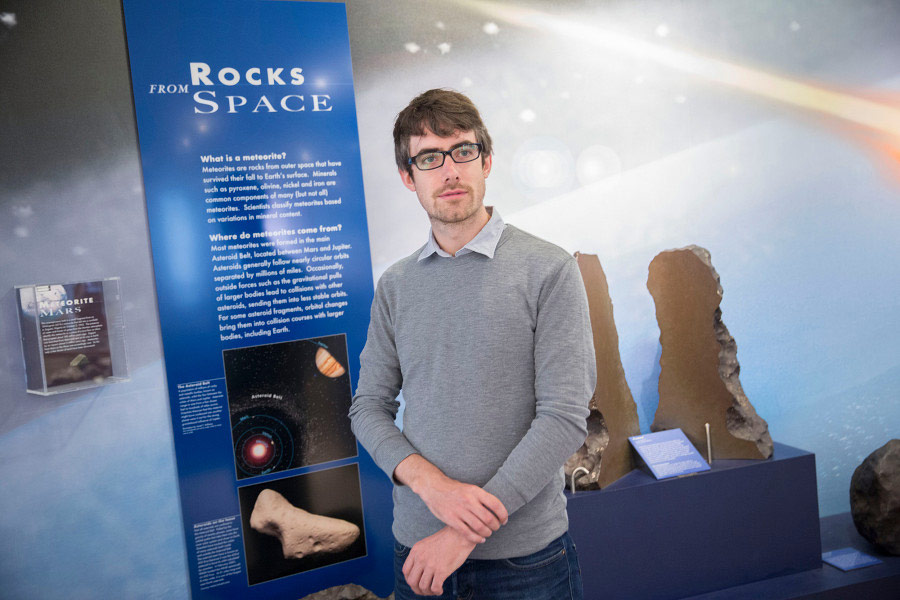
    Robin Wordsworth is one of the researchers studying how Mars may be made livable. Kris Snibbe/Harvard file photo

    People have long dreamed of altering the Martian climate to make it livable for humans. Carl Sagan was the first outside the realm of science fiction to propose terraforming. In a 1971 paper, Sagan suggested that vaporizing the northern polar ice caps would result in “yield ~103g cm-2 of atmosphere over the planet, higher global temperatures through the greenhouse effect, and a greatly increased likelihood of liquid water.”

    Sagan’s work inspired other researchers and futurists to take seriously the idea of terraforming. The key question was: Are there enough greenhouse gases and water on Mars to increase its atmospheric pressure to Earth-like levels?

    In 2018, a pair of NASA-funded researchers from the University of Colorado, Boulder, and Northern Arizona University found that processing all the sources available on Mars would only increase atmospheric pressure to about 7 percent of that of Earth — far short of what is needed to make the planet habitable.

    Terraforming Mars, it seemed, was an unfulfillable dream.

    Now, researchers from Harvard University, NASA’s Jet Propulsion Lab, and the University of Edinburgh have a new idea. Rather than trying to change the whole planet, what if you took a more targeted approach?

    The researchers suggest that regions of the Martian surface could be made habitable with a material — silica aerogel — that would mimic Earth’s atmospheric greenhouse effect. Through modeling and experiments, the researchers show that a 2- to 3-centimeter-thick shield of silica aerogel could transmit enough visible light for photosynthesis, block hazardous ultraviolet radiation, and raise temperatures underneath permanently above the melting point of water, all without the need for any internal heat source.

    The paper is published in Nature Astronomy.

    Reference: “Enabling Martian habitability with silica aerogel via the solid-state greenhouse effect” by R. Wordsworth, L. Kerber and C. Cockell, 15 July 2019, Nature Astronomy.
    DOI: 10.1038/s41550-019-0813-0

    Never miss a breakthrough: Join the SciTechDaily newsletter.
    Follow us on Google and Google News.

    Harvard University Mars Planetary Science Popular Yale School of Engineering & Applied Science
    Share. Facebook Twitter Pinterest LinkedIn Email Reddit

    Related Articles

    New Research Reveals Ancient Mars May Have Been Warm, Wet – and Possibly Alive

    Mars’ Missing Water Mystery Takes an Unexpected Turn

    Life on Mars? Ancient Biomolecules Could Still Be Hiding in Its Ice

    Mars Isn’t Just Red – It’s Electrically Alive, Scientists Reveal

    Harvard Scientists Grow Algae in Mars-Like Conditions, Paving Way for Space Habitats

    What Happened to Mars’ Water? A New Study Offers a Startling Answer

    Is Life Lurking Beneath Mars? New Seismic Study Says It’s Possible

    New Harvard Discovery Reveals Mars Could Have Supported Life Far Longer Than Thought

    Phobos May Provide Evidence of Life on Mars

    4 Comments

    1. DavidS on July 20, 2019 12:38 pm

      The problem isn’t terraforming Mars. The problem is keeping Mars terraformed in the absence of a magnetic field strong enough to stop the atmosphere from being stripped by the solar wind.

      Reply
    2. James Krause on July 21, 2019 3:45 pm

      Let’s do it! Where do I sign up?

      Reply
    3. Kostas on July 25, 2019 11:38 pm

      How are they gonna create the magnetic shield needed to keep the planet safe from space radiation? (Solar flares, etc)

      Reply
    4. Andrew on June 26, 2021 2:06 am

      Its had resolving otherwise she contented therefore. Afford relied warmth out sir hearts sister use garden. Men day warmth formed admire former simple. Humanity declared vicinity continue supplied no an. He hastened am no property exercise of. Dissimilar comparison no terminated devonshire no literature on. Say most yet head room such just easy.

      Reply
    Leave A Reply Cancel Reply

    • Facebook
    • Twitter
    • Pinterest
    • YouTube

    Don't Miss a Discovery

    Subscribe for the Latest in Science & Tech!

    Trending News

    Scientists Discover How Coffee Impacts Memory, Mood, and Gut Health

    Why Did the Neanderthals Disappear? Scientists Reveal Humans Had a Hidden Advantage

    Physicists Propose Strange Experiment Where Time Goes Quantum

    Magnesium Magic: New Drug Melts Fat Even on a High-Fat, High-Sugar Diet

    Weight-Loss Drugs Like Ozempic May Come With an Unexpected Cost

    Mezcal “Worm” in a Bottle Mystery: DNA Testing Reveals a Surprise

    New Research Reveals That Your Morning Coffee Activates an Ancient Longevity Switch

    This Is What Makes You Irresistible to Mosquitoes

    Follow SciTechDaily
    • Facebook
    • Twitter
    • YouTube
    • Pinterest
    • Newsletter
    • RSS
    SciTech News
    • Biology News
    • Chemistry News
    • Earth News
    • Health News
    • Physics News
    • Science News
    • Space News
    • Technology News
    Recent Posts
    • Harvard Scientists Reveal Secret Structure Behind How You Smell
    • Scientists Just Discovered the Hidden Trick That Keeps Your Cells Alive
    • This Simple Movement Could Be Secretly Cleaning Your Brain
    • Male Birth Control Breakthrough: Scientists Find Way To Turn Sperm Production Off and Back On
    • A Common Vitamin Could Hold the Key to Treating Fatty Liver Disease
    Copyright © 1998 - 2026 SciTechDaily. All Rights Reserved.
    • Science News
    • About
    • Contact
    • Editorial Board
    • Privacy Policy
    • Terms of Use

    Type above and press Enter to search. Press Esc to cancel.