
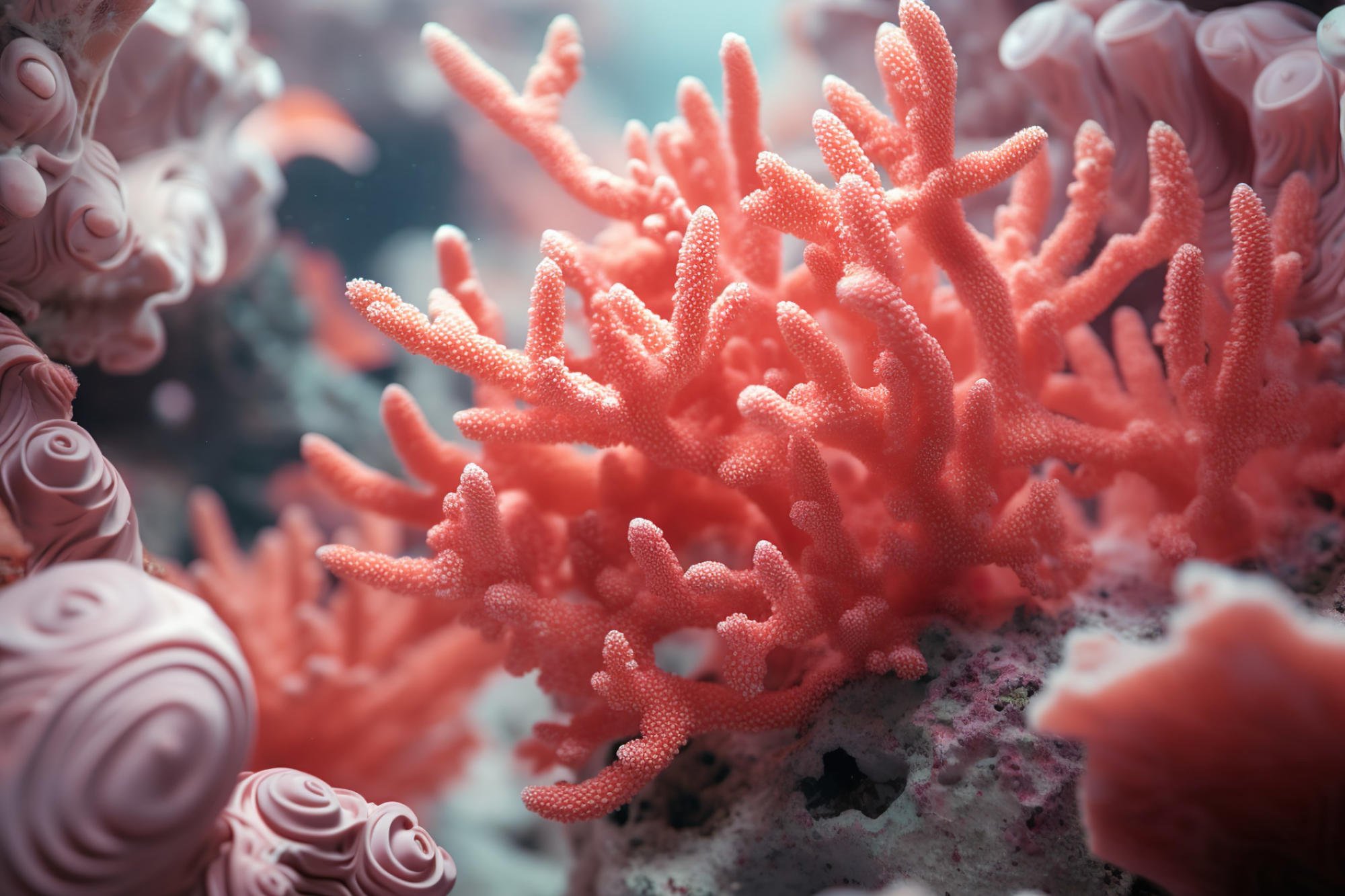
Selective breeding improves coral heat tolerance slightly, but global emission reductions are still essential to help corals survive future warming.
A new study has shown that selective breeding can lead to a modest rise in coral heat tolerance.
A team of experts from Newcastle University’s Coralassist Lab has conducted the world’s first study on selectively breeding adult corals for improved heat tolerance—the ability to withstand extreme marine heatwaves. The study demonstrated that this breeding approach was successful, showing that the heat tolerance of adult coral offspring can be enhanced, even within a single generation.
However, the improvement was modest in comparison to future marine heatwaves expected under climate change. The authors stress that rapid reductions of global greenhouse gas emissions are an absolute requirement to mitigate warming and give corals an opportunity to adapt.
The study was published in the journal Nature Communications. It was carried out in partnership with the University of Victoria, Horniman Museum and Gardens, Palau International Coral Reef Center, University of Derby, and the University of Exeter.
The publication is the result of a five-year project which was launched by Dr James Guest with funding from the European Research Council.
Not a silver-bullet solution
“This work shows that selective breeding is feasible but not a silver bullet solution and that more research is needed to maximize breeding outcomes”, says study lead author, Liam Lachs, a Postdoctoral Research Associate at Newcastle University. He continues, reflecting that “in parallel, rapid reductions of global greenhouse gas emissions are an absolute requirement to mitigate warming and give corals an opportunity to adapt.
Dr Guest, Reader in Coral Reef Ecology at Newcastle University’s School of Natural and Environmental Sciences, explains that “the results show that selective breeding could be a viable tool to improve population resilience. Yet, there are still many challenges that need to be overcome. How many corals need to outplanted to benefit wild populations? Can we ensure there are no trade-offs (evidence so far suggests this is not a large risk)? How can we avoid dilution of selected traits once added to the wild? How can we maximize responses to selection?
“Given the moderate levels of enhancement we achieved in this study the effectiveness of such interventions will also depend on urgent climate action.”
Successful breeding trial
Selective breeding has been practiced by humans for thousands of years to produce animals and plants with desirable characteristics. Now it is being considered as a tool for nature conservation, particularly for coral reefs. These marine ecosystems are at the forefront of climate change impacts, as reef-building corals are highly sensitive to marine heat waves. These can trigger mass coral bleaching and mortality events which have already led to considerable reef declines globally.
The experts conducted selective breeding trials for two different traits, either the tolerance to a short intense heat exposure (10 days, reaching +3.5°C) or a less-intense but long-term exposure more typical of natural marine heatwaves (1 month, reaching +2.5°C).
The team found that selecting parent colonies for high rather than low heat tolerance increased the tolerance of adult offspring. This result held for the response to both 10-day and 1-month exposures. Heat tolerance could in theory be enhanced by approximately 1 °C-week within one generation. However, this level of enhancement is likely insufficient to keep pace with unabated warming.
What’s next?
Selectively breeding for short-stress tolerance did not show evidence of enhancing the ability of offspring to survive the long heat stress exposure. With no genetic correlation detected, it is plausible that these traits are under independent genetic controls. This would have important implications, as interventions would benefit from cheap and rapid assays that can effectively identify heat-tolerant colonies for breeding. However, if these assays do not predict adult colony survival in natural marine heatwaves, it presents a serious challenge for management interventions.
Study lead author, Dr Adriana Humanes, Postdoctoral Research Associate at the Coralassist Lab, Newcastle University, highlights that: “considerable work remains before selective breeding can be successfully implemented. A deeper understanding is needed to determine which traits to prioritize and how these traits are genetically correlated.”
Take home message
The authors say that this work is an important proof of concept: selective breeding corals for adult heatwave survival is possible. Now, they call for more research and development to understand how to operationalize breeding interventions and maximize outcomes to hopefully keep pace with the lower levels of warming that can be achieved with concurrent climate action.
Reference: “Selective breeding enhances coral heat tolerance to marine heatwaves” by Adriana Humanes, Liam Lachs, Elizabeth Beauchamp, Leah Bukurou, Daisy Buzzoni, John Bythell, Jamie R. K. Craggs, Ruben de la Torre Cerro, Alasdair J. Edwards, Yimnang Golbuu, Helios M. Martinez, Pawel Palmowski, Eveline van der Steeg, Michael Sweet, Alex Ward, Alastair J. Wilson and James R. Guest, 14 October 2024, Nature Communications.
DOI: 10.1038/s41467-024-52895-1
The study was funded by the European Research Council.
Never miss a breakthrough: Join the SciTechDaily newsletter.
Follow us on Google and Google News.
1 Comment
22:10:24. Good luck to those Scientists and researchers. Thanks. M. Luke.