
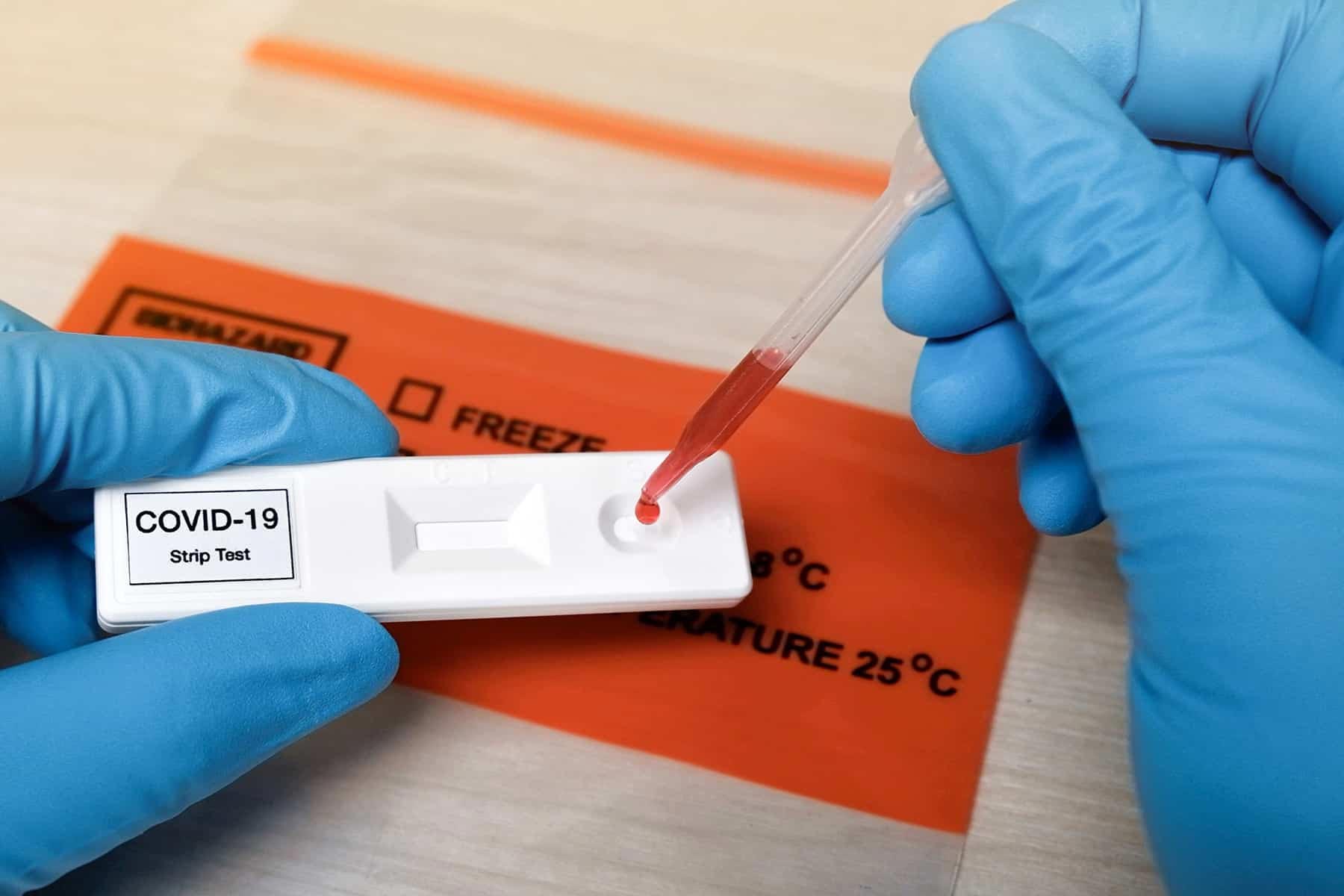
A new study led by Marc Veldhoen, principal investigator at Instituto de Medicina Molecular João Lobo Antunes (iMM; Portugal) with an interdisciplinary team of clinicians and researchers from Faculdade de Medicina da Universidade de Lisboa (FMUL) and Centro Hospitalar Lisboa Norte (CHLN) and collaborators at Instituto Português do Sangue e Transplantação (IPST), shows that 90% of subjects have detectable antibodies from 40 days up to 7 months post contracting COVID-19. These results, now published in the scientific journal European Journal of Immunology, also show that age is not a confounding factor in levels of antibodies produced, but disease severity is.
This comprehensive and cross-sectional study was thought off in the early days of the pandemic, back in March 2020. The researchers Patrícia Figueiredo-Campos and Birte Blankenhaus, the first authors of this study, set up an in-house sensitive specific, and versatile COVID-19 serology test. The optimization and validation of the assay were performed as part of Serology4COVID, a consortium of 5 research institutes of Lisbon and Oeiras. Collaborating with physicians in the campus of the Santa Maria Hospital, the research team started to monitor the antibody levels of over 300 COVID-19 hospital patients and healthcare workers, and over 200 post-COVID-19 volunteers.
“Our immune system recognizes the virus SARS-CoV-2 as harmful and produces antibodies in response to it, which helps to fight the virus.” “The results of this 6 months cross-sectional study show a classic pattern with a rapid increase of antibody levels within the first three weeks after COVID-19 symptoms and, as expected, a reduction to intermediate levels thereafter”, explains Marc Veldhoen, adding that “in this early response phase, on average men produce more antibodies than women, but levels equilibrate during the resolution phase and are similar between the sexes in the months after SARS-CoV-2 infection”. In the acute phase of the immune response, the team observed higher antibody levels in subjects with more severe disease. Also, the results show that age is not a confounding factor for the production of antibodies, as no significant differences were observed between age groups. Globally, 90% of subjects have detectable antibodies up to 7 months post contracting COVID-19.
Next, the research team, evaluated the function of these antibodies, i.e. their neutralizing activity against the virus SARS-CoV-2. In collaboration with Instituto Português do Sangue e Transplantação (IPST), the research team analyzed the neutralizing capacity of the antibodies produced by the patients and volunteers. “Although we observed a reduction in the levels of antibodies over time, the results of our neutralizing assays have shown a robust neutralization activity for up to the seventh months post-infection in a large proportion of previously virus-positive screened subjects”, explains Marc Veldhoen.
On the importance of this study, Marc Veldhoen states: “Our work provides detailed information for the assays used, facilitating further and longitudinal analysis of protective immunity to SARS-CoV-2. Importantly, it highlights a continued level of circulating neutralizing antibodies in most people with confirmed SARS-CoV-2. The next months will be critical to evaluate the robustness of the immune response to SARS-CoV-2 infection, and to find clues for some open questions, such as the duration of circulating antibodies and the impact of reinfection.”
Reference: “Seroprevalence of anti‐SARS‐CoV‐2 antibodies in COVID‐19 patients and healthy volunteers up to six months post disease onset” by Patrícia Figueiredo‐Campos, Birte Blankenhaus, Catarina Mota, Andreia Gomes, Marta Serrano, Silvia Ariotti, Catarina Costa, Helena Nunes‐Cabaço, António M. Mendes, Pedro Gaspar, 21 October 2020, European Journal of Immunology.
DOI: 10.1002/eji.202048970
This study was conducted at iMM in collaboration with the Biobank-IMM, Lisbon Academic Medical Centre, Faculdade de Medicina da Universidade de Lisboa (FMUL), Centro Hospitalar Lisboa Norte (CHLN) and Instituto Português do Sangue e Transplantação (IPST). The SARS-CoV-2 protein used in the serology testing was produced at Instituto de Biologia Experimental e Tecnológica (iBET) as part of the Serology4COVID consortium. This work was funded by the European Union H2020 ERA project EXCELLtoINNOV (No 667824), the Fundação para a Ciência a Tecnologia and Sociedade Francisco Manuel dos Santos.
Never miss a breakthrough: Join the SciTechDaily newsletter.
Follow us on Google and Google News.