
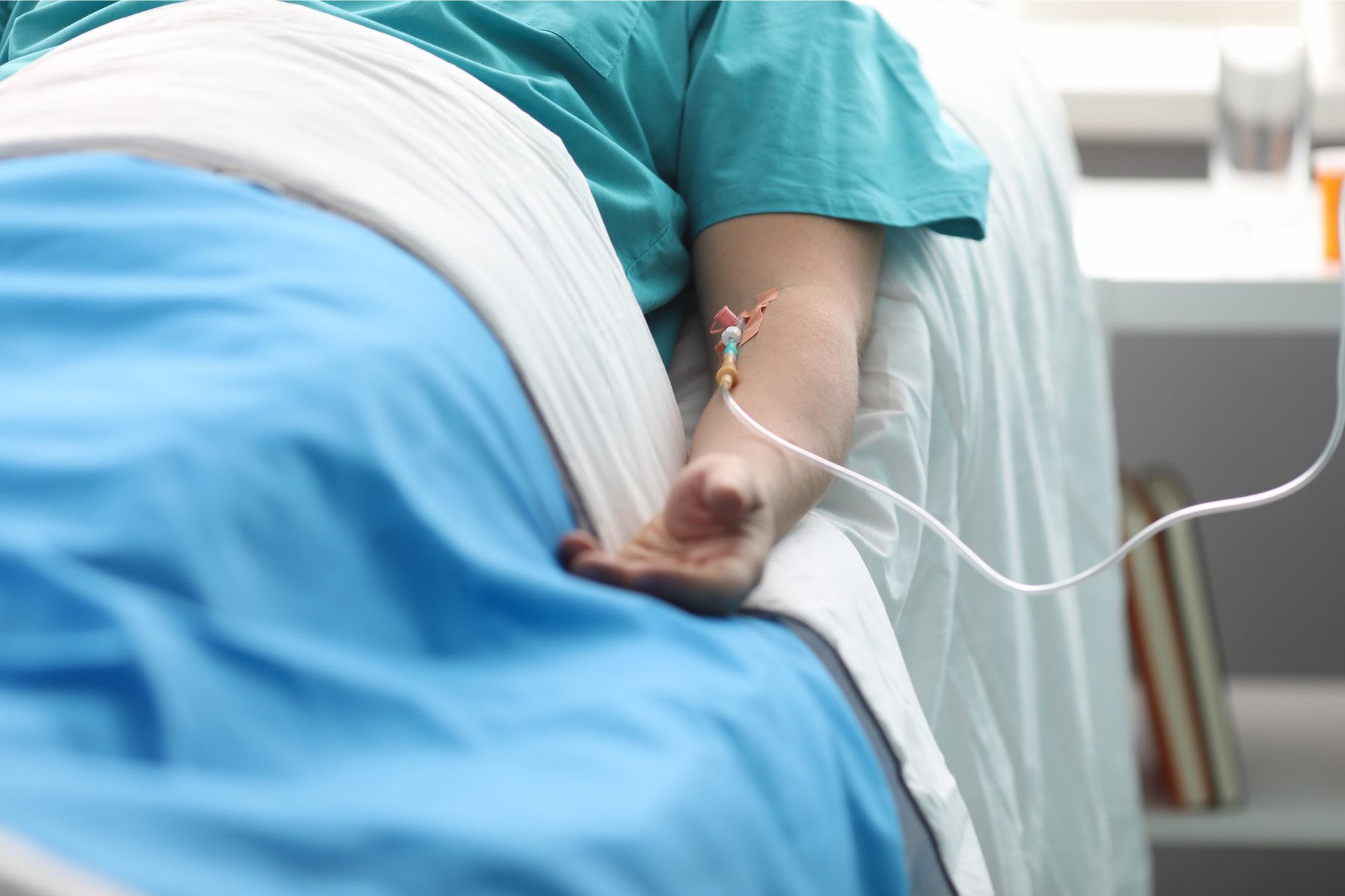
A study co-led by Mass General Brigham revealed that 25% of patients with severe brain injuries, who seemed unresponsive, covertly followed instructions. This finding could inform decisions regarding life-sustaining treatments.
A recent study co-led by experts at Mass General Brigham has revealed that brain scans can identify signs of consciousness in certain brain injury patients who are otherwise unresponsive.
In the study, 241 participants with severe brain injury who do not respond when given a simple instruction were assessed with functional MRI (fMRI), electroencephalography (EEG), or both tests. During these tests, participants heard instructions, such as “imagine opening and closing your hand” followed, 15-30 seconds later by “stop imagining opening and closing your hand.” The fMRI and EEG brain responses showed that 60 (25 percent) of participants repeatedly followed this instruction covertly over minutes. According to the authors of the study, published August 15 in the New England Journal of Medicine, patients who demonstrate this phenomenon, called cognitive motor dissociation, understand language, remember instructions, and can sustain attention, even though they appear unresponsive. For these patients, cognitive (i.e., thinking) abilities exceed, and are therefore dissociated from, motor abilities.
Challenges in Diagnosis and Treatment
“Some patients with severe brain injury do not appear to be processing their external world. However, when they are assessed with advanced techniques such as task-based fMRI and EEG, we can detect brain activity that suggests otherwise,” said lead study author Yelena Bodien, PhD, an investigator for the Spaulding-Harvard Traumatic Brain Injury Model Systems and Massachusetts General Hospital’s Center for Neurotechnology and Neurorecovery. “These results bring up critical ethical, clinical, and scientific questions – such as how can we harness that unseen cognitive capacity to establish a system of communication and promote further recovery?”
Following a significant brain injury, individuals may have a disorder of consciousness, which can include coma, a vegetative state, or minimally conscious state. Since the first study demonstrating cognitive motor dissociation in individuals with disorders of consciousness was published nearly two decades ago, centers around the world have found that this condition occurs in approximately 15 to 20 percent of unresponsive patients. However, the current study suggests it could be present in 25 percent of patients, or even more. Cognitive motor dissociation was most common in participants assessed with fMRI and EEG, suggesting that multiple tests, using different approaches, may be required to ensure consciousness is not missed.
This study included participant data from six different sites spanning the United States, United Kingdom, and Europe collected over approximately 15 years. Each site developed and rigorously tested their methods for detecting cognitive motor dissociation to minimize the possibility that a positive result was obtained spuriously. Some sites recruited participants from the intensive care unit just days after they sustained a severe brain injury, often from a trauma such as a car accident, a stroke, or cardiac arrest. Other sites included participants who were months to years after their injury or illness and were living in nursing facilities or at home.
In addition to studying the 241 participants who did not respond to simple instructions, the research included 112 participants who did respond to simple instructions at the bedside. This latter group would be expected to perform well on the fMRI and EEG tests, but, in 62 percent of those participants, researchers did not detect brain responses suggesting they were covertly following instructions. The authors note that this finding may reflect the complexity of the fMRI and EEG tasks and underscores the high-level of thinking skills required to perform them.
Clinical and Ethical Implications
Just knowing that somebody is cognitively aware and more capable than is immediately apparent, can alter their clinical care substantially. “Families have told us that once a positive test result revealing cognitive motor dissociation is shared with the patients’ clinical team, it can change the way that the team interacts with their loved one,” Bodien said. “Suddenly, the team is paying more attention to subtle behavioral signs that could be under volitional control, or speaking to the patient, or playing music in the room. On the other hand, failing to detect cognitive motor dissociation can have serious consequences, including premature withdrawal of life support, missed signs of awareness, and lack of access to intensive rehabilitation.”
“We find that this kind of sharp dissociation of retained cognitive capabilities and no behavioral evidence of them is not uncommon. I think we now have an ethical obligation to engage with these patients, to try to help them connect to the world,” said senior study author Nicholas Schiff, MD, the Jerold B. Katz Professor of Neurology and Neuroscience in the Feil Family Brain and Mind Research Institute at Weill Cornell Medicine and administrative lead of the consortium. “What we need here is what we in our consortium have been trying to get started for twenty years: a sustained effort to benefit patients who have disorders of consciousness with systematic medical research, technology development, and better clinical infrastructure.
One limitation of the study was that the testing was not standardized; each of the study sites tested patients in their own way, creating variability within the data. In addition, many participants were enrolled because family members heard about the study and reached out to researchers. This recruitment approach limits the researchers’ ability to determine the global prevalence of cognitive motor dissociation. There are no professional guidelines that stipulate how cognitive motor dissociation should be assessed and most centers are unable to provide this testing; clinical translation will need to be a focal point for future research.
“To continue our progress in this field, we need to validate our tools and to develop approaches for systematically and pragmatically assessing unresponsive patients so that the testing is more accessible”, said Bodien. “The Emerging Consciousness Program at Mass General Hospital offers these evaluations clinically, however elsewhere, a patient may have to enroll in a research study to get tested. We know that cognitive motor dissociation is not uncommon, but resources and infrastructure are required to optimize detection of this condition and provide adequate support to patients and their families.”
The researchers added that the findings may spur research of specific interventions to foster effective communication, including brain-computer interfaces.
A separate team of Mass General Brigham researchers are investigating brain-computer interfaces (BCIs) as a potential intervention that may one day have applications to many types of patients unable to effectively communicate. Another study published in the same August 15th issue of New England Journal of Medicine from co-author Leigh Hochberg, MD, PhD of Mass General Hospital’s Department of Neurology and Center for Neurotechnology and Neurorecovery, reported that a man with ALS and severely impaired speech used an investigational BCI implant to convert his attempted speech into text on a screen. Read more about that study, and about the BrainGate clinical trials for which Hochberg serves as principal investigator.
Reference: “Cognitive Motor Dissociation in Disorders of Consciousness” by Yelena G. Bodien, Judith Allanson, Paolo Cardone, Arthur Bonhomme, Jerina Carmona, Camille Chatelle, Srivas Chennu, Mary Conte, Stanislas Dehaene, Paola Finoia, Gregory Heinonen, Jennifer E. Hersh, Evelyn Kamau, Phoebe K. Lawrence, Victoria C. Lupson, Anogue Meydan, Benjamin Rohaut, William R. Sanders, Jacobo D. Sitt, Andrea Soddu, Mélanie Valente, Angela Velazquez, Henning U. Voss, Athina Vrosgou, Jan Claassen, Brian L. Edlow, Joseph J. Fins, Olivia Gosseries, Steven Laureys, David Menon, Lionel Naccache, Adrian M. Owen, John Pickard, Emmanuel A. Stamatakis, Aurore Thibaut, Jonathan D. Victor, Joseph T. Giacino, Emilia Bagiella and Nicholas D. Schiff, 14 August 2024, New England Journal of Medicine.
DOI: 10.1056/NEJMoa2400645
The study was funded by the James S. McDonnell Foundation. Bodien is supported by grants from the National Institute on Disability, Independent Living, and Rehabilitation Research: H133A120085; 90DPTB0011; and 90DPTB0027.
Never miss a breakthrough: Join the SciTechDaily newsletter.
Follow us on Google and Google News.
2 Comments
“What we need here is what we in our consortium have been trying to get started for twenty years: a sustained effort to benefit patients who have disorders of consciousness with systematic medical research, technology development, and better clinical infrastructure….We know that cognitive motor dissociation is not uncommon, but resources and infrastructure are required to optimize detection of this condition and provide adequate support to patients and their families.” In other words, they want money for technology and infrastructure, which makes sense for the researchers but not necessarily for the patients, who will be the subjects of experiments with brain implants to see if scientists can communicate with them. Who will give informed consent for these apparently unconscious people? What is the benefit of communicating with someone in a coma? What would they say? Some would probably say, “Leave me alone, please, and let me die.”
This issue illustrates an important problem in medicine, which is how long can you keep a person alive and billable for insurance payments. As technology further extends the dying process, dying will become more expensive and impoverishing of the patient’s family and estate. We need to ask as a culture whether we want more money used to develop technology and infrastructure to enable apparently brain-dead people to somehow communicate with doctors. Or are there other uses of limited resources to help people who are still fully conscious and have health problems?
My takeaway from this article is that people who seem unconscious should be treated with respect and as though they are subconsciously aware, by talking with them and playing their favorite music. Having loved ones nearby could also be comforting. But trying to implant electrodes into their heads to let them communicate over a computer sounds gruesome, and will have to be tested on monkeys and other non-human animals for years before human trials. And for what? This is Frankensteinian science, not designed to bring these people back to consciousness, but to talk to the living dead. We need to know when it’s time to say goodbye. But there is no medical profit in that.
spinalcardinjury ke newtechanolgy unnada