
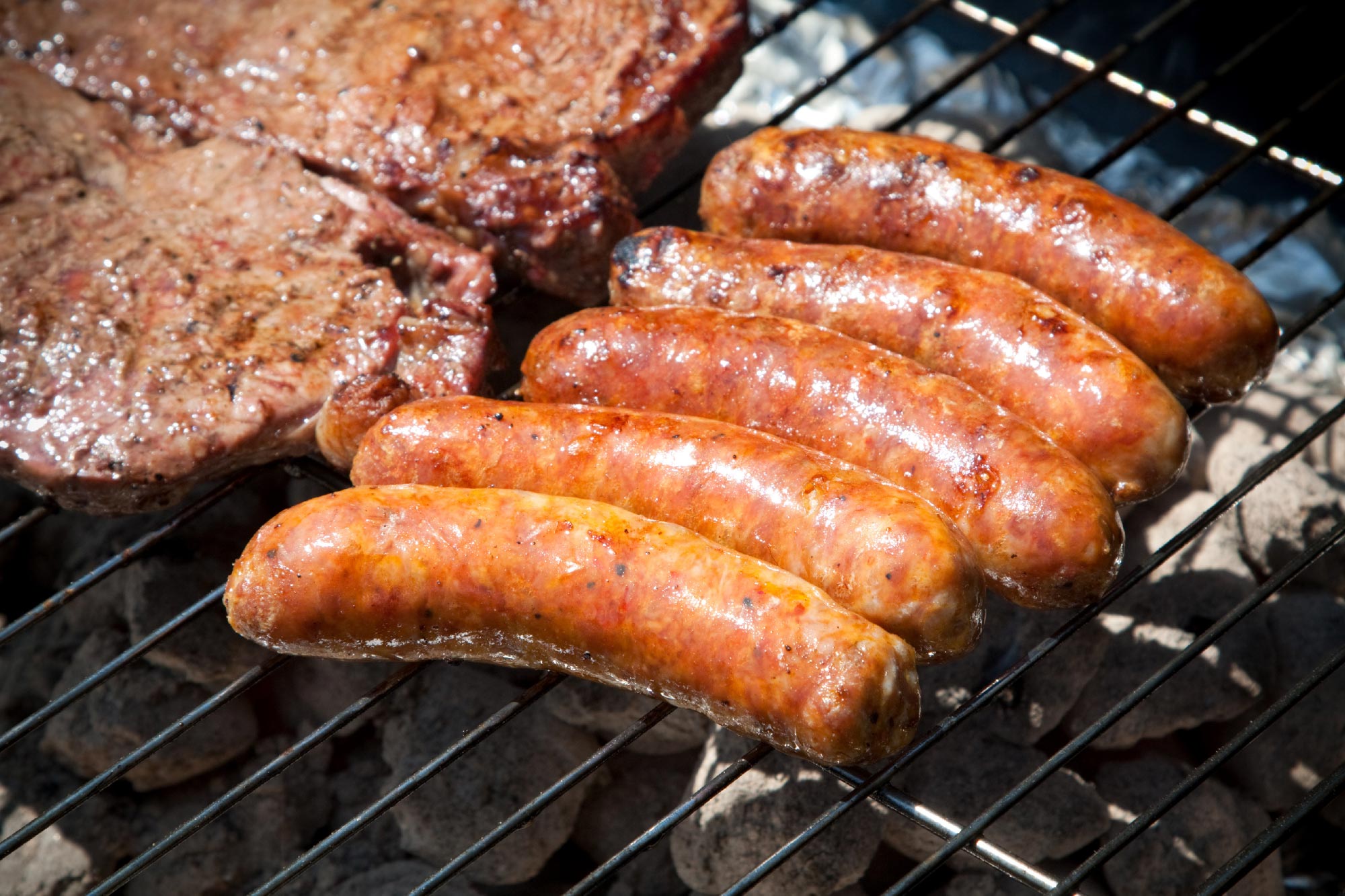
A groundbreaking study reveals that high consumption of processed red meat significantly increases the risk of dementia.
Researchers suggest replacing red meat with healthier protein sources like nuts and legumes to potentially reduce this risk by 20%. This finding could reshape dietary guidelines to better address brain health, especially as the U.S. population ages.
Red Meat and Dementia Risk
Eating red meat is a well-known risk factor for chronic diseases such as heart disease and type 2 diabetes. Now, a new study by researchers from Mass General Brigham, Harvard T.H. Chan School of Public Health, and the Broad Institute of MIT and Harvard has found that consuming higher amounts of red meat—especially processed varieties — may also increase the risk of dementia.
The study, published on January 15, 2025, in Neurology, the medical journal of the American Academy of Neurology, suggests that replacing processed red meat with healthier protein sources like nuts, legumes, or fish could lower dementia risk by about 20%.
Dietary Guidelines and Brain Health
“Dietary guidelines tend to focus on reducing risks of chronic conditions like heart disease and diabetes, while cognitive health is less frequently discussed, despite being linked to these diseases,” said corresponding author Daniel Wang, MD, ScD, of the Channing Division of Network Medicine at Brigham and Women’s Hospital, a founding member of the Mass General Brigham healthcare system. Wang is also an associate member at the Broad Institute and an assistant professor in the Department of Nutrition at Harvard Chan School. “We hope our results encourage greater consideration of the connection between diet and brain health.”
With the U.S. population aging, dementia is becoming an increasing concern for individuals and families. This study followed 133,771 participants, who had an average age of 49 at the start, over a span of up to 43 years. During this period, 11,173 participants were diagnosed with dementia. The research used data from the Nurses’ Health Study (NHS) and the Health Professionals Follow-Up Study (HPFS), which track thousands of participants’ health and lifestyle habits over decades. These studies collect comprehensive health and dietary information, which participants update every two to four years, providing valuable insights into long-term disease risk factors, including dementia.
Cognitive Impacts of Processed Meats
A typical serving of red meat is 3 ounces — approximately the size of a bar of soap. Those eating a daily average of one-quarter or more of a serving of processed red meats (roughly two slices of bacon, one and half slices of bologna, or a hot dog), compared to those consuming a minimal amount, (less than one-tenth a serving each day) had a 13 percent higher risk of developing dementia, adjusting for numerous clinical, demographic and lifestyle factors such as socioeconomic status and family history of dementia.
The researchers measured objective cognitive function using standard cognitive assessments. They found that this measure was also worse among those with greater processed meat consumption, with cognitive aging accelerated by approximately 1.6 years per average daily serving.
Exploring Gut Microbiome and Meat Consumption
The researchers also examined self-reported subjective cognitive decline (SCD), which may precede markers of cognitive decline on standard evaluations. A greater risk of SCD was associated with consuming either processed or unprocessed meats (like beef, pork, and hamburger). SCD risk increased by 14 percent for those eating one-quarter or more servings of processed meat daily compared to the minimal-consumption group, and by 16 percent for those eating one or more daily servings of unprocessed meat compared to those eating less than half a serving.
The researchers are continuing to explore factors linking red meat with dementia risk, especially those involving the gut microbiome. Trimethylamine N-oxide (TMAO), a product of the bacteria-mediated breakdown of meat, may increase cognitive dysfunction due to its effects on the aggregation of amyloid and tau, proteins involved in Alzheimer’s disease, but research is limited. The saturated fat and salt content of red meat may also impair brain cells’ health.
Research Outlook and Future Studies
“Large, long-term cohort studies are essential for investigating conditions like dementia, which can develop over decades,” Wang said. “We are continuing to piece together this story to understand the mechanisms causing dementia and cognitive decline.”
Explore Further: Bacon Lovers Beware: Processed Red Meat Linked to Dementia Risk
Reference: “Long-Term Intake of Red Meat in Relation to Dementia Risk and Cognitive Function in US Adults” by Yuhan Li, Yanping Li, Xiao Gu, Yuxi Liu, Danyue Dong, Jae Hee Kang, Molin Wang, Heather Eliassen, Walter C. Willett, Meir J. Stampfer and Dong Wang, 15 January 2025, Neurology.
DOI: 10.1212/WNL.0000000000210286
In addition to Wang, Mass General Brigham authors include first author Yuhan Li, Yuxi Liu, Danyue Dong, Jae Hee Kang, Molin Wang, Heather Eliassen, Walter C. Willett, and Meir J. Stampfer. Additional authors include Yanping Li and Xiao Gu.
This study was supported by the National Institutes of Health (R01AG077489, RF1AG083764, R00DK119412, R01NR019992, and P30DK046200).
Never miss a breakthrough: Join the SciTechDaily newsletter.
Follow us on Google and Google News.
5 Comments
New study links scientific findings to political agendas. Humans are impossibly biased and subjective on average.
Try looking at fatty acid and proteins. I bet you’ll see something about stearic acid and cystein
Ho-hum, just another time and taxpayer money wasting food allergy, toxic FDA approved food additives and excessive related/resultant medical errors ignorant and incompetent study and diatribe on fatally-flawed dogmatic drivel. For some real information on some real causes, suggesting solutions, try visiting the “About” page of my ad free video channel: https://odysee.com/@charlesgshaver:d?view=about
Nick Norwitz has already burned this “study” to the ground on pretty much every social media platform available.
You should see my reply to his “debunk” under his tweet. At best, he started a draft of a debunk.
Says “red meat” means “processed deli meat”.
Stop being frauds