
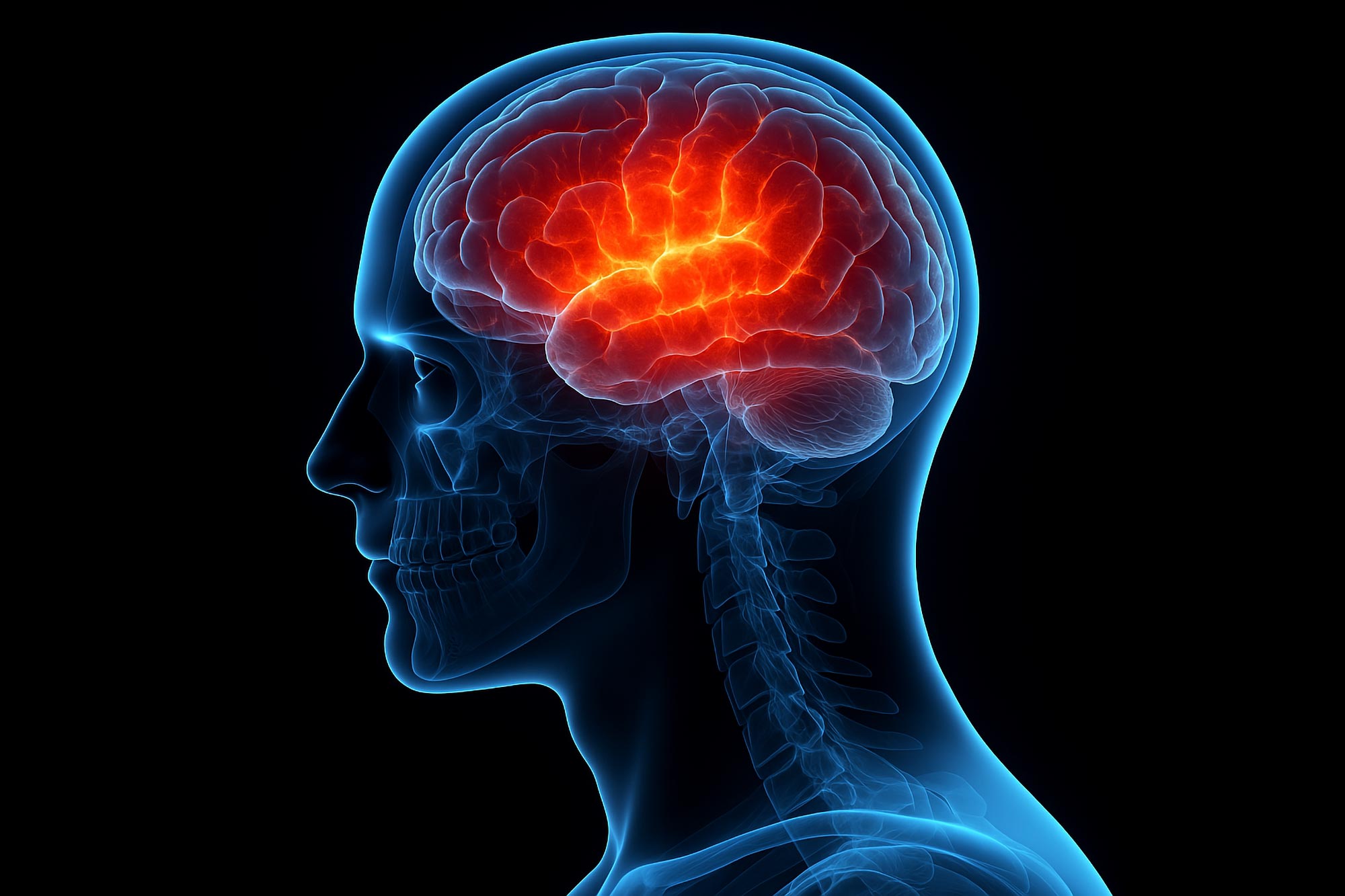
Traumatic brain injuries, often resulting from falls or traffic accidents, lead to significant death and disability each year. Research into secondary brain damage, which follows the initial injury, has yielded a potential breakthrough.
Scientists have developed a new material that targets and neutralizes harmful molecules in the brain, showing promise in improving cognitive recovery in mice and potentially offering a new avenue for treating humans.
Secondary Damage in Brain Injury
Traumatic brain injury (TBI) is a major cause of death and long-term disability worldwide. In the U.S. alone, more than 61,000 people die each year from blunt force trauma to the brain, often caused by falls or traffic accidents. Additionally, over 80,000 individuals experience lasting disabilities as a result of these injuries.
Brain damage from TBI happens in two stages. The first, called the primary injury, occurs at the moment of impact, causing immediate physical harm to brain tissue. However, the damage doesn’t stop there. Over the following minutes, days, and even weeks, a secondary injury can develop due to harmful chemical processes triggered by the initial trauma. Unlike primary injuries, this secondary damage may be preventable by targeting the molecular changes driving it.
As a materials science engineer, I work with a team to develop treatments aimed at minimizing this secondary damage and slowing neurodegeneration. We have designed a new material that can neutralize harmful molecules in the brain, improving cognitive recovery in mice. This breakthrough could pave the way for a potential treatment for people suffering from traumatic brain injury.
Understanding the Blood-Brain Barrier and Neurodegeneration
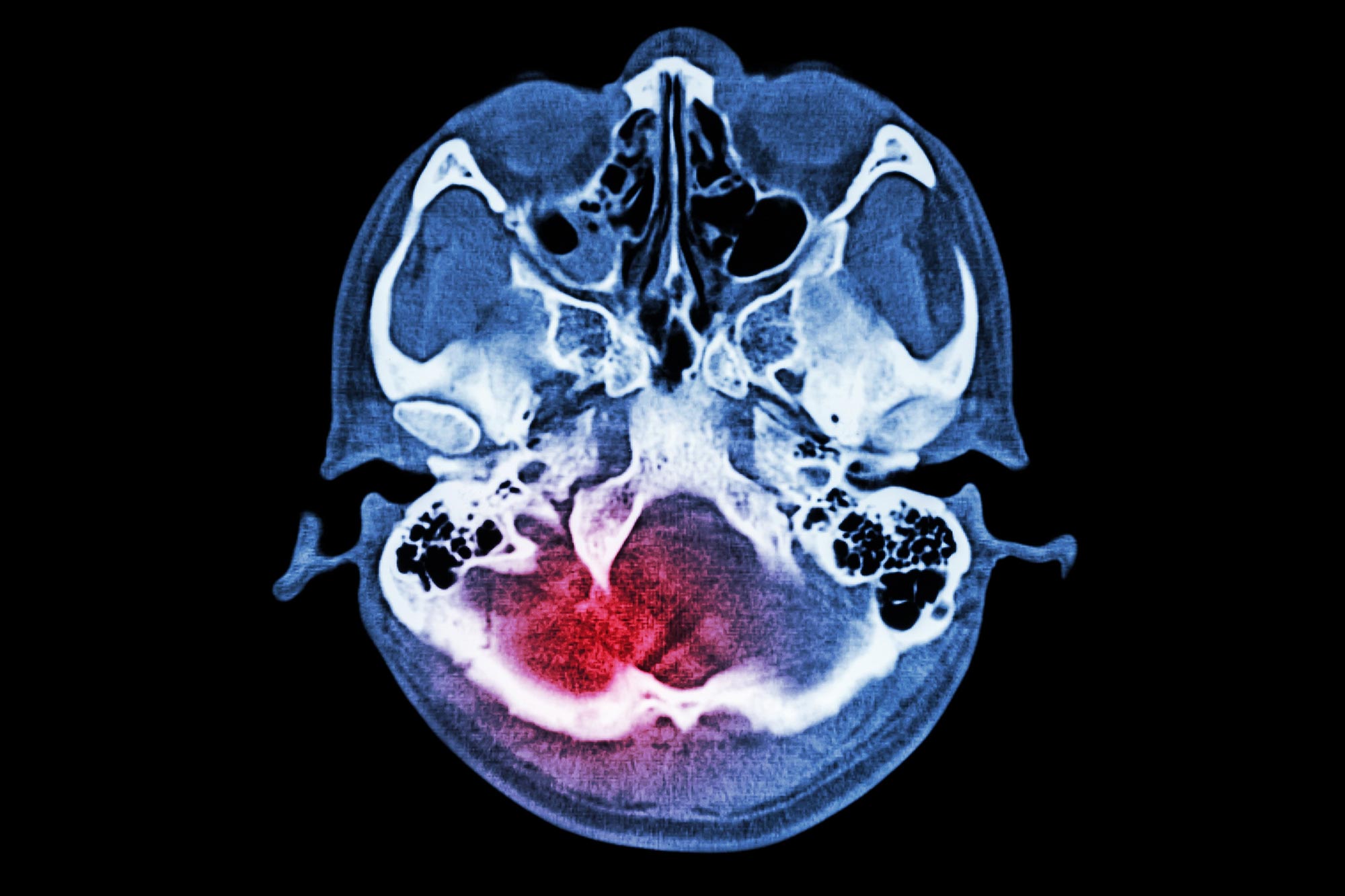
The primary stage of traumatic brain injury can severely damage and even destroy the blood-brain barrier – an interface protecting the brain by limiting what can enter it.
Disruption of this barrier triggers damaged neurons or the immune system to release certain chemicals that result in destructive biochemical processes. One process called excitotoxicity occurs when too many calcium ions are allowed into neurons, activating enzymes that fragment DNA and damage cells, causing death. Another process, neuroinflammation, results from the activation of cells called microglia that can trigger inflammation in damaged areas of the brain.
The Role of Reactive Oxygen Species
These secondary phase processes also produce harmful molecules called reactive oxygen species. These molecules, which include free radicals, chemically modify and deform essential proteins in cells, rendering them useless. They can also break DNA strands, leading to potentially damaging genetic mutations.
If left unchecked, harm from this oxidative stress can have devastating consequences for long-term health and neurocognitive recovery. Researchers have linked the biochemical changes and byproducts resulting from this cascade of damaging molecules to the development of long-term neurological disorders such as Alzheimer’s, Parkinson’s, and ALS, among others.
However, compounds called antioxidants can target this oxidative stress and improve long-term neurocognitive recovery by chemically interacting with reactive oxygen species in a way that can neutralize their damaging properties.
Finding the Ideal Antioxidant
My team and I studied whether an antioxidant called a thiol group could help treat traumatic brain injury.
Thiol groups are chemical compounds that contain a sulfur atom bound to a hydrogen atom. Sulfur atoms are much larger than hydrogen atoms, which means the sulfur atom in a thiol has a strong pull on a hydrogen atom’s lone electron. This weakens the bond between the hydrogen and its electron, allowing the hydrogen to easily give up its electron to other atoms.
As a result, thiols readily interact with many different reactive oxygen species, including the ones that damage DNA. We chose thiols not only for their antioxiant properties, but also for their ability to bind to and neutralize other brain-damaging molecules called lipid peroxidation products. These neurotoxic compounds are formed as byproducts when reactive oxygen species damage fats in the body.
Polymer-Based Solutions for Brain Injury
To get these thiols into the body, we incorporated them into materials called polymers. These are long chains of organic molecules made of individual units called monomers. To get the monomers to link together, a lone electron – or free radical – initiates a bond with a monomer, triggering a chain reaction. Think of this process like knocking down a series of dominoes: The push of your hand (the free radical in this instance) hits a domino (the monomer) and subsequently knocks down the rest of the dominoes to form a line (the polymer).
Polymers are long chains of the same molecule, over and over again.
Because thiols can inhibit this process of polymerization, we had to make a monomer with a so-called protecting group that can be chemically removed after polymerization to become our thiols. Since a-lipoic acid, a common supplement found in pharmacies, contains such a protecting thiol group, we used it to make our monomer.
We then made a chain of these monomers with RAFT, a controlled process by which polymers can be designed to leave the body through the urine. To do this, a water-soluble co-monomer can be added into the chain, allowing the polymer to dissolve in the bloodstream.
Finally, we treated the polymers to remove the protecting group, producing thiol polymers ready for further testing.
Testing on TBI
Next, we tested how well our thiol polymers neutralized reactive oxygen species.
First, we used a technique called UV-visible spectrophotometry, which shines a laser into a cell sample containing both our polymer and brain-damaging molecules. If there are reactive oxygen species present in the sample, the light will be minimally absorbed. But if our polymer neutralizes these compounds, then the light will be heavily absorbed. Through these studies, we found that our thiol polymer neutralized reactive oxygen species such as hydrogen peroxide by as much as 50%, and other neurotoxic molecules such as acrolein by as much as 100%, thus protecting neurons from damage.
We conducted additional tests by exposing fluorescent proteins to free radicals, finding that proteins that weren’t treated with our thiol polymers were destroyed. Proteins that were treated continued to be fluorescent, indicating that our thiol polymer neutralized the free radical and protected the protein.
Lastly, we injected the thiol polymers into mice with traumatic brain injury. Brain scans showed that our polymer not only successfully concentrated in the damaged area of the brain but also provided immediate protection from further injury. Our thiol polymer was able to reduce reactive oxygen species in injured mice to just 3% over the normal levels found in uninjured mice. Untreated mice with traumatic brain injury had a 45% increase compared with uninjured mice.
Future Directions and Clinical Possibilities
Our findings suggest that these thiol polymers may serve as a potential treatment for the secondary stage of traumatic brain injury. Further testing can help determine whether this material could potentially reduce the risk of long-term disability.
We are currently developing a cheap process to incorporate thiols with tiny nanoparticles. This may help increase the number of thiols in the material while also improving its ability to circulate in the bloodstream for longer protection.
Many additional studies in animals are needed to confirm the effectiveness of our material in treating traumatic brain injury. If our results continue to be positive, we aim to test the effectiveness of our material in people through clinical trials. We hope these treatments could improve the long-term outcomes for victims of car crashes, falls or even sport-related injuries to the brain.
Written by Aaron Priester, Postdoctoral Fellow in Materials Science and Engineering, Missouri University of Science and Technology.
Adapted from an article originally published in The Conversation.
Never miss a breakthrough: Join the SciTechDaily newsletter.
Follow us on Google and Google News.