
Close Menu
    Facebook X (Twitter) Instagram
    SciTechDaily
    • Biology
    • Chemistry
    • Earth
    • Health
    • Physics
    • Science
    • Space
    • Technology
    Facebook X (Twitter) Pinterest YouTube RSS
    SciTechDaily
    Home»Health»The Brain’s Hidden Repair Trick Helps Vision Recover After Trauma
    Health

    The Brain’s Hidden Repair Trick Helps Vision Recover After Trauma

    By Society for NeuroscienceDecember 15, 2025No Comments3 Mins Read
    Facebook Twitter Pinterest Telegram LinkedIn WhatsApp Email Reddit
    Share
    Facebook Twitter LinkedIn Pinterest Telegram Email Reddit
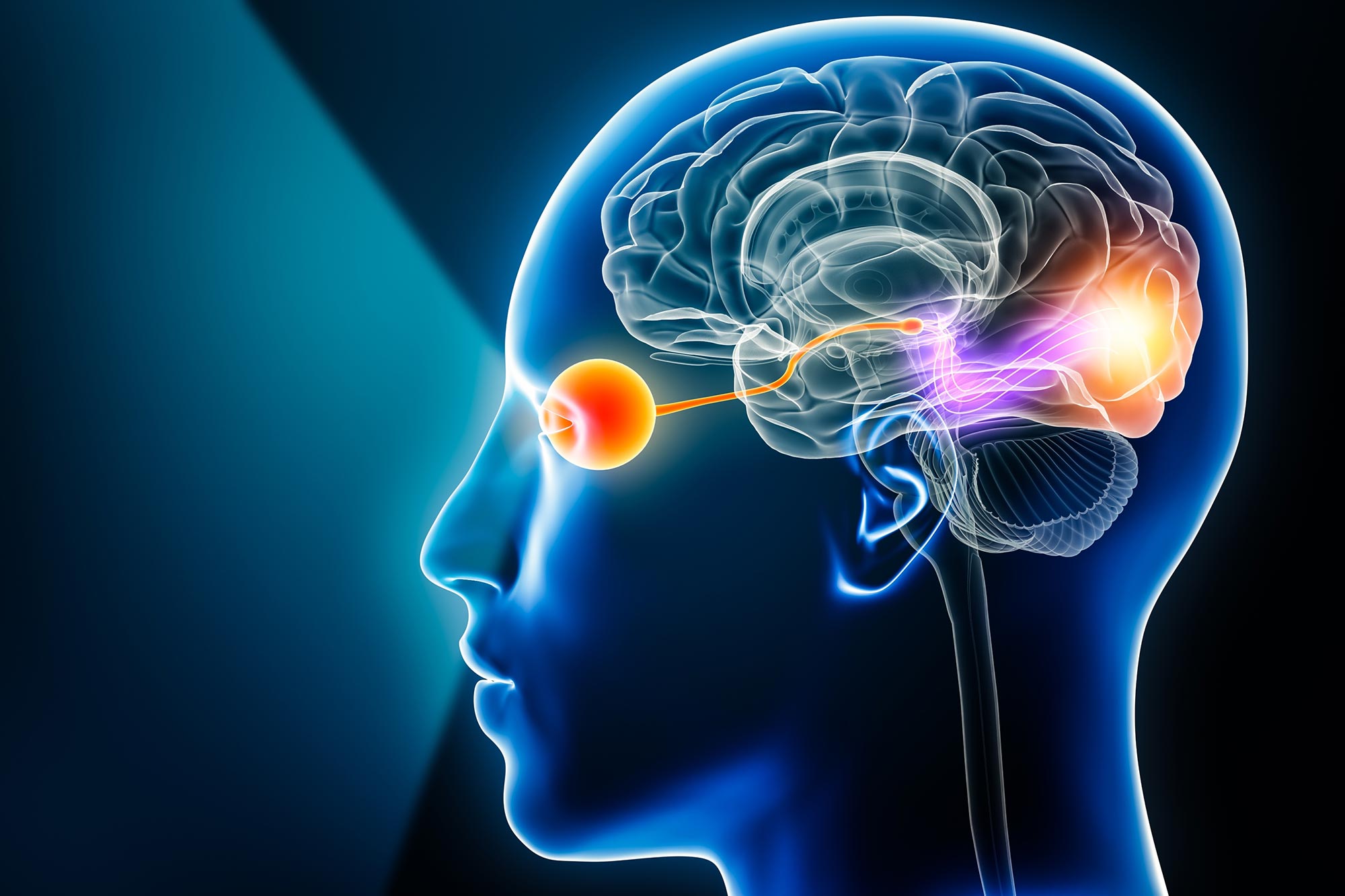
    Vision Pathway Eye Optic Nerve Visual Cortex
    Researchers uncovered an unexpected form of neural resilience: after traumatic injury, surviving retinal cells in mice grow new branches that reestablish lost connections in the brain’s visual system, restoring activity to near-normal levels. Credit: Shutterstock

    The brain has an ability to regain function after traumatic injury, even though it is often said that neurons cannot regenerate. This raises an important question: how does healing occur? In a new JNeurosci paper published today (December 15), Athanasios Alexandris and his team at Johns Hopkins University used mice to investigate how the visual system responds and repairs itself after trauma.

    Neurons Reconnect Through Extensive Branch Sprouting

    The researchers examined how cells in the eye reestablished communication with the brain after injury. They found that the cells that survived the damage produced additional branches, allowing them to link with a greater number of neurons in the brain.

    The growth of these new branches was so substantial that eye-to-brain connectivity reached levels similar to those seen before the injury. Measurements of neural activity confirmed that these restored connections were working.

    The study also revealed a key difference between males and females: female mice showed slower or incomplete recovery.
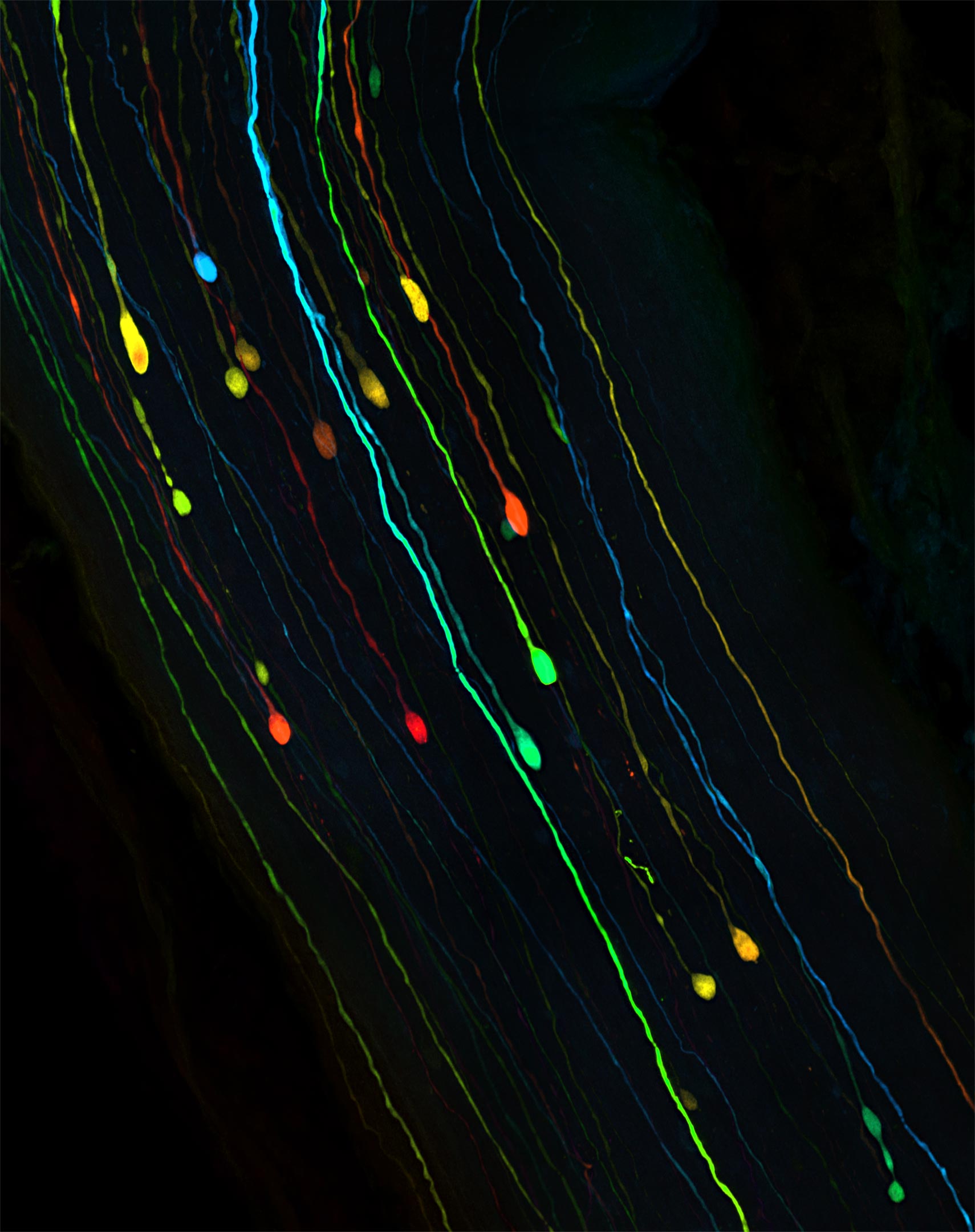
    Neurons After Traumatic Brain Injury
    Microscopy image showing sparsely labeled axons in a mouse optic nerve shortly after traumatic brain injury. Axons are the long projections of neurons that carry electrical signals between brain regions. Traumatic brain injury causes diffuse and often irreversible disconnection and degeneration of these fibers, disrupting communication within neural circuits—in this case, between the eye and visual centers of the brain. Credit: Athanasios Alexandris

    Sex Differences in Brain Repair and Future Directions

    The authors explain that their findings highlight a compensatory repair process that varies by sex. As Alexandris states, “We didn’t expect to see sex differences, but this aligns with clinical observations in humans. Women experience more lingering symptoms from concussion or brain injury than men. Understanding the mechanism behind the branch sprouting we observed—and what delays or prevents this mechanism in females—could eventually point toward strategies to promote recovery from traumatic or other forms of neural injury.”

    The team plans to continue investigating what drives these differences and how these mechanisms operate in males and females.

    Reference: “Recovery of retinal terminal fields after traumatic brain injury: evidence of collateral sprouting and sexual dimorphism” by Athanasios S. Alexandris, Jaeyoon Yi, Chang Liu, Joseph Belamarich, Zahra Alam, Abhishek Vats, Anthony Peng, Derek S. Welsbie, Donald J. Zack and Vassilis E. Koliatsos, 14 December 2025, Journal of Neuroscience.
    DOI: 10.1523/JNEUROSCI.0792-25.2025

    Never miss a breakthrough: Join the SciTechDaily newsletter.
    Follow us on Google and Google News.

    Brain Brain Injury Eyes Neuroscience Society for Neuroscience Vision
    Share. Facebook Twitter Pinterest LinkedIn Email Reddit

    Related Articles

    Serious Head Injuries Increase Your Risk of Dementia by 50%

    Treatment in Early Life Prevents Autism Symptoms From Developing in Mice

    Cognitive Decline Is Not Always a Sign of Alzheimer’s Disease

    Physical Activity May Improve Alzheimer’s Disease by Lowering Brain Inflammation

    Awakening After a Sleeping Pill: Man With Serious Brain Injury Temporarily Recovered After 8 Years

    Imaging the Twilight Zone: The Brain Network Driving Changes in Consciousness

    Lactation Changes Electrical Signaling in Mom’s Brain – But It’s Reversible

    Brain Waves of Sleeping Sheep Maaay Offer Clues to Human Brain Disease

    New Research Shows the Brain May Need Iron for Healthy Cognitive Development

    Leave A Reply Cancel Reply

    • Facebook
    • Twitter
    • Pinterest
    • YouTube

    Don't Miss a Discovery

    Subscribe for the Latest in Science & Tech!

    Trending News

    Breakthrough Bowel Cancer Trial Leaves Patients Cancer-Free for Nearly 3 Years

    Natural Compound Shows Powerful Potential Against Rheumatoid Arthritis

    100,000-Year-Old Neanderthal Fossils in Poland Reveal Unexpected Genetic Connections

    Simple “Gut Reset” May Prevent Weight Gain After Ozempic or Wegovy

    2.8 Days to Disaster: Scientists Warn Low Earth Orbit Could Suddenly Collapse

    Common Food Compound Shows Surprising Power Against Superbugs

    5 Simple Ways To Remember More and Forget Less

    The Atomic Gap That Could Cost the Semiconductor Industry Billions

    Follow SciTechDaily
    • Facebook
    • Twitter
    • YouTube
    • Pinterest
    • Newsletter
    • RSS
    SciTech News
    • Biology News
    • Chemistry News
    • Earth News
    • Health News
    • Physics News
    • Science News
    • Space News
    • Technology News
    Recent Posts
    • ADHD Isn’t Just a Deficit: Study Reveals Powerful Hidden Strengths
    • Scientists Uncover “Astonishing” Hidden Property of Light
    • Scientists Discover Stem Cells That Could Regrow Teeth and Bone
    • Scientists Discover Natural Molecule That Stops Alzheimer’s Protein Clumps From Forming
    • Early Cannabis Use May Stall Key Brain Skills in Teens
    Copyright © 1998 - 2026 SciTechDaily. All Rights Reserved.
    • Science News
    • About
    • Contact
    • Editorial Board
    • Privacy Policy
    • Terms of Use

    Type above and press Enter to search. Press Esc to cancel.