

Close Menu
    Facebook X (Twitter) Instagram
    SciTechDaily
    • Biology
    • Chemistry
    • Earth
    • Health
    • Physics
    • Science
    • Space
    • Technology
    Facebook X (Twitter) Pinterest YouTube RSS
    SciTechDaily
    Home»Biology»New Study Unlocks Secrets of High-Elevation Pregnancies
    Biology

    New Study Unlocks Secrets of High-Elevation Pregnancies

    By University of MontanaSeptember 6, 2023No Comments3 Mins Read
    Facebook Twitter Pinterest Telegram LinkedIn WhatsApp Email Reddit
    Share
    Facebook Twitter LinkedIn Pinterest Telegram Email Reddit
    Fetus Third Trimester Pregnancy Human Development Illustration
    Researchers at the University of Montana uncovered genetic traits that help highland mice maintain healthy pregnancies at high altitudes, hinting at evolutionary strategies against hypoxia-related complications and opening avenues for human medical advancements.

    Researchers found that highland deer mice have genetic adaptations that protect fetal growth in low-oxygen conditions. The findings could help develop treatments for pregnancy complications in humans.

    Pregnancy at elevated altitudes often leads to low birth weights and various complications. These issues are seen across a broad spectrum of mammals, from deer mice to humans.

    A study from the University of Montana has uncovered genetic factors that enable specific highland mouse communities to protect their developing fetuses in these higher terrains. The research was recently published in the Proceedings of the National Academy of Sciences.

    Evolutionary Adaptations to Hypoxia

    “Understanding how deer mice survive and thrive at high elevations not only informs our understanding of basic evolutionary processes, it may also one day provide clues for treating a range of related disorders in humans,” said Zac Cheviron, a UM researcher and biology associate professor.

    The work was led by Kate Wilsterman, a UM postdoctoral researcher who has since joined the faculty of Colorado State University. Cheviron, UM biology Professor Jeff Good, and former UM postdoctoral researcher Rena Schweizer were her chief collaborators in Montana.
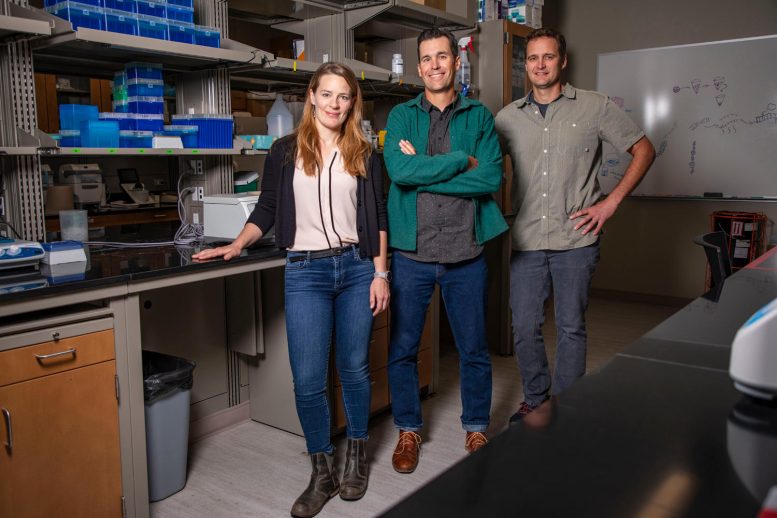
    Rena Schweizer, Zac Cheviron and Jeff Good
    Researchers (left to right) Rena Schweizer, Zac Cheviron, and Jeff Good, shown here in a University of Montana lab, studied how deer mice protect developing fetuses at higher elevations. Credit: UM photo by Ridley Hudson

    Their research shows that fetal growth is adversely affected by decreased oxygen at high elevations in mice that are native to low elevations. Mice native to high elevations, however, have genetic differences that provide placental modifications that protect fetuses from hypoxia, which is a lack of oxygen to the fetus. This pattern is similar to that observed in humans, such as people of Tibetan or Andean ancestry. These human populations also protect fetal growth at high elevations, but researchers have little understanding of how it is achieved.

    Cheviron said one of the most exciting aspects of their work was the discovery that many genes that seem to target fetal growth in their study species – highland deer mice – also have been associated with placental physiology in people.

    Genetic Clues for Human Pregnancy Complications

    “This suggests that the genetic and physiological mechanisms that underlie healthy pregnancies at high elevation may have deep evolutionary roots,” he said. “We might be able to use this insight to develop new treatments to improve pregnancy outcomes in humans.”

    During the study, lowland mice experienced stunted fetal growth in hypoxia conditions, but highland mice avoided negative effects by altering their placentas.

    Potential Applications for Human Medicine

    “If we can understand how deer mice have ‘solved’ the problem of hypoxia for fetal growth,” Wilsterman said, “we may eventually be able to identify targets for treatment development in humans or be in a better position to identify where things are going wrong in gestational diseases that involve hypoxia.”

    She said future studies will examine the tissue-level changes they discovered among deer mice. They also hope to identify the genetic variants that contribute to how specific cell types respond to hypoxia.

    Reference: “Adaptive structural and functional evolution of the placenta protects fetal growth in high-elevation deer mice” by Kathryn Wilsterman, Emily C. Moore, Rena M. Schweizer, Kirksey Cunningham, Jeffrey M. Good and Zachary A. Cheviron, 12 June 2023, Proceedings of the National Academy of Sciences.
    DOI: 10.1073/pnas.2218049120

    Never miss a breakthrough: Join the SciTechDaily newsletter.
    Follow us on Google and Google News.

    Birth Evolution Pregnancy University of Montana
    Share. Facebook Twitter Pinterest LinkedIn Email Reddit

    Related Articles

    Scientists Discover New Permanent Changes Caused by Giving Birth

    A New Study Reveals Why It Is So Hard for Humans To Have a Baby

    Why a Widely Used Drug Causes Birth Defects and Autism

    Scientists Have Figured Out Why Childbirth Became So Complex and Dangerous

    Reproduction and Evolution: A Fish Story With a Human Tell

    Antidepressant Use During Pregnancy Has Increased Risks

    Hybrid Sharks Ready to Take Over the Oceans: Fact and/or Fiction

    Amazonian Tribe’s Head Shapes Explained

    Lungfish Use Pelvic Fins to Walk Underwater

    Leave A Reply Cancel Reply

    • Facebook
    • Twitter
    • Pinterest
    • YouTube

    Don't Miss a Discovery

    Subscribe for the Latest in Science & Tech!

    Trending News

    Scientists Uncover Potential Brain Risks of Popular Fish Oil Supplements

    Scientists Discover a Surprising Way To Make Bread Healthier and More Nutritious

    After 60 Years, Scientists Uncover Unexpected Brain Effects of Popular Diabetes Drug Metformin

    New Research Uncovers Hidden Side Effects of Popular Weight-Loss Drugs

    Scientists Rethink Extreme Warming After Surprising Ocean Discovery

    Landmark Study Links Never Marrying to Significantly Higher Cancer Risk

    Researchers Discover Unknown Beetle Species Just Steps From Their Lab

    Largest-Ever Study Finds Medicinal Cannabis Ineffective for Anxiety, Depression, PTSD

    Follow SciTechDaily
    • Facebook
    • Twitter
    • YouTube
    • Pinterest
    • Newsletter
    • RSS
    SciTech News
    • Biology News
    • Chemistry News
    • Earth News
    • Health News
    • Physics News
    • Science News
    • Space News
    • Technology News
    Recent Posts
    • Scientists Discover Hidden Pathway Inside Catalysts That Defies Decades of Assumptions
    • Scientists Finally Crack Decades-Old Mystery of “Breathing” Lasers
    • “Like Liquid Metal”: Scientists Create Strange Shape-Shifting Material
    • Early Warning Signals of Esophageal Cancer May Be Hiding in Plain Sight
    • Researchers Have Discovered a THC-Free Cannabis Compound That May Replace Opioids
    Copyright © 1998 - 2026 SciTechDaily. All Rights Reserved.
    • Science News
    • About
    • Contact
    • Editorial Board
    • Privacy Policy
    • Terms of Use

    Type above and press Enter to search. Press Esc to cancel.