
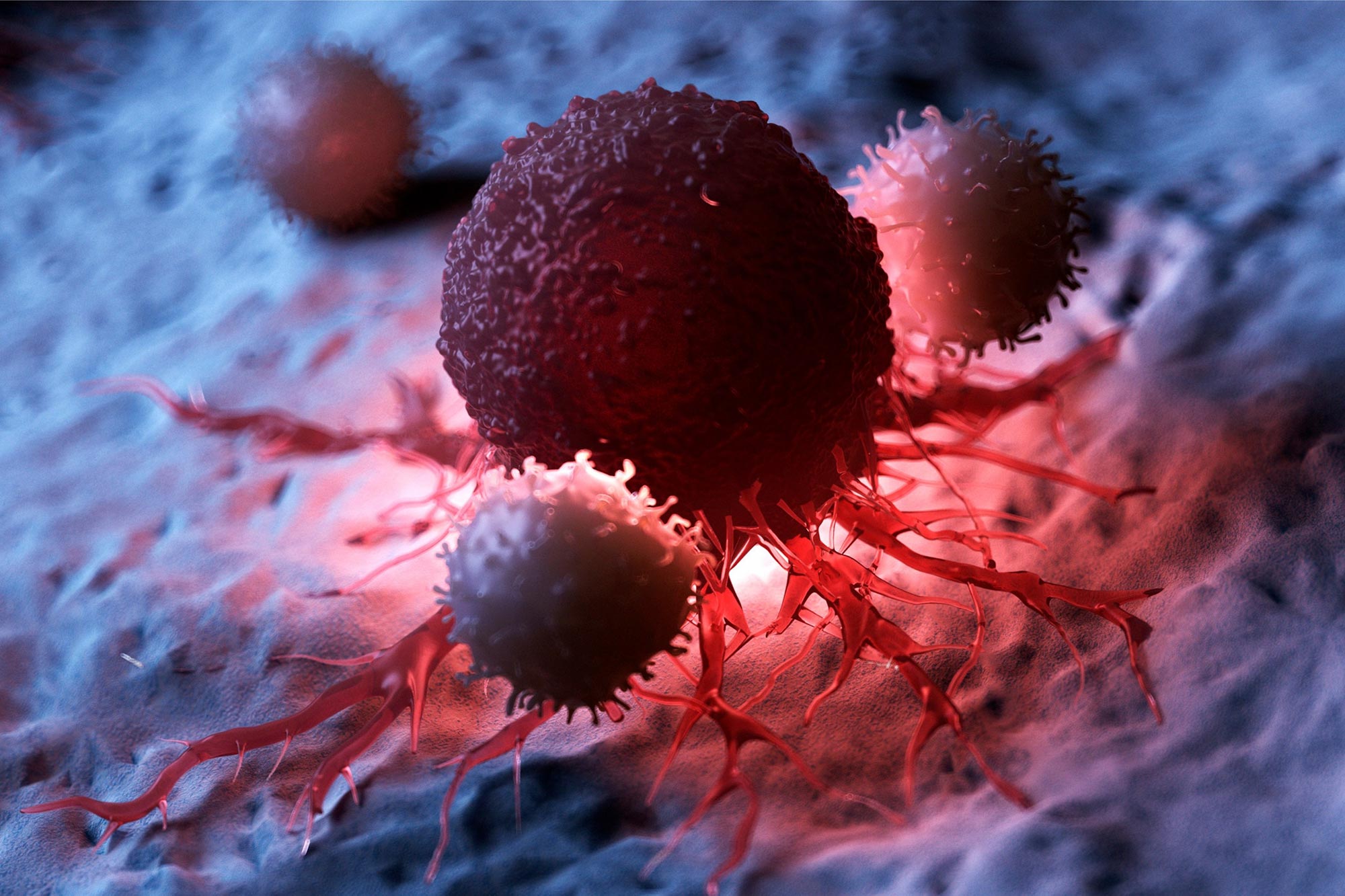
Research into a type of blood cancer called juvenile myelomonocytic leukemia suggests anti-inflammatory treatment as a possible new therapy for the disease
Juvenile myelomonocytic leukemia (JMML) is most common in children under the age of four. 10% of all cases occur in newborns under the age of three months. Every year, one to two children out of a million are diagnosed with JMML. The disease accounts for approximately 1.6 percent of all blood-related cancers. It is more common in males, with boys being nearly twice as likely as girls to develop JMML.
The exact underlying causes of JMML are unclear, however, virtually all patients will have a mutation in a RAS gene or a gene that affects the activation levels of Ras proteins that modifies the DNA within their blood cells. Currently, allogeneic hematopoietic stem cell transplantation is the only successful treatment for the majority of patients, although recent advancements show promise.
According to a report published on May 10th, 2022, in the journal eLife, scientists have identified a potential new target for treating patients with the blood cancer juvenile myelomonocytic leukemia (JMML).
Their findings in zebrafish and JMML patients suggest that anti-inflammatories may be a new approach to fighting the disease.
Link Between JMML and Noonan Syndrome
JMML is a highly aggressive blood cancer with poor patient outcomes. Children with Noonan Disease (NS), a relatively common developmental syndrome, are at a high risk of having a disorder similar to JMML called myeloproliferative neoplasm, which may later progress to JMML. A mutation in the PTPN11 gene, which encodes the protein-tyrosine phosphatase SHP2, is the most common genetic cause of JMML and NS.
“Hematopoietic stem and progenitor cells are considered to be the cells of origin for JMML,” says first author Maja Solman, Postdoctoral Fellow at the Hubrecht Institute, Utrecht, Netherlands. “Currently, hematopoietic stem cell transplantation is the only treatment for the disease, but it has a relapse rate of 50%. With such limited treatment options for JMML, we wanted to gain a better understanding of how the disease develops to identify other possible ways of targeting it.”
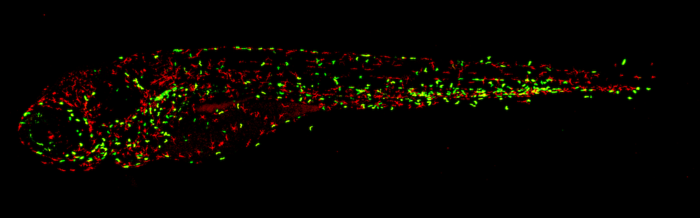
To do this, Solman and the team used a novel zebrafish model with a mutation in SHP2 – equivalent to the most common mutation in NS patients which can cause JMML. They used a technique called single-cell transcriptomics to examine the level of gene expression in the animals’ hematopoietic stem and progenitor cells. The analysis showed an increase in the number of monocyte and macrophage progenitor cells in the fish embryos, and that these cells expressed genes associated with the immune response.
The team next compared these results with their analysis of hematopoietic stem and progenitor cells, which contained SHP2 mutations, from the bone marrow of JMML patients. They found a similar pattern of proinflammatory gene expression in these cells to the one they identified in the zebrafish.
Anti-Inflammatory Drug Shows Promise in Zebrafish
Finally, they treated the zebrafish embryos with an anti-inflammatory drug called dexamethasone. They found that the drug helped rescue JMML-like blood defects in the fish, suggesting that anti-inflammatories could one day be an important treatment strategy for JMML.
“Our work reveals striking similarities in the proinflammatory response of human and zebrafish cells containing SHP2 mutations, and shows that inhibiting this response can improve JMML-like symptoms in a zebrafish model,” concludes senior author Jeroen den Hertog, Group Leader and Managing Director at the Hubrecht Institute, and Professor of Molecular Developmental Zoology at Leiden University, Netherlands. “Together, these findings lay the groundwork for future studies to verify the effectiveness of anti-inflammatories as a potential new treatment approach for JMML patients.”
Reference: “Inflammatory response in hematopoietic stem and progenitor cells triggered by activating SHP2 mutations evokes blood defects” by Maja Solman, Sasja Blokzijl-Franke, Florian Piques, Chuan Yan, Qiqi Yang, Marion Strullu, Sarah M Kamel, Pakize Ak, Jeroen Bakkers, David M Langenau, Hélène Cavé and Jeroen den Hertog, 10 May 2022, eLife.
DOI: 10.7554/eLife.73040
Never miss a breakthrough: Join the SciTechDaily newsletter.
Follow us on Google and Google News.